

ProductBoard Overview
Productboard addresses the challenge of aligning product development with customer needs. It provides product managers with tools to gather insights, prioritize features, and create a unified roadmap. By understanding customer requirements, Productboard enables teams to focus on building relevant products efficiently. The platform is trusted by Fortune 500 and high-growth companies, indicating its reliability and effectiveness in diverse business environments. A surprising aspect is its ability to rally entire teams around a shared vision, ensuring cohesive progress. This comprehensive approach supports businesses in delivering products that truly resonate with their market.
Use Cases
Customers recommend Products & Pricelist Management, Customer Feedback Management, Engagement Management, as the business use cases that they have been most satisfied with while using ProductBoard.
Business Priorities
Enhance Customer Relationships and Acquire Customers are the most popular business priorities that customers and associates have achieved using ProductBoard.
ProductBoard Use-Cases and Business Priorities: Customer Satisfaction Data
ProductBoard's features include Ticketing, Personalization, Recording, etc. and ProductBoard support capabilities include 24/7 Support, Email Support, Phone Support, etc. also ProductBoard analytics capabilities include Analytics, and Custom Reports.
Reviews
"...productboard is the agile product management system that aligns everyone on the right features to build next...." Peer review from productboard
Peer review evidence (same sources as the product rating summary)
"...I like that it gives you a lot of options as a product manager...." Peer review by Mohamed F., Product Manager, Transportation/Trucking/Railroad
"...It can handle the large influx of customer feedback and help funnel that to the right part of our product...." Peer review by Seth G., Product Manager, Information Technology and Services
"...Validate ideas, collect feature requests, share progress, celebrate launches, and engage your customer community with the productboard Portal. ..." productboard
ProductBoard, Prism PPM (formerly WorkOtter), TeamGantt, ClickUp, MeisterTask, etc., all belong to a category of solutions that help Project Management. Each of them excels in different abilities. Therefore, determining the best platform for your business will depend on your specific needs and requirements.
Productboard is a product management software suite that helps managers understand customer needs and prioritize features. A free 15-day trial is offered.
Popular Business Setting
for ProductBoard
Top Industries
- Computer Software
- Information Technology and Services
- Media Production
Popular in
- Small Business
- Mid Market
- Enterprise
ProductBoard is popular in Computer Software, Information Technology And Services, and Media Production and is widely used by Small Business, Mid Market, and Enterprise.
ProductBoard Customer wins, Customer success stories, Case studies
What solutions does ProductBoard provide for Products & Pricelist Management?
What makes ProductBoard ideal for Customer Feedback Management?
How does ProductBoard facilitate Engagement Management?
What Are the key features of ProductBoard for Workflow Management?
Why is ProductBoard the best choice for Communication Management?
Intro to Productboard - Product overview
Frequently Asked Questions (FAQ)
What buyers ask before choosing ProductBoard
Integrations What CRM integrations are available for ProductBoard?
ProductBoard offers several CRM integrations that enhance its functionality and streamline workflows for product management teams. Notably, it integrates with popular CRM platforms such as SuiteCRM, OneCRM, and OnePageCRM, allowing users to connect customer insights directly with product features. These integrations facilitate the collection and management of user feedback, ensuring that product teams can prioritize development based on real customer needs. Additionally, ProductBoard's API capabilities enable further customization and integration with other tools, enhancing its adaptability to various business processes. By leveraging these CRM integrations, organizations can improve alignment between product development and customer relationship management, ultimately driving better business outcomes.
Integrations How does ProductBoard connect to Salesforce and HubSpot?
Productboard integrates seamlessly with Salesforce and HubSpot, allowing product teams to centralize customer feedback and insights directly from these platforms. By connecting Productboard to Salesforce, teams can pull in customer data and sales insights, enabling them to prioritize features based on real user needs and market demands. Similarly, the HubSpot integration allows for the collection of marketing feedback and customer interactions, which can be linked to specific product features in Productboard. This connectivity enhances collaboration across departments, ensuring that product decisions are informed by comprehensive data from sales and marketing. Overall, these integrations streamline workflows, improve alignment, and facilitate data-driven decision-making within product management teams.
Integrations What are the setup steps for integrating ProductBoard with Marketo?
To integrate ProductBoard with Marketo, start by ensuring you have admin access to both platforms. First, log into your Marketo account and navigate to the Admin section, where you can find the API settings to generate your client ID and client secret. Next, in ProductBoard, go to the Integrations tab and select Marketo from the list of available integrations. Enter the client ID and client secret you obtained from Marketo, and configure the integration settings according to your needs, such as mapping fields for customer feedback and insights. Finally, test the integration to ensure data flows correctly between ProductBoard and Marketo, allowing you to leverage customer insights for more effective marketing campaigns.
Integrations Can I access the ProductBoard API for custom integrations?
Yes, you can access the Productboard API for custom integrations, allowing you to tailor the platform to meet your specific business needs. The Productboard API provides a robust set of endpoints that enable you to connect with other tools and systems, facilitating seamless data exchange and enhancing your product management processes. By leveraging the API, you can automate workflows, integrate with customer feedback tools, and synchronize data across platforms, ultimately driving efficiency and alignment within your teams. To get started, you can refer to the Productboard API documentation, which offers detailed guidance on authentication, available endpoints, and example use cases to help you implement your custom integrations effectively.
Integrations What is the data flow between ProductBoard and other systems like Zoho CRM?
The data flow between ProductBoard and systems like Zoho CRM involves seamless integration that allows for the efficient transfer of customer insights and feedback. When using ProductBoard, teams can centralize user feedback collected from various channels, which can then be linked to specific features in Zoho CRM. This integration enables product managers to prioritize features based on customer needs and insights gathered in ProductBoard, ensuring that the development aligns with market demands. Additionally, feedback and insights from Zoho CRM can be imported into ProductBoard, enhancing the product management process by providing a comprehensive view of customer interactions. This streamlined data flow ultimately leads to improved decision-making and collaboration across teams, enhancing overall product strategy and execution.
Integrations Are there any limitations to the integrations available with ProductBoard?
While Productboard offers a range of integrations with popular project management tools like Jira and GitHub, some users have noted limitations in the integration capabilities. For instance, there is a desire for additional integrations, such as with GitLab, which are not currently available. Additionally, while Productboard supports various APIs for custom integrations, the flexibility of these integrations may vary based on specific business needs and technical requirements. Users have also expressed concerns about the overall cost per seat, which could impact the decision to fully utilize all available integrations. Therefore, while Productboard provides valuable integration options, potential users should assess their specific integration needs and budget constraints to determine if the platform aligns with their requirements.
Features What does the roadmap management feature do in ProductBoard?
The roadmap management feature in ProductBoard allows teams to add and update their existing product roadmaps efficiently. This feature provides a structured way to organize and visualize various product features, making it easier to track development progress and prioritize tasks. Users can connect different sources to gather insights related to specific features, ensuring that the roadmap reflects customer needs and business goals. Additionally, ProductBoard facilitates the publishing of release notes for new updates, enhancing communication with stakeholders. By utilizing this feature, product managers can maintain clarity and alignment across teams, ultimately driving better decision-making and product outcomes.
Features How do I track development progress of features on the roadmap in ProductBoard?
To track the development progress of features on the roadmap in ProductBoard, you can utilize its built-in progress tracking tools. Start by adding your features to the roadmap and assigning them to relevant teams or individuals. As development progresses, you can update the status of each feature directly within the platform, allowing for real-time visibility. Additionally, you can integrate ProductBoard with tools like Jira or Asana to synchronize updates and manage tasks more effectively. This integration helps ensure that all stakeholders are informed about the current status and any changes made. By regularly updating the roadmap and utilizing these integrations, you can maintain a clear overview of development progress and make informed decisions based on the latest information.
Features What is the purpose of gathering insights in ProductBoard and how does it work?
The purpose of gathering insights in Productboard is to centralize user feedback and inform product development decisions, ultimately enhancing the product management process. Productboard allows teams to collect insights from various channels, such as emails, surveys, and direct user feedback, and organizes this information in a single platform. This centralized approach enables product managers to prioritize features based on user impact scores, aligning development efforts with customer needs and strategic business goals. By utilizing tools like the customer portal and feedback themes, teams can effectively categorize and analyze insights, leading to more informed decision-making and improved collaboration across departments. This structured method not only streamlines workflows but also fosters a data-driven culture within organizations, enhancing overall product strategy and execution.
Features How can I organize my products and features flexibly in ProductBoard?
To organize your products and features flexibly in ProductBoard, start by utilizing its customizable board layouts, which include grid, timeline, and column views. You can create different types of views tailored to your team's needs, allowing for easy prioritization and categorization of features. Use the input feature to gather suggestions and feedback from your teams, ensuring that all valuable insights are captured. Additionally, leverage the enhanced filtering and grouping options to manage complex product areas effectively. By connecting various sources of customer insights, you can align your product features with user needs, making it easier to track development progress and update your roadmap as necessary. This flexibility not only streamlines your product management process but also enhances collaboration across departments.
Features What functionality does the user impact score provide in ProductBoard?
The user impact score in Productboard is a powerful feature designed to help product teams prioritize which features to develop next based on user feedback and insights. This functionality allows teams to evaluate the potential value of features by scoring them against criteria such as user demand, business impact, and implementation effort. By centralizing user feedback from various channels, Productboard enables teams to make data-driven decisions, ensuring that the features built align closely with user needs and company goals. This not only streamlines the product development process but also enhances collaboration across departments, as stakeholders can easily understand the rationale behind feature prioritization, ultimately leading to increased buy-in and trust within the organization.
Features How do I create different types of views in ProductBoard?
To create different types of views in ProductBoard, start by accessing your ProductBoard dashboard and selecting the board you wish to customize. Utilize the redesigned board layouts, which include grid, timeline, and column views, to organize your product features and insights effectively. You can switch between these layouts instantly to find the one that best suits your needs. Additionally, leverage the enhanced filtering and grouping options to tailor the information displayed according to specific criteria, such as prioritization statuses or customer insights. This flexibility allows you to create internal views for your team and external views to share with marketing or other departments, ensuring that all stakeholders have access to relevant information in a format that works for them.
ROI & pricing What measurable business value can ProductBoard provide for my organization?
ProductBoard delivers significant measurable business value by centralizing user insights and streamlining product management workflows, which enhances decision-making and collaboration across teams. Organizations using ProductBoard, like Autodesk and Sprout Social, have reported substantial improvements, such as onboarding multiple product teams quickly, capturing thousands of customer insights, and reducing meeting times. By providing a single, real-time view of roadmaps, ProductBoard helps align product, sales, and engineering teams, leading to faster prioritization of features based on user impact scores. This centralized approach not only saves time but also increases buy-in from stakeholders, ultimately driving higher customer satisfaction and more effective product strategies. The ability to visualize and manage product features efficiently translates into tangible business outcomes, including improved productivity and reduced duplicated efforts.
ROI & pricing What measurable business outcomes can I expect from using ProductBoard?
Using Productboard can lead to several measurable business outcomes that enhance product management efficiency and collaboration. By centralizing user feedback and insights, teams can save significant time—Sprout Social reported saving hours daily by consolidating feedback from various channels into one platform. This streamlined approach allows product managers to prioritize features effectively, as evidenced by Autodesk's Building & Infrastructure Design division, which captured over 2,000 customer insights and improved decision-making through real-time roadmap visibility. Additionally, enhanced alignment among cross-functional teams fosters better collaboration, reducing duplicated efforts and accelerating product development cycles. Ultimately, these efficiencies can lead to higher customer satisfaction and increased trust across the organization, driving overall business success.
ROI & pricing How does ProductBoard impact ROI and cost savings for product management teams?
ProductBoard significantly impacts ROI and cost savings for product management teams by centralizing user feedback and insights, which streamlines decision-making and reduces time spent on meetings and scattered communication. By providing a single platform for capturing and prioritizing customer insights, teams can focus on building features that deliver the highest value, thereby increasing customer satisfaction and retention. For instance, companies like Sprout Social and Autodesk have reported saving hours each day and improving collaboration across departments, which translates to reduced operational costs. Additionally, ProductBoard's ability to create clear, data-driven roadmaps enhances alignment among stakeholders, leading to faster execution of product strategies and ultimately driving better business outcomes. This efficiency not only saves time but also maximizes the impact of each development dollar spent, contributing to a stronger ROI.
ROI & pricing How does ProductBoard contribute to cost savings and increased revenue for my business?
ProductBoard contributes to cost savings and increased revenue by streamlining product management workflows and centralizing user insights, which enhances decision-making and reduces duplicated efforts. By consolidating feedback from various channels into one platform, teams save significant time that would otherwise be spent on scattered communications and meetings. For instance, companies like Sprout Social have reported saving hours each day by using ProductBoard to manage user feedback efficiently. Additionally, the platform's user impact score helps prioritize features that align with customer needs, ensuring that development resources are focused on high-value projects. This strategic alignment not only boosts productivity but also fosters collaboration across departments, ultimately leading to improved product offerings and increased customer satisfaction, which can drive revenue growth.
ROI & pricing What are the different pricing plans available for ProductBoard, and what do they include?
ProductBoard offers various pricing plans tailored to different business needs, though specific pricing details are not provided in the context. Typically, these plans include features such as user insights gathering, product development tracking, and enhanced product management workflows. Each plan may vary in terms of the number of users, access to advanced features, and integrations with other tools. Businesses should consider their budget and specific requirements when selecting a plan, as pricing can be a significant factor. For the most accurate and up-to-date information on pricing and included features, it is recommended to visit the ProductBoard website or contact their sales team directly.
ROI & pricing What is the total cost of ownership for using ProductBoard over time?
The total cost of ownership (TCO) for using Productboard over time includes several factors such as subscription fees, implementation costs, training expenses, and ongoing support. Productboard typically operates on a per-seat pricing model, which can vary based on the number of users and the specific features selected. While the platform offers significant value through enhanced product management workflows, user insights handling, and improved collaboration, potential users should also consider the costs associated with integrating Productboard with existing tools like Salesforce or HubSpot. Additionally, organizations may incur costs related to onboarding and training staff to maximize the platform's capabilities. To accurately assess TCO, businesses should evaluate their specific needs, the scale of their operations, and the expected return on investment from improved product alignment and efficiency.
ROI & pricing What is the total cost of ownership for implementing ProductBoard in my organization?
The total cost of ownership (TCO) for implementing ProductBoard in your organization includes several factors beyond just the subscription fees. While specific pricing details are not provided, you should consider the per-seat costs, which can be relatively high, as well as any additional expenses related to training your team, integrating with existing tools like Salesforce or HubSpot, and ongoing support. Additionally, factor in the potential savings from improved efficiency and collaboration, as ProductBoard centralizes user feedback and enhances product management workflows. By streamlining processes and reducing duplicated work, the TCO may be offset by the value gained through better alignment and faster decision-making across teams. It's essential to evaluate both the upfront and long-term costs to determine the overall financial impact on your organization.
ROI & pricing How quickly can I expect to see value from implementing ProductBoard in my workflow?
When implementing Productboard in your workflow, you can expect to see value relatively quickly, often within a few weeks. For instance, Autodesk's Building & Infrastructure Design division onboarded 20 product teams in under two months, capturing over 2,000 customer insights and achieving more than 2,000 roadmap views from 167 unique viewers in just 90 days. This rapid integration allowed product managers to streamline feedback review processes, enhance collaboration, and significantly reduce meeting times. Similarly, Sprout Social centralized user feedback, saving hours daily by consolidating insights into one platform. By leveraging Productboard's features, such as user impact scoring and real-time roadmap sharing, teams can enhance decision-making and align faster, leading to immediate improvements in productivity and strategic execution.
ROI & pricing How quickly can I expect to see value from ProductBoard after implementation?
After implementing Productboard, you can expect to see value relatively quickly, often within a few weeks. For instance, Autodesk's Building & Infrastructure Design division onboarded 20 product teams in under two months, capturing over 2,000 customer insights and achieving 2,000+ roadmap views from 167 unique viewers in just 90 days. This rapid adoption allowed product managers to review feedback in one centralized location, significantly reducing the time spent in meetings and enhancing alignment across teams. Similarly, Sprout Social centralized user feedback, saving hours daily by consolidating research and insights in one platform. Overall, the speed at which you realize value from Productboard will depend on your team's engagement and the complexity of your product management processes, but many users report noticeable improvements in collaboration and decision-making within the first month.
ROI & pricing What are the potential revenue impacts of using ProductBoard for feature prioritization?
Using ProductBoard for feature prioritization can significantly impact revenue by enhancing decision-making and aligning product development with customer needs. By centralizing user feedback and insights, ProductBoard allows teams to prioritize features that deliver the highest value to users, ensuring that resources are allocated effectively. This targeted approach can lead to faster feature releases, improved customer satisfaction, and increased retention rates, all of which contribute to revenue growth. Additionally, the integration with tools like Jira, Slack, and Zendesk facilitates better collaboration among teams, reducing time spent on misaligned projects and enabling quicker responses to market demands. Ultimately, leveraging ProductBoard's prioritization capabilities can drive a more strategic product roadmap, leading to higher sales and a stronger competitive position in the market.
ROI & pricing What factors should I consider when evaluating the ROI of ProductBoard for my team?
When evaluating the ROI of ProductBoard for your team, consider several key factors. First, assess how effectively ProductBoard centralizes user insights and feedback, as this can significantly reduce time spent on gathering and organizing information, leading to increased productivity. Analyze the impact of its features on your product management workflows, including how it enhances collaboration among teams and streamlines decision-making processes. Additionally, evaluate the tool's ability to align product roadmaps with customer needs, which can improve feature prioritization and ultimately boost customer satisfaction. Finally, consider the cost of ProductBoard relative to the time saved and the potential revenue generated from more informed product decisions, as well as any integrations with existing tools like GitHub or Gong that could further enhance its value.
Capabilities What features does ProductBoard offer for managing customer insights?
ProductBoard offers a robust set of features designed to effectively manage customer insights, making it an invaluable tool for product teams. It allows users to gather and centralize feedback from various channels, ensuring that insights are not scattered across emails or spreadsheets. The platform includes powerful scoring capabilities to evaluate features based on user impact, helping teams prioritize what to build next. Additionally, ProductBoard provides easy-to-understand roadmap views that connect customer insights with product features, facilitating better alignment across sales, marketing, and engineering teams. With its user-friendly interface and integration with top project management tools, ProductBoard enhances collaboration and streamlines workflows, ultimately driving more informed product decisions and improving customer satisfaction.
Capabilities Can ProductBoard help in organizing product features for high-level presentations?
Yes, ProductBoard can significantly aid in organizing product features for high-level presentations. Its flexibility allows teams to categorize and prioritize features in a way that aligns with strategic goals, making it easier to create clear and impactful presentations. With the ability to abstract sets of features into larger buckets, ProductBoard helps product managers present a cohesive narrative that highlights key initiatives and customer insights. Additionally, the platform's user impact scoring enables teams to focus on features that deliver the most value, ensuring that presentations resonate with stakeholders. By integrating with tools like Jira and Asana, ProductBoard also streamlines the process of updating and sharing roadmaps, enhancing collaboration and communication across departments.
Capabilities Does ProductBoard support collaboration across multiple product teams?
Yes, Productboard supports collaboration across multiple product teams effectively. The platform is designed to centralize user feedback and insights, allowing various teams, such as sales, engineering, and product management, to align on priorities and strategies in one place. With features like real-time roadmap views and collaborative documents, teams can share updates and feedback seamlessly, reducing the need for lengthy meetings and improving overall communication. For instance, Autodesk’s Building & Infrastructure Design division successfully onboarded 20 product teams using Productboard, capturing over 2,000 customer insights and enhancing collaboration. This centralized approach not only streamlines workflows but also fosters a culture of transparency and alignment, ultimately leading to better decision-making and increased productivity across teams.
Capabilities Can ProductBoard create customizable roadmap views for different stakeholders?
Yes, ProductBoard can create customizable roadmap views tailored for different stakeholders, making it an effective tool for diverse teams. The platform offers flexibility in organizing products and features, allowing product managers to define various types of views based on stakeholder needs. For instance, internal teams can focus on prioritization statuses and feature requests, while external views can be shared with marketing or other departments to align on goals. This customization enhances collaboration and ensures that each stakeholder has access to relevant information, ultimately improving decision-making and project alignment. By leveraging these customizable views, organizations can better manage complex products and maintain clarity across teams.
Capabilities Is ProductBoard capable of handling complex product management workflows?
Yes, ProductBoard is well-equipped to handle complex product management workflows, making it an ideal choice for organizations with intricate product structures and numerous feature areas. Its flexibility allows teams to organize products and features in various ways, ensuring that important requests and ideas are not overlooked. ProductBoard facilitates the gathering of customer insights and connects these insights directly with product features, enabling teams to build clear and understandable roadmap views. Additionally, it integrates seamlessly with top project management tools, enhancing collaboration and streamlining processes. While some users may find it lacks certain export capabilities or flexibility in scoring equations, its powerful portal feature and user-friendly interface significantly contribute to effective workflow management, ultimately improving alignment and decision-making across product teams.
Capabilities Does ProductBoard provide tools for strategic planning and execution?
Yes, ProductBoard provides robust tools for strategic planning and execution tailored for product teams. The platform features enhanced board views and strategic planning tools that facilitate collaboration among team members, allowing for a more organized approach to product management. With the ability to centralize user feedback and insights, ProductBoard helps teams prioritize features based on customer needs and business goals. This alignment boosts productivity and ensures that all stakeholders have access to real-time roadmaps, improving decision-making processes. Additionally, the platform's user impact score assists teams in determining which features to develop next, making it an invaluable resource for executing strategic initiatives effectively.
Use cases How can SDRs use ProductBoard to gather and prioritize customer feedback effectively?
Sales Development Representatives (SDRs) can effectively use Productboard to gather and prioritize customer feedback by leveraging its centralized platform for insights collection. SDRs can input customer feedback directly into Productboard, ensuring that valuable insights from prospects and clients are not lost. By utilizing the user impact score feature, SDRs can help prioritize which feedback should be addressed first based on its potential impact on product development. Additionally, Productboard's integration with tools like Slack and Zendesk allows SDRs to collaborate seamlessly with product and engineering teams, ensuring that customer needs are communicated and prioritized effectively. This streamlined process not only enhances the alignment between sales and product teams but also contributes to a more responsive product development cycle, ultimately leading to improved customer satisfaction and retention.
Use cases What are the best practices for marketers to align their campaigns with product roadmaps using ProductBoard?
To effectively align marketing campaigns with product roadmaps using ProductBoard, marketers should first leverage the platform's insights gathering capabilities to understand customer needs and preferences. This involves connecting various feedback sources to prioritize features that resonate with target audiences. Next, marketers can utilize ProductBoard's roadmap management tools to visualize upcoming product releases and ensure that marketing efforts are timed appropriately with product launches. Regularly updating and sharing the roadmap with marketing teams fosters collaboration and transparency, enabling them to craft campaigns that highlight new features and benefits. Additionally, utilizing the platform's progress tracking can help marketers adjust their strategies based on development timelines, ensuring that campaigns remain relevant and impactful. By integrating these practices, marketers can create cohesive strategies that drive engagement and support product success.
Use cases In what ways can RevOps teams leverage ProductBoard to enhance collaboration between product and delivery teams?
RevOps teams can leverage Productboard to enhance collaboration between product and delivery teams by centralizing customer feedback and insights, which streamlines communication and decision-making. With Productboard, teams can connect various sources of feedback, prioritize features based on user impact scores, and create clear, data-driven roadmaps that align all stakeholders. The platform's integrations with tools like Jira, Slack, and Zendesk facilitate seamless sharing of insights and updates, ensuring that both product and delivery teams are on the same page. Additionally, Productboard's collaborative features allow for real-time updates and discussions, reducing the time spent in meetings and improving overall efficiency. By using Productboard, RevOps teams can foster a more cohesive environment that drives faster execution and higher customer satisfaction.
Use cases In what scenarios should RevOps teams implement ProductBoard to enhance cross-department collaboration?
RevOps teams should implement Productboard in scenarios where cross-department collaboration is essential for aligning product development with customer insights and business objectives. For instance, when teams need to centralize feedback from various channels, such as emails, surveys, and spreadsheets, Productboard can streamline this process, ensuring that all insights are accessible in one place. Additionally, if the organization struggles with prioritizing features based on user impact, Productboard's prioritization tools can help teams make data-driven decisions, enhancing alignment between product, sales, and marketing departments. Furthermore, integrating Productboard with tools like Jira, Slack, and Zendesk can facilitate seamless communication and collaboration, ultimately leading to faster decision-making and improved workflows across the organization.
Use cases How do sales leaders utilize ProductBoard to track product development progress and communicate updates to stakeholders?
Sales leaders utilize ProductBoard to track product development progress by leveraging its centralized platform to monitor feature roadmaps and development timelines. By integrating with tools like Jira, Slack, and Zendesk, they can easily share insights and updates with their teams, ensuring that everyone is aligned on priorities and progress. ProductBoard's user impact score helps sales leaders assess which features are most valuable to customers, allowing them to communicate effectively with stakeholders about upcoming releases and their potential impact. Additionally, the real-time visibility into the product roadmap fosters collaboration between sales, marketing, and product teams, enhancing trust and buy-in across the organization. This streamlined communication process ultimately leads to more informed decision-making and improved customer satisfaction.
Use cases How can sales leaders utilize ProductBoard to track product development progress and communicate updates to their teams?
Sales leaders can utilize ProductBoard to effectively track product development progress and communicate updates to their teams by leveraging its centralized roadmap and user feedback features. By integrating ProductBoard with tools like Asana, sales leaders can monitor the status of various features and enhancements in real-time, ensuring they are informed about product developments that may impact sales strategies. Additionally, ProductBoard allows for the sharing of roadmaps with sales and marketing teams, fostering transparency and alignment across departments. This visibility helps sales leaders articulate product updates to their teams, enhancing collaboration and trust. Furthermore, the user impact score feature aids in prioritizing which features to promote, ensuring that sales efforts are aligned with customer needs and product capabilities.
Use cases What specific workflows can product managers implement in ProductBoard to streamline innovation management?
Product managers can implement several specific workflows in ProductBoard to streamline innovation management effectively. First, they can utilize the platform's ability to gather and manage customer insights, allowing teams to capture feedback and suggestions directly from users. This feedback can then be connected to specific product features, ensuring that innovation is driven by real customer needs. Additionally, ProductBoard enables the creation of interactive roadmaps, which help visualize the development process and prioritize features based on value versus effort. By organizing features into larger buckets for high-level presentations, product managers can communicate their innovation strategies clearly to stakeholders. Furthermore, integrating with tools like Asana enhances project tracking and management, ensuring that innovation initiatives are executed efficiently and collaboratively.
Use cases What workflows can product managers adopt in ProductBoard to streamline innovation management and reduce meeting times?
Product managers can adopt several workflows in ProductBoard to streamline innovation management and significantly reduce meeting times. By utilizing the platform's ability to capture and organize customer insights, teams can prioritize feedback and align on product features without lengthy discussions. ProductBoard allows for the creation of interactive roadmaps that provide a real-time view of project statuses, enabling stakeholders to stay informed and engaged without the need for constant meetings. Additionally, the integration of AI-driven tools, such as Productboard Pulse, transforms customer feedback into actionable insights, further enhancing decision-making efficiency. By centralizing information and facilitating collaboration, ProductBoard helps product managers focus on innovation while minimizing redundant meetings.
Use cases When should teams adopt ProductBoard for OKR tracking to ensure strategic alignment across departments?
Teams should consider adopting ProductBoard for OKR tracking when they seek to enhance strategic alignment across departments and improve overall productivity. This platform is particularly beneficial during periods of rapid growth or when launching new products, as it centralizes objectives and key results, allowing teams to align their goals effectively. If your organization struggles with scattered information and miscommunication between departments, ProductBoard can streamline the process by integrating feedback and insights into a cohesive strategy. Additionally, when teams need to prioritize initiatives based on customer feedback and business impact, ProductBoard's tools facilitate this alignment, ensuring that all departments are working towards common objectives. By adopting ProductBoard, organizations can foster collaboration, reduce duplicated efforts, and enhance decision-making processes, ultimately driving better business outcomes.
Use cases When is it most beneficial for teams to use ProductBoard's prioritization tools to coordinate feature delivery?
Productboard's prioritization tools are most beneficial for teams when they need to align multiple departments around feature delivery, especially in complex product environments with numerous feature requests. For instance, companies like DANA have successfully utilized these tools to streamline communication between product and engineering teams, ensuring that high-priority features are identified and delivered efficiently. When teams face challenges in managing feedback from various sources or struggle with conflicting priorities, Productboard helps centralize insights and provides a clear framework for evaluating feature importance based on user impact and business value. This structured approach not only enhances team alignment but also accelerates the decision-making process, ultimately leading to improved product outcomes and customer satisfaction.
Alternatives What are the best alternatives to ProductBoard for product management?
When considering alternatives to ProductBoard for product management, two notable options are Aha! and Trello. Aha! is well-regarded for its robust roadmap capabilities and strategic planning features, making it ideal for teams focused on long-term product vision and prioritization. It offers extensive customization and integrates well with various project management tools. On the other hand, Trello is known for its user-friendly interface and flexibility, allowing teams to organize tasks visually using boards and cards. While Trello excels in simplicity and collaboration, it may lack some advanced features found in ProductBoard and Aha!. Ultimately, the best choice depends on your team's specific needs, budget, and the complexity of your product management processes.
Alternatives How does ProductBoard compare to Aha! in terms of user insights gathering?
ProductBoard and Aha! both serve as powerful tools for gathering user insights, but they have distinct features that cater to different needs. ProductBoard excels in centralizing user feedback from various channels, allowing teams to prioritize features based on a user impact score, which helps in making data-driven decisions. It offers flexibility in organizing products and features, making it suitable for complex product environments. In contrast, Aha! provides robust roadmapping capabilities and integrates well with project management tools, but may lack the same level of user feedback centralization as ProductBoard. Ultimately, the choice between the two depends on whether a business prioritizes user insights and feedback management (ProductBoard) or comprehensive roadmapping and project integration (Aha!).
Alternatives What are the key differences between ProductBoard and Trello for tracking product development?
ProductBoard and Trello serve different purposes in tracking product development, each with unique strengths. ProductBoard is specifically designed for product management, offering features like roadmap planning, user insights gathering, and progress tracking tailored for complex product environments. It allows teams to prioritize features based on customer feedback and strategic goals, making it ideal for organizations focused on product development. In contrast, Trello is a more general project management tool that uses a Kanban-style board for task management, which is great for visualizing workflows but lacks the specialized features for product insights and roadmap management that ProductBoard provides. Therefore, if your focus is on detailed product development processes and customer feedback integration, ProductBoard is the better choice, while Trello may be suitable for simpler project tracking needs.
Alternatives Is Monday.com a better choice than ProductBoard for managing product workflows?
Choosing between Monday.com and ProductBoard for managing product workflows depends on your specific needs and priorities. Monday.com offers a highly customizable platform with a user-friendly interface, making it suitable for teams that require flexibility in project management. However, its total cost of ownership can be perceived as high, especially for those needing implementation services. On the other hand, ProductBoard excels in gathering user insights and aligning product features with customer feedback, which is crucial for product management. It integrates well with tools like Jira and GitHub, enhancing collaboration and decision-making. Ultimately, if your focus is on user feedback and product roadmapping, ProductBoard may be the better choice, while Monday.com could be preferable for broader project management needs.
Alternatives What makes Craft.io a strong competitor to ProductBoard?
Craft.io is a strong competitor to ProductBoard due to its robust feature set that focuses on product management and roadmapping. It offers a user-friendly interface that allows teams to easily prioritize features and manage backlogs, similar to ProductBoard. Craft.io excels in providing customizable templates and visual roadmaps, which enhance collaboration among cross-functional teams. Additionally, it integrates seamlessly with popular tools like Jira and Slack, facilitating streamlined workflows. While ProductBoard emphasizes gathering user insights and centralizing feedback, Craft.io focuses on agile project management and prioritization, making it particularly appealing for teams looking for a more structured approach to product development. Ultimately, the choice between Craft.io and ProductBoard will depend on specific team needs, such as the importance of user feedback versus project management capabilities.
Alternatives How does ProductBoard stack up against ClickUp for roadmap visualization?
ProductBoard and ClickUp both offer roadmap visualization tools, but they cater to different needs and preferences. ProductBoard excels in providing a structured approach to product management, allowing teams to organize features and gather user feedback effectively, which is crucial for prioritizing development. Its integration with top project management tools enhances its usability for product teams. On the other hand, ClickUp is more versatile, offering a broader range of project management features, including task management and collaboration tools, which can be beneficial for teams looking for an all-in-one solution. While ProductBoard is ideal for those focused specifically on product roadmaps and user insights, ClickUp may appeal to teams needing comprehensive project management capabilities alongside roadmap visualization. Ultimately, the choice depends on whether your primary focus is product management or a more general project management approach.
ProductBoard Competitors


ProductBoard Features
- Low
- Medium
- High
| FEATURE | RATINGS AND REVIEWS |
|---|---|
| Analytics | Read Reviews (99) |
| Custom Reports | Read Reviews (82) |
| CAPABILITIES | RATINGS AND REVIEWS |
|---|---|
| Analytics | Read Reviews (99) |
| Custom Reports | Read Reviews (82) |
ProductBoard Integrations
ProductBoard integrates with a wide range of software applications through its robust data import and export capabilities.


Few API Integrations for ProductBoard


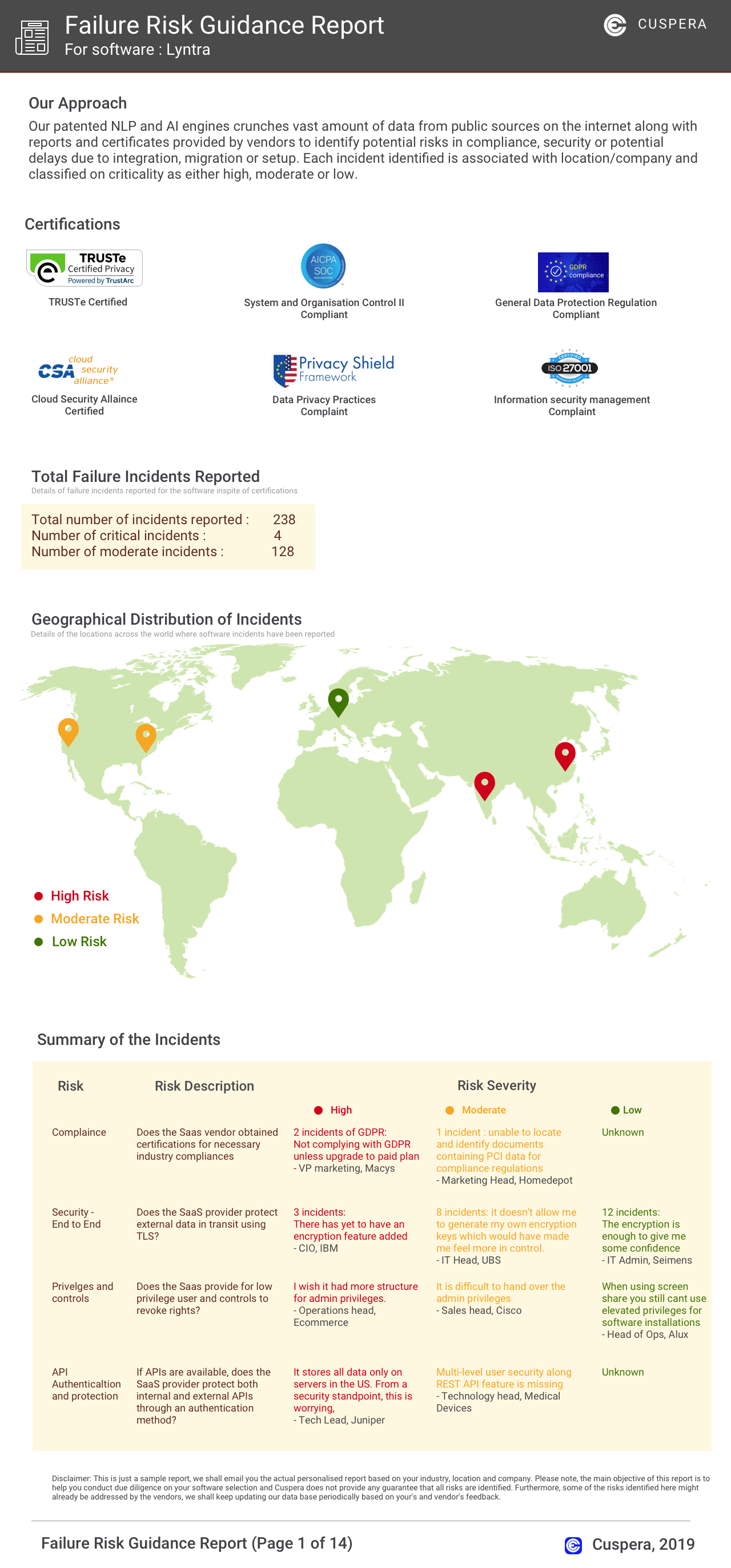
Software Failure Risk Guidance
?for ProductBoard
Overall Risk Meter
Top Failure Risks for ProductBoard
Productboard, Inc. News
Inside the Spark Launch: Watching Productboard's Agentic Product System Run Live
Productboard launched Spark, an agentic product system designed to streamline the product development lifecycle. Spark integrates specialized AI agents to automate tasks like feedback analysis, product specification, and impact measurement. It connects with coding agents and respects existing permissions, enhancing product management efficiency without replacing general-purpose tools.
Introducing Productboard Spark, AI Built for Product Teams
Productboard introduces Spark, an AI-native product system designed to enhance product management processes. Spark features specialized agents for feedback analysis, spec writing, and competitive research, streamlining workflows and improving team collaboration. The system integrates with tools like GitHub, enabling seamless transitions from customer feedback to delivery-ready specifications.
Spark Ignites: The Future of Product Management Is Here
Productboard has launched Productboard Spark, an AI-first platform designed to revolutionize product management. Spark offers a conversational interface, enabling product managers to efficiently analyze feedback, conduct competitive analysis, and create detailed product specifications. This launch marks Productboard's shift from a system of record to a system of work, aiming to enhance productivity and decision-making in product development.
Context (Not AI) Is the Real Competitive Advantage
Productboard emphasizes the importance of context over AI in product management. CEO Hubert Palan argues that while AI accelerates tasks, it cannot replace human judgment in deciding what to build. Productboard's AI tool, Spark, integrates customer insights and strategic context to enhance product workflows, supporting product managers in making informed decisions. This approach ensures that AI complements human expertise, maintaining focus on impactful product outcomes.
Productboard, Inc. Profile
Company Name
Productboard, Inc.
Company Website
https://www.productboard.com/HQ Location
731 Market St, # 200, San Francisco, California 94103, US
Employees
251-500
Social


Financials
SERIES D