

Kizen Overview
Kizen addresses the challenge of integrating AI into enterprise applications across diverse industries. It enhances team productivity by utilizing AI agents to automate routine tasks, allowing businesses to focus on strategic growth. Kizen's platform is built on a robust data foundation, enabling users to create applications swiftly. It provides real-time insights for informed decision-making, reducing reliance on disorganized systems. The platform supports seamless workflow management, tracking processes like student progress and client data management. Kizen also aids in refining business development efforts and managing projects efficiently. It is particularly beneficial in healthcare, where it streamlines participant sourcing and accelerates treatment delivery.
Use Cases
Customers recommend Engagement Management, Communication Management, Knowledge Management, as the business use cases that they have been most satisfied with while using Kizen.
Business Priorities
Improve ROI and Acquire Customers are the most popular business priorities that customers and associates have achieved using Kizen.
Kizen Use-Cases and Business Priorities: Customer Satisfaction Data
Kizen works with different mediums / channels such as E-Mail.
Kizen's features include Feedback Surveys, Personalization, Recording, etc. and Kizen support capabilities include Email Support, Chat Support, AI Powered, etc. also Kizen analytics capabilities include Analytics, and Custom Reports.
Reviews
"...The features such as email syncing and survey are suitable for businesses in different industries...." Peer review by User
Peer review evidence (same sources as the product rating summary)
"...Messages: Check whether a contact read, opened, clicked, and/or engaged with a specific email, or all emails created from a specific template...." How To Set Conditions To Ensure Your Sales Campaigns Reach The Right Audience
"...Send surveys through email, web, mobile, or text, and present them on kiosks or tablets to uncover product needs, discover customer preferences, deepen relationships, predict market trends, and prioritize investments. ..." Kizen Surveys Studio
"...Kizen's Knowledge Base...." How To Track Where In A Web App A Contact Visited
Kizen, AgencyAnalytics, Yespo Оmnichannel CDP, omnisend, VBOUT, etc., all belong to a category of solutions that help CRM. Each of them excels in different abilities. Therefore, determining the best platform for your business will depend on your specific needs and requirements.
Kizen simplifies and accelerates AI adoption for healthcare, insurance, and financial services. The Kizen Platform is the leader in ProGen AI.
Popular Business Setting
for Kizen
Top Industries
- Marketing and Advertising
- Health, Wellness and Fitness
- Insurance
Popular in
- Small Business
- Large Enterprise
- Mid Market
Kizen is popular in Marketing And Advertising, Health, Wellness And Fitness, and Insurance and is widely used by Small Business, Large Enterprise, and Mid Market.
Kizen Customer wins, Customer success stories, Case studies
How efficiently Does Kizen manage your Engagement Management?
How can Kizen optimize your Communication Management Workflow?
How can Kizen enhance your Knowledge Management process?
What Are the key features of Kizen for Competitive Intelligence?
What benefits does Kizen offer for Advertisement?
Frequently Asked Questions (FAQ)
What buyers ask before choosing Kizen
Integrations What CRM integrations are available with Kizen?
Kizen offers a variety of CRM integrations designed to enhance its functionality and streamline workflows. Notably, it integrates seamlessly with Salesforce, allowing users to leverage existing data and processes while benefiting from Kizen's AI-driven capabilities. Additionally, Kizen supports integrations with various platforms such as Cursor, which can facilitate multi-agent orchestration, and other tools that enhance compliance and governance, including those adhering to SOC 2, HIPAA, and ISO standards. These integrations enable businesses to connect their systems effectively, ensuring that teams can collaborate efficiently and access critical customer data in real-time. By utilizing Kizen's integrations, organizations can optimize their customer relationship management processes and drive better engagement and revenue growth.
Integrations How does Kizen connect to Salesforce and HubSpot?
Kizen connects to Salesforce and HubSpot through its SmartConnectors, which facilitate seamless integration with these platforms, allowing businesses to leverage existing data and workflows. By utilizing Kizen’s integration capabilities, users can synchronize data between Kizen and Salesforce or HubSpot, ensuring that information is accurate and up-to-date across systems. This integration enables teams to automate processes such as lead scoring, outreach, and follow-ups, enhancing overall efficiency. Additionally, Kizen's AI-driven insights can enrich the data from Salesforce and HubSpot, providing real-time visibility and personalized recommendations. This connectivity not only eliminates data silos but also empowers organizations to make informed decisions and improve customer engagement, ultimately driving better business outcomes.
Integrations What are the setup steps for integrating Kizen with Marketo?
To integrate Kizen with Marketo, start by ensuring you have administrative access to both platforms. First, log into your Kizen account and navigate to the integration settings. Select Marketo from the list of available integrations. You will need to provide your Marketo API credentials, which can be found in your Marketo account under Admin > Integration > API. Once you enter the credentials, Kizen will establish a connection with Marketo. Next, configure the data sync settings to determine which data points you want to share between Kizen and Marketo, such as leads, campaigns, and customer interactions. Finally, test the integration to ensure data flows correctly and set up any necessary automations within Kizen to enhance your marketing efforts. This streamlined process allows you to leverage both platforms effectively for improved marketing automation and customer engagement.
Integrations Can Kizen sync data with external data providers, and what is the sync behavior?
Yes, Kizen can sync data with external data providers through its SmartConnectors and well-documented API, allowing for seamless integration of various data sources. The sync behavior is designed to ensure that data is accurately and efficiently managed, with features such as automatic change logs, duplicate detection, and data health monitoring. This means that as data is updated or changed in external systems, Kizen can automatically reflect those changes in real-time, maintaining data integrity and accuracy across platforms. Additionally, Kizen's enterprise permissions engine allows for precise control over user access, ensuring compliance and security during the data synchronization process. This capability not only eliminates data silos but also enhances the visibility and usability of data for your teams and AI agents.
Integrations What are the limitations of data flow between Kizen and other integrated systems?
While Kizen offers robust integration capabilities through its SmartConnectors and well-documented API, there are some limitations to consider regarding data flow between Kizen and other integrated systems. One potential limitation is the dependency on the specific APIs of the external systems, which may impose restrictions on the types of data that can be exchanged or the frequency of updates. Additionally, while Kizen can ingest data from various sources, the processing of unstructured data may require additional configuration to ensure compatibility. Furthermore, the effectiveness of data synchronization can be influenced by the complexity of the existing workflows and the need for custom rules to manage data integrity. Therefore, businesses should evaluate their specific integration needs and the capabilities of their existing systems to maximize the benefits of Kizen's integration features.
Integrations How can I access the API for Kizen integrations and configure it?
To access the API for Kizen integrations, you can start by visiting the Kizen documentation page, which provides comprehensive guidelines on how to configure and utilize the API effectively. The API allows you to connect Kizen with your existing systems using Smart Connectors, enabling seamless data integration and workflow automation. You will need to create an API key through your Kizen account settings, which will authenticate your requests. Once you have your API key, you can follow the detailed instructions in the documentation to set up endpoints, manage data exchanges, and customize integrations according to your business needs. This process ensures that you can leverage Kizen's capabilities to enhance your operational efficiency and data management.
Features What does Kizen's granular permissions feature do?
Kizen's granular permissions feature allows businesses to control user access to data and functionalities with precision, ensuring that each team member only has access to the information necessary for their role. This capability enhances data security and compliance by preventing unauthorized access to sensitive information, thereby maintaining data integrity. With customizable roles, organizations can tailor permissions based on specific job functions, such as giving marketing managers access to customer segments and analytics dashboards while restricting customer support representatives to customer profiles and order histories. This level of control not only fosters secure collaboration across teams but also streamlines workflows, enabling efficient data management and reducing the risk of data breaches. Ultimately, Kizen's granular permissions feature supports scalable collaboration while safeguarding critical business data.
Features How do I configure user roles and permissions in Kizen?
To configure user roles and permissions in Kizen, start by accessing the admin settings within your Kizen portal. Navigate to the "User Management" section, where you can create custom roles tailored to your organization's needs. Assign specific permissions to each role, ensuring that team members have access only to the data and functionalities necessary for their tasks, such as marketing analytics for Marketing Managers or customer profiles for Customer Support Representatives. This granular control enhances data security and compliance while promoting efficient collaboration across teams. Once roles are defined, you can easily assign users to these roles, allowing for seamless integration into your existing workflows. Regularly review and adjust permissions as your team or project requirements evolve to maintain optimal security and functionality.
Features What functionality does Kizen's AI-driven workflows provide for healthcare?
Kizen's AI-driven workflows for healthcare provide a comprehensive suite of functionalities designed to enhance care delivery and streamline operations. These workflows integrate seamlessly with existing systems, such as EHRs and claims data, using Kizen’s SmartConnectors and Data Cloud to eliminate data silos and ensure real-time visibility for care teams. The platform automates repetitive tasks, allowing healthcare professionals to focus on patient care rather than administrative burdens. Additionally, Kizen's AI analyzes data to identify risks, close care gaps, and recommend next best actions, all while maintaining compliance with regulations like HIPAA. By leveraging AI-driven insights, healthcare organizations can improve care quality, accelerate reimbursement processes, and ultimately enhance patient outcomes, making Kizen a valuable tool in modern healthcare environments.
Features How can I use Kizen's customizable dashboards to monitor performance?
To use Kizen's customizable dashboards for monitoring performance, start by accessing the dashboard feature within the Kizen platform. You can tailor the layout to display key performance indicators (KPIs) relevant to your business, such as commissions, production metrics, and customer engagement statistics. Utilize the drag-and-drop functionality to arrange widgets that showcase real-time data, allowing you to visualize trends and performance at a glance. Additionally, you can set up role-based access to ensure that team members see the most pertinent information for their roles, whether they are marketing managers or product managers. By leveraging Kizen's intuitive interface, you can create a streamlined view that enhances decision-making and drives performance improvements across your organization.
Features What does Kizen's Smart Connectors feature do for data integration?
Kizen's Smart Connectors feature facilitates seamless data integration by allowing organizations to connect various existing tools and systems effortlessly. This feature enables users to upload necessary data and integrate Electronic Health Records (EHR), claims, and Social Determinants of Health (SDoH) data into a unified platform. By eliminating data silos, Smart Connectors ensure data accuracy and provide care teams with real-time visibility into critical information. Additionally, Kizen's Smart Connectors support automated workflows, enabling teams to streamline processes and enhance operational efficiency. This integration capability not only simplifies data management but also enhances collaboration across departments, ultimately leading to improved patient care and faster reimbursement cycles.
Features How do I set up automations for client interactions in Kizen?
To set up automations for client interactions in Kizen, start by accessing the platform and utilizing its intuitive drag-and-drop designer. First, define the specific triggers for your automations, such as changes in the system, client actions, or important dates like birthdays. Next, create personalized workflows by incorporating conditional follow-ups and goal-oriented nurturing strategies tailored to your clients' needs. Kizen allows you to build these automations quickly, so you can implement them without needing extensive technical knowledge. Once your automations are designed, test them to ensure they function as intended, and monitor their performance to make adjustments as necessary. This streamlined process enhances client engagement and improves overall experience, driving better results for your business.
ROI & pricing What measurable business value can Kizen provide for my organization?
Kizen delivers measurable business value by optimizing mission-critical processes through automation and AI, resulting in a rapid return on investment (ROI) within 30 to 90 days. Its enterprise-ready platform is secure, scalable, and compliant with standards like SOC 2 and HIPAA, ensuring reliability for large organizations. Kizen's low-code/no-code development capabilities empower teams to build applications and agents quickly, enhancing productivity and reducing the time to market for new ideas. Additionally, Kizen's true context technology allows AI agents to operate with complete situational awareness, improving decision-making and operational efficiency. By streamlining workflows and providing actionable insights, Kizen helps organizations reduce costs, increase customer engagement, and ultimately drive growth.
ROI & pricing How quickly can I expect to see ROI after implementing Kizen's solutions?
After implementing Kizen's solutions, enterprises can expect to see a return on investment (ROI) within 30 to 90 days. This rapid ROI is attributed to Kizen's enterprise-ready platform, which is designed to be secure, reliable, and scalable, allowing businesses to streamline their operations and enhance productivity quickly. By leveraging Kizen's AI-powered tools and low-code/no-code capabilities, organizations can automate workflows and improve efficiency, leading to significant cost savings and increased revenue. Additionally, Kizen's focus on democratized development enables teams to build and deploy applications swiftly, further accelerating the time to value. Overall, Kizen's solutions are tailored to deliver measurable results in a short timeframe, making it an attractive option for businesses looking to optimize their processes.
ROI & pricing What are the different pricing plans available for Kizen, and what do they include?
Kizen offers a variety of pricing plans tailored to meet the needs of different businesses, though specific pricing details are not explicitly listed in the provided context. Typically, Kizen's plans may include features such as access to customer segments, campaign management, analytics dashboards, and the ability to automate workflows like abandoned cart recovery. Additionally, the platform supports enterprise-level compliance and security standards, including SOC 2 and HIPAA, which may influence pricing tiers. For precise pricing and to understand what each plan includes, it is advisable to contact Kizen's sales team directly, as they can provide customized options based on your business requirements and scale.
ROI & pricing How does Kizen help in reducing total cost of ownership for businesses?
Kizen helps businesses reduce total cost of ownership (TCO) by offering an integrated, AI-powered platform that streamlines operations and minimizes the need for multiple disparate systems. By consolidating various functionalities such as CRM, marketing automation, and back-office operations into a single solution, Kizen eliminates redundant software costs and reduces maintenance expenses. The platform's low-code/no-code capabilities enable rapid deployment and customization, allowing teams to adapt quickly without extensive coding resources, which further lowers development costs. Additionally, Kizen's focus on automation and efficiency enhances productivity, enabling businesses to achieve more with fewer resources. This combination of features not only drives down operational costs but also accelerates return on investment, making Kizen a cost-effective choice for organizations looking to optimize their technology expenditures.
ROI & pricing What kind of cost savings can I anticipate by using Kizen's platform?
By using Kizen's platform, businesses can anticipate significant cost savings primarily through enhanced operational efficiency and reduced administrative overhead. Kizen's AI-powered automations streamline workflows, minimizing the time spent on manual tasks such as data entry and compliance management. This leads to faster processing times and a reduction in errors, which can further decrease operational costs. Additionally, Kizen's ability to consolidate outdated systems into a single platform reduces the need for multiple software licenses and maintenance expenses. Many enterprises report a return on investment (ROI) within 30 to 90 days, highlighting the platform's effectiveness in delivering tangible financial benefits. Overall, Kizen empowers organizations to allocate resources more effectively, ultimately driving down costs while improving productivity.
ROI & pricing What is the typical time-to-value for Kizen's implementation process?
The typical time-to-value for Kizen's implementation process is impressively fast, with ROI delivered within 30 to 90 days. This rapid deployment is made possible through Kizen's enterprise-ready platform, which is designed to be secure, reliable, and scalable, ensuring that businesses can quickly integrate the software into their existing workflows. Kizen employs low-code and no-code development tools, allowing teams to build agents and applications in minutes, which accelerates the implementation timeline. Additionally, Kizen's focus on democratized development means that even those without extensive technical expertise can contribute to the setup process, further reducing the time required to realize the benefits of the platform. This swift implementation enables organizations to optimize their mission-critical business processes and achieve significant operational improvements in a short timeframe.
Capabilities What data management capabilities does Kizen offer for enterprises?
Kizen offers robust data management capabilities tailored for enterprises, ensuring secure, scalable, and efficient handling of data. With its Data Cloud, Kizen centralizes data management, allowing teams and AI agents to access accurate and up-to-date information without the hassle of scattered databases. The platform features granular permissions through its enterprise permissions engine, enabling precise control over user access to maintain data privacy and compliance with standards like SOC-2 Type II, HIPAA, and ISO 27001. Additionally, Kizen includes built-in change logs, duplicate detection, and data health monitoring, ensuring data integrity. The Smart Connectors and well-documented API facilitate seamless integration with various platforms, enhancing the overall data management experience for enterprises looking to maximize the value of their data.
Capabilities Can Kizen ensure compliance with SOC-2 Type II and HIPAA standards?
Yes, Kizen can ensure compliance with SOC-2 Type II and HIPAA standards, providing robust security and privacy measures for your data. The platform is fully compliant with these regulations, which means it adheres to strict guidelines regarding data protection, confidentiality, and integrity. Kizen employs enterprise-grade security protocols, including data encryption and role-based access controls, to safeguard sensitive information. Additionally, Kizen's commitment to compliance is reflected in its proactive security approach and responsible disclosure policy, ensuring that any potential vulnerabilities are addressed promptly. By utilizing Kizen, organizations can trust that their data management practices meet the necessary compliance requirements, ultimately enhancing their operational integrity and building trust with clients and partners.
Capabilities Does Kizen support the orchestration of AI agents across critical workflows?
Yes, Kizen fully supports the orchestration of AI agents across critical workflows through its Agentic OS platform. This enterprise-grade solution allows teams to build, deploy, and monitor multi-agent workflows with a focus on governance, observability, and compliance. Kizen's platform is designed to unify AI orchestration with enterprise applications, enabling intelligent agents to learn your company's processes and best practices. By leveraging Kizen's intuitive interface, users can create hybrid workflows that combine human expertise with AI capabilities, ensuring that your business objectives are met efficiently. Additionally, the platform provides full observability into agent reasoning and performance, allowing for continuous improvement and alignment with your key performance indicators (KPIs).
Capabilities Can Kizen provide secure self-service portals for customers and partners?
Yes, Kizen can provide secure self-service portals for customers and partners, designed to enhance data access while ensuring robust security and compliance. With Kizen's Secure Portals, organizations can offer a customizable and scalable solution that allows users to access applications, documents, and onboarding materials safely. The platform features an enterprise permissions engine that precisely controls user access, ensuring data privacy and compliance with regulations. Additionally, Kizen's Smart Connectors and well-documented API facilitate seamless integration with other platforms, enabling organizations to embed various tools within their portals. This empowers customers and partners to manage their interactions efficiently while maintaining peace of mind regarding data security.
Capabilities What features does Kizen have for monitoring data health and accuracy?
Kizen offers several robust features for monitoring data health and accuracy, ensuring that your data remains reliable and up-to-date. The platform includes built-in and automatic change logs that track modifications over time, allowing users to maintain an accurate history of data alterations. Additionally, Kizen employs duplicate detection mechanisms to identify and eliminate redundant entries, enhancing data integrity. The data health monitoring feature continuously assesses the quality of your data, providing insights into any discrepancies or issues that may arise. With these capabilities, Kizen not only helps organizations maintain compliance with standards such as SOC-2, HIPAA, and ISO 27001 but also empowers teams to make informed decisions based on trustworthy data, ultimately driving better business outcomes.
Capabilities Does Kizen allow for easy integration of data from other sources using APIs?
Yes, Kizen allows for easy integration of data from other sources using its well-documented API and SmartConnectors. This functionality enables businesses to link and embed various platforms directly within the Kizen portal, facilitating seamless data flow and eliminating silos. By leveraging Kizen’s integration capabilities, teams can connect existing systems, such as EHRs and claims data, ensuring data accuracy and real-time visibility across their operations. The platform supports automated, event-driven processing, allowing for the ingestion of documents and unstructured data from multiple sources, which enhances overall efficiency. With Kizen, organizations can centralize their data management while maintaining robust security and compliance standards, making it a valuable tool for businesses looking to streamline their workflows and improve data accessibility.
Use cases How can SDRs use Kizen to improve lead scoring and prioritize outreach?
Sales Development Representatives (SDRs) can leverage Kizen's advanced lead scoring capabilities to enhance their outreach efforts significantly. By utilizing Kizen's AI-driven automation, SDRs can set specific rules that automatically score leads based on engagement metrics, such as email opens, clicks, and interactions with marketing materials. This allows SDRs to prioritize their outreach to the most promising leads, ensuring that their efforts are focused where they are likely to yield the highest returns. Additionally, Kizen provides personalized recommendations and real-time alerts, enabling SDRs to engage with leads at optimal times and tailor their messaging based on individual behaviors and preferences. By integrating Kizen into their workflow, SDRs can streamline their processes, reduce manual tasks, and ultimately close deals more efficiently.
Use cases What are the best use cases for Kizen in marketing automation for small businesses?
Kizen offers several effective use cases for small businesses looking to leverage marketing automation. One of the best applications is automated email marketing, where businesses can set up personalized campaigns that trigger based on customer behavior, such as abandoned cart reminders or follow-ups after a purchase. Additionally, Kizen's drag-and-drop automation designer allows small businesses to create tailored workflows that enhance customer engagement through targeted messaging and conditional follow-ups. Another valuable use case is customer segmentation, enabling businesses to categorize their audience based on specific criteria, which helps in delivering more relevant content. Finally, Kizen's integration with platforms like Salesforce enhances data management and analytics, allowing small businesses to track campaign performance and optimize their marketing strategies effectively.
Use cases In what scenarios can RevOps teams leverage Kizen to optimize their sales funnel management?
RevOps teams can leverage Kizen to optimize their sales funnel management in several key scenarios. For instance, they can utilize Kizen's automation tools to manage leads, opportunities, and deals more efficiently, enhancing the traditional B2B sales funnel with features like lead scoring and intelligent alerts based on engagement. Additionally, Kizen's AI capabilities allow teams to proactively identify upsell and cross-sell opportunities by analyzing performance and usage trends, which can significantly boost revenue. The platform's drag-and-drop automation designers enable RevOps teams to quickly implement personalized client interactions and conditional follow-ups, ensuring that no potential sale is overlooked. By integrating these capabilities, RevOps teams can streamline their processes, improve customer engagement, and ultimately drive higher conversion rates throughout the sales funnel.
Use cases How can sales leaders implement Kizen to identify upsell and cross-sell opportunities effectively?
Sales leaders can effectively implement Kizen to identify upsell and cross-sell opportunities by leveraging its AI-driven capabilities that analyze customer performance, usage trends, and engagement data. To start, they should integrate Kizen with their existing CRM systems to ensure seamless data flow and real-time insights. Next, sales leaders can utilize Kizen's automation tools to set up lead scoring and intelligent alerts that notify them of potential upsell or cross-sell opportunities based on customer interactions. By customizing the sales funnel within Kizen, teams can track customer journeys and identify key moments for targeted offers. Additionally, Kizen's intuitive dashboards provide actionable insights, enabling sales leaders to make data-driven decisions that enhance customer relationships and drive revenue growth.
Use cases What workflows can marketers automate using Kizen to enhance customer engagement?
Marketers can automate a variety of workflows using Kizen to significantly enhance customer engagement. With Kizen's intelligent marketing automation capabilities, teams can trigger automations based on specific client actions, such as completing a purchase or reaching important dates like birthdays. This allows for personalized interactions through conditional follow-ups and goal-oriented nurturing strategies. Additionally, Kizen enables real-time customer segmentation based on behavior and preferences, facilitating targeted marketing campaigns across multiple channels, including email and mobile. Marketers can also automate customer journey mapping and send reminders for abandoned carts, ensuring timely engagement that drives retention and conversion. By leveraging Kizen's drag-and-drop designers, marketers can quickly implement these automations, making it easier to create impactful customer experiences.
Use cases When should a clinical research institute consider using Kizen for managing patient data and communications?
A clinical research institute should consider using Kizen for managing patient data and communications when seeking to enhance data accuracy, streamline workflows, and improve patient engagement. Kizen's platform integrates seamlessly with existing systems through APIs, HL7, and FHIR standards, allowing for the consolidation of EHR, claims, and social determinants of health data. This integration eliminates data silos and provides real-time visibility for care teams. Additionally, Kizen's AI-driven automation can help close care gaps, reduce administrative burdens, and ensure compliance with HIPAA and SOC2 standards. By leveraging Kizen's capabilities, clinical research institutes can improve care quality, enhance communication with patients and providers, and ultimately maximize performance in value-based contracts, making it a strategic choice for organizations aiming to optimize their patient management processes.
Alternatives What are the best alternatives to Kizen for business intelligence?
When considering alternatives to Kizen for business intelligence, several notable options stand out. Tableau is widely recognized for its powerful data visualization capabilities, allowing users to create interactive dashboards and reports. Power BI, developed by Microsoft, offers robust integration with other Microsoft products and is known for its user-friendly interface. SAS Business Intelligence provides advanced analytics and reporting features, making it suitable for larger enterprises with complex data needs. Additionally, open-source solutions like Apache Superset and Metabase offer flexibility and cost-effectiveness for businesses looking to customize their BI tools. Each of these alternatives has unique strengths, so the best choice will depend on your specific business requirements, budget, and existing technology stack.
Alternatives How does Kizen compare to Leadspace in terms of features?
Kizen and Leadspace both offer robust solutions for B2B marketing and sales, but they differ in their feature sets and focus areas. Kizen emphasizes a comprehensive platform that integrates sales automation, personalized marketing, and AI-driven insights, allowing users to automate outreach, manage customer data, and enhance engagement through SmartConnectors and Data Cloud. In contrast, Leadspace specializes in account-based marketing (ABM) and data enrichment, providing tools for identifying and targeting high-value accounts with precision. While Kizen offers a more holistic approach with features like document intake and compliance management, Leadspace focuses on delivering actionable insights and analytics for targeted campaigns. Ultimately, the choice between Kizen and Leadspace will depend on your specific business needs and marketing strategies.
Alternatives What are the key differences between Kizen and Radius?
Kizen and Radius are both B2B software solutions, but they cater to different aspects of business needs. Kizen is a comprehensive platform that focuses on customer relationship management (CRM), marketing automation, and sales enablement, offering features like personalized email marketing and two-way data sync with various applications. In contrast, Radius specializes in data-driven marketing and predictive analytics, providing businesses with insights to identify and engage potential customers effectively. While Kizen emphasizes a user-friendly interface and rapid deployment for various business functions, Radius is known for its robust data analytics capabilities that help refine targeting strategies. Ultimately, the choice between Kizen and Radius depends on whether a business prioritizes an all-in-one CRM solution or a data-centric approach to marketing.
Alternatives Is Triblio a better choice than Kizen for account-based marketing?
When comparing Triblio and Kizen for account-based marketing (ABM), both platforms offer unique strengths. Triblio specializes in targeted advertising and personalized content delivery, making it a strong choice for businesses focused on engaging specific accounts through tailored campaigns. Its robust analytics and reporting features help track engagement and optimize strategies effectively. On the other hand, Kizen provides a comprehensive suite that integrates marketing automation with customer relationship management, enabling businesses to manage their entire marketing process seamlessly. Kizen's ability to automate workflows and personalize client interactions can enhance the overall customer experience. Ultimately, the better choice depends on your specific needs: if targeted advertising is your priority, Triblio may be preferable, while Kizen is ideal for those seeking an all-in-one solution that combines ABM with broader marketing capabilities.
Alternatives What are the strengths of Kizen compared to other business analytics tools?
Kizen stands out among business analytics tools due to its comprehensive integration of digital CRM capabilities and advanced business intelligence features. Unlike many competitors, Kizen offers a unified engagement platform that combines customer relationship management with robust analytics, allowing businesses to gain deeper insights into customer behavior and marketing metrics. Its user-friendly interface simplifies data visualization and reporting, making it accessible for teams without extensive technical expertise. Additionally, Kizen's focus on sales force automation enhances efficiency in managing sales processes, which can be a significant advantage over other tools that may not offer such seamless integration. Overall, Kizen's holistic approach to business analytics empowers organizations to make data-driven decisions more effectively than many standalone analytics solutions.
Alternatives Kizen vs Leadspace: Which tool is more effective for customer engagement?
When comparing Kizen and Leadspace for customer engagement, both tools offer unique strengths tailored to different business needs. Kizen excels with its comprehensive sales automation features, personalized email marketing, and two-way sync capabilities, making it ideal for businesses looking to streamline their customer interactions and enhance engagement through automation. In contrast, Leadspace focuses on leveraging AI-driven insights to provide detailed customer profiles and predictive analytics, which can be particularly effective for targeted marketing strategies. Ultimately, the choice between Kizen and Leadspace depends on whether a business prioritizes automation and integration (Kizen) or advanced data analytics and profiling (Leadspace) for their customer engagement strategy.
Kizen Competitors


Kizen Features
- Low
- Medium
- High
| FEATURE | RATINGS AND REVIEWS |
|---|---|
| AI Powered | Read Reviews (50) |
| Analytics | Read Reviews (416) |
| Custom Reports | Read Reviews (550) |
| CAPABILITIES | RATINGS AND REVIEWS |
|---|---|
| AI Powered | Read Reviews (50) |
| Analytics | Read Reviews (416) |
| Custom Reports | Read Reviews (550) |
Kizen Integrations
Kizen integrates with a wide range of software applications through its robust data import and export capabilities.


Few API Integrations for Kizen


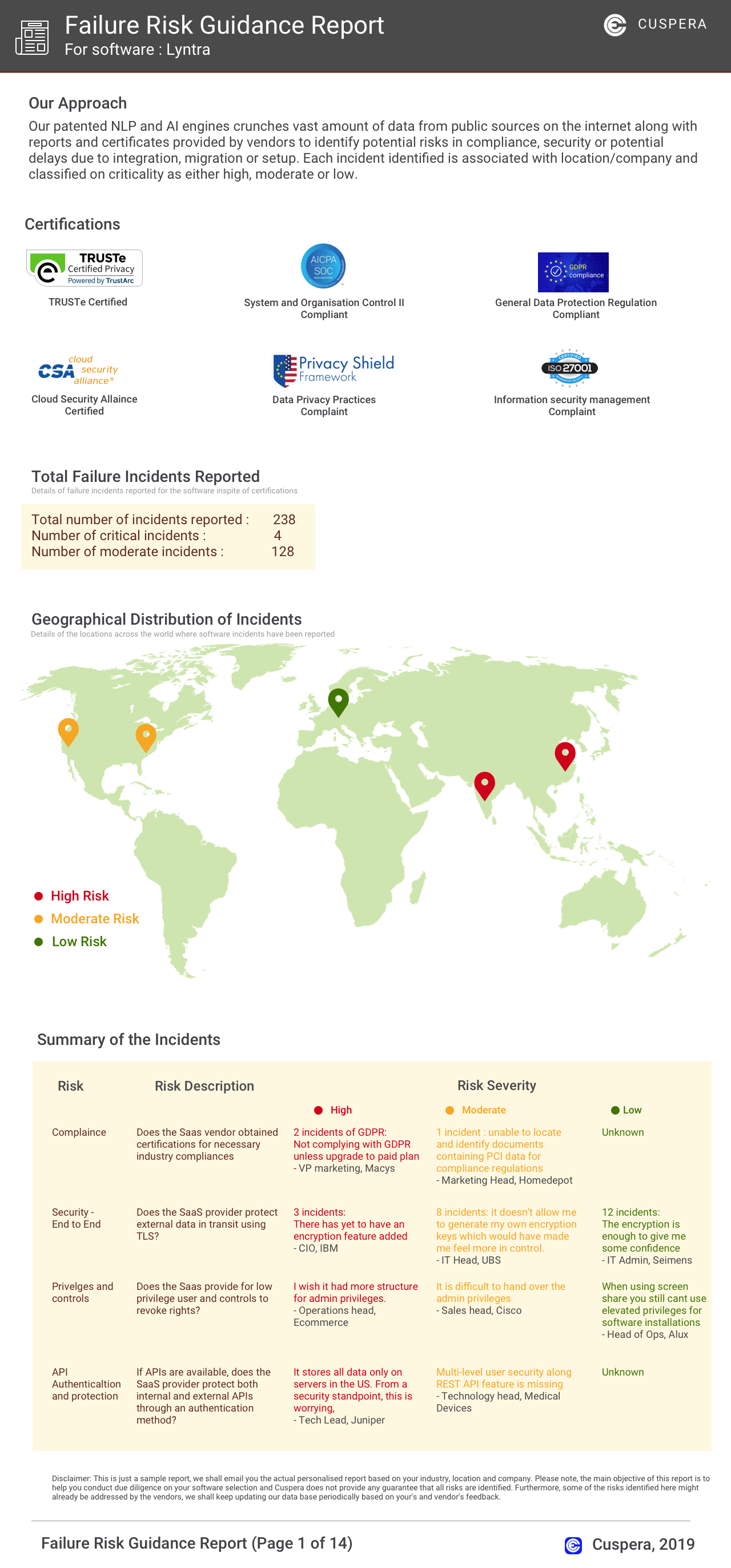
Software Failure Risk Guidance
?for Kizen
Overall Risk Meter
Top Failure Risks for Kizen
Kizen Technologies Inc News
Kizen launches AI assistant for insurance agents aimed at cutting post ...
Kizen has launched an AI assistant for insurance agents, reducing post-call administrative tasks from 30-45 minutes to three minutes. The tool, debuting in Q2 2026, automates transcription, CRM updates, medication analysis, and follow-up scheduling. It complies with SOC 2 Type II, HIPAA, and ISO-27001 standards, aiming to save agents two workdays weekly. The product was announced at the Medicarians conference.
Kizen Introduces Ultimate AI Assistant for Insurance Industry ...
Kizen has launched the Ultimate AI Assistant for Insurance Agents, designed to streamline workflows and enhance client relationships by reducing manual tasks. This AI solution can cut administrative time from 30-45 minutes to just three, allowing agents to focus on growth and service. The assistant offers features like real-time CRM updates and personalized follow-up notes, ensuring compliance with industry regulations.
Kizen Introduces Ultimate AI Assistant for Insurance Industry ...
Kizen has launched an advanced AI assistant tailored for the insurance sector. This new tool aims to enhance efficiency and decision-making by leveraging agentic AI capabilities. It is designed to streamline processes, improve customer interactions, and provide actionable insights for insurance professionals.
Kizen - Why Every CTO Needs an AI Orchestration Layer (Not Just More Models)
Kizen emphasizes the importance of an AI orchestration layer for enterprise workflows, highlighting its Agentic OS platform. This system manages AI operations across workflows, ensuring accuracy, governance, and observability. It allows for the integration of AI agents into existing tools, supporting scalable and reliable AI applications. The orchestration layer is crucial for managing complex tasks, ensuring security, and enabling continuous improvement in AI deployments.
Kizen Technologies Inc Profile
Company Name
Kizen Technologies Inc
Company Website
https://kizen.com/HQ Location
12 Groveland Court, 1st Floor, London, London EC4M 9EH, GB
Employees
51-100
Social

Financials
SERIES C