


Contentstack AXP: Content Experience Platforms overview — capabilities, features, use cases and value by role
Contentstack AXP is an Agentic Experience Platform that spans Content Experience Platforms, Content Management Systems, Customer Data Platforms for B2B, and Digital Experience Platforms. Content experience platforms enable the creation and delivery of dynamic, interactive experiences to users on any device.
Top capabilities of Contentstack AXP
Front-end Hosting
Read detailsContentstack AXP delivers front-end hosting through Launch, its MACH-compliant hosting layer that connects directly to the CMS. Launch automates deployments in a few clicks and supports edge and cloud functions, on-demand cache revalidation, and serverless, framework-agnostic hosting across AWS, Azure, and GCP with SOC2-compliant security. In one customer's words: "It's hassle-free every time. Our team can easily take some copy and launch a blog post in 10 minutes."
Personalization
Read detailsContentstack AXP brings together first-party data activation, AI-powered content generation, drag-and-drop journey orchestration, and automated behavior-based messaging to enable real-time, 1:1 omnichannel personalization across channels. Visual journey design, A/B/n testing, and audience insights let teams experiment and reuse content at scale. Customers have seen the results directly: one deployment achieved a 38% lift in conversions through targeted web personalization, and in one customer's words: "Leadership now brings us into 2026 planning earlier and more strategically than ever before. It's proof that personalization is driving the business forward". Air France-KLM found that "with Contentstack, we are changing the way we distribute content, and paving the way for personalization". The platform connects data sources through 200+ native connectors and has shown outcomes of up to 60% higher ROAS, 40% deeper engagement and over 25% more conversions in live customer environments.
Headless CMS
Read detailsContentstack AXP's headless CMS is API-first and cloud-native, giving teams modular content models, multilingual publishing, and consistent delivery across any digital channel through features including Visual Editor, Timeline, Modular Blocks, Workflows, Branches, and Taxonomy. Pella increased publishing speed by 230%, cut development time by half, and launched sites 50% faster. One software company was able to publish content 75% faster and saw a 50% boost in productivity. In one customer's words: "Embracing headless CMS, especially the concept of providing centralized content for individual localization alongside all-local content, was a new way of doing things. We underwent a big learning curve. This was not only with the technology but also increasing our autonomy and no longer relying on our supplier. This has begun to pay dividends as we now see much more content from local teams that resonates with their markets." The same customer added: "We began our journey looking at what headless content management could offer us in terms of better internal processes and removing our dependency on external suppliers. We have now come full circle and are looking to see how we can use the same technology to improve our role as a supplier, offering a superior digital experience to customers and partners alike."
CDP
Read detailsContentstack AXP's CDP capability gives teams a single, real-time view of their customers by pulling first-party data together from multiple sources into dynamic profiles. From there, it supports advanced audience segmentation and lets teams activate data directly from cloud data warehouses. Governance features are built in: consent management, data residency controls, and real-time analytics sit alongside predictive insights in the same platform. What that means in practice comes through clearly in customer experience. One customer described the before state as: "Before Lytics, we struggled to get a clear picture of our readers. Now we have much better customer intelligence about how people are engaging with our content". The same team went further, noting that "In the past we sometimes had to spend money outside the organization to hit our campaign goals. With the insights we get from Lytics, we can improve the quality of our targeting emails and content to reach our campaign goals on time without spending money elsewhere." Industry Dive went on to achieve conversions boosted by more than 40% for certain campaigns.
Agents & Automations
Read detailsContentstack AXP's Agents & Automations capability lets teams build intelligent agents and no-code automations grounded in content, audience data, and brand context. Polaris acts as a conversational AI companion, while Agent Builder supports custom agent creation and Digital Concierge handles external-facing conversational AI. Brand Kit and AI Assistant round out the toolset for autonomous workflows and content creation.
Top features of Contentstack AXP
Integration Marketplace
Read detailsContentstack AXP serves as a content management and digital experience platform where the Integration Marketplace lets teams discover and connect third-party integrations so stacks can be connected in minutes, with customers reporting 75% faster deployment of new marketplace pages.
Content History & Timeline
Read detailsContentstack AXP's Timeline feature, part of the Contentstack Headless CMS, gives teams a chronological view of upcoming content changes, lets them compare versions side-by-side, and supports planning and approvals around scheduled updates. Customers working with the platform have found content changes easier to manage on their own terms — in one customer's words: "The ability to make quick changes to quote and buy is huge. It's all now within our control to make changes, which was what we were looking for - to release on our own timeline. All in all, it's a much more efficient way of working." Another customer noted: "Our company had a very aggressive timeline to both redesign and migrate our website. With Contentstack, we were able to make those changes in no time."
Drag-and-Drop Component Builder
Read detailsContentstack AXP's Headless CMS gives non-technical users direct control over page and app components through a Drag-and-Drop Component Builder, surfaced in the product as Modular Blocks. The core promise is straightforward: build and modify components without waiting on a developer. Users can rearrange, add, or change components dynamically, on their own schedule.
Visual Editing (No-Code)
Read detailsContentstack AXP's Visual Editor puts content teams in direct control of editing and previewing content in real time, without writing code, and removes guesswork from the publishing workflow.
No-Code Automation Hub
Read detailsContentstack AXP includes a no-code tool called No-Code Automation Hub that lets users connect stacks and automate integrations without writing code, and customers highlight capabilities spanning Flexible & Modular Content Models, Scheduled Publishing, Automation Hub, 3rd Party Connectors as part of the platform.
Polaris Conversational AI Companion
Read detailsContentstack AXP spans content management, customer data, and digital experience workflows. Polaris, a conversational AI companion built into the platform, draws on content, audience data, and brand context to guide actions, surface insights, and move work forward faster.
APIs & SDKs
Read detailsContentstack AXP exposes the platform to developers through modern REST and GraphQL APIs, software development kits, and a CLI, all designed to support custom builds without imposing framework constraints.
Independent Developer Branches
Read detailsBranches, a named feature within the Contentstack Headless CMS, keeps development and content work from interfering with each other by letting each happen in its own independent workspace. Developers can build and test changes without touching production content. Content managers, meanwhile, can work on content models at the same time.
Warehouse Sync
Read detailsWarehouse Sync, a named feature within Contentstack AXP's CDP and personalization platform, lets users securely activate customer data directly from existing cloud data warehouses such as Snowflake or BigQuery without costly data migrations, enabling real-time 1:1 experiences from warehouse data.
Agent Builder
Read detailsAgent Builder is Contentstack's tool for creating custom AI agents that handle repetitive tasks, connect to existing systems, and grow more capable over time — letting teams scale their workflows without adding manual effort.
SOC2 Compliance
Read detailsContentstack AXP's Launch front-end hosting is SOC2 compliant. That certification comes alongside DDoS protection as part of the platform's built-in security feature set.
Knowledge Vaults
Read detailsContentstack AXP's Knowledge Vaults centralizes key brand assets in a single repository, then uses that foundation to shape AI outputs around a specific brand and its audiences — moving teams from generic GenAI results to brand-aware AI-generated content. It is a named component within Brand Kit in Contentstack AXP.
Voice Profiles
Read detailsVoice Profiles, a named configuration feature within Brand Kit, lets users set specific rules for tone, style, and language to shape AI-generated content toward a business's brand and target audiences, working alongside Knowledge Vaults to make GenAI outputs brand-aware.
Visual Flow Builder
Read detailsContentstack AXP's Visual Flow Builder is a drag-and-drop canvas built into an omnichannel personalization platform. It lets users design cross-channel journeys for both anonymous and known users. Real-time triggers, versioning, experimentation, and goal tracking are all part of the Flows feature.
Goal Tracking
Read detailsContentstack AXP keeps Goal Tracking inside the Flows feature itself, where users define and track goals for cross-channel customer journeys. Flows also handles real-time triggers, versioning, and experimentation in the same place.
Native Data Connectors
Read detailsContentstack AXP is built to turn first-party data into real-time, 1:1 experiences. It does this through Native Data Connectors, which come with 200+ pre-built options that activate data sources directly — no fragile ETL pipelines required.
CMS-connected Deployment Integration
Read detailsContentstack AXP's Deployment Integration automates frontend deployments by connecting a hosting environment directly to the CMS, replacing code-heavy processes with a simplified end-to-end workflow through Contentstack Launch — all in just a few clicks.
Multi-cloud Availability
Read detailsContentstack AXP lets organizations deploy its Launch front-end hosting product across AWS, Azure, and GCP, keeping them free from vendor lock-in on their preferred major cloud provider.
Framework-agnostic Hosting
Read detailsContentstack AXP's Framework-agnostic Hosting supports any frontend framework a development team chooses to work with. It is a named feature within Contentstack Launch. By removing frontend framework restrictions, it frees developer teams from being constrained by infrastructure choices when building experiences.
DDoS Protection
Read detailsContentstack AXP builds DDoS protection directly into Contentstack Launch's front-end hosting, rather than treating it as an add-on. Fast load speeds come paired with that protection. SOC2 compliance and enterprise-grade security features round out the built-in controls.
AI-assisted Audience Schema Creation
Read detailsAudience schemas in a real-time CDP can go stale fast — and AI-assisted Audience Schema Creation addresses that directly by letting users build and maintain those schemas using AI capabilities built into the platform itself. Because the AI works within the CDP, audience definitions stay current as customer behaviors change, without requiring manual rework each time.
Real-time Data Pipeline
Read detailsContentstack AXP's Real-time Data Pipeline consolidates all data sources into a single customer data source of truth. It builds and manages that pipeline automatically, respecting customer privacy throughout the process. Enriched data is then pushed wherever it is needed.
Automated Privacy Compliance
Read detailsContentstack AXP handles privacy compliance automatically, built directly into the real-time data pipeline so that customer privacy is respected during ingestion and management without any manual configuration required.
API-first Cloud-native Architecture
Read detailsContentstack AXP runs on an API-first, cloud-native architecture that removes framework and infrastructure constraints for development teams. It operates across the Content Experience Platforms, Content Management Systems, Customer Data Platforms For B2B, Digital Experience Platform (DXP), and Digital Experience Platforms categories.
Custom Action Saving in AI Assistant
Read detailsContentstack AXP's AI Assistant stores custom AI actions so users can retrieve and reuse them directly within the authoring experience, building a team-level library of repeatable AI-assisted content operations.
Real-time Translations in Authoring
Read detailsContentstack AXP's AI Assistant keeps authors inside the editor while they work — handling real-time translations, summaries, and idea generation all in one place, with no need to switch tools for localization.
Audience-personalized Content Production
Read detailsContentstack AXP uses generative AI together with personalized audience details to accelerate customized content production for diverse audiences and deliver audience-specific experiences at scale. This named capability is called Audience-personalized Content Production.
Flow Versioning
Read detailsContentstack AXP's Flow Versioning is a built-in version-control mechanism inside the Flows builder that tracks and manages versions of cross-channel customer journeys. It works alongside real-time triggers, experimentation, and goal tracking.
Pre-built Journey Templates
Read detailsContentstack AXP's Pre-built Journey Templates reduce time-to-value from quarters to weeks by giving teams a ready starting point for cross-channel journey design within the omnichannel personalization platform.
AI-powered Recommendations
Read detailsContentstack AXP's AI-powered Recommendations shortens the time it takes to build personalized customer journeys — from quarters down to weeks. It works as part of the broader omnichannel personalization platform, generating journey recommendations that teams can act on immediately. Pre-built journey templates pair with it as a second accelerator, so teams are not starting from scratch on either the strategy or the structure.
Real-time Traffic Routing to Winning Content
Read detailsReal-time Traffic Routing to Winning Content, part of Contentstack AXP's edge-fast personalization and automated optimization capability, automatically routes traffic to winning content variants in real time during testing and experimentation, removing the need for manual intervention to maximize revenue.
Top use cases for Contentstack AXP
Automate content operations with AI agents
Read detailsDigital teams use Contentstack AXP to automate routine content operations. This covers updates, translations, and performance reporting, orchestrated through AI flows, custom agents built with Agent Builder, and brand-aware content generation via Brand Kit and AI Assistant. The result is freed-up team resources, consistent brand output at scale, and faster decision-making through automated insights.
Deliver personalized omnichannel customer journeys
Read detailsContentstack AXP gives marketers one platform to build and automate personalized journeys across channels, for both anonymous and known users. It brings together real-time first-party data activation and AI-powered content generation. Behavior-based messaging and journey analytics are also part of the same platform. The outcome, as the vendor describes it, is measurable: up to 60% higher ROAS, 40% deeper engagement, and over 25% more conversions.
Modernize and future-proof the digital experience stack
Read detailsContentstack AXP is a composable, MACH-compliant Agentic Experience Platform built on API-first architecture, designed for IT leaders and digital experience decision-makers evaluating or migrating away from legacy monolithic or rigid PaaS platforms. The platform combines no-code automation, enterprise security, and predictable TCO. Those three elements work together to eliminate vendor lock-in and accelerate time to market.
Launch and manage content across digital channels at speed
Read detailsContentstack AXP puts content teams and marketers in a position to launch new content, campaigns, and experiences in hours instead of weeks. It reaches that outcome by combining flexible content modeling, multilingual management, workflow automation, and visual editing tools into a single orchestrated system. The result is faster time to market, with consistent, on-brand experiences delivered across every digital channel at scale.
Deploy and host front-end experiences with automated publishing
Read detailsContentstack Launch cuts hosting costs to 50% or less of what competitors charge, while folding front-end hosting directly into the CMS so development teams never have to manage the two separately. Deployments happen in just a few clicks. Deployment webhooks and on-demand cache revalidation keep content globally fresh without manual intervention. Edge and cloud functions push code live in minutes. Enterprise-grade security is included, and none of it requires infrastructure management overhead.
Unify and activate customer data for real-time audience targeting
Read detailsContentstack AXP centers its customer data work on a Real-Time CDP that unifies customer data from multiple sources into dynamic profiles. Marketing and data teams then activate those profiles for hyper-targeted campaigns through identity resolution, advanced segmentation, predictive insights, and warehouse-native activation. The result is real-time, relevant audiences supported by actionable analytics and content affinity insights.
Value delivered by role with Contentstack AXP
Business users
Read detailsContentstack AXP, built on Polaris, turns every CMS user into a power user who can create, review, and publish personalized omnichannel experiences without developer help or coding. Marketing teams can launch or optimize campaigns in hours rather than weeks. Content managers benefit from an interface that cuts training time from days to minutes, as one editor notes: "Editors find it easier to search for and find the content they are trying to edit, and we can use links in the review version to go straight to Contentstack and make those changes directly and at speed". Content update time is cut by 90% and publishing time by 40%. AI-assisted workflows give back up to a full day per week to marketing users — for instance, golf course content creation dropped from nine hours to two. Teams also see a 200% increase in content power users once the platform is in place. In one customer's words: "Simplicity in the UI, both for content editors and technically savvy people, has helped us."
Digital leaders
Read detailsContentstack AXP is a composable, MACH-ready platform spanning content management, digital experience delivery, and customer data that frees digital teams from legacy CMS bottlenecks so they can experiment, pivot, and scale omnichannel experiences — with enterprise-grade governance and security (SOC 2, ISO 27001) built in — as illustrated by customers launching omnichannel campaigns 8x faster, getting new brands live in two months, and delivering 50 websites in the time previously needed for three. Marketing teams gain direct control over execution: in one customer's words, "Before Contentstack, marketing couldn't build a campaign landing page without involving the IT department. Every change required a request to IT. Now, we can do it on our own — just build what we need, and publish it." The platform also powers experiences that matter at the executive level, as one organization put it: "This project is not just something that's exciting to our IT organization. This is what our president (Eric Woolworth) is exulting about in front of his peers. What we're powering with Contentstack today represents one of the most important initiatives for the Miami Heat."
Developers & IT
Read detailsContentstack AXP gives development and IT teams a headless, API-first foundation — built on REST and GraphQL APIs, SDKs, and a CLI — that frees engineers from repetitive content work and infrastructure maintenance so they can focus on core engineering. Independent branch workspaces let developers build and test without touching production, and a framework-agnostic hosting layer removes infrastructure constraints entirely. One customer notes: "Contentstack helps our engineers to move fast and concentrate on business requirements by reducing proprietary platform inconveniences". Teams have used that freedom to simplify their stacks — one engineering team reduced their stacks from 97 to 20, with both technical and non-technical members able to locate and update content with ease. Deployment speed improves as well: in one customer's words, "It's a lot faster to get new experiences and fixes out to our users". Evaluators assessing fit across the developer experience have found strong signals: "I've looked at more than half a dozen CMSes, and Contentstack came to the top for all the right reasons. The product is incredibly user-friendly. The support team was excellent. The integration with our system was seamless. The engineering team is delighted."
What customers say about Contentstack AXP: ratings, outcomes and feedback
Contentstack AXP customer experience captures both what customers value in day-to-day use and where they see room for improvement. These two dimensions reflect how customers interact with Contentstack AXP across Content Experience Platforms, Content Management Systems, Customer Data Platforms For B2B, and Digital Experience Platforms.
What works well
Customers working with Contentstack AXP describe concrete operational gains alongside a sense of genuine partnership. One organization managing a high-volume events calendar found that "By leveraging Contentstack, we've won back a ton of time. Running 400 events a year with the size of our team would have been very hard four years ago." Another customer put it plainly: "We know that we have made a really good decision choosing Contentstack. We're extremely happy with our partnership." On the support side, one customer notes that Contentstack has consistent responses and support before and after the deal. The same customer points to freedom to try things previously hadn't considered as something the platform's features and flexibility make possible.
Where customers see room for improvement
Contentstack AXP draws recurring feedback around a handful of friction points in its interface and content operations workflows. The most concrete operational limit is that bulk functionality is sometimes limited (i.e. only 20 entry publishes at a time, bulk export/import), which slows teams managing large content volumes. Some customers find the platform's structure not immediately intuitive, particularly when it comes to understanding how to relate and nest entries — deeper levels of nested Modular Blocks have been requested to support use cases built around few content types but many entries. Users have also called for notification or recognition of duplicate images. On the localization side, translation management is described as difficult and manual, even though the platform does handle multilingual work at scale. The accessibility of the UI — especially for screen-reader users — is flagged as an area needing improvement, and users have requested options like dark mode or UI re-skinning. None of this erases meaningful complexity the platform does handle well: one customer notes working with more than 300 variables — very complex, but now with Contentstack it's way easier to keep all the content up to date. The friction points above are the edges of that capability, not a rejection of it.
Contentstack Customer wins, Case studies
TIME - Media - Very Large
TIME partners with Contentstack to modernize its digital publishing ...
Frequently Asked Questions (FAQ)
What buyers ask before choosing Contentstack
Integrations What CRM integrations are available for Contentstack?
Contentstack offers several CRM integrations to enhance your content management and customer relationship capabilities. Notably, it integrates seamlessly with Salesforce, allowing businesses to synchronize customer data and streamline marketing efforts. Additionally, Contentstack can connect with HubSpot, enabling users to manage content and campaigns effectively while leveraging HubSpot's powerful marketing automation tools. These integrations facilitate a more cohesive workflow between content creation and customer engagement, ensuring that marketing teams can deliver personalized experiences based on real-time customer insights. By utilizing these CRM integrations, businesses can improve their operational efficiency, enhance customer interactions, and ultimately drive better results from their content strategies.
Integrations How does Contentstack connect with Salesforce and HubSpot?
Contentstack connects with Salesforce and HubSpot through robust integrations that enhance marketing and sales workflows. With the Salesforce integration, users can seamlessly manage customer data and synchronize content across platforms, allowing for personalized customer experiences and streamlined sales processes. Similarly, the HubSpot integration enables users to leverage Contentstack's headless CMS capabilities to create and manage content that can be easily distributed through HubSpot's marketing tools, enhancing lead generation and nurturing efforts. These integrations empower businesses to utilize their content more effectively, ensuring that marketing teams can deliver timely and relevant information to their audiences while maintaining a cohesive brand experience across all channels. By connecting Contentstack with Salesforce and HubSpot, organizations can optimize their digital strategies and improve overall operational efficiency.
Integrations How does Contentstack connect with Salesforce and what are the setup steps?
Contentstack integrates seamlessly with Salesforce, allowing businesses to enhance their customer engagement and streamline content management. To set up this integration, first, ensure you have admin access to both your Contentstack and Salesforce accounts. In Contentstack, navigate to the "Integrations" section and select Salesforce from the list of available integrations. You will need to provide your Salesforce credentials and authorize the connection. Next, configure the data mapping between Contentstack and Salesforce to ensure that the content flows correctly between the two platforms. Finally, test the integration by creating a sample content entry in Contentstack and verifying that it appears in Salesforce as expected. This integration empowers teams to leverage Salesforce's CRM capabilities alongside Contentstack's headless CMS features, enhancing overall operational efficiency.
Integrations What are the setup steps for integrating Contentstack with Marketo?
To integrate Contentstack with Marketo, start by ensuring you have admin access to both platforms. First, log into your Contentstack account and navigate to the "Settings" section, where you can find the "Integrations" tab. Here, select Marketo from the list of available integrations. You will need to provide your Marketo API credentials, which can be obtained from your Marketo account under the Admin section. Once the credentials are entered, configure the integration settings to define how data will flow between Contentstack and Marketo, such as specifying which content types to sync. Finally, test the integration to ensure that content is being transferred correctly and that Marketo can access the data as intended. This setup allows for seamless marketing automation and content management, enhancing your overall digital strategy.
Integrations Is there a HubSpot integration for Contentstack, and how does it work?
Yes, Contentstack offers a HubSpot integration that allows users to seamlessly connect their headless CMS with HubSpot's marketing and CRM tools. This integration enables businesses to manage and deliver personalized content across various channels while leveraging HubSpot's powerful marketing automation features. With the integration, users can pull content from Contentstack directly into HubSpot, ensuring that marketing teams have access to the latest updates and assets without manual intervention. Additionally, it facilitates the creation of dynamic landing pages and email campaigns that are enriched with content managed in Contentstack. This synergy enhances the overall efficiency of content delivery and marketing efforts, ultimately driving better engagement and conversion rates.
Integrations Is there API access for Contentstack integrations, and how does it work?
Yes, Contentstack provides robust API access for integrations, allowing businesses to connect seamlessly with various platforms and tools. The Contentstack API is designed to facilitate the management of content across different channels, enabling developers to create, read, update, and delete content programmatically. This flexibility supports a wide range of integrations, including popular platforms like Salesforce, HubSpot, and Marketo, enhancing the overall digital experience. To utilize the API, developers can refer to the comprehensive documentation available in Contentstack's developer resources, which includes step-by-step guides and examples to help streamline the integration process. By leveraging API access, businesses can automate workflows, improve content delivery, and ensure a cohesive omnichannel strategy, ultimately driving better engagement and efficiency.
Integrations What API access does Contentstack provide for third-party integrations?
Contentstack provides robust API access that facilitates seamless third-party integrations, enabling businesses to connect their existing tools and platforms effortlessly. With its API-first architecture, developers can utilize RESTful APIs to manage content, automate workflows, and integrate with various applications such as Salesforce, HubSpot, and Marketo. This flexibility allows for the creation of custom solutions tailored to specific business needs, enhancing the overall digital experience. Additionally, Contentstack's SDKs support multiple programming languages, making it easier for developers to implement integrations within their preferred environments. By leveraging Contentstack's API capabilities, organizations can streamline their content operations, improve collaboration across teams, and ultimately deliver more personalized experiences to their customers.
Integrations What is the data flow between Contentstack and external systems like Salesforce?
The data flow between Contentstack and external systems like Salesforce involves a seamless integration that allows for efficient content management and customer relationship management. Contentstack acts as a headless CMS, enabling users to create, manage, and deliver content across various channels while Salesforce handles customer data and interactions. Through APIs, data can be exchanged in real-time, allowing for updates in customer profiles, content personalization, and targeted marketing campaigns. For instance, when a new lead is generated in Salesforce, relevant content can be automatically pulled from Contentstack to enhance customer engagement. This integration not only streamlines workflows but also ensures that businesses can deliver timely and relevant content to their audiences, ultimately driving better customer experiences and increasing operational efficiency.
Integrations How does data flow between Contentstack and other systems like Marketo?
Data flow between Contentstack and other systems like Marketo is facilitated through robust integrations that enable seamless communication and data exchange. Contentstack acts as a headless CMS, allowing users to manage content centrally while distributing it across various channels. When integrated with Marketo, data such as leads, customer interactions, and content performance metrics can be synchronized. This integration typically involves setting up webhooks or using APIs to push and pull data between the two platforms. For example, when new content is published in Contentstack, it can automatically trigger updates in Marketo, ensuring that marketing campaigns are aligned with the latest content. This streamlined data flow enhances marketing efficiency, improves targeting, and ultimately drives better engagement with customers.
Integrations Are there any limitations to the integrations available with Contentstack?
Contentstack offers a robust set of integrations with various platforms and tools, enhancing its functionality and allowing businesses to streamline their workflows. However, there are some limitations to consider. For instance, while Contentstack supports third-party connectors and has an Automation Hub, users may encounter low rate limits on bulk-publishing entries and assets, which can restrict efficiency when managing large volumes of content. Additionally, error messages may not always provide meaningful guidance, potentially complicating troubleshooting efforts. It's also worth noting that there are limits on the number of asset folders and no content types specifically designed for building website navigation. Despite these limitations, Contentstack remains a powerful headless CMS that can significantly improve content management processes for businesses.
Integrations Are there any limitations to the integrations available in the Contentstack Marketplace?
While Contentstack offers a robust Marketplace with a variety of integrations, there are some limitations to consider. The integrations available may not cover every tool or platform that businesses use, which could restrict certain workflows or data synchronization needs. Additionally, the depth of integration can vary; some integrations may offer basic functionality while others provide more comprehensive features. It's also important to note that the integration capabilities depend on the specific APIs and support provided by the third-party applications. Businesses should evaluate their specific requirements against the available integrations in the Contentstack Marketplace to ensure they can achieve their desired outcomes. For more detailed information, consulting the Contentstack documentation or reaching out to their support team can provide clarity on any specific integration concerns.
Features What does flexible content modeling do in Contentstack?
Flexible content modeling in Contentstack allows businesses to create and manage content in a way that is tailored to their specific needs and use cases. This feature enables users to define custom content types and structures, making it easier to organize and deliver content across various channels and platforms. By leveraging flexible content modeling, organizations can ensure that their content is not only reusable but also adaptable to different contexts, enhancing the overall user experience. This capability is particularly valuable for companies looking to streamline their content operations, as it supports rapid deployment and updates, ultimately leading to faster time-to-market and improved engagement with their audience. With Contentstack's headless CMS, businesses can efficiently manage diverse content types while maintaining consistency and quality across all digital touchpoints.
Features How do I configure workflows in Contentstack to streamline content approval?
To configure workflows in Contentstack and streamline content approval, start by accessing the "Workflows" section in your Contentstack dashboard. Here, you can create a new workflow by defining the stages your content will go through, such as Draft, Review, and Approval. Assign specific roles to each stage, ensuring that the right team members are responsible for reviewing and approving content. Utilize the built-in permissions to prevent users from moving their own entries through workflow stages or publishing without proper review. Additionally, you can set up notifications to alert team members when their input is needed, enhancing collaboration and efficiency. By customizing these workflows, you can ensure a structured and efficient content approval process that aligns with your organization's needs.
Features What is the purpose of the Preview Sharing feature in Contentstack?
The Preview Sharing feature in Contentstack is designed to enhance collaboration and streamline the content review process by allowing users to generate secure links for sharing in-progress content with stakeholders. This feature enables teams to preview content before it goes live, ensuring that all parties can provide feedback and make necessary adjustments in real-time. By facilitating this level of transparency and communication, the Preview Sharing feature helps to reduce the risk of errors and miscommunication, ultimately leading to a more efficient workflow. This capability is particularly valuable for organizations that require input from multiple stakeholders, as it allows for a more agile and responsive content development process, ensuring that the final output aligns with business objectives and audience expectations.
Features How do I use the Management API to automate stack creation in Contentstack?
To use the Management API for automating stack creation in Contentstack, start by obtaining your API key and access token from your Contentstack account. Next, familiarize yourself with the API documentation, which provides detailed endpoints and request formats. You can create a new stack by sending a POST request to the appropriate endpoint, including necessary parameters such as the stack name and configuration settings in the request body. This automation allows you to quickly spin up new stacks for various environments, such as development and testing, streamlining your workflow. Additionally, consider implementing error handling in your code to manage any issues that may arise during the stack creation process. By leveraging the Management API, you can significantly reduce the time and effort required for stack management in your projects.
Features How can I use the Management API to automate stack creation in Contentstack?
To automate stack creation in Contentstack using the Management API, you can follow these actionable steps: First, ensure you have the necessary API credentials by creating an API key in your Contentstack account. Next, utilize the Management API endpoints to programmatically create and configure stacks by sending HTTP requests with the required parameters, such as stack name and configuration settings. You can also leverage the Extensions SDK to enhance your stacks by building custom UI components tailored to your content types. This automation allows your team to quickly respond to feature requests and streamline the development process, as new stacks can be spun up for local testing and development without manual intervention, significantly improving efficiency and reducing turnaround time.
Features What functionality does the localization feature provide for managing multilingual content in Contentstack?
Contentstack's localization feature is designed to simplify the management of multilingual content, making it an essential tool for businesses operating in diverse markets. This functionality allows users to create and manage localized content efficiently, enabling teams to serve different locales under a single domain. One of the standout capabilities is the use of fallback languages, which ensures that if content is not available in a specific language, the system can automatically revert to a predefined alternative. This feature is particularly beneficial for organizations like Berlitz, which require a centralized platform to launch multiple websites while maintaining brand consistency across various regions. Additionally, Contentstack empowers content editors with intuitive tools to create, edit, and publish localized content seamlessly, enhancing the overall user experience and engagement across different markets.
Features What does the Extensions SDK allow me to do in Contentstack?
The Extensions SDK in Contentstack allows developers to create custom user interface components that can be integrated into their content types, enhancing the overall functionality and user experience of the headless CMS. With this SDK, you can build tailored solutions that meet specific business needs, such as adding unique fields or interactive elements to your content management workflows. This flexibility enables teams to streamline their processes and improve content management efficiency. Additionally, the Extensions SDK works seamlessly with Contentstack's API-first architecture, allowing for easy customization and integration with other tools and platforms. By leveraging the Extensions SDK, businesses can create a more personalized and effective content management experience, ultimately driving better engagement and results.
Features How can I organize entry fields into defined tabs for better usability in Contentstack?
To organize entry fields into defined tabs for better usability in Contentstack, you can utilize the platform's feature that allows you to group multiple entry fields into distinct tabs. This functionality reduces cognitive load for editors by presenting information in a more structured manner, making it easier to navigate and manage content. To implement this, access your Contentstack dashboard, go to the content type you wish to modify, and use the tab configuration options to create and label your tabs according to the categories of entry fields you have. This not only streamlines the editing process but also enhances the overall user experience by allowing editors to focus on specific sections without being overwhelmed by all available fields at once.
Features How do I organize entry fields into tabs to reduce cognitive load for editors in Contentstack?
To organize entry fields into tabs in Contentstack and reduce cognitive load for editors, you can utilize the platform's built-in features for structuring content. Start by accessing the Content Model section of your Contentstack dashboard, where you can define your entry fields. Create multiple tabs by grouping related fields together, which helps streamline the editing process. Each tab can represent a specific category or type of information, making it easier for editors to navigate and manage content without feeling overwhelmed. Additionally, ensure that you label each tab clearly to enhance usability. This organization not only simplifies the editing experience but also improves overall efficiency, allowing editors to focus on content quality rather than getting lost in numerous fields.
ROI & pricing What measurable business value can I expect from using Contentstack?
By using Contentstack, businesses can expect significant measurable value, including a remarkable 295% return on investment (ROI) over a three-year period. Companies have reported an 80% reduction in content-related development time, allowing teams to focus on strategic initiatives rather than repetitive tasks. Additionally, Contentstack enables a 90% reduction in time to publish, which accelerates the delivery of content across various channels, enhancing customer engagement and satisfaction. Organizations can also save hundreds of thousands of dollars annually by leveraging the efficiencies of a headless CMS, which streamlines content management and supports scalability. Overall, Contentstack empowers businesses to innovate faster, reduce operational costs, and improve their digital presence, driving both revenue growth and operational efficiency.
ROI & pricing How does Contentstack improve ROI for businesses over a three-year period?
Contentstack significantly improves ROI for businesses over a three-year period by delivering a remarkable 295% return on investment, primarily through enhanced efficiency and reduced operational costs. By utilizing Contentstack's headless CMS, organizations experience an 80% reduction in content-related development time and a 90% decrease in time to publish, allowing teams to focus on strategic initiatives rather than getting bogged down in technical tasks. This streamlined approach not only accelerates content production but also enables businesses to respond more swiftly to market demands, ultimately driving higher revenue generation. The interactive ROI calculator provided by Contentstack allows potential users to estimate their specific savings, making it easier to visualize the financial benefits of switching to this composable content platform.
ROI & pricing How does Contentstack help in achieving a high return on investment (ROI)?
Contentstack helps organizations achieve a high return on investment (ROI) by significantly enhancing content management efficiency and reducing operational costs. With an impressive reported ROI of 295% over a three-year period, businesses can save hundreds of thousands of dollars annually by leveraging Contentstack's headless CMS capabilities. The platform enables an 80% reduction in content-related development time and a 90% decrease in time to publish, allowing teams to deliver content faster and more effectively. By streamlining workflows and improving collaboration between marketing and development teams, Contentstack empowers organizations to maximize their online revenue potential, ultimately leading to a more profitable digital presence. This combination of efficiency and cost savings makes Contentstack a valuable investment for enterprises looking to optimize their content strategies.
ROI & pricing What are the different pricing plans available for Contentstack and what do they include?
Contentstack offers a variety of pricing plans designed to cater to different business needs and digital experience requirements. While specific pricing details are not publicly disclosed, the plans typically include features such as headless CMS capabilities, web personalization, and omnichannel personalization. Each plan is structured to provide essential tools for content management, real-time data activation, and no-code automation, ensuring that businesses can create and manage digital experiences efficiently. Additionally, Contentstack emphasizes a risk-free trial, allowing potential customers to explore the platform's features before committing to a specific plan. For detailed pricing information and to determine which plan best suits your organization, it is recommended to contact Contentstack directly or visit their official website.
ROI & pricing How can Contentstack help reduce total cost of ownership for my organization?
Contentstack can significantly reduce the total cost of ownership (TCO) for your organization by eliminating hidden costs associated with traditional content management systems. With its agile SaaS model, Contentstack offers predictable, value-based pricing that avoids the complexities of opaque licenses and unexpected expenses like consultants and upgrades. Organizations can benefit from rapid implementation, often getting to market in weeks rather than the typical 6-12 months required by traditional systems. Additionally, Contentstack's pre-built integrations and cross-vendor support streamline operations, reducing the need for extensive developer resources and minimizing ongoing maintenance costs. This results in a more efficient content management process, allowing your team to focus on strategic initiatives rather than technical hurdles, ultimately leading to substantial savings and a quicker return on investment.
ROI & pricing How can I calculate the total cost of ownership (TCO) when using Contentstack?
To calculate the total cost of ownership (TCO) when using Contentstack, you should consider both direct and indirect costs associated with the platform. Start by evaluating the subscription fees for the Contentstack plans you are considering, including any additional costs for features or integrations. Next, factor in potential savings from reduced infrastructure management and the elimination of painful upgrades, as Contentstack offers a predictable, value-based TCO model. Additionally, assess the costs related to training, support, and any necessary consulting services. Finally, consider the time savings and increased efficiency that Contentstack provides, such as an 80% reduction in content-related development time and a 90% reduction in time to publish, which can significantly impact your overall TCO. Using these elements, you can create a comprehensive view of the financial implications of adopting Contentstack.
ROI & pricing What is the typical time-to-value when implementing Contentstack for a new project?
The typical time-to-value when implementing Contentstack for a new project is remarkably swift, often allowing organizations to fully migrate their content in under three weeks. This rapid deployment is facilitated by Contentstack's agile SaaS model, which includes pre-built integrations and a user-friendly interface that empowers marketing and technical teams to work autonomously. As a result, web development can be completed up to 50% faster compared to traditional content management systems. This efficiency not only accelerates the launch of new projects but also enables businesses to start realizing the benefits of improved content management and operational agility almost immediately, significantly reducing the time it takes to achieve a return on investment.
ROI & pricing What is the estimated time-to-value when implementing Contentstack for my organization?
The estimated time-to-value when implementing Contentstack can vary based on your organization's specific needs and existing infrastructure, but many users report significant benefits within a short timeframe. Contentstack's headless CMS is designed for rapid deployment, often allowing organizations to see a return on investment within just a few months. For instance, businesses have experienced up to a 90% reduction in time to publish content and an 80% decrease in content-related development time, enabling teams to deliver updates and new features more quickly. Additionally, the interactive ROI calculator provided by Contentstack can help you estimate the real-world benefits tailored to your organization, ensuring you can quantify the value of your investment effectively. Overall, organizations leveraging Contentstack typically find that they can achieve substantial improvements in efficiency and productivity shortly after implementation.
ROI & pricing How much can businesses save annually by switching to Contentstack's headless CMS?
Businesses can save hundreds of thousands of dollars annually by switching to Contentstack's headless CMS. This significant cost reduction is primarily attributed to the platform's ability to streamline content management processes, resulting in an 80% reduction in content-related development time and a 90% faster time to publish. By enabling teams to make content updates independently and in real-time, organizations can eliminate the delays and costs associated with relying on technical teams for simple changes. Additionally, the improved efficiency and productivity can lead to increased online traffic and revenue, further enhancing the overall return on investment. Contentstack's ROI calculator can help businesses estimate their specific savings and benefits when transitioning to this adaptive digital experience platform.
ROI & pricing How much cost savings can I achieve by switching to Contentstack from my current CMS?
Switching to Contentstack from your current CMS can lead to significant cost savings, potentially amounting to hundreds of thousands of dollars annually. Contentstack's headless CMS is designed to streamline content management processes, which can drastically reduce the time developers spend on tasks. For instance, companies like Harbor Capital Advisors have reported a reduction in developer time by over 75%, allowing their marketing teams to produce and publish content 75% faster. This efficiency not only lowers operational costs but also enhances productivity, enabling teams to update content more frequently without relying heavily on developer support. To estimate your specific savings, you can utilize Contentstack's interactive ROI calculator, which helps quantify the real-world benefits of making the switch.
Capabilities What can Contentstack do for managing digital content across multiple channels?
Contentstack is a powerful headless CMS designed to manage digital content seamlessly across multiple channels, enabling businesses to create, publish, and optimize content efficiently. With its no-code tools, teams can easily author and publish content without relying heavily on development resources, which accelerates the content lifecycle. Contentstack supports omnichannel strategies by allowing users to deliver personalized experiences across websites, mobile apps, and other digital platforms from a unified workspace. This flexibility not only enhances collaboration among teams but also significantly reduces content-related development time by up to 80%. By leveraging Contentstack, organizations can ensure consistent messaging and branding while adapting quickly to market changes, ultimately driving engagement and improving customer experiences across all touchpoints.
Capabilities What can Contentstack do for multi-channel delivery?
Contentstack is designed to enhance multi-channel delivery by providing a headless CMS that allows businesses to create, manage, and distribute content seamlessly across various platforms and devices. With its no-code tools, users can easily build and publish content without heavy reliance on development teams, fostering cross-functional collaboration. Contentstack supports omnichannel personalization, enabling businesses to deliver tailored experiences to their audiences based on powerful audience segmentation and data-driven A/B/n testing. This flexibility ensures that the right message reaches the right audience at the right time, improving engagement and brand alignment. By streamlining content operations and integrating with various front-end technologies, Contentstack empowers organizations to scale their digital presence effectively across multiple channels.
Capabilities Can Contentstack support role-based access for enterprise teams?
Yes, Contentstack can support role-based access for enterprise teams, allowing organizations to manage user permissions effectively. This feature enables administrators to define specific roles and assign varying levels of access to different team members based on their responsibilities. For instance, content creators may have permissions to create and edit content, while reviewers might only have access to approve or publish content. This granular control enhances security and ensures that sensitive information is only accessible to authorized personnel. By implementing role-based access, enterprises can streamline their content workflows, improve collaboration among teams, and maintain compliance with internal policies and regulations, ultimately leading to a more efficient content management process.
Capabilities Does Contentstack support role-based access for security?
Yes, Contentstack supports role-based access control (RBAC) to enhance security and manage user permissions effectively. This feature allows administrators to define specific roles and assign permissions based on the needs of different users or teams within an organization. By implementing RBAC, businesses can ensure that sensitive content and functionalities are only accessible to authorized personnel, thereby minimizing the risk of unauthorized access or data breaches. This capability is particularly valuable for organizations with multiple stakeholders, as it streamlines collaboration while maintaining strict security protocols. Overall, Contentstack's role-based access not only strengthens security but also improves operational efficiency by allowing users to focus on their designated tasks without unnecessary access to unrelated content.
Capabilities Does Contentstack provide content analytics features for performance tracking?
Yes, Contentstack provides content analytics features that enable users to track the performance of their content effectively. These analytics tools surface real-time behavioral data, allowing businesses to understand who is engaging with their content and how it is performing across various channels. This capability is crucial for optimizing content strategies, as it helps identify trends and areas for improvement, ultimately leading to better audience engagement and increased traffic. By leveraging these insights, organizations can make data-driven decisions to enhance their content's impact and effectiveness, ensuring that their digital experiences resonate with their target audiences.
Capabilities Can Contentstack provide content analytics for performance measurement?
Yes, Contentstack can provide content analytics for performance measurement through its robust features that allow users to track and analyze content engagement and effectiveness. By integrating with various analytics tools, such as Google Analytics, users can gain insights into how their content is performing across different channels. This capability enables businesses to measure key performance indicators (KPIs) such as page views, user interactions, and conversion rates, helping them understand audience behavior and optimize their content strategy accordingly. Additionally, Contentstack's headless CMS architecture allows for seamless integration with other marketing and analytics platforms, ensuring that businesses can leverage data-driven insights to enhance their content's impact and drive better results.
Capabilities Can Contentstack help organizations comply with security and accessibility standards?
Yes, Contentstack can help organizations comply with security and accessibility standards through its robust features designed to meet industry requirements. The platform adheres to security best practices, including data encryption, secure access controls, and regular security audits, ensuring that sensitive information is protected. Additionally, Contentstack supports accessibility standards such as WCAG (Web Content Accessibility Guidelines), enabling organizations to create content that is usable by individuals with disabilities. By leveraging these capabilities, businesses can enhance their compliance efforts, reduce legal risks, and improve user experience for all customers. This commitment to security and accessibility not only fosters trust with users but also aligns with regulatory requirements, making Contentstack a valuable asset for organizations aiming to maintain high standards in their digital content management.
Capabilities What enterprise readiness features does Contentstack offer for compliance?
Contentstack offers a range of enterprise readiness features that enhance compliance and security for organizations. These include robust user access controls, allowing administrators to define roles and permissions, ensuring that sensitive content is only accessible to authorized personnel. Additionally, Contentstack provides audit logs that track changes and user activities, which are essential for compliance with regulations such as GDPR and HIPAA. The platform also supports data encryption both at rest and in transit, safeguarding information from unauthorized access. Furthermore, Contentstack's API-first architecture allows for seamless integration with existing security tools and compliance frameworks, enabling businesses to maintain their compliance posture while leveraging the flexibility of a headless CMS. These features collectively empower enterprises to manage their content securely and in accordance with industry standards.
Capabilities What capabilities does Contentstack offer for content preview and publishing workflows?
Contentstack offers robust capabilities for content preview and publishing workflows that enhance efficiency and collaboration. Users can leverage real-time content previews to visualize how their content will appear across various channels before publishing, ensuring accuracy and alignment with brand standards. Additionally, Contentstack provides a structured workflow management system that allows teams to define stages for content review and approval, preventing unauthorized self-publication and ensuring that all content undergoes necessary scrutiny. This system is designed to reduce cognitive load for editors by organizing multiple entry fields into defined tabs, streamlining the editing process. With these features, Contentstack empowers teams to publish content faster and with greater confidence, ultimately driving improved engagement and user experience across digital platforms.
Capabilities Can Contentstack handle content preview for digital experiences?
Yes, Contentstack can handle content preview for digital experiences effectively. The platform offers robust features that allow users to preview content in real-time before it goes live, ensuring that all elements are displayed correctly across various channels. This capability is crucial for maintaining brand consistency and enhancing user experience, as it enables teams to visualize how content will appear on different devices and platforms. By utilizing Contentstack's content preview functionality, businesses can streamline their content approval processes, reduce errors, and ensure that their digital experiences are polished and ready for audience engagement. This not only saves time but also enhances collaboration among team members, ultimately leading to more successful digital initiatives.
Capabilities Does Contentstack enable flexible content modeling for diverse digital experiences?
Yes, Contentstack enables flexible content modeling, which is essential for creating diverse digital experiences. As a headless CMS, it allows businesses to define and structure content in a way that best suits their unique needs, enabling them to manage various content types across multiple channels seamlessly. This flexibility supports the creation of tailored user experiences, whether for websites, mobile apps, or other digital platforms. By utilizing Contentstack's robust API and customizable content types, organizations can adapt their content strategies quickly and efficiently, ensuring they remain agile in a fast-paced digital landscape. This capability not only enhances user engagement but also streamlines content operations, ultimately driving better business outcomes.
Capabilities Does Contentstack support audit logs for tracking changes?
Yes, Contentstack does support audit logs for tracking changes, which is a crucial feature for organizations that require transparency and accountability in their content management processes. Audit logs allow users to monitor who made specific changes, when those changes occurred, and what modifications were implemented. This capability is particularly valuable for compliance purposes and for maintaining a clear history of content evolution, enabling teams to revert to previous versions if necessary. By leveraging audit logs, businesses can enhance their operational efficiency and ensure that all content updates are traceable, thereby fostering a more secure and organized content management environment.
Use cases How can SDRs leverage Contentstack to create personalized content for lead nurturing?
Sales Development Representatives (SDRs) can leverage Contentstack to create personalized content for lead nurturing by utilizing its headless CMS capabilities, which allow for seamless integration of various content types across multiple channels. By employing Contentstack's no-code tools, SDRs can easily design and publish tailored content that resonates with specific audience segments, enhancing engagement and driving conversions. The platform's automation features enable SDRs to deliver timely, relevant content based on user behavior and preferences, ensuring that leads receive personalized messaging throughout their journey. Additionally, with Contentstack's unified workspace, SDRs can collaborate effectively with marketing teams to align content strategies, ultimately fostering stronger relationships with leads and improving overall nurturing efforts.
Use cases How can SDRs use Contentstack to enhance their lead nurturing processes?
Sales Development Representatives (SDRs) can leverage Contentstack to enhance their lead nurturing processes by utilizing its headless CMS capabilities to create and manage personalized content across multiple channels. By integrating Contentstack with CRM tools like Salesforce or HubSpot, SDRs can automate the delivery of targeted content based on lead behavior and preferences, ensuring timely and relevant communication. Additionally, Contentstack's flexibility allows SDRs to quickly update and optimize content, such as email campaigns or landing pages, to align with evolving marketing strategies. This streamlined approach not only improves engagement with potential leads but also accelerates the nurturing process, ultimately leading to higher conversion rates and more successful sales outcomes.
Use cases What are the best practices for marketers using Contentstack to optimize audience engagement?
To optimize audience engagement using Contentstack, marketers should focus on creating personalized and relevant content tailored to their target segments. Start by leveraging Contentstack's headless CMS capabilities to manage and deliver content across multiple channels seamlessly. Utilize the built-in Data & Insights features to analyze audience behavior and preferences, allowing for data-driven decisions on content strategy. Implement A/B testing for different messaging and formats to determine what resonates best with your audience. Additionally, ensure that your content is optimized for SEO to enhance visibility and drive organic traffic. Finally, regularly update and refresh content to keep it engaging and relevant, fostering a stronger connection with your audience and ultimately improving conversion rates.
Use cases What are the best practices for marketers to implement personalization using Contentstack?
To effectively implement personalization using Contentstack, marketers should start by leveraging first-party data to gain insights into customer behavior and preferences. This involves setting up real-time data tracking to create adaptive web experiences that respond to user interactions. Marketers should utilize Contentstack's native AI tools to automate personalization efforts, ensuring that content is tailored to individual users without manual intervention. Additionally, it's crucial to segment audiences based on their interactions and demographics, allowing for targeted messaging that resonates with specific groups. Regularly testing and optimizing personalized content will help refine strategies and improve conversion rates. Lastly, integrating with platforms like Salesforce can enhance data utilization, enabling a more comprehensive view of customer journeys and further enhancing personalization efforts.
Use cases In what scenarios should RevOps teams utilize Contentstack for improving internal workflows?
RevOps teams should utilize Contentstack in scenarios where they need to streamline internal workflows, enhance collaboration, and improve content management efficiency. Contentstack's headless CMS allows teams to create, manage, and publish content without heavy reliance on development resources, making it ideal for organizations looking to reduce bottlenecks in content production. For instance, if a RevOps team is managing multiple brands or channels, Contentstack's unified workspace enables cross-functional collaboration, allowing marketing, sales, and operations teams to work together seamlessly. Additionally, the no-code tools provided by Contentstack empower business users to quickly adapt and publish content, significantly speeding up processes and improving overall productivity. This is particularly beneficial for teams aiming to respond rapidly to market changes or internal demands while maintaining high-quality content delivery.
Use cases In what scenarios should RevOps teams leverage Contentstack for audience insights?
RevOps teams should leverage Contentstack for audience insights in scenarios where understanding customer behavior and preferences is critical for driving business growth. By utilizing Contentstack's headless CMS capabilities, teams can create personalized content experiences across multiple channels, enabling them to gather valuable data on audience engagement. This data can inform strategic decisions, such as optimizing marketing campaigns or enhancing product offerings. Additionally, Contentstack's integration with analytics tools allows for real-time reporting and insights, helping RevOps teams identify trends and adjust strategies accordingly. Whether launching a new product or refining existing services, Contentstack empowers RevOps teams to make data-driven decisions that enhance customer satisfaction and drive revenue.
Use cases How can sales leaders implement Contentstack to enhance their team's content delivery speed?
Sales leaders can implement Contentstack to enhance their team's content delivery speed by leveraging its headless CMS capabilities, which allow for seamless content management and distribution across multiple channels without heavy reliance on development resources. To get started, leaders should first assess their current content workflows and identify bottlenecks. Next, they can utilize Contentstack’s no-code tools to empower team members to create, edit, and publish content quickly and efficiently. Training sessions can be organized to familiarize the team with the platform's features, such as tagging and filtering content for easy retrieval. Additionally, integrating Contentstack with existing tools like Salesforce or HubSpot can streamline processes further, ensuring that sales teams have timely access to the latest marketing materials and product information, ultimately improving response times and customer engagement.
Use cases How can sales leaders utilize Contentstack to create effective knowledge bases for their teams?
Sales leaders can utilize Contentstack to create effective knowledge bases by leveraging its headless CMS capabilities to centralize and manage diverse content efficiently. By integrating various content sources into a unified platform, sales teams can access up-to-date product information, sales strategies, and training materials, ensuring they have the resources needed to succeed. Contentstack allows for quick adjustments to portal structures and features, enabling sales leaders to align the knowledge base with evolving business goals and user preferences. Additionally, the platform's scalability supports growing content and user interactions, making it easier to maintain a comprehensive and accessible knowledge base that enhances team performance and drives sales success.
Use cases What specific use cases demonstrate how Contentstack can support localization efforts in global marketing campaigns?
Contentstack effectively supports localization efforts in global marketing campaigns through various use cases that highlight its capabilities. For instance, Berlitz utilized Contentstack to manage multiple websites under a single domain while catering to different locales, ensuring that content is tailored to local audiences. Similarly, Trade Me scaled New Zealand's largest online marketplace by leveraging Contentstack's headless CMS to deliver culturally relevant experiences across diverse regions. Additionally, Generali Austria fostered omnichannel engagement by localizing content to resonate with different markets. These examples illustrate how Contentstack's composable architecture allows businesses to create and manage localized content efficiently, enhancing their global marketing strategies and driving engagement in various cultural contexts.
Use cases What workflows can retail teams adopt with Contentstack to drive customer loyalty?
Retail teams can adopt several workflows with Contentstack to enhance customer loyalty by leveraging its headless CMS capabilities. By utilizing no-code tools, teams can create and publish personalized content across multiple channels, ensuring a consistent and engaging customer experience. Workflows can include automating promotional campaigns, managing product information seamlessly, and integrating customer feedback loops to refine offerings. Additionally, Contentstack's unified workspace fosters collaboration among marketing, sales, and customer service teams, allowing for quicker responses to customer needs and preferences. This streamlined approach not only improves operational efficiency but also enables retail teams to deliver targeted content that resonates with customers, ultimately driving loyalty and repeat business.
Use cases How can a marketing team effectively adopt Contentstack to streamline the creation of microsites?
To effectively adopt Contentstack for streamlining the creation of microsites, a marketing team should start by leveraging its no-code tools, which allow team members to create and publish content without needing extensive technical skills. Begin by defining the goals and target audience for each microsite, then utilize Contentstack’s flexible content modeling to structure the necessary components. Collaborate across departments using the unified workspace to ensure alignment on branding and messaging. Implement automated workflows to expedite content approval and publishing processes, reducing lead times significantly. Additionally, take advantage of Contentstack’s integration capabilities with tools like Salesforce or HubSpot to enhance marketing efforts and track performance metrics. By following these steps, the marketing team can efficiently launch and manage multiple microsites, driving engagement and lead generation.
Use cases How does Contentstack help travel and tourism companies streamline their digital content management?
Contentstack helps travel and tourism companies streamline their digital content management by providing a headless content management system (CMS) that allows for the rapid deployment of personalized content across multiple channels. This flexibility enables companies like GetYourGuide and Golfbreaks to create tailored digital experiences that resonate with travelers, enhancing engagement and increasing bookings. With features such as real-time data integration and intelligent recommendations, Contentstack empowers businesses to deliver relevant content quickly, fostering long-term customer loyalty. Additionally, the platform's AI Accelerator has been shown to significantly reduce time-to-market, allowing companies to launch new digital experiences faster and more efficiently. By simplifying workflows and enabling seamless content updates, Contentstack positions travel and tourism companies to meet the evolving needs of their customers effectively.
Alternatives What are the best alternatives to Contentstack?
When considering alternatives to Contentstack, several notable headless CMS options are available. Contentful is a popular choice, known for its robust API and flexibility, making it suitable for various digital experiences. Strapi is another strong contender, offering an open-source solution that allows for extensive customization and self-hosting capabilities. Sanity is recognized for its real-time collaboration features and structured content management, appealing to teams that prioritize agility. Additionally, Prismic provides a user-friendly interface and supports multi-language content, which can be beneficial for global brands. Each of these alternatives has unique strengths, so the best choice will depend on specific business needs, such as scalability, ease of use, and integration capabilities.
Alternatives What are the key differences between Contentstack and Ghost?
Contentstack and Ghost serve different purposes in the content management landscape, with key differences in their architecture and functionality. Contentstack is a headless CMS designed for enterprises, allowing developers to create and manage content across multiple platforms and channels without being tied to a specific front-end. This flexibility supports complex digital experiences and integrations with tools like Salesforce and HubSpot. In contrast, Ghost is primarily a blogging platform that offers a simpler, more user-friendly interface for content creators, focusing on publishing and SEO features. While Ghost is ideal for straightforward content needs, Contentstack excels in scalability and customization, making it suitable for organizations requiring a robust solution for diverse content types and distribution channels.
Alternatives How does Contentstack compare to Magnolia CMS?
Contentstack and Magnolia CMS both serve as content management systems, but they cater to different needs and approaches. Contentstack is a headless CMS, which means it separates content creation from presentation, allowing for greater flexibility and faster deployment across multiple channels. This is particularly beneficial for businesses looking to deliver consistent experiences across various platforms. In contrast, Magnolia CMS offers a more traditional approach with integrated features for managing both content and its presentation, which can be advantageous for organizations that prefer an all-in-one solution. While Contentstack emphasizes speed and scalability, Magnolia focuses on providing a robust digital experience platform with strong personalization capabilities. Ultimately, the choice between the two depends on a company's specific requirements for content management and delivery.
Alternatives How does Contentstack compare to Magnolia CMS in terms of features?
Contentstack and Magnolia CMS both offer robust content management solutions, but they cater to different needs and use cases. Contentstack is a headless CMS, which means it separates content creation from presentation, allowing for greater flexibility in delivering content across various channels and devices. It excels in API-driven content delivery, making it ideal for enterprises looking to manage multi-language content and omnichannel strategies. On the other hand, Magnolia CMS is a traditional CMS that provides a more integrated approach with built-in templates and tools for web content management, which can be beneficial for users who prefer a more conventional setup. Ultimately, the choice between Contentstack and Magnolia CMS depends on whether a business prioritizes flexibility and scalability (Contentstack) or a more straightforward, integrated content management experience (Magnolia).
Alternatives What are the key differences between Contentstack and Sanity?
Contentstack and Sanity are both headless CMS platforms, but they differ in several key areas. Contentstack is known for its robust enterprise features, including advanced workflow management, extensive integrations with tools like Salesforce and HubSpot, and a focus on delivering a seamless omnichannel experience. It emphasizes speed and efficiency, boasting an 80% reduction in content-related development time. In contrast, Sanity offers a more flexible and customizable approach, allowing developers to create tailored content models and real-time collaboration features. While Sanity is often favored for its developer-friendly environment and open-source capabilities, Contentstack excels in providing a comprehensive solution for larger organizations needing scalability and support. Ultimately, the choice between the two depends on specific business needs, such as the level of customization required versus the need for enterprise-level features and support.
Alternatives Why should I choose Contentstack over other headless CMS options?
Choosing Contentstack over other headless CMS options offers several compelling advantages that can significantly enhance your digital content strategy. Contentstack is designed for speed and scalability, enabling teams to launch new content and campaigns in hours rather than weeks, which is crucial in today’s fast-paced market. Its flexible content modeling allows for modular content management, making it easier to adapt to various digital channels and markets. Additionally, Contentstack provides robust features like real-time data activation, AI-driven automation, and a user-friendly interface that empowers both technical and non-technical users. Compared to competitors like Contentful, Contentstack's focus on reducing content-related development time by up to 80% and its ability to streamline omnichannel strategies make it a superior choice for businesses looking to optimize their content operations and improve customer engagement.
Alternatives Contentstack vs Sanity: Which one is better for enterprise use?
When comparing Contentstack and Sanity for enterprise use, both platforms offer distinct advantages tailored to different business needs. Contentstack is recognized for its robust headless CMS capabilities, enabling organizations to manage content across multiple channels efficiently, with features like an 80% reduction in content-related development time and a 90% faster time to publish. This makes it particularly appealing for enterprises looking to scale quickly and enhance their digital experiences. On the other hand, Sanity provides a highly customizable content structure and real-time collaboration features, which can be beneficial for teams that require flexibility and a tailored approach to content management. Ultimately, the choice between Contentstack and Sanity will depend on specific enterprise requirements, such as the need for speed and scalability versus customization and collaboration.
Alternatives What makes Contentstack a better choice than traditional CMS platforms?
Contentstack stands out as a superior choice compared to traditional CMS platforms due to its headless architecture, which decouples content management from presentation, allowing for greater flexibility and scalability. Unlike traditional CMSs that often limit content delivery to specific channels, Contentstack enables businesses to deliver content seamlessly across multiple platforms and devices, enhancing omnichannel strategies. This flexibility is particularly beneficial for organizations like Berlitz, which required a centralized solution for managing diverse locales under a single domain. Additionally, Contentstack's user-friendly interface empowers non-technical teams to manage content efficiently, significantly reducing development time and speeding up publishing processes. With features like AI-driven automation and robust integrations, Contentstack not only streamlines content operations but also supports rapid innovation, making it an ideal choice for modern enterprises looking to stay competitive.
Alternatives Why should I choose Contentstack over Magnolia CMS?
Choosing Contentstack over Magnolia CMS can provide several advantages depending on your business needs. Contentstack is a headless CMS that offers greater flexibility and scalability, allowing you to manage content across multiple channels and devices seamlessly. Its API-first approach enables faster integrations with various platforms, enhancing your omnichannel strategy. Additionally, Contentstack's user-friendly interface and robust features, such as multi-language support and customizable workflows, can streamline content operations and improve collaboration among teams. In contrast, Magnolia CMS, while also a strong contender, may not offer the same level of agility and ease of use for modern digital experiences. Ultimately, if your organization prioritizes speed, flexibility, and a developer-friendly environment, Contentstack may be the better choice for your content management needs.
Alternatives What are the unique strengths of Contentstack compared to its competitors?
Contentstack stands out among its competitors, such as Contentful and other traditional CMS platforms, due to its unique strengths in flexibility, speed, and user empowerment. As a headless CMS, Contentstack allows businesses to manage content across multiple channels seamlessly, enabling a 90% faster time to publish and an 80% reduction in content-related development time. This efficiency is particularly beneficial for enterprises looking to scale their digital presence quickly. Additionally, Contentstack's user-friendly interface empowers non-technical users to manage content without developer assistance, enhancing productivity across teams. The platform also offers robust integrations with tools like Salesforce and HubSpot, further streamlining workflows. With proven results, such as a 295% ROI over three years, Contentstack provides a compelling value proposition for organizations seeking to innovate and improve their content operations.
Alternatives What makes Contentstack a better option than Ghost for content management?
Contentstack is often considered a better option than Ghost for content management due to its robust headless CMS capabilities, which allow for greater flexibility and scalability across multiple platforms and devices. Unlike Ghost, which primarily focuses on blogging and publishing, Contentstack supports a wide range of content types and offers advanced features such as API-first architecture, enabling seamless integration with various tools and services. This makes it ideal for enterprises needing to manage complex content ecosystems. Additionally, Contentstack provides enhanced collaboration tools, version control, and a user-friendly interface, which can streamline workflows and improve productivity. For businesses looking to launch multiple websites or manage diverse content strategies, Contentstack's capabilities often surpass those of Ghost, making it a more comprehensive solution for modern content management needs.
Who uses Contentstack AXP: customer base, geography, and verticals
Contentstack AXP draws its customer base primarily from Enterprise companies, with Consumer Discretionary as the leading industry among those where size and sector are known. EMEA and North America together cover the vast majority of customers where region is known. Representative names include 1-800-FLOWERS.COM, Inc., Air France-KLM, Alaska Airlines, and Berlitz. Stated target industries span Retail, Travel and tourism, Financial services, E-commerce, and Manufacturing, among others.
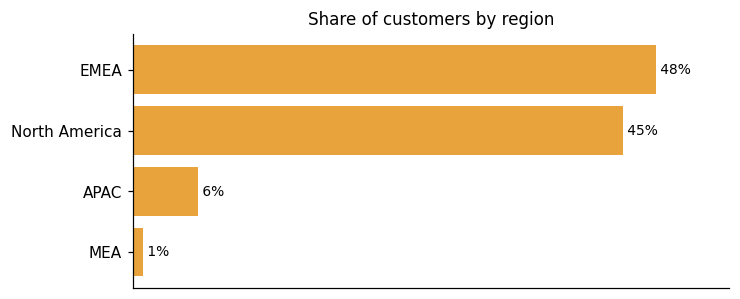
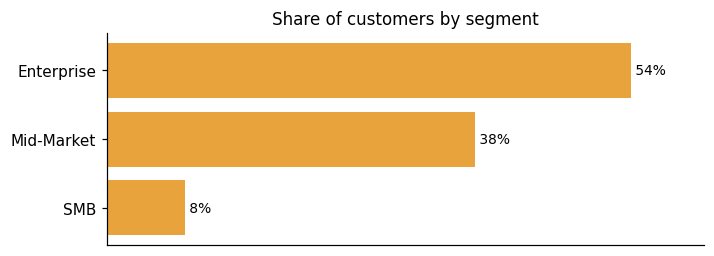
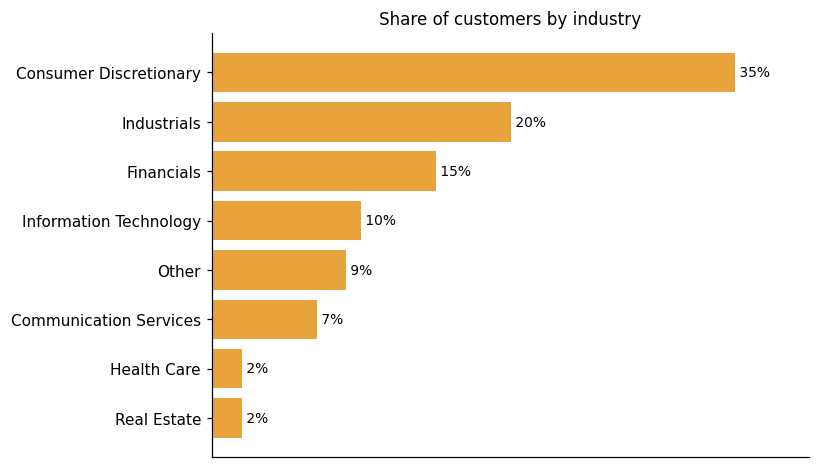
Representative customers: 1-800-FLOWERS.COM, Inc., Air France-KLM, Alaska Airlines, Assembly, Axelos, Axis Cross Media, Berlitz
How Contentstack AXP uses AI in practice
Contentstack AXP is a headless CMS and composable digital experience platform that layers AI across content creation, audience management, and personalization — not as a bolt-on, but woven into the core product. The AI shows up in several distinct places. Agent Builder lets teams create intelligent agents and automations grounded in content, audience data, and brand. The vendor positions Agent Builder as capable of powering both autonomous workflows and conversational assistants. Polaris is a conversational AI companion available across the platform. Brand Kit and an AI Assistant handle brand-aware generative content. AI also surfaces in audience schema creation and in personalization recommendations. The underlying platform carries substantial value independent of all of that.
Generative AI
Read detailsGenerative AI in Contentstack AXP works inside the authoring experience to handle content creation tasks: producing on-brand variations, translating content in real time, writing summaries, and generating ideas. Knowledge Vaults and Voice Profiles shape every output, aligning what the AI produces with brand tone, style, and audience context.
Agentic AI
Read detailsContentstack AXP packages its agentic AI into two distinct tools that together cover both human-facing conversation and behind-the-scenes automation. The first is Polaris, a conversational AI companion that runs across the entire platform. The second is Agent Builder, which lets teams create custom agents to handle repetitive tasks, connect with external systems, and adapt over time. As the vendor puts it, these combine to enable autonomous workflow orchestration and conversational assistants.
Recommendation / Matching
Read detailsContentstack AXP brings AI-powered journey recommendations and predictive audience insights into its personalization and CDP layers, putting those signals where teams already work. Journey building and audience targeting both draw on these capabilities. The design intent is to shorten the path from setup to results in those workflows.
Predictive ML
Read detailsContentstack AXP applies predictive machine learning in two distinct layers. The real-time CDP uses it to generate predictive insights and maintain audience schemas. The front-end hosting layer directs that same machine learning toward workflow automation and content creation acceleration.
Contentstack AXP pricing and value: quote-based costs, ROI and fit
Contentstack AXP does not publish tier prices; the pricing page routes visitors to "Request demo" or "Start free" with no listed price points. Customers have reported ROI results across multiple engagements, with engineering cost savings of 60% appearing among those outcomes. Pirelli migrated 218 websites in 10 months with Contentstack. Publishing via Contentstack Automate produced 150 pages per automated batch on average, compared to 30 pages per manual batch — a 5x increase. One customer describes the day-to-day impact this way: "Right now, on any given day during the season, we have over 70 users actively monitoring 250 dashboards and reports." That same customer adds: "with Contentstack, we are more efficient and can make better decisions as a result."
ROI evidence from 11 customers
- 60% ### CASE STUDY METRIC ### engineering cost savings
- Cost savings of 60%
- Right now, on any given day during the season, we have over 70 users actively monitoring 250 dashboards and reports and, with Contentstack, we are more efficient and can make better decisions as a result.
- a single CMS that updates content across both mobile app and website has saved up to 20 hours each week
Time-to-value: what implementations take
- Pirelli migrates 218 websites in 10 months with Contentstack
- the company's developer relations website achieved a complete migration within eight weeks
- the first page in production within three months of onboarding
- it took Icelandair just three weeks to migrate from their previous vendor
- from the first conversation to full implementation — all content in the system and ready for mobile — it took three weeks. It was so seamless and easy
- 3 week implementation time
Who it fits: value by company size
Contentstack AXP shows up in large, multi-site enterprise environments — that pattern comes through clearly in the available examples. At Pirelli, a team of 13 migrated 218 sites in ten months, ahead of schedule. That kind of scale points to organizations managing content across many properties, not a single web presence. Breadth of internal adoption is another signal: at Old Mutual, use cases spanning WhatsApp, documentation, advertising, and Legal emerged across the enterprise. That reflects a platform being pulled into many departments, not just a single content team. Smaller organizations with straightforward content needs and limited IT resources may find the platform's scope exceeds what they require.
The pricing page presents no specific price points and routes visitors to 'Request demo' or 'Start free', with no published tier prices.
Contentstack AXP enterprise readiness: security, compliance, migration, and support
Contentstack AXP is built around four enterprise-readiness dimensions: security, compliance, migration, and customer support. Those dimensions run across all of its roles — as a Content Experience Platform, a Content Management System, a Customer Data Platform for B2B, and a Digital Experience Platform.
Security controls and assurance
Contentstack AXP holds ISO 27001 and SOC 2 attestations, and its security policy is formally aligned with those standards to protect the confidentiality, integrity, and availability of personal data. Physical controls are substantial. Data-hosting environments maintain 24 x 7 security personnel at all relevant locations, with redundant power, network, and cooling systems, plus provisions against fire and natural disasters. On the network side, defenses include firewalls, ACLs, IDS/IPS, and related controls, backed by vulnerability scanning and penetration testing at least once a year. Staff authentication controls are equally concrete: privileged access to personal data systems is logged, and laptop encryption applies to all staff who access personal data. For its CDP capability, Contentstack AXP provides tools for consent management and data residency. One documented boundary matters for procurement: the Security Addendum covers only components within Contentstack's own control. Customer-side configurations, modifications, or actions taken by the customer or their clients fall outside its scope. Security compliance obligations are also addressed within the master subscription agreement.
Compliance and data protection
Contentstack AXP is certified under both the EU-U.S. Data Privacy Framework and the Swiss-U.S. Data Privacy Framework, as set forth by the U.S. Department of Commerce, and the EU-U.S. DPF certification also extends to UK data flows. On regulatory compliance, Contentstack AXP follows EU-U.S. DPF Principles. For financial-sector customers, Contentstack is not directly subject to DORA and is not classified as a critical vendor under that regulation. Still, the standard Security Addendum includes incident response terms specific to DORA. Contentstack can also provide relevant information about security incidents and operational resilience to support customers' own DORA reporting obligations. One hard boundary applies to data types. Customers may not use the Services to store, transmit or display financial or health data that would trigger compliance obligations under HIPAA, HITECH, GLBA, COPPA, or similar statutes. This restriction binds both customers and Contentstack AXP.
Migration from competing platforms
Migration into Contentstack AXP hands you a clear division of labor: the platform's migrations consulting covers transforming JSON content against content models built in Contentstack, and importing structured JSON content and assets via documented APIs. Testing, development, configuration, and all implementation steps required for commercial deployment remain solely the customer's responsibility, or that of their chosen implementation partner. Time-to-market depends heavily on your environment. Agile SaaS delivery, pre-built integrations, and Launch hosting can get teams to market in weeks. More complex setups tell a different story: integration complexity delays initiatives and can push implementations to six to twelve months or more. At contract end, customers have thirty days to request their data. Contentstack will either permanently delete the account and associated confidential information, or deliver that data to the customer or a designee in a mutually agreed format — on a time-and-materials basis.
Customer support experience
Contentstack AXP ties support access directly to which plan tier a customer is on. As the vendor puts it, Contentstack Content Management System ("CMS") provides in-product chat support: 24x5 (Start, Grow and X1) or 24x7 (Scale, X3 and X5). Customers can contact the Contentstack support team through in-product chat or by emailing support@contentstack.com. Beyond those channels, 24/7 live in-app support with average response time under two minutes is part of the support offer. A dedicated account team is available to understand customer goals. For teams running multiple vendors, Contentstack offers cross-vendor support across the partner network, rather than leaving customers to manage multi-vendor complexity alone. One boundary applies regardless of plan. Instant messaging is not a valid channel for technical problems. As the vendor puts it, IM shall not be used to document solutions or detailed technical instructions. All documentation should be maintained in the designated knowledge base or support system. Customer shall not submit any technical issues, bugs or feature and/or enhancement requests through IM. Such communications and requests shall be submitted by Customer through an approved customer support method, such as a support ticket. Bugs, feature requests, and technical issues all require a formal support ticket.
Contentstack AXP vs. Adobe, Optimizely, Salesforce and other platforms
Contentstack AXP competes in the Digital Experience Platform category, which covers composable application portfolios that let organizations create, orchestrate, and optimize digital experiences across owned and third-party channels — spanning content, customer data, transactions, analytics, and automation through API and integration frameworks. Digital experience platforms serve as a core anchor within enterprise architecture, giving practitioners the tools to actively manage customer engagement across channels. Contentstack AXP addresses this through four documented capabilities. Its headless CMS supports modular content models, multilingual publishing, and omnichannel delivery on an API-first architecture. The built-in CDP unifies first-party data into real-time dynamic profiles, builds advanced audience segments, and activates data directly within the platform. Launch provides MACH-compliant front-end hosting integrated directly to the CMS, with automated deployments and support for modern front-end frameworks. The Agents and Automations capability enables intelligent agents and no-code automations grounded in content, audience data, and brand context for autonomous workflows. The comparison table below shows where Contentstack AXP differs most from Adobe, Optimizely, Salesforce, and Oracle — it is a differentiation view, not a full feature-by-feature comparison, and readers should interpret it that way. The grounding used for this assessment does not include comparative evidence on analytics depth, transactional capabilities, or commerce and marketing suite integrations relative to those vendors, so no claims are made about those dimensions here.
Digital Experience Platforms
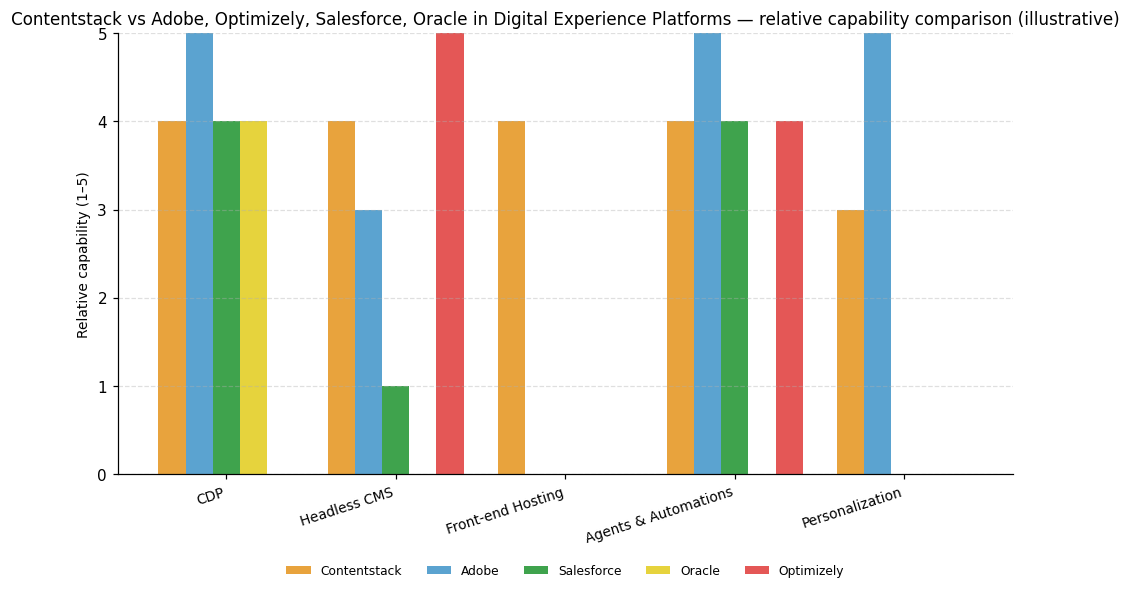
| Capability | Contentstack | Adobe | Optimizely | Salesforce | Oracle |
|---|---|---|---|---|---|
| CDP | 4 | 5 | — | 4 | 4 |
| Headless CMS | 4 | 3 | 5 | 1 | — |
| Front-end Hosting | 4 | — | — | — | — |
| Agents & Automations | 4 | 5 | 4 | 4 | — |
| Personalization | 3 | 5 | — | — | — |
Contentstack
CDP: CDP capability unifies first-party data into real-time dynamic profiles, builds advanced audience segments, and activates data directly within the platform.; Headless CMS: Headless CMS supports modular content models, multilingual publishing, and consistent omnichannel delivery with API-first architecture.; Front-end Hosting: Launch provides MACH-compliant front-end hosting integrated directly to the CMS with automated deployments and support for modern front-end frameworks.; Agents & Automations: Agents and Automations capability enables intelligent agents and no-code automations grounded in content, audience data, and brand context for autonomous workflows.
Adobe
CDP: Identified as a standout strength; all products built on AEP are designed to help brands thrive using first-party data, with explicit strength noted in customer data.; Agents & Automations: Explicitly identified as a standout strength; Sensei genAI powers personalized content variations and optimization across the platform.; Personalization: Explicitly identified as a standout strength in journey orchestration, operating at cloud scale with first-party data.
Optimizely
Headless CMS: Explicitly identified as a standout strength; content marketing platform orchestrates work across applications with persona- and task-specific interfaces.; Agents & Automations: Explicitly identified as a strength in AI/ML alongside experience experimentation and content.
Salesforce
CDP: Customers can leverage their own CRM data troves to deliver proprietary brand AI experiences, with explicit strength noted in customer data.; Agents & Automations: Entire company pivoted to AI in 2023 with a portfolio-spanning roadmap; explicitly identified as a standout strength.
Oracle
CDP: Explicitly identified as a standout strength in customer data within this peer set.


Connect Contentstack AXP with your stack: integrations and partner ecosystem
Contentstack AXP connects to an integration ecosystem of 119 partnerships spanning 57 partner categories. That range runs from A/B Testing Platform and AI Platform to Blockchain Analytics, covering a wide sweep of the technology types that digital experience teams commonly rely on. The platform also has 1 native integration alongside those partnerships.
Contentstack AXP is built as an API-first platform with no-code Automation Hub and a rich Marketplace, letting teams connect stacks in minutes. The architecture is agentic as well as API-first, and accelerates content delivery across any channel. For developers building on the platform, GraphQL, APIs, SDKs and UI extensions mean faster builds and fewer tickets. For its Personalization capability, Contentstack AXP supports 200+ native connectors, warehouse sync and live stream — no fragile ETL required. For its CDP capability, warehouse native activation lets teams securely activate customer data directly from existing cloud data warehouses like Snowflake or BigQuery, without costly data migrations. For its Front-end Hosting capability, Contentstack Launch is available on AWS, Azure and GCP.
| Partner category | Integration partners | Native count | Flow direction |
|---|---|---|---|
| A/B Testing Platform | Kameleoon | 0 | Unknown |
| AI Platform | Gatsby (gatsby.ai) | 0 | Unknown |
| Blockchain Analytics | Nansen | 0 | Unknown |
| CRM Platform | Salesforce | 0 | Unknown |
| Consulting Services | WayPath | 0 | Unknown |
| Content Management | Egnyte | 0 | Unknown |
| Digital Agency | 3Pillar Global, Axioned, Blackbird International, BlueModus, Bounteous, E2X, Emakina, Enfold digital, Heady, Hero Digital LLC, Hugo and Cat, I-D Media, Kin + Carta, Object Edge, Raw Engineering, Rose, Tenovos, The Reference, Touchtribe, Willow Tree LLC, X82 Softworks, authentic digital agency | 0 | Unknown |
| Digital Asset Management | Brandfolder, Bynder (bynder.com), Bynder (byndsc.com) | 0 | Unknown |
| Digital Services | HGS Digital (hgs.cx), TELUS Digital, iSoftStone | 0 | Unknown |
| E-Commerce Consulting | Commerce Right, Tryzens | 0 | Unknown |
| E-Commerce Platform | BigCommerce, Shopify, VTEX, commercetools | 0 | Unknown |
| Enterprise Software | International Business Machines, SAP | 0 | Unknown |
| Experimentation Platform | Optimizely | 0 | Unknown |
| GraphQL Platform | Apollo | 0 | Unknown |
| Headless CMS | Builder.io, Uniform | 0 | Unknown |
| Headless CMS Platform | Stackbit | 0 | Unknown |
| Headless Commerce Platform | Alokai, Frontastic | 0 | Unknown |
| Hosting/Deployment Platform | Netlify, Vercel | 0 | Unknown |
| Image/Media Management | Cloudinary | 0 | Unknown |
| Integration Platform | ApiX-Drive, Zapier | 0 | Unknown |
| Integration Services | InterOperate | 0 | Unknown |
| Machine Learning/Text Analysis | MonkeyLearn | 0 | Unknown |
| Marketing Automation | Eloqua, Marketo | 0 | Unknown |
| Marketing Resource Management | Aprimo | 0 | Unknown |
| Other | GraphQL, Luminary, MACH Alliance, Mundrisoft Solutions, Tango Modem, LLC, Trivident, Vinneren | 0 | Unknown |
| Personalization Platform | Dynamic Yield, Monetate, Ninetailed, Personify XP | 0 | Unknown |
| Product Information Management | Bluestone PIM | 0 | Unknown |
| Promotion Management | Talon One | 0 | Unknown |
| Search Platform | Lucidworks, Swiftype | 0 | Unknown |
| Search/Analytics Platform | Elasticsearch | 0 | Unknown |
| Search/Discovery Platform | Algolia, Attraqt, Constructor | 0 | Unknown |
| SharePoint Consulting | SharePoint Frontier | 0 | Unknown |
| Static Site Generator | Gatsby Inc (gatsbyjs.com), Metalsmith | 0 | Unknown |
| Translation Management | Memsource, Smartling, XTM International | 0 | Unknown |
| Translation Services | Comactiva Language Partner, Translations.com, Unbabel | 0 | Unknown |
| Video Platform | Brightcove, Inc., Ooyala, Vimeo, YouTube | 0 | Unknown |
| Work Management Software | Productiv | 0 | Unknown |
| cloud platform | Amazon Web Services, Microsoft Azure | 0 | Upstream |
| composable commerce consultancy | Orium | 0 | Unknown |
| content management / eCommerce solutions | Zorang | 0 | Unknown |
| data warehouse | Google BigQuery, Snowflake | 1 | Upstream |
| digital agency | AKQA, Inviqa, Konabos, iO | 0 | Unknown |
| digital agency / commerce | BORN Group | 0 | Unknown |
| digital agency / experience consultancy | Valtech | 0 | Unknown |
| digital asset management | Orange Logic | 0 | Bidirectional |
| digital commerce agency | Mira Commerce, SQLI | 0 | Unknown |
| digital consulting / systems integrator | Publicis Sapient | 0 | Unknown |
| digital customer experience | HGS Digital (hgsdigital.com) | 0 | Unknown |
| digital engineering / consulting | Grid Dynamics | 0 | Unknown |
| digital engineering / systems integrator | EPAM Systems | 0 | Unknown |
| digital experience agency | Oshyn, VShift, XCentium | 0 | Unknown |
| digital experience consultancy | Arke, Tahzoo | 0 | Unknown |
| digital marketing and technology consulting | Altudo | 0 | Unknown |
| digital service provider | Incentro | 0 | Unknown |
| digital transformation / systems integrator | DMI | 0 | Unknown |
| headless commerce agency | 64labs | 0 | Unknown |
| professional services / systems integrator | Accenture | 0 | Unknown |
| translation management / localization | Phrase | 0 | Bidirectional |


Few API Integrations for Contentstack


What's new in Contentstack AXP
Contentstack AXP has recorded one product update and one partnership or integration announcement over the last nine months, alongside one award in the last 24 months. The product update and the partnership or integration are separate tracks of activity during that window.
Simmons & Simmons achieves full control over presentation and data with Contentstack
Simmons & Simmons swapped out its legacy Sitecore CMS for Contentstack AXP, gaining full control over how content is presented and how its application ecosystem is structured. The move to a headless CMS approach gave the firm the flexibility to distribute content across a wider range of applications. Where content model updates and new feature rollouts once took days, the team can now turn them around in hours.
Read more →Content Management is Dead — Contentstack Announces Agent OS to Power Adaptive Experiences in the
Contentstack has reframed its platform around what it calls "context management," and Agent OS is the product that makes that concrete. Where traditional content management serves up fixed content, Agent OS is built around agentic AI — meaning the system adapts brand interactions to each individual customer in the moment. Data, content, and brand intelligence work together in a coordinated way. The goal is customer-driven experiences at scale, delivered across Contentstack AXP.
Read more →Recent awards for Contentstack AXP
Contentstack AXP has received one analyst recognition award in the last 24 months: The Forrester Wave: Content Management Systems (CMS), Q1 2025.
- The Forrester Wave: Content Management Systems (CMS), Q1 2025 (2025-03-24) →
XCentium Achieves Contentstack Elite Partner Status - The National Law Review
XCentium has achieved Elite Partner status with Contentstack, marking a significant milestone in their strategic collaboration. This partnership reflects XCentium's expertise in implementing Contentstack's Agentic Experience Platform, which integrates content, customer data, and AI orchestration. The collaboration aims to enhance digital experiences by optimizing content management systems and delivering measurable business outcomes.
Contentstack waited to build its agent platform. Here's how its ...
Contentstack has rebranded its platform to the Agentic Experience Platform, focusing on cross-platform agentic experiences. The platform includes AI components like Polaris and autonomous agents, integrated with its existing Automation Hub, now called Automate. This integration supports a seamless blend of AI reasoning and deterministic automation, enhancing content and data management capabilities.
Contentstack Introduces Its Agentic Experience Platform (AXP) With ...
Contentstack has launched its Agentic Experience Platform (AXP), featuring Agent OS and Agent Accelerator, to enhance enterprise AI adoption and operational impact. AXP integrates content, data, and AI to streamline digital operations and improve content governance and personalization. The platform aims to address the complexity of disconnected systems and enable scalable, adaptive digital experiences.
Contentstack Inc Profile
Company Name
Contentstack Inc
Company Website
https://www.contentstack.com/HQ Location
49 Geary Street, 238, San Francisco, CA 94108, US
Employees
51-100
Social


Financials
SEED