

Metadata Platform Overview
Metadata transforms ad spending into measurable pipeline outcomes. It empowers demand generation marketers to optimize their campaigns by leveraging data-driven insights for Account Based Marketing (ABM). The platform enables precise targeting across social media channels, ensuring that each dollar spent contributes to pipeline growth. Metadata's smart features allow marketers to experiment with campaigns, enhancing their efficiency and effectiveness. Users can strategically manage their marketing efforts, turning potential chaos into streamlined actions. This approach not only maximizes return on investment but also provides a competitive edge in navigating ad tech trends.
Use Cases
Customers recommend Advertisement, Account Management, Generation Of New Leads, as the business use cases that they have been most satisfied with while using Metadata Platform.
Business Priorities
Improve ROI and Scale Best Practices are the most popular business priorities that customers and associates have achieved using Metadata Platform.
Metadata Platform Use-Cases and Business Priorities: Customer Satisfaction Data
Metadata Platform works with different mediums / channels such as Social Media. LinkedIn. and Facebook.
Metadata Platform's features include Personalization, Dashboard, Landing Page, etc. and Metadata Platform support capabilities include AI Powered, Chat Support, Phone Support, etc. also Metadata Platform analytics capabilities include Analytics, and Custom Reports.
Reviews
"...The ability to target specific prospects allows us to create customized ads that will resonate with each group...." Peer review by Navy N, Marketing Campaign Manager
Peer review evidence (same sources as the product rating summary)
"...In our Facebook ads platform, we are able to segment and target audiences that we never could without it...." Peer review by Austin P., Paid Media Manager
"...As an ABM manager, I am tasked with generating net new leads and also prove reach to Target accounts...." Peer review by Peter M. T, ABM Manager, Computer Software
"...Lead generation social media advertisements and audience creation...." Peer review by User
Metadata Platform, TaxDome, XiQ, VTS, AdRoll ABM (formerly RollWorks), etc., all belong to a category of solutions that help Account Based Marketing. Each of them excels in different abilities. Therefore, determining the best platform for your business will depend on your specific needs and requirements.
Metadata.io helps B2B marketers automate paid campaigns and spend more efficiently. Revenue is driven without manual marketing efforts.
Popular Business Setting
for Metadata Platform
Top Industries
- Computer Software
- Marketing and Advertising
- Information Technology and Services
Popular in
- Mid Market
- Small Business
- Enterprise
Metadata Platform is popular in Computer Software, Marketing And Advertising, and Information Technology And Services and is widely used by Mid Market, Small Business, and Enterprise.
Metadata Platform Customer wins, Customer success stories, Case studies
How efficiently Does Metadata Platform manage your Advertisement?
How efficiently Does Metadata Platform manage your Account Management?
What makes Metadata Platform ideal for Generation Of New Leads?
How efficiently Does Metadata Platform manage your Campaign Management?
What solutions does Metadata Platform provide for Lead Qualification?
Tapping into the right tools

Frequently Asked Questions (FAQ)
What buyers ask before choosing Metadata Platform
Integrations What CRM integrations are available with Metadata?
Metadata integrates seamlessly with several leading Customer Relationship Management (CRM) platforms, specifically Salesforce, HubSpot, Eloqua, Pardot, and Marketo. This integration allows businesses to leverage their existing CRM data to enhance marketing efforts, streamline lead management, and improve campaign performance. By connecting Metadata with these CRMs, users can automatically enrich leads, optimize marketing strategies based on real-time data, and ensure that their tech stack operates more efficiently without the need for manual data entry or CSV exports. This integration not only saves time but also enhances the quality of leads generated, ultimately driving better business outcomes.
Integrations How does Metadata connect to Salesforce and HubSpot?
Metadata connects to Salesforce and HubSpot through seamless integrations that allow users to leverage their existing data for targeted marketing campaigns. With the MetaMatch feature, Metadata can dynamically pull account and contact information from Salesforce, enabling businesses to create precise audiences based on their Ideal Customer Profile (ICP). This integration facilitates the automatic enrichment of leads and ensures that campaign targeting is aligned with the most relevant data. Similarly, the HubSpot integration allows for the synchronization of marketing efforts, enabling users to allocate budgets effectively and track campaign performance without the hassle of manual data entry. By connecting these platforms, Metadata enhances the efficiency of marketing operations, allowing teams to focus on strategy rather than administrative tasks.
Integrations What are the setup steps for integrating Metadata with Marketo?
To integrate Metadata with Marketo, start by accessing your Metadata account and navigating to the integrations section. Select Marketo from the list of available integrations and follow the prompts to authenticate your Marketo account, ensuring you have the necessary API credentials. Once authenticated, configure the integration settings, including lead sync preferences and data mapping to align with your Marketo fields. Next, create audiences in Metadata using firmographic targeting and other criteria relevant to your marketing goals. After setting up your audiences, you can begin running campaigns that leverage Marketo's capabilities alongside Metadata's targeting features. Finally, monitor the integration's performance and make adjustments as needed to optimize your lead generation efforts.
Integrations How does the data flow between Metadata and my marketing automation platform?
The data flow between Metadata and your marketing automation platform (MAP) is designed to be seamless and efficient. Metadata integrates with popular MAPs such as Salesforce, HubSpot, Eloqua, Pardot, and Marketo, allowing it to read data from your CRM without overwriting existing information. When a lead converts, Metadata can automatically enrich that lead or allow for manual enrichment by its team, adhering to a 24-hour service level agreement (SLA). This integration enables you to track campaign performance from the initial impression to the closed-won deal, ensuring that all relevant data is utilized for optimizing your campaigns. Additionally, Metadata's AI agents analyze this data to adjust budgets and bids in real-time, enhancing your marketing efforts based on actual performance metrics rather than assumptions.
Integrations Are there any limitations to the integrations between Metadata and CRMs?
Yes, there are limitations to the integrations between Metadata and CRMs. While Metadata seamlessly connects with popular CRMs like Salesforce, HubSpot, Eloqua, Pardot, and Marketo, it primarily operates in a read-only capacity. This means that Metadata can access and utilize data from your CRM for lead enrichment and campaign optimization, but it does not write or overwrite existing data within your CRM. Additionally, when leads are converted, they can either be automatically enriched or manually enriched by Metadata's team, which has a 24-hour service level agreement (SLA). Therefore, while the integration enhances data utilization and lead management, it does not alter the foundational data in your CRM, ensuring data integrity and consistency across your tech stack.
Integrations What is the sync behavior when connecting Metadata to my data provider?
When connecting Metadata to your data provider, the sync behavior is designed to ensure data integrity and efficiency. Metadata reads data from your CRM or marketing automation platform (MAP) without overwriting existing information, allowing for a seamless integration that respects your current data structure. When a lead converts, it can either be automatically enriched or manually enriched by Metadata's team, which operates under a 24-hour service level agreement (SLA). This means that while new leads are enriched, your existing data remains intact, ensuring that your tech stack is not disrupted. Additionally, Metadata integrates with various platforms such as Salesforce, HubSpot, Eloqua, Pardot, and Marketo, making it easy to connect and manage your data flow effectively.
Features What does the automation feature in Metadata do?
The automation feature in Metadata streamlines and optimizes B2B marketing campaigns by handling repetitive tasks and complex execution, allowing your team to focus on strategic initiatives. It automates the entire process of launching, testing, and optimizing paid campaigns across various channels, including Google Ads and LinkedIn, significantly reducing the time spent on manual execution. Metadata's patented AI technology automatically adjusts bids, budgets, and audience targeting in real-time based on performance data, ensuring that resources are allocated efficiently and effectively. This capability not only accelerates pipeline development but also enhances ROI by minimizing waste and maximizing the impact of your marketing spend. By integrating directly with your CRM and marketing automation platforms, Metadata ensures that your campaigns are aligned with revenue goals, providing a comprehensive solution for driving business growth.
Features How do I configure campaign settings in Metadata?
To configure campaign settings in Metadata, start by navigating to the campaign dashboard where you can lock in your strategy and create budget groups tailored to each funnel stage or offer. Next, define your audience by building proven segments that align with your campaign goals. After that, craft compelling offers designed to attract high-quality leads and create ads that resonate with your target audience. Once your settings are in place, review and refine your campaign parameters, ensuring they align with your overall marketing objectives. Finally, launch your campaign and monitor its performance, making adjustments as necessary to optimize results. This structured approach allows you to effectively manage your campaigns and maximize lead generation through Metadata.
Features What functionalities does the dashboard in Metadata provide?
The dashboard in Metadata provides a comprehensive overview of your marketing campaigns, allowing you to track performance metrics and optimize your strategies effectively. It features real-time data visualization, enabling you to monitor key performance indicators such as pipeline created, revenue influenced, and stage progression. Users can customize their dashboard to focus on specific metrics that matter most to their business, ensuring that the insights align with their unique goals. Additionally, the dashboard integrates seamlessly with your CRM and marketing automation platforms, such as Salesforce and Marketo, allowing for a holistic view of campaign performance from initial engagement to closed-won deals. This functionality empowers marketers to make data-driven decisions and adjust their strategies dynamically, enhancing overall campaign effectiveness.
Features How do I set up automated budget allocation in Metadata?
To set up automated budget allocation in Metadata, start by defining your campaign goals and the specific metrics you want to optimize for, such as pipeline created or revenue influenced. Once you have your objectives, create budget groups for each funnel stage or offer within the Metadata platform. Utilize Metadata’s AI Agents, which automatically evaluate experiments across channels, audiences, and creative to determine where to allocate your budget most effectively. This process involves setting up experiments with various variables like audience and creative, allowing the AI to shift spend toward the highest-performing elements based on real-time data. After your initial setup, Metadata’s ongoing support will help you refine your strategy and ensure optimal budget allocation as your campaigns progress.
Features What does the AI optimization feature in Metadata do?
The AI optimization feature in Metadata automates the management of B2B paid campaigns by leveraging advanced algorithms to evaluate and adjust ad spend in real-time. This feature analyzes various experiments across channels, audiences, and creative elements, using data from your CRM to determine which strategies are most effective in driving conversions down the funnel. By automatically reallocating budget toward high-performing campaigns, Metadata ensures that your marketing efforts are focused on generating qualified leads and accelerating pipeline development without requiring additional resources. This not only saves time for your marketing team but also maximizes return on investment by optimizing spend based on metrics you define, such as pipeline created or revenue influenced, rather than relying on platform defaults.
Features How do I create and manage multivariate campaigns in Metadata?
To create and manage multivariate campaigns in Metadata, start by defining your campaign objectives and the variables you want to test, such as audience, channel, offer, type, creative, and text. Use the Metadata platform to set up your campaign by selecting the appropriate audience segments and crafting compelling ad creatives that align with your goals. Once your campaign is live, leverage Metadata's automation features to monitor performance and make real-time adjustments to bids, budgets, and audience targeting based on the results of your experiments. This approach allows you to optimize your campaigns efficiently, ensuring that you can double down on what works best while minimizing manual effort. Additionally, Metadata's integration with your CRM and marketing automation tools enables seamless tracking of campaign performance from lead generation to revenue generation.
ROI & pricing What measurable business outcomes can I expect from using the Metadata platform?
Using the Metadata platform, businesses can expect measurable outcomes such as increased pipeline creation, enhanced revenue influence, and improved stage progression within the sales funnel. Metadata allows users to define specific metrics that matter most to their organization, including opportunity value and custom CRM fields, ensuring that optimization aligns with unique business goals rather than generic platform defaults. Customers have reported significant results, such as Gainsight generating $4.8 million in pipeline and Zoom achieving a 77% reduction in cost-per-click while tripling their ROI. By leveraging Metadata's AI-driven capabilities, companies can automate campaign management and optimize ad spend effectively, leading to tangible growth without the need for additional headcount or inflated budgets.
ROI & pricing How does Metadata help in maximizing ROI for B2B marketing teams?
Metadata helps B2B marketing teams maximize ROI by automating and optimizing paid campaigns, allowing teams to achieve more without increasing headcount or program spend. By leveraging AI-driven insights, Metadata evaluates various experiments across channels and audiences, automatically reallocating budgets to the most effective strategies based on real-time performance data. This ensures that marketing dollars are spent efficiently, targeting the right audiences and optimizing for metrics that matter, such as pipeline creation and revenue influence. Additionally, Metadata's single-platform approach eliminates the need to juggle multiple ad channels, streamlining workflows and reducing wasted ad spend. Ultimately, this leads to more effective campaigns and a higher return on investment, aligning marketing efforts with overall business goals.
ROI & pricing What are the different pricing plans available for the Metadata platform?
The Metadata platform offers a range of pricing plans tailored to meet the diverse needs of businesses looking to optimize their marketing efforts. While specific pricing details are not publicly disclosed, interested customers can engage directly with the Metadata sales team to discuss their unique requirements and receive a customized quote. This approach allows businesses to explore options that align with their budget and marketing goals. Additionally, Metadata provides onboarding support to ensure a smooth transition and effective utilization of the platform. For those interested in standalone products, such as web personalization, Metadata also offers flexible purchasing options. To get started, potential customers can initiate a chat with the Metadata team for more information on pricing and available plans.
ROI & pricing What is the average payback period for an investment in Metadata?
The average payback period for an investment in Metadata is less than six months, according to customer data. This means that businesses typically recoup their initial investment within this timeframe, making it a financially viable option for B2B marketing teams looking to optimize their campaigns. Metadata automates repetitive marketing tasks, allowing teams to focus on strategic initiatives while reducing wasted ad spend. By leveraging AI-driven insights and experimentation, companies can efficiently allocate budgets and scale their top-performing campaigns, ultimately driving revenue growth without the need for additional hires or agency support. This quick return on investment highlights the effectiveness of Metadata in enhancing marketing performance and maximizing ROI.
ROI & pricing How can Metadata contribute to cost savings in my marketing budget?
Metadata can significantly contribute to cost savings in your marketing budget by automating repetitive tasks, allowing your team to focus on strategic initiatives rather than manual campaign management. With its ability to optimize budgets at the experiment level rather than across entire campaign groups, Metadata ensures that your spending is more efficient and targeted. The platform's AI Agents evaluate performance across channels and audiences, automatically reallocating budget to the highest-converting areas, which maximizes ROI. Additionally, by leveraging 22 different data sources for audience targeting, Metadata enhances the precision of your campaigns, reducing wasted ad spend. This streamlined approach not only increases the effectiveness of your marketing efforts but also enables you to generate more pipeline without the need for additional headcount or increased program spend.
ROI & pricing What is the estimated total cost of ownership for using the Metadata platform?
The estimated total cost of ownership (TCO) for using the Metadata platform can vary based on several factors, including the scale of your marketing efforts, the specific features you choose to utilize, and your overall campaign budget. Metadata operates on a subscription model, which typically includes costs associated with the platform itself, as well as any additional expenses for integrations with tools like Salesforce or HubSpot. Businesses often find that the TCO is offset by the significant ROI achieved through automated campaign management and audience targeting, as evidenced by case studies showing clients generating millions in pipeline revenue. To get a precise estimate tailored to your needs, it’s advisable to book a demo with Metadata, where you can discuss your specific requirements and receive a customized pricing proposal.
Capabilities What capabilities does the Metadata platform offer for managing data privacy?
The Metadata platform offers robust capabilities for managing data privacy, ensuring compliance with international regulations such as GDPR. With its ISO 27701 certification, Metadata implements privacy-by-design principles, which means that data privacy is integrated into the platform's architecture from the outset. The platform provides users with transparency regarding data collection, usage, and sharing practices through its comprehensive Privacy Policy and Data Processing Addendum (DPA). Additionally, Metadata allows users to access and control their data, enabling informed choices about privacy settings. This proactive approach to data privacy not only safeguards user information but also builds trust with clients, making it a valuable asset for B2B marketers looking to maintain compliance and protect sensitive data.
Capabilities Can Metadata ensure compliance with GDPR and other international privacy regulations?
Yes, Metadata can ensure compliance with GDPR and other international privacy regulations through its comprehensive privacy management framework, which is validated by its ISO 27701 certification. This certification demonstrates that Metadata has implemented privacy-by-design principles and robust controls to protect user data and uphold privacy rights. Additionally, Metadata's Data Processing Addendum (DPA) outlines the specific terms under which data is processed, ensuring transparency and compliance with applicable data protection laws. Regular audits and continuous monitoring further reinforce Metadata's commitment to maintaining high standards of security and compliance, providing clients with confidence that their data is managed securely and in accordance with international regulations.
Capabilities Does Metadata support comprehensive security measures for data protection?
Yes, Metadata supports comprehensive security measures for data protection, ensuring the highest standards of information security and compliance. The company employs a robust risk management framework that identifies, evaluates, and mitigates potential risks to client data. This framework prioritizes risks based on their impact and likelihood, allowing Metadata to address critical threats proactively through a combination of technical, administrative, and physical security controls. Additionally, Metadata holds three key certifications—SOC 2 Type II, ISO 27001, and ISO 27701—which validate its operational security, information security management, and privacy management practices. These certifications demonstrate Metadata's commitment to safeguarding client data against breaches and ensuring compliance with international regulations, including GDPR. Overall, Metadata's proactive approach to security provides clients with confidence in the protection of their sensitive information.
Capabilities What types of certifications does Metadata hold for information security?
Metadata holds three key certifications that demonstrate its commitment to information security and privacy management. These include SOC 2 Type II, which validates the effectiveness of operational security controls through independent audits over a 12-month period, ensuring that security measures are functioning as intended. Additionally, Metadata is certified under ISO 27001, which establishes a comprehensive information security management system to protect against cyber threats and data breaches. Lastly, the ISO 27701 certification focuses on privacy management and confirms compliance with GDPR and international privacy regulations, emphasizing the importance of privacy-by-design principles. Together, these certifications affirm Metadata's dedication to maintaining the highest standards of security, confidentiality, integrity, and availability for its clients' data.
Capabilities Can Metadata scale to meet the needs of large enterprises?
Yes, Metadata is designed to scale effectively to meet the needs of large enterprises. It enables organizations to automate and optimize their demand generation efforts through AI-driven campaigns, allowing for significant increases in pipeline generation, as demonstrated by Gainsight's success in driving $6 million in pipeline. The platform supports the creation of targeted audiences and integrates seamlessly with major CRMs and MAPs like Salesforce, HubSpot, and Marketo, ensuring that large enterprises can leverage their existing data infrastructure. Additionally, Metadata's capabilities in audience targeting, campaign experimentation, and lead enrichment allow enterprises to manage complex marketing strategies without the need to scale headcount, making it a robust solution for large-scale operations.
Capabilities Does Metadata provide tools for risk management and compliance monitoring?
Yes, Metadata provides robust tools for risk management and compliance monitoring as part of its commitment to maintaining high standards of information security and privacy. The platform employs a comprehensive risk management framework that systematically identifies, evaluates, and mitigates risks, ensuring that critical threats are prioritized and addressed proactively. Additionally, Metadata holds certifications such as SOC 2 Type II, ISO 27001, and ISO 27701, which affirm its adherence to operational security, information security management, and privacy management standards. These certifications not only demonstrate compliance with international regulations but also enhance the reliability of the platform for businesses seeking to manage their data securely. By integrating these tools, Metadata helps organizations maintain compliance and effectively monitor their risk landscape.
Use cases How can SDRs use Metadata to improve audience segmentation and targeting precision?
Sales Development Representatives (SDRs) can leverage Metadata to enhance audience segmentation and targeting precision by utilizing its advanced audience-building features. First, SDRs can segment campaigns based on various criteria such as geography, market segment, and product offerings. By creating targeted audiences using native LinkedIn targeting, firmographic MetaMatch targeting, and dynamic Salesforce account targeting, SDRs can ensure they are reaching the most relevant prospects. Additionally, Metadata allows for the testing of different audience segments, creative, and messaging tailored to distinct personas, enabling SDRs to identify which combinations yield the best results. By promoting educational content and customer testimonials, SDRs can further engage these audiences, ultimately driving higher-quality leads and conversions. This strategic approach not only optimizes outreach efforts but also aligns with the overall goals of the sales pipeline.
Use cases What workflows can marketers implement with Metadata to automate their paid campaigns effectively?
Marketers can implement several workflows with Metadata to effectively automate their paid campaigns, significantly reducing manual effort and increasing efficiency. First, they can set up automated campaign launches by defining budget groups for each funnel stage and creating proven audience segments tailored to specific offers. Additionally, Metadata allows for real-time optimization by automatically adjusting bids, budgets, and audience targeting based on performance data, ensuring campaigns are always aligned with revenue goals. Marketers can also experiment with various variables such as audience, channel, and creative elements to identify the most effective combinations, all while leveraging integrations with their CRM and marketing automation platforms for seamless data flow. This comprehensive approach not only streamlines campaign management but also enhances the overall effectiveness of marketing efforts, driving better results with less manual intervention.
Use cases In what situations should RevOps teams consider using Metadata to optimize their marketing spend?
RevOps teams should consider using Metadata to optimize their marketing spend in situations where they aim to enhance efficiency and drive revenue growth without increasing headcount. If the team is struggling with repetitive marketing tasks, Metadata automates these processes, allowing teams to focus on strategic initiatives. Additionally, when there is a need for precise budget control, Metadata allows for budget allocation at the experiment level, ensuring funds are spent efficiently based on performance. Furthermore, if the team wants to leverage data from multiple sources to build targeted audiences, Metadata integrates with 22 different data sources, enhancing audience targeting capabilities. Finally, for teams looking to optimize spend based on specific metrics like pipeline created or revenue influenced, Metadata's AI-driven optimization aligns marketing efforts with business goals, making it a valuable tool for RevOps teams.
Use cases How can sales leaders leverage Metadata to gain insights into campaign performance and pipeline influence?
Sales leaders can leverage Metadata to gain valuable insights into campaign performance and pipeline influence by utilizing its advanced analytics and AI-driven optimization features. Metadata allows sales teams to track key metrics such as pipeline created, revenue influenced, and opportunity value, enabling them to understand which campaigns are driving results. By integrating with CRM systems, Metadata evaluates experiments across various channels and audiences, automatically reallocating budget to the most effective strategies. This data-driven approach not only helps in identifying high-performing campaigns but also provides actionable insights that can inform future sales strategies. Additionally, sales leaders can refine their audience targeting and optimize lead enrichment processes, ensuring that their efforts are aligned with the overall business goals and maximizing ROI.
Use cases What are the best practices for implementing Metadata in a B2B marketing team to enhance campaign efficiency?
To implement Metadata effectively in a B2B marketing team and enhance campaign efficiency, start by automating repetitive tasks to save time—Metadata can reduce the time spent on paid campaigns by up to 94%. Next, leverage its audience targeting capabilities by integrating data from 22 different sources to build precise audience segments. Set budgets at the experiment level rather than the campaign group level to optimize spending. Additionally, utilize Metadata's real-time experimentation features to personalize web experiences and increase conversions. Regularly analyze campaign performance through Metadata Insights to measure success and adjust strategies accordingly. Finally, ensure your team is trained on using Metadata's features to maximize its potential and drive revenue impact effectively.
Use cases How does Metadata help marketing teams scale their efforts without increasing headcount?
Metadata helps marketing teams scale their efforts without increasing headcount by automating repetitive tasks and streamlining campaign management. With Metadata Campaigns, teams can launch and manage paid campaigns from a single platform, eliminating the need to juggle multiple ad channels and their complex workflows. This automation allows marketers to spend 94% less time running paid campaigns, enabling them to focus on strategic initiatives that drive revenue. Additionally, Metadata provides advanced audience targeting capabilities by integrating 22 different data sources, allowing for more precise segmentation and efficient budget allocation. By leveraging AI to optimize campaign performance based on defined metrics, such as pipeline created or revenue influenced, Metadata empowers teams to achieve greater results without the necessity of hiring additional staff.
Alternatives What are the best alternatives to Metadata for B2B marketing automation?
When considering alternatives to Metadata for B2B marketing automation, several platforms stand out. 6sense, Demandbase, RollWorks, and ZoomInfo are often compared to Metadata, each offering unique features tailored to different marketing needs. For instance, 6sense focuses on account-based marketing (ABM) and predictive analytics, while Demandbase emphasizes personalized advertising and account targeting. RollWorks provides robust audience segmentation and retargeting capabilities, and ZoomInfo excels in lead generation and data enrichment. Additionally, some marketers opt to run campaigns directly within native platforms like Google, Meta, or LinkedIn, which can provide more control over specific ad placements. Ultimately, the best choice depends on your specific goals, budget, and the level of automation you require in your marketing efforts.
Alternatives How does Metadata compare to 6sense in terms of campaign optimization?
Metadata and 6sense both offer campaign optimization for B2B marketing, but they differ significantly in their approaches. Metadata utilizes real-time data and AI agents to automatically manage and optimize campaigns across multiple channels, allowing for a unified buyer experience and immediate budget adjustments based on performance metrics. This means that campaigns can be fine-tuned dynamically, focusing on what converts best down the funnel. In contrast, 6sense relies on more traditional intent signals and requires manual audience building on a channel-by-channel basis, which can lead to slower optimization and less agility. As a result, businesses using Metadata often experience faster revenue growth and improved campaign efficiency compared to those using 6sense, making Metadata a compelling choice for companies looking to enhance their marketing effectiveness.
Alternatives What key differentiators set Metadata apart from Demandbase?
Metadata differentiates itself from Demandbase primarily through its focus on automating marketing tasks and driving revenue rather than just generating leads. While Demandbase offers account-based marketing solutions, Metadata's patented AI technology automates the optimization of campaigns, adjusting bids, budgets, and audiences in real time, which significantly reduces the manual effort required from marketers. Additionally, Metadata allows for more granular budget control at the experiment level, enabling marketers to allocate resources more efficiently. Furthermore, Metadata integrates seamlessly with CRM and marketing automation platforms, providing a comprehensive view of campaign performance from initial engagement to closed-won deals, whereas Demandbase primarily focuses on account targeting and engagement metrics. This holistic approach empowers demand generation marketers to scale their efforts effectively while maintaining a strong emphasis on revenue impact.
Alternatives Why should I choose Metadata over RollWorks for my marketing needs?
Choosing Metadata over RollWorks for your marketing needs can provide distinct advantages, particularly in automation and revenue tracking. Metadata automates repetitive marketing tasks, allowing you to spend 94% less time managing paid campaigns, while RollWorks focuses more on account-based marketing strategies. Additionally, Metadata connects directly to your CRM and marketing automation platform, enabling you to track performance from initial impression to closed-won deal, which is crucial for understanding revenue impact. While RollWorks offers robust targeting capabilities, Metadata's patented AI optimizes campaigns in real-time, adjusting bids and budgets automatically based on performance metrics you define, such as pipeline created or revenue influenced. This level of control and efficiency can lead to better results and a more streamlined marketing process, making Metadata a compelling choice for demand generation marketers focused on maximizing ROI.
Alternatives What makes Metadata a better option than ZoomInfo for pipeline generation?
Metadata stands out as a superior option for pipeline generation compared to ZoomInfo due to its unique focus on automating and optimizing demand generation campaigns across multiple channels. While ZoomInfo excels in providing detailed company and contact data, Metadata leverages AI to evaluate campaign performance in real-time, automatically reallocating budgets to the highest-performing ads based on pipeline metrics. This allows businesses to scale their marketing efforts without increasing headcount, focusing on revenue impact rather than vanity metrics. Additionally, Metadata integrates seamlessly with platforms like Salesforce and utilizes advanced targeting techniques, such as MetaMatch and dynamic audience segmentation, to ensure that campaigns reach the right prospects effectively. This combination of automation, optimization, and targeted outreach makes Metadata a compelling choice for companies looking to enhance their pipeline generation efforts.
Alternatives How does Metadata's AI-driven approach differ from traditional ABM platforms like 6sense?
Metadata's AI-driven approach significantly differs from traditional ABM platforms like 6sense by focusing on real-time execution and automation rather than relying on lagging intent data. While 6sense and similar platforms provide insights based on historical data, Metadata utilizes its patented AI agents to autonomously optimize campaigns, adjusting bids, budgets, and audience targeting in real time based on CRM data. This allows businesses to shift their marketing strategies dynamically, ensuring that resources are allocated to the most effective channels and campaigns. Additionally, Metadata emphasizes a unified buyer intelligence model, which integrates seamlessly with CRM and marketing automation platforms like Salesforce and HubSpot, enabling a more holistic view of campaign performance from initial engagement to revenue generation. This proactive approach not only enhances efficiency but also drives measurable revenue impact, setting Metadata apart in the competitive landscape of B2B marketing solutions.
Metadata Platform Competitors


Metadata Platform Features
- Low
- Medium
- High
| FEATURE | RATINGS AND REVIEWS |
|---|---|
| AI Powered | Read Reviews (46) |
| Analytics | Read Reviews (53) |
| Custom Reports | Read Reviews (145) |
| CAPABILITIES | RATINGS AND REVIEWS |
|---|---|
| AI Powered | Read Reviews (46) |
| Analytics | Read Reviews (53) |
| Custom Reports | Read Reviews (145) |
Metadata Platform Integrations
Metadata Platform integrates with a wide range of software applications through its robust data import and export capabilities.


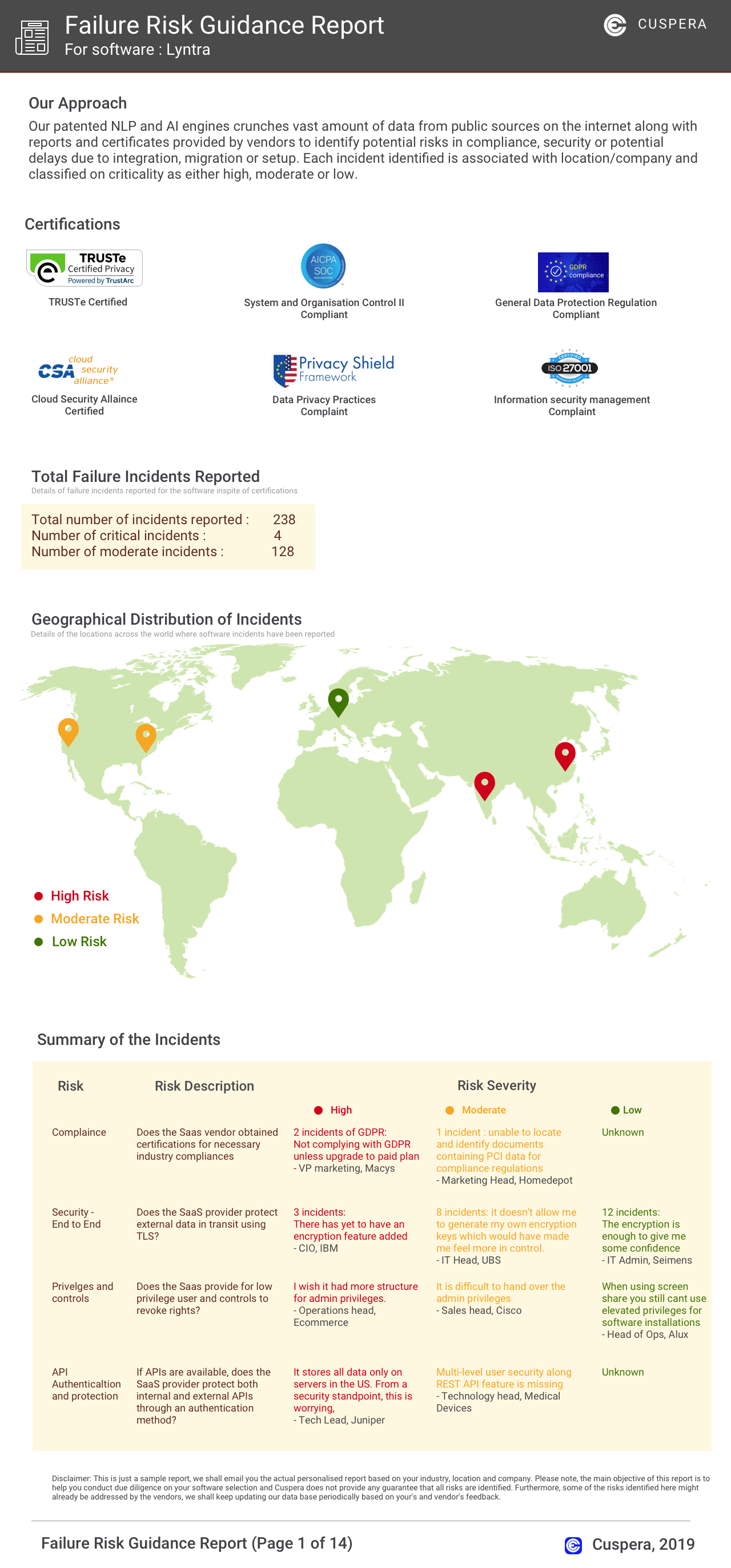
Software Failure Risk Guidance
?for Metadata Platform
Overall Risk Meter
Top Failure Risks for Metadata Platform
Metadata, Inc News
Compliance Automation Pays Off for Metadata.io - Dark Reading
Metadata.io benefits from using compliance automation, improving security and efficiency.
Metadata, Inc Profile
Company Name
Metadata, Inc
Company Website
https://metadata.io/HQ Location
880 Harrison St, #3C, San Francisco, California 94102, US
Employees
11-50
Social


Financials
IPO