


BillingPlatform: Recurring Billing Applications overview — capabilities, features, use cases and value by role
BillingPlatform is a recurring billing application built for enterprises managing subscription and recurring revenue operations. It handles one-time, subscription-based, and usage-based fees. On the revenue side, it generates recurring charges and ingests product usage data. Finance, sales, and IT teams rely on it for billing accuracy and automation.
Top capabilities of BillingPlatform
Billing
Read detailsBillingPlatform's Billing capability covers the full quote-to-cash lifecycle, from product setup and quoting through rating, invoicing, accounts receivable, and revenue recognition. It handles subscription, usage-based, hybrid, and dynamic billing models, with built-in AI and advanced analytics supporting revenue forecasting. Tipalti chose it because, as they put it, "we needed a billing solution that could not only handle our growing volumes and complexity but also integrated to critical third-party solutions to round out the entire billing and revenue management process". Valley Irrigation says, "BillingPlatform gives us the billing and monetization foundation to support new revenue channels and reach new customers". The platform scales to high transaction volumes, with one customer able to reduce billing time from days to hours, and another consolidating 6 billing systems into 1, saving >$1m/year.
Revenue Recognition
Read detailsBillingPlatform handles revenue recognition end-to-end, from allocation through to final recognition, across varied pricing models and billing methods. The engine enforces ASC 606 and IFRS 15 compliance through dynamic rules that generate journal entries automatically. SSP determination and automated revenue contract management are built in, as are waterfall and rollforward reporting.
Integration
Read detailsBillingPlatform integrates front and back-office systems through REST APIs and pre-built connectors for CRM, ERP, and tax solutions. A standardized payment gateway framework handles payment partner onboarding. The platform also supports bi-directional data syncing and bulk data operations.
Payments
Read detailsBillingPlatform's Payments capability handles electronic and manual payment methods, digital wallets, hosted payment pages, and pay-by-link options, with BP Pay® or third-party gateways providing the integration layer, while smart retry algorithms, automated cash application, and global compliance with standards like 3DSv2 round out the processing engine.
Powered by: BP Pay®
Billing Automation
Read detailsBillingPlatform's Billing Automation capability uses an integrated workflow engine to automatically generate and deliver documents such as invoices and credit memos, trigger alerts for critical events, and support bespoke workflows configured through a point-and-click interface. As Snapdocs puts it, "BillingPlatform offers us the automation, scale and flexibility to launch and bill for our core and new products as our business continues to expand". The practical impact shows up in reduced manual effort — NBT Bank/EPIC achieved a 50% decrease in billing and invoicing labor costs. One customer credits BillingPlatform with reducing end of month revenue closing times by giving the finance team capabilities to automate the generation and delivery of customer invoices.
Collections
Read detailsBillingPlatform's Collections capability handles billing, dunning, collections, and payment processing in one automated solution. The collector dashboard is configurable, and automated notifications fire when predefined thresholds are met. Dunning strategies are flexible. Real-time analytics and external collection agency data exchange round out the feature set. Together, these tools are designed to reduce Days Sales Outstanding (DSO) and improve cash flow.
Customer Portal
Read detailsBillingPlatform's Customer Portal gives customers round-the-clock self-service access to their invoices, transaction history, and payment options. Hosted payment pages come with PCI compliance managed by BillingPlatform directly. The portal supports customizable branding and personalized dashboards, and it sends automated payment alert notifications. All of this works across any device.
Accounts Receivable
Read detailsBillingPlatform's Accounts Receivable capability automates payment collection, credit and refund management, and dunning strategies to reduce outstanding debt and overdue payments, while supporting electronic and manual payment methods, multi-currency transactions, and compliance with regional mandates including 3DSv2, SEPA, and ACH.
AR Automation
Read detailsBillingPlatform's AR Automation capability brings invoicing, payments, collections, and analytics together into a single end-to-end process. AI-powered reporting tools, automated cash application, and a customer self-serve portal all work within that unified workflow. Together these features reduce Days Sales Outstanding (DSO), curb revenue leakage, and unlock working capital. Ontra, for example, reduced DSO by 5 days within a year.
Extensible Data Model
Read detailsBillingPlatform's Extensible Data Model lets enterprises configure the billing solution to meet exact business requirements without IT intervention, using a metadata-based architecture. It supports adding custom objects, fields, and relationships, as well as customizing UI layouts and widgets. Point-and-click configuration automates deployment between test and production environments.
Predictive Insights
Read detailsBillingPlatform's Predictive Insights capability applies AI-powered predictive analytics trained on both internal and external data. It surfaces forward-looking financial intelligence covering churn risk, cash flow volatility, and revenue fluctuations. Those insights then feed intelligent automation that triggers actions such as initiating collections workflows and adjusting pricing strategies.
E-Invoicing
Read detailsBillingPlatform's **BP E-Invoice** automates the creation, delivery, and tracking of invoices online. It supports mandatory reporting functions like SAF-T, multi-currency invoicing, and configurable templates. As a certified Peppol Service Provider, it handles regulatory-compliant invoice exchange to help companies meet emerging government requirements. Adopting e-invoicing can save companies up to 65% on invoicing processing costs and cut 12 days on average processing time.
RevenueIQ
Read detailsRevenueIQ is BillingPlatform's AI suite, combining Copilot, Predictive Insights, AI-Powered Admin, and AI Studio to deliver embedded conversational AI and custom-trained models that equip finance teams with predictive insights and automated workflows tailored to each organization's data — relevant given that 70% of finance organizations will use AI analysis for real-time decision-making by 2028.
Copilot
Read detailsBP Copilot keeps users in their current workflow while handling platform navigation, report generation, and help-resource access through natural language commands. It also connects with the AI Report Builder to produce custom data visualizations.
Order Processing
Read detailsBillingPlatform's Order Processing capability covers the full order lifecycle, from initial import through financial reconciliation. Orders can enter the system automatically via APIs and CRM/CPQ integrations, or be created manually. From there, the capability handles subscription upgrades and renewals, one-time charge processing, and seamless financial reconciliation.
Account Management
Read detailsBillingPlatform's Account Management capability organizes customer relationships across n-tier account hierarchies, complex contract management, automated partner settlements, and a self-service customer portal. Account managers work from a unified view of customer information, with real-time activity insights available alongside it.
Global Support
Read detailsBillingPlatform's Global Support capability covers multi-currency transactions, multilingual user interfaces and invoices, and regional tax compliance, letting enterprises adapt the platform's interface and customer-facing documents to local regulatory and operational requirements as they expand across markets.
AI Studio
Read detailsAI Studio is BillingPlatform's built-in AI model development environment for finance teams. It supports deploying pre-trained models or building and training custom ones, aligned to the organization's own data, configuration, and processes. Capabilities span natural language reporting, anomaly detection, predictive forecasting, and ongoing model refinement.
Financial Management
Read detailsBillingPlatform's Financial Management capability provides configurable general ledger rules, precise journal entry recording, automated period close processes, and detailed financial reporting. These tools help finance teams streamline accounting operations and maintain compliance with accounting standards.
AI-Powered Reporting & Insights
Read detailsBillingPlatform's AI-Powered Reporting & Insights capability turns billing and usage data into instant answers through pre-built and custom reports, role-based dashboards, and advanced analytics. Central to this is the AI Report Builder, which accepts natural language queries and returns actionable insights without requiring users to write code or navigate complex report configurations.
AI-Powered Admin
Read detailsBillingPlatform's AI-Powered Admin capability puts natural-language control in the hands of admin users through a chat interface. Without any coding, users can create, explain, and optimize workflows, formulas, and business rules by describing them in plain language. The capability automatically generates product rating methods, revenue recognition rules, validations, and step-by-step workflows from those descriptions.
Rating & Invoicing
Read detailsBillingPlatform's Rating & Invoicing capability covers the full arc of usage-based billing, from pricing logic to invoice delivery. Dynamic pricing models sit at the core, with support for tiered and volume-based structures alongside flexible rate adjustments. Invoice generation is automated and runs in real time. The capability also integrates with existing systems to keep data flowing consistently across the stack.
Products & Pricing
Read detailsBillingPlatform's Products & Pricing capability covers physical and digital products, services, metered usage, and recurring revenue offerings through a multi-level product catalog, 14 out-of-the-box rating methods, formula-based pricing calculations, and tools for building customized packages and bundles.
Mediation & Charge Routing
Read detailsBillingPlatform's Mediation & Charge Routing capability turns raw usage data from diverse sources into accurate billing data, handling high volumes through a built-in mediation engine and intelligent charge routing. The Mediation Data Lake keeps data synchronized with real-time insights. The capability also supports IoT and consumption-based pricing models.
Automated Tax Compliance Software
Read detailsBillingPlatform handles tax compliance through a certified integration with Avalara, calculating applicable taxes, fees, and surcharges in real time across billing line items. The calculation covers jurisdictions spanning the US, Canada, Europe, and other international regions.
Telecom Equipment & Infrastructure
Read detailsBillingPlatform's Telecom Equipment & Infrastructure capability automates revenue processes across hardware sales, support services, and infrastructure deployments, handling complex contract terms, multi-party agreements, and recurring service plans at global scale.
Enterprise Billing for Any Pricing Model
Read detailsBillingPlatform's Enterprise Billing for Any Pricing Model capability covers recurring, subscription, usage-based, dynamic, hybrid, and digital commerce billing structures. That breadth means enterprises can launch new monetization strategies and meet customer demand across all pricing models.
Advanced Usage Data API
Read detailsBillingPlatform's recent platform enhancements center on consumption-based billing and deeper analytics. The Advanced Usage Data API handles thousands of records per second, which lets teams onboard consumption-based billing models quickly. Revenue Waterfall Reports, AI-powered analytics, and Workflow Visualization round out the broader set of additions.
Cash Acceleration & Accounting
Read detailsBillingPlatform's Cash Acceleration & Accounting capability handles both cash management and accounting in a single, automated system. It eliminates bottlenecks across financial operations. Records stay accurate through real-time insights.
Oracle NetSuite Connector
Read detailsBillingPlatform's Oracle NetSuite Connector connects BillingPlatform's billing and finance capabilities with NetSuite's accounting and ERP solution, covering the full order-to-cash workflow. Data synchronization runs automatically. Field mapping works through point-and-click configuration. The connector supports any subscription or usage-based pricing model.
Microsoft Dynamics Connector
Read detailsBillingPlatform's Microsoft Dynamics Connector keeps billing, invoicing, and payment data in sync between BillingPlatform and Microsoft Dynamics. It automates end-to-end billing and revenue management, and it speeds up the financial close process. Revenue recognition, financial reporting, and enhanced product catalog capabilities are all supported through built-in mediation.
industry-specific Billing, Collections, and Revenue Management
Read detailsBillingPlatform and Imagine Communications have partnered to deliver Billing, Collections, and Revenue Management tailored to the media and entertainment industry. The solution targets MVPD and media customers of Imagine's xG Linear advertising management platform. It completes the full revenue cycle, covering billing and collections capabilities specific to that vertical.
Top features of BillingPlatform
Reports library and custom report creation
Read detailsBillingPlatform lets billing teams both use pre-built reports and build their own. For custom reports, the platform provides tools for consolidating data, applying filters, building pivot tables, and automating complex calculations.
Real-time strategy performance monitoring
Read detailsBillingPlatform ties real-time business intelligence to collection strategy in one continuous loop: monitor performance, analyze what's working, adjust on the fly, and optimize cash application processes as the data comes in.
Dunning management
Read detailsBP E-Invoice handles overdue collections without leaving the e-invoicing workflow, combining integrated reminders with dunning management tools to automate payment follow-up.
Payment-to-invoice matching
Read detailsPayment-to-invoice matching in BillingPlatform reconciles payments to invoices at the charge level, handles incomplete remittance data, and keeps teams informed on payment status and outstanding invoices.
Product catalog
Read detailsBillingPlatform's product catalog centralizes the definition and management of everything from physical goods to digital services. Teams can push bulk rate changes across all product lines at once. Standardized offerings feed directly into a streamlined invoicing process. When it's time to bring something new to market, the catalog is built to move quickly.
SSP calculation and adjustment management
Read detailsBillingPlatform handles the math and record-keeping that ASC 606 and IFRS 15 require for revenue recognition. Its SSP calculation determines Standalone Selling Prices, and its adjustment management keeps those figures aligned with the relevant accounting standards. Together, these capabilities support accurate revenue allocation and compliance.
Point-and-click configuration
Read detailsBillingPlatform puts business users in direct control of the data model, interfaces, and workflows — no code required. Point-and-click configuration handles all of it. That same toolset lets teams design and launch products faster and tailor the solution to match enterprise requirements.
Revenue recognition rule configuration
Read detailsGeneral Ledger Rules in BillingPlatform put finance teams in charge of how journal entries are generated. Each rule can be configured with a trigger, a name, a transaction source, and an execution order to reflect specific financial scenarios. The rules also enforce consistency across accounting processes.
Surcharging options
Read detailsBP Pay supports surcharge configuration on transactions, giving businesses control over how those costs are applied at the payment level.
Self-service customer portal
Read detailsBillingPlatform's self-service customer portal gives customers 24/7 access to account information, invoices, and payments from any computer, tablet, or mobile device, reducing support load while improving satisfaction and efficiency.
Usage tracking
Read detailsBillingPlatform tracks and rates consumption data through advanced metering capabilities, and supports custom metering solutions built around specific billing model requirements for precise, consumption-based pricing.
Anomaly detection
Read detailsBillingPlatform's anomaly detection uses predictive analytics trained on internal and external data sources to identify irregular patterns and deviations in financial data. Finance teams get a mechanism to surface unexpected trends and areas of concern across the revenue lifecycle.
Multi-currency support
Read detailsBillingPlatform handles multi-currency billing within a single account and contract — including mixing currencies inside the same contract. Exchange rate conversions run automatically, keeping rating, usage calculations, and invoice generation accurate across all of them.
Bring-Your-Own Payment Provider
Read detailsBillingPlatform's Payment Gateway Framework is built around choice: customers can connect to their preferred payment provider either through a microservices-based integration framework or through pre-built connectors for immediate launch. Neither path creates vendor lock-in.
Cash flow forecasting
Read detailsBillingPlatform's cash flow forecasting capability centers on AI-powered predictive analytics that surface volatility and forward-looking projections. It draws on unified internal and external data, so finance teams can anticipate trends before they arrive.
PCI compliance for payment processing
Read detailsBillingPlatform's digital payments solution handles transactions through hosted payment pages or customer portals while maintaining PCI-Level 1 compliance to protect payment data and customer information.
Dynamic payment retry management
Read detailsBillingPlatform's Dynamic payment retry management automates the retry and recovery cycle for failed payments, using algorithms that optimize each attempt and apply targeted solutions to address the root causes of transaction failures.
Natural language reporting and query interface
Read detailsBillingPlatform's AI Studio accepts everyday natural language questions about financial data, letting teams query and report without complex syntax or specialized knowledge.
Collections workflow automation with account prioritization
Read detailsBillingPlatform automates collections workflows by translating predictive insights into targeted actions against high-risk accounts. This reduces manual intervention, so finance teams can work with greater precision and consistency.
Branded document generation
Read detailsBillingPlatform's branded document generation dynamically populates PDFs, XLS, or Word documents with application data using templates, automating delivery across use cases such as welcome documents, invoice attachments, credit memo PDFs, and document sends triggered from custom objects.
Bundle and auto-deploy to development environment
Read detailsBillingPlatform automates the move from development to production by bundling configurations and deploying them automatically — cutting out manual data re-entry and the errors that come with it.
Automated invoice creation and delivery
Read detailsBillingPlatform generates accurate invoices in real time from customer billing information, then automatically creates and distributes them to minimize revenue leakage, reduce manual errors, and support E-Invoicing compliance and reporting.
API connectivity
Read detailsBP E-Invoice's API access embeds invoicing functions directly into an organization's existing tech stack. Because the connection is built in, integration with other systems requires no external synchronizations.
Government-compliant e-invoicing
Read detailsBillingPlatform handles government-compliant e-invoicing end to end, automating invoice exchange, supporting real-time e-reporting, and enforcing compliance with government mandates. This reduces both errors and administrative workload across complex reporting requirements.
Pivot tables
Read detailsBillingPlatform supports pivot tables within its custom report creation toolkit, allowing enterprises to reorganize and summarize billing and usage data for analysis.
Flexible rate adjustments
Read detailsBillingPlatform handles usage-based billing through flexible rate adjustments that adapt pricing to actual consumption patterns and reflect real-time usage in dynamic pricing.
Contract management
Read detailsBillingPlatform brings product creation, pricing configuration, and contract oversight together in a single module. Users can set discounts and schedule rate changes from that same space. The module also supports defining product dependencies and exclusions, which keeps the sales process tightly controlled.
Multi-factor authentication
Read detailsBillingPlatform secures user access through multi-factor authentication, which sits inside a broader security architecture that also includes proactive threat detection and traffic monitoring to protect private customer data.
Record-level sharing groups
Read detailsBillingPlatform's record-level sharing groups lock each user to only the data their assigned group is authorized to see — a design that supports customer portal extensions while reducing the risk of exposing incorrect information.
Field-level change tracking
Read detailsBillingPlatform centralizes all user activity through field-level change tracking, capturing configuration changes and data modifications in audit logs so compliance and auditing teams can trace the most granular changes to any data element over time.
Customer notifications and billing alerts
Read detailsBillingPlatform keeps both internal users and customers informed when critical billing events occur. It triggers automated alerts for situations such as missed payments, expiring credit cards, and approaching contract thresholds. Application users receive these proactive alerts on the home screen or via email. Customers receive their own automated notifications to stay informed and engaged.
Wallet creation and management
Read detailsBillingPlatform handles wallet creation and management as part of its recurring billing workflows. Accounts can store multiple payment methods through digital wallet integration. Users can also select a preferred payment method, which supports both convenience and transaction security.
Pay-by-link sharing
Read detailsBillingPlatform's pay-by-link sharing produces secure, no-login payment links that customers can receive through email, text, or invoice. No account access is required to complete a payment. The links are PCI-compliant, keeping the transaction secure without adding friction for the customer.
UI and invoice localization
Read detailsBillingPlatform handles multi-currency transactions and full language localization within a single platform. The UI and customer invoices can be translated into any language. A language can be set as a system-wide default or assigned per individual customer invoice, depending on what the operation or the customer requires.
Tax calculation and integration
Read detailsBillingPlatform's tax calculation and integration capability handles precise taxation calculations and supports compliance with tax standards across all operational regions. An out-of-the-box tax product is available for simple taxes. For sales tax, VAT, GST, or other taxes, the platform also supports integration with external tax engines.
Tailored payment options per customer
Read detailsBillingPlatform supports flexible payment plans tailored to individual customer needs. Structured repayment options help keep collections on schedule, reduce friction, and improve cash flow.
Bulk Extract and Bulk Load APIs
Read detailsBillingPlatform's Bulk Extract and Bulk Load APIs handle large data requests flowing to and from external systems or data lakes, working alongside a REST-based metadata-driven data model to enable bi-directional configuration and data syncing at scale.
Automated revenue recognition journal entry generation
Read detailsBillingPlatform uses a dynamic rule-based engine to automatically generate revenue recognition journal entries based on user-defined criteria. It manages complex revenue scenarios including discounts, usage, renewals, and cancellations without manual intervention.
Milestone and event-driven recognition triggers
Read detailsBillingPlatform supports milestone and event-driven recognition triggers that let finance teams customize revenue recognition schedules to fit diverse customer arrangements and business strategies, handling advanced recognition scenarios through flexible scheduling options.
Natural language chat interface for workflow generation
Read detailsBillingPlatform's AI-driven configuration turns a plain-language description into working billing logic — no coding required. Through a chat interface, the AI accepts natural-language input and automatically generates product rating methods, revenue recognition rules, validations, and step-by-step workflows. Ideas become execution in seconds.
Credit and refunds management
Read detailsBillingPlatform's credit and refunds management automates the processing of credits and refunds through tailored business rules and workflows. Those rules and workflows align with an organization's own accounting processes rather than forcing a generic approach. The system also handles past-due accounts, working to reduce outstanding debt and support financial stability.
Built-in AI and advanced analytics
Read detailsBillingPlatform handles both revenue forecasting and customer insights through built-in AI and advanced analytics. It also accommodates emerging revenue streams, including IoT billing and new hybrid pricing models.
Audit traceability
Read detailsBillingPlatform tracks every adjustment, credit, refund, and line-item correction across the full financial landscape, updating the ledger in real time to support clean reporting and compliance with accounting standards.
In-platform knowledgebase and documentation access
Read detailsBP Copilot keeps users inside BillingPlatform by surfacing knowledgebase articles, support resources, and step-by-step guides directly within the application. With everything available in context, users can troubleshoot issues and complete tasks without switching away to find help.
Pre-built connectors for CRM, ERP, and general ledger
Read detailsBillingPlatform connects to CRM, ERP, general ledger, and tax solutions through pre-built connectors. These connectors synchronize data across systems, reducing the need for internal development work.
Custom entities and fields
Read detailsBillingPlatform supports the addition and modification of custom objects, fields, and relationships to reflect unique business processes without coding. Changes are immediately reflected across the platform, maintaining data integrity and consistency.
Aggregated and unaggregated data views in sync
Read detailsBillingPlatform's Mediation Data Lake (MDL) stores data in both aggregated and unaggregated forms at the same time. Keeping both views in sync means teams can run detailed analysis without disrupting existing operating procedures or affecting critical process performance.
Improved authorization rates
Read detailsBP Pay improves authorization rates, raising the success rate of payment transactions while supporting enhanced performance and flexibility for payment operations.
Days sales outstanding reduction
Read detailsBP Pay streamlines the revenue cycle by automating payment processing to reduce Days Sales Outstanding (DSO), minimize manual errors, manage chargebacks, and prevent failed payments.
Approval chain management
Read detailsBillingPlatform handles approval chain management across the full lifecycle of data-change oversight. Teams can configure which changes require approvals and route requests to designated approvers. Single or multi-level approval chains are available based on request significance. A dedicated approval dashboard consolidates pending and past approvals into one interface, supporting approval by exception.
Customizable charge definitions
Read detailsCustomizable charge definitions in BillingPlatform allow billing teams to tailor one-time charge structures for diverse business needs while integrating with financial systems to support reconciliation.
Automatic synchronization across connected systems
Read detailsBillingPlatform keeps every connected system in sync the moment a configuration change is made. Custom objects and external integrations update automatically, so bi-directional syncing requires minimal effort on your team's part.
High-volume transaction processing
Read detailsBillingPlatform manages large transaction volumes across its electronic payment systems, applying PCI compliance expertise to protect payment data while maintaining billing precision and customer satisfaction.
General ledger integration
Read detailsBillingPlatform's general ledger integration ties the waterfall and rollforward reporting module directly to the general ledger. It supports ERP system compatibility to centralize financial data and keep records current with real-time updates. The result is accurate financial reporting across connected systems.
Churn risk detection
Read detailsBillingPlatform treats churn risk as a financial indicator, not just a customer success metric. Predictive analytics trained on both internal and external data drive the detection. Finance teams use the output to anticipate attrition and act before it occurs.
Wholesale and retail rate configuration for sub-accounts
Read detailsBillingPlatform handles wholesale and retail rates independently, configuring each within sub-account structures so that complex enterprise billing works regardless of the charging method used.
Consolidated invoicing based on configurable rules
Read detailsBillingPlatform streamlines invoicing by generating consolidated invoices through configurable rules within account hierarchies, supporting parent accounts that oversee billing across multiple sub-accounts and contracts.
Scheduled rate changes
Read detailsBillingPlatform's scheduled rate changes apply new contract rates automatically at a specified future date, so billing stays aligned with contract terms without relying on manual intervention to catch deadlines.
Revenue share calculation based on predefined agreements
Read detailsBillingPlatform handles partner settlements end-to-end, tracking transaction details precisely and calculating revenue shares against predefined agreements — which means enterprise partnership calculations stay accurate and revenue diversification becomes easier to manage.
User-level portal customization
Read detailsBillingPlatform's self-service customer portal is built around individual users, not just accounts — meaning each customer sees an experience tailored specifically to them. From that personalized view, customers can access account information, invoices, and payments from any device.
Real-time process console for document generation monitoring
Read detailsBillingPlatform's process console keeps finance teams informed as document generation workflows run, showing execution status and pending work item counts in real time.
Custom buttons and actions for new pages
Read detailsBillingPlatform supports custom pages built with standard web technologies. Users reach them through custom buttons and actions, tailoring the experience to any use case without writing code.
External system integration via widgets
Read detailsBillingPlatform connects to external systems through widgets built on standard web technologies. These widgets embed consolidated data views, graphs, and charts directly into page layouts. They can also automate tasks and manage services.
Stringent access controls on environment changes
Read detailsBillingPlatform's deployment tool keeps unauthorized changes out of production by automating the promotion of changes between environments and enforcing strict access controls and change control processes.
Metadata-driven architecture for product configuration
Read detailsBillingPlatform is built on a metadata-based architecture that keeps recurring billing operations configurable without IT intervention. The data model is externalized, meaning teams can adjust it directly. Product offerings, business rules, workflows, and reports are all within reach of non-technical staff. The same goes for dashboards, rating, invoicing, APIs, and formulas. That scope of self-service configurability means the platform can adapt to market or regulatory changes at speed.
Real-time payment reconciliation updates
Read detailsBillingPlatform keeps finance teams continuously informed on payment reconciliation status, surfacing real-time updates on payment standing and outstanding invoices while reducing the manual effort involved in cash application processes.
Regional direct-debit gateway support
Read detailsBillingPlatform supports regional direct-debit gateways that connect with local payment providers worldwide. Multi-currency transactions, end-customer consent enforcement before storing financial information, and global fraud prevention mandates such as 3DSv2 are all handled within that same framework.
3DSv2 fraud prevention compliance
Read detailsBillingPlatform's 3DSv2 fraud prevention compliance ensures that payment transactions meet the 3DSv2 global fraud prevention standard as part of its broader digital payments compliance capabilities.
Account notes and call scheduling
Read detailsBillingPlatform handles dunning workflows by combining automated actions with manual ones — collectors can add account notes and schedule customer calls directly from within the collections interface.
Automated email and text communications
Read detailsBillingPlatform handles dunning and collections outreach end-to-end, triggering emails and texts automatically when accounts cross predefined thresholds. Both high-touch and low-touch strategies are covered. Payment reminders and missed payment notifications are included in that outreach.
Payment lifecycle monitoring
Read detailsBillingPlatform covers the full payment journey — from initialization through tokenization, processing, and settlement all the way to chargeback notifications. That span of coverage is what makes comprehensive reconciliation between financial systems possible.
Performance obligation tracking
Read detailsPerformance obligation tracking in BillingPlatform automates the creation, management, and modification of performance obligations within revenue contracts, including re-allocation of revenue, to support compliance with ASC 606 and IFRS 15.
Contract transaction price calculation
Read detailsBillingPlatform calculates contract transaction prices within revenue contract management, handling adjustments and allocating revenue based on Standalone Selling Prices to support compliance with ASC 606 and IFRS 15 standards.
Trial balance generation
Read detailsBillingPlatform generates detailed trial balances through a waterfall and rollforward reporting module that connects directly to the general ledger, supporting both reconciliation and accurate financial reporting.
Integrated payment processing
Read detailsBP E-Invoice connects electronic invoice delivery with built-in payment processing, folding digital payment options like BP Pay into the invoicing flow itself to enable faster payment cycles and improve cash flow.
Promotions and discounting rules
Read detailsBillingPlatform supports promotions and discounting rules that help teams configure product launches and competitive pricing as part of a broader flexible product configuration for diverse monetization strategies.
Product dependencies and thresholds
Read detailsBillingPlatform's rules engine handles the logic of how products and services can be combined and sold. Configurable rules apply dependencies and thresholds to manage both product bundling and sales processes with precision.
Multi-legal entity and cash separation support
Read detailsBillingPlatform's accounts receivable payment processing is built for complex requirements like multi-legal entity structures and cash separation. Managing global financial activity across multiple legal entities is supported, with accurate payment allocation across each.
Multi-gateway routing
Read detailsMulti-gateway routing in BillingPlatform sends transactions through multiple payment gateways to meet redundancy or localization needs, while integrations with ERP platforms, tax engines, payment processors, and hosted payment pages keep financial data consistent across systems.
Payment method support
Read detailsBillingPlatform's accounts receivable software covers both electronic and manual payment methods, ranging from debit and credit cards, PayPal, checks, and hosted payment pages to ACH, wire transfers, SEPA, digital wallets, and direct debit.
Automatic transaction routing to customer balances
Read detailsBillingPlatform keeps accounts receivable reporting accurate by automatically routing transactions to customer balances and GL accounts — removing the need for manual allocation and eliminating reconciliation errors in the process. That same automation surfaces real-time visibility directly in the accounts receivable billing dashboard.
Automated late fee management
Read detailsBillingPlatform's accounts receivable software automates the entire dunning process through built-in workflow automation, covering late fees, account suspensions, and customer notifications while reducing manual effort and ensuring consistent follow-through.
Pre-trained model deployment
Read detailsBillingPlatform's AI Studio equips finance teams with pre-trained AI models that align to their specific data, configuration, and processes — covering use cases from natural language reporting to anomaly detection and predictive forecasting without requiring teams to build models from scratch.
Data consolidation and filtering
Read detailsBillingPlatform's reporting module consolidates enterprise data and applies custom filters to extract targeted insights on any variable of interest to the business.
Report automation
Read detailsBillingPlatform's report automation covers calculations, pivot tables, and data filters within its reporting module. Automating those steps reduces manual effort and keeps reporting outputs consistent and accurate.
Role-based dashboard views
Read detailsBillingPlatform builds role-based dashboards through a wizard that enforces stringent security measures at each view. Real-time operational insights surface as charts and graphs. Users can incorporate these visualizations across the application to power dynamic dashboards and reports.
Charts and graphs embedding
Read detailsBillingPlatform embeds charts and graphs directly into page layouts, building rich dashboards that surface dynamic, actionable insights and enhance customer support from inside the interface.
Tiered, volume, or discount-based pricing structures
Read detailsBillingPlatform handles tiered, volume, or discount-based pricing models through customizable pricing structures designed to reflect real-time consumption and maximize revenue.
Manual entry error reduction
Read detailsBillingPlatform's rating and invoicing module automates invoice generation and distribution, cutting out manual data entry to reduce billing errors.
Rule-based data normalization and filtering
Read detailsBillingPlatform keeps billing data clean before it ever reaches rating — and maintains a full audit trail while doing so. The mediation layer is automated and rule-based. It normalizes incoming data, filters out extraneous usage records, and removes invalid or duplicate entries. Once the data is clean, it routes to rating and billing. Lineage tracking is built in throughout, which strengthens audit readiness.
Multi-format source integration
Read detailsBillingPlatform's mediation layer accepts structured, semi-structured, or unstructured data formats — CSV, XML, JSON, and streamed events — from sources spanning CRM systems, connected devices, network equipment, ERP platforms, and APIs, capturing and standardizing large data sets from diverse origins for recurring billing use.
Usage event tagging, grouping, and enrichment
Read detailsBillingPlatform's mediation layer tags, groups, and enriches usage events so billing and product teams can deploy tiered, threshold, pay-per-use, and time-based pricing structures without delay.
Hybrid billing model processing
Read detailsBillingPlatform runs subscriptions, fixed charges, usage-based events, and overage fees through a single billing cycle simultaneously. The mediation layer prepares each charge type separately before automation routes them all together through the charge routing platform.
Excel-like formula support for custom pricing
Read detailsBillingPlatform extends standard pricing configuration through Excel-like formula-based calculations, letting teams charge based on custom combinations of factors beyond the 14 out-of-the-box rating methods to support more creative pricing scenarios.
Recurring payments support
Read detailsBP Pay handles recurring payments, invoices, collections, and the customer portal together in one platform — no external connectors required. The native connection between these functions supports automated recurring billing workflows without needing to route data through outside tools. Everything runs inside a single platform.
Revenue recognition integration
Read detailsBP Pay unifies billing, payments, and revenue recognition within a single user interface and reporting engine, covering full AR reporting, payment-specific insights, and a comprehensive payment dashboard — removing the need to manage separate systems for each function.
Single-vendor support and updates
Read detailsBP Pay consolidates billing and payments under a single vendor, simplifying issue resolution and system maintenance through comprehensive support and regular updates.
Proactive threat detection and traffic monitoring
Read detailsBillingPlatform's secure billing software safeguards private customer data through proactive threat detection that continuously monitors for malicious activity and unauthorized behavior, traffic anomaly monitoring, and a rigorous source code review process designed to identify, prioritize, and resolve security issues.
DKIM protocol support
Read detailsBillingPlatform uses the DKIM (DomainKeys Identified Mail) protocol to secure outbound email communication. Billing notifications and invoices are authenticated before they leave the platform. DKIM also protects those messages against tampering in transit.
Customer-managed encryption keys
Read detailsBillingPlatform puts customers in control of their own encryption keys, so all encryption and decryption occurs without ceding data access to anyone else. This approach adheres to FIPS 140-2 Level 3 standards.
Geographical access restriction
Read detailsBillingPlatform's sharing groups capability locks data access to geographical boundaries, so users in distributed operations see only the records authorized for their region.
SOC compliant controls
Read detailsBillingPlatform's SOC-compliant solution maintains SOC 1 & 2 compliance to support internal controls over financial reporting, customer data privacy, and regulatory adherence.
Top use cases for BillingPlatform
Gain real-time financial insights and forecasts
Read detailsCFOs and finance teams use BillingPlatform's RevenueIQ predictive analytics to unify internal and external financial data and surface forward-looking indicators such as churn risk, cash flow volatility, and revenue fluctuations. Those insights then trigger intelligent automation across collections workflows, pricing adjustments, and dunning. The outcome is proactive revenue lifecycle management with greater forecasting precision and reduced manual intervention.
Deliver self-service billing to customers
Read detailsBillingPlatform's account management tools give enterprise teams a unified view of customer accounts. They support complex n-tier account hierarchies and contracts, automate partner settlements, and provide end customers with 24/7 self-service portal access to view invoices, make payments, and manage their accounts.
Accelerate cash flow and reduce DSO
Read detailsBillingPlatform's AR Automation solution brings invoicing, digital payments, collections, cash application, and a customer self-serve portal together into one end-to-end workflow for finance and AR teams. Running those functions through a single pipeline reduces days sales outstanding, unlocks working capital, and curbs revenue leakage at enterprise scale. AI-powered reporting and analytics sit on top of that workflow, delivering real-time visibility into AR performance and cash flow forecasting.
Configure and automate billing workflows without coding
Read detailsBillingPlatform's AI-Powered Admin capability, part of the RevenueIQ suite, lets finance and accounting teams describe billing rules and processes in plain language. The system then automatically generates workflows, product rating methods, revenue recognition rules, and validations. No code writing is required.
Expand billing operations globally
Read detailsBillingPlatform's internationalization capabilities let enterprises localize billing interfaces and invoices to any language. A single account can manage multiple currencies. Exchange rate conversions are automated. Compliance with regional tax regulations — including VAT, GST, and sales tax — is built in, supporting confident expansion into global markets without disrupting existing product catalogs.
Integrate billing with enterprise systems
Read detailsBillingPlatform ties front and back-office systems together through REST APIs, pre-built enterprise connectors for CRM, general ledger, and tax solutions, and a standardized payment gateway framework. That architecture supports bi-directional data syncing and seamless reconciliation across the full payment lifecycle. Errors and revenue leakage are minimized as a result.
Monetize usage data at scale
Read detailsBilling and finance teams use BillingPlatform's integrated mediation and charge routing software to collect, normalize, enrich, and route massive volumes of raw usage data from diverse sources into highly customizable usage-based pricing models. Those sources include IoT devices, CRM systems, ERP platforms, and APIs. The Mediation Data Lake provides synchronized real-time data insights, enabling enterprises to convert customer consumption into accurate revenue streams while reducing billing errors and revenue leakage.
Value delivered by role with BillingPlatform
Finance Leader
Read detailsBillingPlatform automates billing and revenue recognition end-to-end, cutting billing time by over 50% and enabling faster financial closes. AI-powered predictive insights detect anomalies and reveal patterns. They also anticipate emerging trends, giving finance leaders real-time visibility into cash flow and revenue performance.
Revenue Accounting Leader
Read detailsBillingPlatform gives Revenue Accounting Leaders faster month-end closes with greater accuracy by consolidating billing data and automating complex accounting workflows. AI-powered tools translate natural language into automated processes, which cuts manual intervention and improves consistency. Billing data normalizes across general ledger units inside a single system, so financial questions get answered in minutes rather than hours.
IT Leader
Read detailsBillingPlatform is a cloud-first billing solution that IT leaders can configure without writing code, consolidating legacy systems and scaling to complex requirements without heavy developer dependency. As EPIC RPS (Retirement Plan Services) puts it, "We were able to perform the implementation ourselves without turning to a programmer or the IT team."
Billing Operations Leader
Read detailsBillingPlatform lets a single billing manager oversee more than 1,500 customer accounts — which tells you what the platform is really built for: scaling billing volume without scaling headcount. It eliminates manual data-pulling across systems. It also handles complex pricing models, including usage-based and consumption billing at high volumes.
Go-to-Market Leader
Read detailsBillingPlatform builds a billing and monetization foundation that Go-to-Market Leaders use to support new revenue channels, launch new products, and reach new customers through flexible pricing models. Automation and scalability are built in, so teams can introduce new offerings quickly without hitting billing infrastructure limits. The platform also enhances the user experience and surfaces new data insights, helping GTM leaders grow their services business and customer base.
Business Leader
Read detailsBillingPlatform is a billing and monetization platform built to handle complex pricing models, multi-brand portfolios across geographies, and new revenue channels. It automates billing operations so teams can redirect effort toward higher-value strategic work and stronger client service.
Finance IT Leader
Read detailsBillingPlatform is built for Finance IT Leaders who need a scalable platform that can handle complex pricing and billing requirements. Its no-code configurability means routine changes don't require IT involvement. Enterprise-class security and integrations with critical third-party solutions support sophisticated business models across the full revenue management process.
Digital Transformation Leader
Read detailsBillingPlatform replaces manual, unscalable billing processes with a configurable platform built for complex subscription, usage-based, and multi-currency billing at scale. It supports global growth, fits into broader revenue lifecycle ecosystems, and meets enterprise-class security requirements.
Billing for the Revenue Accounting Leader | BillingPlatform
Read detailsBillingPlatform targets Revenue Accounting Leaders with tools that automate revenue recognition, handle deferred revenue and multi-element arrangements, and produce audit-ready reporting — covering the full revenue lifecycle from close acceleration to manual adjustment reduction.
What customers say about BillingPlatform: ratings, outcomes and feedback
BillingPlatform's customer experience reflects what users value in day-to-day work across recurring billing applications and solutions.
What works well
Neptune Technology Group says, "BillingPlatform proved to be the best solution that combined the ability to easily configure and scale the system to meet the evolving needs of Neptune 360, without the time and expense other solutions required to customize it". N-Able puts it in terms of company-wide recognition: "We're a global company with 32 offices around the world, and there are three vendors almost everybody in our company knows: Microsoft, Salesforce, and BillingPlatform." The Texas Stock Exchange selected BillingPlatform for providing an advanced, cost-effective billing solution that can be deployed and customized to specific needs.
BillingPlatform Customer wins, Case studies
Frequently Asked Questions (FAQ)
What buyers ask before choosing BillingPlatform
Integrations How does BillingPlatform connect to Salesforce and Microsoft Dynamics?
BillingPlatform connects to Salesforce and Microsoft Dynamics through out-of-the-box, bi-directional integrations that facilitate seamless data synchronization between billing and invoicing systems and customer relationship management (CRM) platforms. This integration allows businesses to automate their quote-to-cash processes, ensuring that billing data aligns with CRM and configure-price-quote (CPQ) data for a comprehensive view of customer interactions. By leveraging these connectors, organizations can enhance their digital transformation initiatives, streamline operations, and improve accuracy in financial reporting. The integration not only simplifies the management of complex pricing models but also supports various billing automation features, making it easier for businesses to adapt to changing market demands while maintaining control over their financial processes.
Integrations What are the setup steps for integrating BillingPlatform with Oracle NetSuite?
To integrate BillingPlatform with Oracle NetSuite, start by ensuring you have administrative access to both systems. First, log into your BillingPlatform account and navigate to the integration settings. Select the Oracle NetSuite connector and follow the prompts to initiate the integration process. You will need to provide your NetSuite account credentials and configure the necessary API settings, including authentication tokens. Next, map your BillingPlatform data fields to the corresponding fields in NetSuite to ensure seamless data flow. After completing the mapping, test the integration to confirm that data transfers correctly between the two platforms. Finally, monitor the integration for any issues and adjust settings as needed to optimize performance. This setup will enable streamlined financial operations and enhance your order-to-cash capabilities.
Integrations How does data flow between BillingPlatform and external CRM systems?
Data flow between BillingPlatform and external CRM systems is facilitated through robust APIs that enable seamless integration. This integration allows for the automatic exchange of customer information, billing details, and transaction data, ensuring that both systems remain synchronized. When a new customer is added or updated in the CRM, this information can be automatically reflected in BillingPlatform, streamlining the billing process. Conversely, any billing updates or payment statuses from BillingPlatform can be sent back to the CRM, providing sales and support teams with real-time insights into customer accounts. This two-way data flow enhances operational efficiency, reduces manual data entry errors, and improves overall customer experience by ensuring that all teams have access to the most current information.
Integrations Are there any limitations to the integrations offered by BillingPlatform?
BillingPlatform offers a robust set of integrations designed to enhance its functionality, but there are some limitations to consider. While it supports various integrations with popular platforms such as Salesforce, HubSpot, and other enterprise systems, the extent of these integrations may vary based on specific use cases and business requirements. Additionally, certain custom integrations may require additional development resources or may not be available out-of-the-box, which could limit immediate accessibility for some users. It's essential for businesses to assess their unique integration needs and consult with BillingPlatform's support team to understand the capabilities and any potential constraints related to their specific integration scenarios. Overall, while BillingPlatform provides extensive integration options, evaluating these limitations is crucial for optimal implementation.
Integrations What is the API access like for connecting BillingPlatform with other financial systems?
BillingPlatform offers robust API access designed to facilitate seamless integration with various financial systems, enabling businesses to connect their critical front and back-office applications efficiently. The platform provides flexible billing integration through its comprehensive APIs and pre-built connectors, which streamline processes such as sales, provisioning, and accounting. This integration capability minimizes errors and revenue leaks, ensuring that financial data flows smoothly between systems. Additionally, the API access supports customization, allowing businesses to tailor their integrations according to specific operational needs. By leveraging BillingPlatform's API access, organizations can enhance their billing automation and improve overall financial management, making it a valuable asset for any enterprise looking to optimize its financial workflows.
Features What does the automated usage handling feature do?
The automated usage handling feature in BillingPlatform streamlines the management of usage-based billing by automatically processing millions of micro-transactions in real-time, ensuring accurate billing even during peak usage periods. This feature allows businesses to quickly adapt to changing market demands by launching new usage-based pricing models within 30 days, utilizing no-code rate configuration for rapid experimentation and optimization. By automating the configuration and administration of business rules and processes through natural language, users can easily translate their ideas into actionable workflows. This not only enhances operational efficiency but also enables organizations to capitalize on new monetization opportunities swiftly, ultimately improving customer satisfaction and driving revenue growth.
Features How do I configure subscription billing in BillingPlatform?
Configuring subscription billing in BillingPlatform is a straightforward process designed to streamline your setup. Start by accessing the intuitive dashboard, where you can utilize guided onboarding resources and thorough documentation to familiarize yourself with the platform. Next, define your pricing strategies, such as flat-rate, tiered, or usage-based models, without needing to write any code. Use the pre-built APIs and connectors to integrate BillingPlatform seamlessly with your existing systems, ensuring a smooth transition. Once your products and pricing are set up, leverage the automation features to manage invoicing, tax calculations, and payment reminders efficiently. Ongoing support is available to help optimize your processes as your business grows, making it easier to adapt your subscription billing to changing needs.
Features What are the steps to set up tiered pricing on BillingPlatform?
To set up tiered pricing on BillingPlatform, start by logging into your account and navigating to the pricing configuration section. Here, you can create new tier structures by defining the different pricing levels based on user segments or product features. Utilize the no-code tier management feature to easily launch and test various pricing variations, ensuring they align with your market strategy. Next, configure the specific parameters for each tier, such as pricing, volume discounts, and feature access. Once your tiers are set, leverage the advanced analytics tools to monitor performance and make adjustments as needed. Finally, ensure that your tiered pricing model is compliant with global regulations and integrates seamlessly with your existing CRM or ERP systems for efficient billing and revenue management.
Features How can I automate notifications for billing events in BillingPlatform?
To automate notifications for billing events in BillingPlatform, you can leverage its built-in workflow capabilities designed for seamless process automation. Start by accessing the workflow engine within the platform, where you can create custom workflows tailored to your specific billing events, such as payment reminders, invoice generation, or subscription renewals. Utilize the notification settings to configure automated alerts that will be sent to customers at critical moments, enhancing their experience and response time. You can set parameters for when and how notifications are triggered, ensuring that your customers receive timely updates. This automation not only streamlines communication but also improves customer satisfaction by keeping them informed throughout the billing process.
Features What functionality does the workflow automation provide in BillingPlatform?
BillingPlatform's workflow automation functionality is designed to streamline and enhance billing processes by eliminating manual tasks and reducing IT dependency. It offers built-in workflows that allow users to automate critical business operations such as invoicing, payment collection, and subscription management with ease. The platform features a point-and-click configuration that enables businesses to develop customized workflows tailored to their specific needs, ensuring flexibility and precision. Additionally, automated notifications can be sent to customers for critical events, improving response times and overall customer satisfaction. By leveraging these capabilities, organizations can focus on strategic growth initiatives while minimizing errors and enhancing operational efficiency, ultimately optimizing revenue generation throughout the customer lifecycle.
Features How do I use the platform to manage dynamic-based pricing?
To manage dynamic-based pricing using BillingPlatform, start by leveraging its flexible configuration tools that allow you to create and implement various pricing models tailored to your business needs. First, define your pricing logic by setting up formulas and rules that adapt to real-time activity, market inputs, or customer behavior. Utilize the platform's automated billing capabilities to ensure that charges adjust dynamically based on usage or demand-driven factors. You can also implement tiered or volume-based pricing structures to enhance your offerings. Once your pricing models are established, monitor performance through advanced analytics to optimize and refine your strategies continuously. This approach not only streamlines your billing processes but also helps unlock new revenue streams while maintaining agility in response to market changes.
ROI & pricing What measurable business value can BillingPlatform provide for my organization?
BillingPlatform delivers significant measurable business value by enhancing billing automation, improving cash flow, and providing actionable insights through AI-powered reporting. By streamlining processes such as order processing, invoicing, and accounts receivable automation, organizations can reduce operational costs and minimize billing errors, leading to faster revenue recognition. The platform's extensible data model allows for seamless integration with existing systems, enabling businesses to adapt quickly to market changes and support diverse monetization models. Additionally, features like Revenue IQ and predictive insights empower organizations to make data-driven decisions, optimize pricing strategies, and enhance customer satisfaction. Overall, BillingPlatform not only accelerates time-to-market but also positions businesses for scalable growth and improved financial performance.
ROI & pricing How does BillingPlatform help in optimizing revenue and reducing costs?
BillingPlatform helps optimize revenue and reduce costs by providing a comprehensive, AI-powered billing solution that streamlines the entire customer lifecycle. Its real-time processing capabilities allow businesses to calculate complex tier pricing, volume discounts, and feature access across millions of transactions with instant accuracy, ensuring that pricing strategies are both competitive and profitable. The platform's flexible configuration enables companies to launch new tier structures and test pricing variations quickly, often within 30 days, without requiring extensive coding. Additionally, advanced analytics tools offer insights into customer behavior and revenue trends, empowering businesses to make informed decisions that enhance operational efficiency. By automating billing processes and improving accuracy, BillingPlatform not only minimizes administrative costs but also maximizes revenue potential, ultimately driving growth and profitability for enterprises across various industries.
ROI & pricing What are the different pricing plans available for BillingPlatform, and what do they include?
BillingPlatform offers a variety of pricing plans designed to accommodate different business needs and billing strategies. While specific pricing details may vary based on the scale and requirements of your organization, the platform supports diverse pricing models, including flat-rate, tiered, usage-based, and freemium options. Each plan typically includes features such as billing automation, enterprise-grade security, global compliance, and seamless integrations with CRM and ERP systems. Additionally, BillingPlatform allows businesses to manage innovative pricing for both physical and digital products, enabling them to unlock new revenue streams through flexible billing options like one-time charges, subscriptions, and consumption-based billing. For precise pricing and plan details tailored to your business, it is recommended to contact BillingPlatform directly for a customized quote.
ROI & pricing What is the expected ROI when implementing BillingPlatform for revenue management?
The expected ROI when implementing BillingPlatform for revenue management can be significant, as it enhances agility, reduces operational costs, and allows businesses to monetize various revenue models effectively. By leveraging the platform's AI capabilities, particularly through the RevenueIQ suite, organizations can automate and optimize their revenue lifecycle processes, leading to improved efficiency and accuracy in billing and invoicing. This automation minimizes manual errors and accelerates cash flow, which can directly impact profitability. Additionally, the platform's extensible data model and integration capabilities enable seamless connectivity with existing systems, further enhancing operational efficiency. Overall, businesses can expect a strong return on investment through cost savings, increased revenue opportunities, and improved financial insights, making BillingPlatform a valuable asset for revenue management.
ROI & pricing How quickly can I expect to see value from BillingPlatform after implementation?
After implementing BillingPlatform, you can expect to see value relatively quickly, often within a few weeks. The platform is designed for rapid deployment, allowing businesses to automate their revenue lifecycle processes efficiently. With features like AI-powered reporting and insights, billing automation, and flexible configuration options, organizations can streamline operations and enhance financial performance almost immediately. Additionally, the no-code tier management enables quick adjustments to pricing structures, which can lead to faster revenue realization. As users become familiar with the platform's capabilities, they can leverage advanced analytics and predictive insights to optimize their billing strategies further, maximizing the return on investment in a short timeframe. Overall, BillingPlatform aims to deliver tangible benefits swiftly, supporting your business's growth and scalability.
ROI & pricing What is the total cost of ownership for using BillingPlatform over time?
The total cost of ownership (TCO) for using BillingPlatform over time encompasses several factors, including initial setup costs, ongoing subscription fees, and potential expenses related to integration, training, and support. BillingPlatform offers a flexible pricing model that can be tailored to your specific business needs, which may include usage-based billing and multi-currency support. Additionally, the platform's automation features, such as billing automation and accounts receivable (AR) automation, can lead to significant cost savings by reducing manual processes and improving efficiency. It's essential to consider the long-term benefits of scalability and AI-powered insights, which can enhance revenue management and operational efficiency, ultimately impacting the overall TCO positively. For a precise estimate, businesses should evaluate their unique requirements and consult with BillingPlatform for a detailed pricing proposal.
Capabilities What core capabilities does BillingPlatform offer for billing operations?
BillingPlatform offers a comprehensive suite of core capabilities designed to enhance billing operations for businesses of all sizes. Key features include an extensible data model that allows for customization to fit unique business needs, robust billing automation to streamline processes, and AI-powered reporting and insights for data-driven decision-making. The platform supports multi-language and multi-currency transactions, ensuring global scalability and compliance with regional requirements. Additionally, BillingPlatform provides hosted payment pages for seamless payment integration, enabling businesses to collect payments efficiently within their existing digital environments. Other functionalities include mediation and charge routing, order processing, accounts receivable automation, and electronic invoicing, all aimed at optimizing billing workflows and enhancing overall operational efficiency.
Capabilities Can BillingPlatform support modern pricing models like subscriptions and usage-based billing?
Yes, BillingPlatform can effectively support modern pricing models, including subscriptions and usage-based billing. The platform is designed to accommodate a variety of pricing strategies such as flat-rate, tiered, and freemium models, all without requiring any coding. This flexibility allows businesses to quickly adapt to market trends and launch new pricing models with ease. Additionally, BillingPlatform's automation capabilities streamline the entire billing process, from invoicing to tax calculations, ensuring accuracy and reducing manual intervention. This makes it an ideal solution for companies looking to modernize their billing operations while maintaining compliance and control over their pricing strategies.
Capabilities Does BillingPlatform ensure compliance with regulatory standards for data security?
Yes, BillingPlatform ensures compliance with regulatory standards for data security through a comprehensive approach that includes robust security measures such as encryption, multi-factor authentication, and access controls. These features are designed to protect data integrity and confidentiality, while continuous monitoring and compliance reporting capabilities help maintain adherence to industry standards. Additionally, BillingPlatform's SOC compliant solution provides essential internal controls for financial reporting and auditing, further ensuring regulatory compliance. The platform also aligns billing processes with global regulatory standards and country-specific legislation, enabling businesses to operate confidently across various jurisdictions. This commitment to security and compliance not only safeguards sensitive customer data but also facilitates rapid market entry for fintech companies without adding regulatory risk or technical complexity.
Capabilities Can BillingPlatform handle automated usage billing to replace manual processes?
Yes, BillingPlatform can effectively handle automated usage billing, significantly replacing manual processes. The platform is designed to automate subscription billing end-to-end, which includes managing usage-based pricing models without the need for coding. This capability allows businesses to implement diverse pricing strategies, such as tiered and usage-based billing, seamlessly. By automating the rating, invoicing, and payment processes, BillingPlatform reduces the need for manual intervention, minimizes errors, and enhances billing accuracy. Additionally, its built-in error checks and compliance reporting ensure that businesses maintain operational efficiency and improve cash flow. Overall, BillingPlatform empowers organizations to streamline their billing operations, making it an ideal solution for those looking to automate usage billing.
Capabilities What security measures does BillingPlatform implement to protect customer data?
BillingPlatform implements a comprehensive suite of security measures to protect customer data, ensuring enterprise-grade security and compliance with regulatory standards. Key features include application-level encryption, which safeguards sensitive data by ensuring that only authenticated users with the appropriate privileges can access it. The platform adheres to the PCI security standard for credit card processing and employs multi-factor authentication to enhance access security. Additionally, BillingPlatform continuously monitors for malicious activity and unauthorized behavior through proactive threat detection and traffic monitoring for abnormalities. A rigorous source code review process is also in place to identify and resolve potential vulnerabilities. These robust security protocols not only protect data integrity and confidentiality but also help businesses maintain compliance with global regulatory standards.
Capabilities Does BillingPlatform provide tools for secure and efficient data migration?
Yes, BillingPlatform provides robust tools for secure and efficient data migration, ensuring that your transition to their platform is seamless and reliable. The platform's Extensible Data Model allows for flexible data structuring, which simplifies the migration process. Additionally, BillingPlatform emphasizes security and control throughout the migration, utilizing advanced encryption and compliance measures to protect sensitive information. Their global support team is available to assist with any challenges during the migration, ensuring that data integrity is maintained. By leveraging these tools, businesses can confidently migrate their billing and financial data without disruption, ultimately enhancing operational efficiency and accuracy in their billing processes.
Use cases How can SDRs leverage BillingPlatform to streamline their billing processes for healthcare software sales?
Sales Development Representatives (SDRs) can leverage BillingPlatform to streamline their billing processes for healthcare software sales by utilizing its comprehensive billing automation features. By integrating BillingPlatform's extensible data model, SDRs can easily manage complex billing scenarios, including mediation and charge routing, which are essential for healthcare transactions. The platform's AI-powered reporting and insights enable SDRs to gain real-time visibility into billing metrics, helping them identify trends and optimize pricing strategies. Additionally, the automated usage handling feature allows SDRs to generate accurate invoices based on real-time usage data, reducing manual errors and administrative burdens. This efficiency not only accelerates the sales cycle but also enhances customer satisfaction by ensuring timely and precise billing, ultimately driving revenue growth in the healthcare software sector.
Use cases What are the best practices for marketers using BillingPlatform to implement usage-based pricing models?
To effectively implement usage-based pricing models using BillingPlatform, marketers should start by clearly defining their pricing strategy based on customer usage patterns and market demands. Utilize the platform's no-code configuration capabilities to quickly launch and test different pricing tiers, ensuring flexibility to adapt as needed. Leverage advanced analytics tools within BillingPlatform to monitor customer behavior and optimize pricing models in real-time, allowing for rapid experimentation. Additionally, ensure seamless integration with existing systems like Salesforce or NetSuite to facilitate smooth data flow from quote to cash, minimizing data silos. Regularly review performance metrics to refine pricing strategies and enhance customer satisfaction, ultimately driving revenue growth while maintaining operational efficiency.
Use cases In what scenarios should RevOps teams consider adopting BillingPlatform for revenue management?
RevOps teams should consider adopting BillingPlatform for revenue management in scenarios where they need to enhance agility, reduce operational costs, and effectively monetize diverse revenue models. The platform's industry-leading capabilities, including AI-powered insights through RevenueIQ, enable finance teams to gain a unified view of financial data, from individual contracts to enterprise-wide trends. This comprehensive visibility empowers proactive strategy development and informed decision-making, crucial for navigating today's rapidly changing market. Additionally, BillingPlatform's extensible data model and robust billing automation features streamline processes such as order processing, invoicing, and accounts receivable management, making it an ideal solution for organizations looking to optimize their revenue lifecycle management and improve overall financial performance.
Use cases How can sales leaders utilize BillingPlatform to gain insights into customer billing trends and improve decision-making?
Sales leaders can utilize BillingPlatform's AI-Powered Reporting & Insights to gain valuable insights into customer billing trends, which can significantly enhance decision-making. By leveraging the platform's predictive insights and Revenue IQ Copilot, sales teams can analyze historical billing data to identify patterns and trends in customer behavior, such as payment cycles and usage-based pricing effectiveness. This data-driven approach allows leaders to make informed decisions regarding pricing strategies, customer engagement, and revenue forecasting. Additionally, the seamless integration with Salesforce CPQ enables sales leaders to align their billing processes with sales strategies, ensuring that they can respond quickly to market demands and customer needs. By harnessing these insights, sales leaders can optimize their billing practices, improve customer satisfaction, and ultimately drive revenue growth.
Use cases What workflows can healthcare software companies establish with BillingPlatform to ensure compliance in their billing operations?
Healthcare software companies can establish a variety of workflows with BillingPlatform to ensure compliance in their billing operations. The platform supports modern pricing models, including subscriptions and usage-based billing, allowing companies to tailor their billing processes to meet regulatory requirements. Automated usage handling simplifies complex billing scenarios by processing and tracking usage data in real-time, which minimizes manual interventions and reduces the risk of errors. Additionally, BillingPlatform's extensible data model enables seamless integration with existing healthcare systems, ensuring that all billing data adheres to compliance standards. By leveraging AI-powered reporting and insights, companies can continuously monitor their billing practices, identify potential compliance issues, and make informed adjustments to their workflows, ultimately enhancing operational efficiency and maintaining regulatory adherence.
Use cases When is it most beneficial for finance teams to implement BillingPlatform's automated billing features in their existing processes?
Implementing BillingPlatform's automated billing features is most beneficial for finance teams during periods of growth, operational restructuring, or when transitioning to a subscription-based or usage-based pricing model. These features streamline billing processes, enhance accuracy, and reduce manual errors, which is crucial when scaling operations or managing increased transaction volumes. Additionally, integrating automated billing can significantly improve cash flow management and customer satisfaction by ensuring timely invoicing and payments. Finance teams should also consider implementing these features when they need to adapt to changing market demands or regulatory requirements, as BillingPlatform's flexibility allows for quick adjustments to billing practices. Overall, leveraging these automated features can lead to improved efficiency and a more agile financial operation.
Alternatives How does BillingPlatform compare to Zuora in terms of features and flexibility?
BillingPlatform and Zuora both offer robust subscription billing solutions, but they differ significantly in features and flexibility. BillingPlatform excels with its support for diverse pricing strategies, including flat-rate, tiered, usage-based, and freemium models, all without requiring code, which enhances user accessibility. Its enterprise-grade security and global compliance further strengthen its appeal for businesses operating internationally. Additionally, BillingPlatform integrates seamlessly with various CRM and ERP systems, including Salesforce, allowing for a more streamlined quote-to-cash process. In contrast, while Zuora is known for its comprehensive billing capabilities, it may not offer the same level of flexibility in pricing models or ease of use for non-technical users. Ultimately, businesses seeking a highly adaptable and user-friendly billing solution may find BillingPlatform to be the superior choice.
Alternatives What are the best alternatives to BillingPlatform for subscription billing?
When considering alternatives to BillingPlatform for subscription billing, several notable options stand out. Zuora is a popular choice, offering robust subscription management and billing capabilities tailored for complex pricing models. Chargebee is another strong contender, known for its user-friendly interface and extensive integration options, making it ideal for startups and growing businesses. Recurly also provides flexible billing solutions with a focus on revenue optimization and customer retention. Additionally, Stripe Billing is a widely used platform that excels in payment processing and subscription management, particularly for tech-savvy companies. Each of these alternatives has unique features and pricing strategies, so evaluating them based on your specific business needs and operational requirements is essential.
Alternatives BillingPlatform vs. Fusebill: Which one is better for healthcare billing?
When comparing BillingPlatform and Fusebill for healthcare billing, both platforms offer unique advantages tailored to the needs of healthcare software companies. BillingPlatform is designed specifically for the healthcare industry, providing unmatched flexibility to support various pricing models, including subscriptions and usage-based billing, while ensuring compliance and control. Its robust automation capabilities streamline billing processes, reducing reliance on manual tasks. On the other hand, Fusebill also offers automated billing solutions but may not have the same level of industry-specific features as BillingPlatform. Ultimately, the choice between the two will depend on your specific requirements, such as the need for extensive customization, integration capabilities, and the complexity of your billing operations.
Alternatives Why should I choose BillingPlatform over SaaSOptics for my billing needs?
Choosing BillingPlatform over SaaSOptics for your billing needs can be advantageous due to its flexible and scalable billing solution specifically designed for SaaS companies. BillingPlatform allows for customizable billing models that align with your unique business strategies and customer preferences, enabling you to create bespoke billing structures. Additionally, its built-in data mediation capabilities facilitate seamless monetization of usage-based billing offerings, which can enhance revenue generation. The platform also features advanced analytics and real-time processing, allowing for accurate calculations of complex tier pricing and volume discounts. While SaaSOptics offers robust subscription management, BillingPlatform's focus on automation and flexibility may better suit businesses looking to optimize their billing processes and adapt quickly to market changes.
Alternatives What makes BillingPlatform stand out compared to Recurly?
BillingPlatform stands out compared to Recurly by offering a broader range of pricing strategies, including flat-rate, tiered, usage-based, and freemium models, all without requiring code. This flexibility allows businesses to tailor their billing processes to diverse business models more effectively. Additionally, BillingPlatform boasts enterprise-grade security and global compliance, ensuring that organizations can operate securely across various regions. Its seamless integrations with CRM and ERP systems enhance operational efficiency, while automation tools significantly reduce operational costs and minimize errors common in manual processes. Furthermore, BillingPlatform has received numerous accolades, including being named a Leader in the Gartner Magic Quadrant for Recurring Billing Applications, which underscores its position as a market leader in subscription billing solutions.
Who uses BillingPlatform: customer base, geography, and industries
Among the 54 customers we looked at, adoption is concentrated at the enterprise level, with 21 of the 26 customers where segment is known falling into that tier. Geographically, North America leads, with Global deployments second and EMEA also represented. Industry spans a range of sectors. Diversified Financial Services and Integrated Telecommunication Services are the most represented industries where the industry is known. Representative customers include Advania, Amadeus, Asurint, Auctane, Bill.com, BillPro, and Carrier. BillingPlatform itself markets to Healthcare Services, Media & Communications Services, Cloud Apps and Infrastructure, Financial Services, Transportation Services, SaaS, AI Monetization & Revenue Management, Billing Solutions For Any Industry | BillingPlatform. Industry analysts place its strongest presence in B2C, B2B, diverse industries.
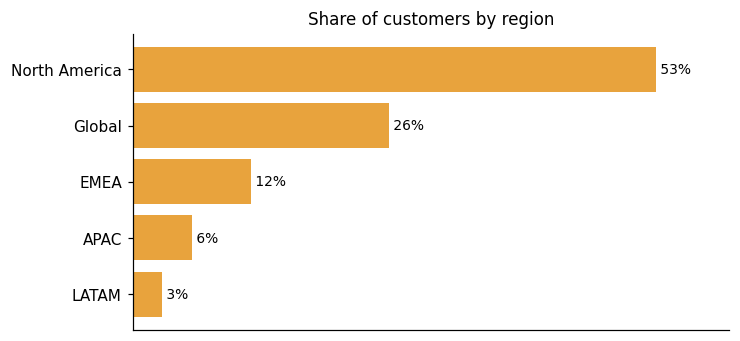
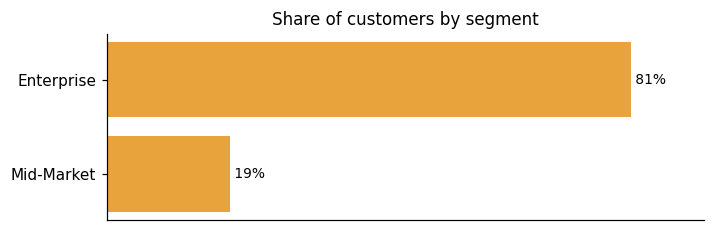
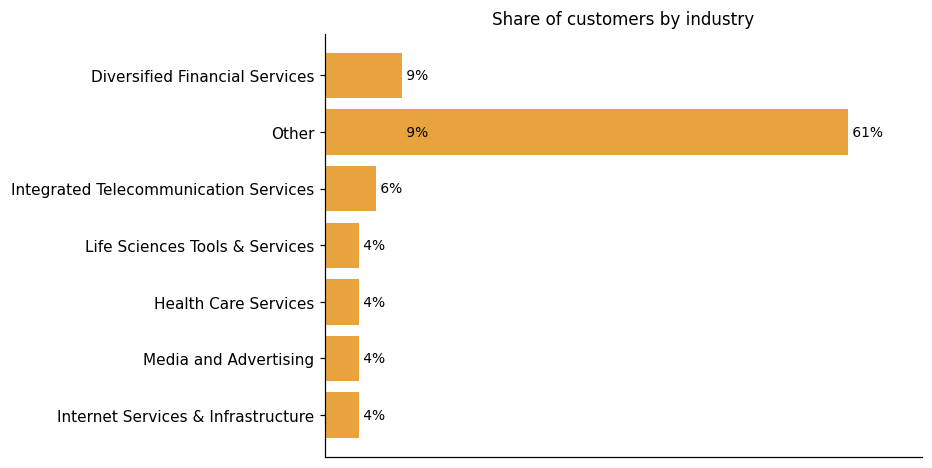
Representative customers: Advania, Amadeus, Asurint, Auctane, Bill.com, BillPro, Carrier
How BillingPlatform uses AI in practice
BillingPlatform layers AI across reporting, admin, predictive analytics, and workflow automation through a suite called RevenueIQ — but the platform's core value in billing, invoicing, and AR automation stands independent of those AI features. RevenueIQ brings together conversational AI and custom-trained models in a single integrated experience. One component of that suite, BP Copilot, is BillingPlatform's AI-powered assistant that transforms the way users interact with their billing data and navigate the platform.
Generative AI
Read detailsBillingPlatform embeds Generative AI across the platform so that plain-language instructions replace code and complex queries throughout. Users can trigger data queries, report generation, workflow creation, business rule setup, and platform navigation simply by typing everyday questions. No technical syntax required — describing what you need is enough.
Predictive ML
Read detailsBillingPlatform's machine learning models give finance teams forward-looking signals, not just a record of what has already occurred. The models are trained on both internal and external data. They cover four specific areas: churn risk, cash flow volatility, revenue fluctuations, and demand forecasting.
Anomaly / Pattern Detection
Read detailsBillingPlatform surfaces irregular patterns and deviations in financial data through two tools: AI Studio and RevenueIQ. Both work across the revenue lifecycle, flagging unexpected trends and areas of concern as they emerge. The models draw on internal and external data to detect these deviations, rather than relying on a single fixed ruleset.
Agentic AI
Read detailsBillingPlatform's intelligent automation moves beyond surfacing predictions — it acts on them. The system can trigger collections workflows and prioritize high-risk accounts without manual intervention. It also generates business rules and processes directly from natural language descriptions, meaning a user describes a process in plain language and the system builds the corresponding logic from that description.
BillingPlatform pricing and value: what the evidence shows
BillingPlatform does not publish pricing on its website, so cost conversations happen directly with the team. The ROI picture from customers is concrete: four customers account for five reported outcomes. One example is consolidation — N-Able collapsed six billing systems into one, saving more than $1 million per year. Customization is another thread: in one customer's words, BillingPlatform is "more cost-effective billing at high volumes and can easily be customized to our specific business needs." Another customer describes it as "the only agile, cost-effective solution on the market that could manage thousands of online chat sessions with complex pricing options." A third says BillingPlatform "stood out for providing an advanced, cost-effective billing solution that we can deploy and easily customize to our specific needs." Flexibility and automation also appear as drivers: one customer explains, "We chose BillingPlatform for its flexibility and ability to meet our customization and automation needs. BillingPlatform allowed us to replicate the work we were doing for our current customers in one consolidated system."
ROI evidence from 4 customers
- more cost-effective billing at high volumes and can easily be customized to our specific business needs
- BillingPlatform stood out for providing an advanced, cost-effective billing solution that we can deploy and easily customize to our specific needs
- the only agile, cost-effective solution on the market that could manage thousands of online chat sessions with complex pricing options
- employee time savings, increased performance, operational efficiency and ultimately, an improved customer experience
Who it fits: value by company size
BillingPlatform is used by large enterprises with complex billing needs. Vantage Towers, for example, cites scalability and enterprise-class security as deciding factors. That points to a platform built around sophisticated, large-scale requirements rather than simple or lightweight billing scenarios.
No dedicated pricing page detected; pricing is undisclosed on the vendor site.
BillingPlatform enterprise readiness: security, compliance, migration, and support
BillingPlatform is evaluated as an enterprise-grade Recurring Billing Application and Recurring Billing Solution across four areas: security, compliance, migration, and customer support.
Security controls and assurance
BillingPlatform takes a layered approach to security, combining proactive controls with formal third-party attestations. At the infrastructure level, traffic monitoring, multi-factor authentication, and source code review work together to limit both external threats and unauthorized access. For data at rest, BillingPlatform uses application-level encryption before storage, meeting FIPS 140-2 Level 2 and Level 3 standards. Notably, encryption keys are managed directly by customers, so organizations retain full control over who can access their data. On the attestation side, BillingPlatform holds SOC 1 and SOC 2 certifications alongside PCI Level 1 — the highest tier for payment card security — and complies with PCI DSS for credit card processing. DKIM support is included for secure email communication. For its E-Invoicing capability specifically, BillingPlatform is a certified Peppol Service Provider, enabling regulatory-compliant invoice exchange across Europe and beyond, and that capability maintains audit trails for invoicing activities to support tax and compliance requirements.
Compliance and data protection
BillingPlatform holds SOC 1 and SOC 2 attestations. On the regulatory side, it complies with GDPR and PCI standards for customer payments and personal information. Revenue recognition aligns with ASC 606 and IFRS 15, covering both domestic and international business units. GDPR sub-processor handling is documented: when a new sub-processor is engaged, data subjects have 30 days to refuse processing after the list is updated. For its E-Invoicing capability, BillingPlatform goes beyond standard invoice formats. It includes mandatory reporting functions such as SAF-T and supports country-specific compliance needs. That capability also automates compliance with regional and global tax regulations.
Migration from competing platforms
BillingPlatform is built to migrate billing systems without dismantling what already exists. The platform provides advanced data migration tools designed for secure, efficient transitions, alongside a separate commitment to protecting data integrity at every step. Integration with existing systems is designed to minimize disruption rather than require a clean-slate replacement. The pricing model can also reduce migration risk directly. As LiveTV Satellite Communications LLC puts it, BillingPlatform's pay-as-you-go model helped them significantly avoid implementation risk for a mission-critical system, while tiered pricing delivered a guaranteed ROI from the outset.
Customer support experience
BillingPlatform's support model centers on a dedicated Customer Success Manager assigned to each customer. That CSM serves as your voice throughout the company, working with you to install new products, integrate acquired business solutions, or improve existing processes. Regular cadences matter here: the CSM holds performance reviews with your executive team to review key metrics, surface changing business needs, and address roadblocks. For its Copilot capability, BillingPlatform also surfaces Knowledgebase articles, support resources, and step-by-step guides directly within the platform, so users can troubleshoot without leaving their workflow.
BillingPlatform vs. AppDirect, Aria, Chargebee and other platforms
Recurring billing applications give organizations a structured way to bill customers for one-time, subscription, and usage-based charges — consuming orders and contracts, generating recurring fees, rating usage data, issuing invoices, collecting payments, and feeding recognized revenue into a general ledger. BillingPlatform competes in this category with capabilities across revenue recognition, payments, e-invoicing, and integration. On revenue recognition, it automates allocation, reconciliation, monitoring, and recognition across various pricing models and billing methods, with compliance support built in. Its collections capability combines dunning, collections, and payment processing in a single automated solution with configurable workflows aimed at reducing DSO. Billing automation dynamically generates and delivers documents using configurable templates and automated workflows for invoice delivery. Integration exposes robust REST APIs and pre-built connectors so enterprises can build a fully integrated financial ecosystem. The table below shows where BillingPlatform, AppDirect, Aria, and Chargebee differ most. It is a differentiation view, not a complete feature-by-feature comparison, and should be read accordingly. Where the evidence points to areas where BillingPlatform trails the category, those differences are reflected in the table ratings rather than summarized here.
Recurring Billing Applications
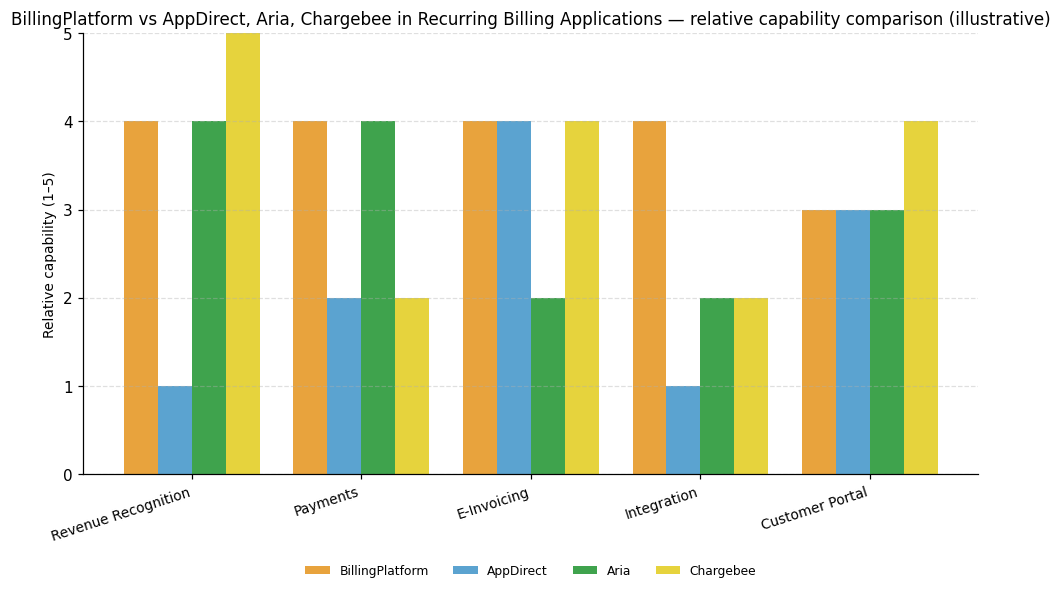
| Capability | BillingPlatform | AppDirect | Aria | Chargebee |
|---|---|---|---|---|
| Revenue Recognition | 4 | 1 | 4 | 5 |
| Payments | 4 | 2 | 4 | 2 |
| E-Invoicing | 4 | 4 | 2 | 4 |
| Integration | 4 | 1 | 2 | 2 |
| Customer Portal | 3 | 3 | 3 | 4 |
BillingPlatform
Revenue Recognition: Automates allocation, reconciliation, monitoring, and recognition of revenue across various pricing models and billing methods with compliance support.; Payments: Collections capability combines dunning, collections, and payment processing in a single automated solution with configurable workflows to reduce DSO.; E-Invoicing: Billing automation dynamically generates and delivers documents with configurable templates and automated workflows for invoice delivery.; Integration: Integration capability exposes robust REST APIs and pre-built connectors enabling enterprises to build a fully integrated financial ecosystem.
AppDirect
E-Invoicing: Excellent WYSIWYG designer for invoice and email templates with automatic email delivery, rated strong.
Aria
Revenue Recognition: Aria Revenue provides robust support for revenue recognition calculations, rated strong.; Payments: Supports multiple payment collection workflows including automated and manual tasks, email notifications, payment retries, suspensions, and terminations with automatic payment matching.
Chargebee
Revenue Recognition: Comprehensive revenue recognition module and AR subledger deployable independently of core billing, rated strong.; E-Invoicing: Flexible and easy-to-use WYSIWYG invoice template designer with automatic email and e-invoicing delivery, rated strong.; Customer Portal: Self-service contract management website composed using HTML fragments with customizable branding, rated strong.


Connect BillingPlatform with your stack: integrations and partner ecosystem
BillingPlatform supports 23 native integrations and 2 integration partnerships, spanning 18 partner categories. Those categories include CRM, Bank Debit / Payment Processing, and CPQ / Product Configuration, among others.
BillingPlatform covers integration through REST APIs, webhooks, bulk data APIs, and pre-built connectors for ERP and CRM systems. The platform externalizes the data model using application metadata, which gives external systems database-style access through REST protocols. Any change made inside the solution immediately reflects in the API layer, so custom objects can be combined with external systems for bi-directional configuration and data syncing without a separate deployment step. For moving large volumes of data, BillingPlatform supports Bulk Extract and Bulk Load APIs to efficiently process large data requests to and from your systems or data lake. For usage-based billing specifically, BillingPlatform connects to your tech stack through REST APIs, webhooks, and pre-built connectors for ERP and CRM platforms including NetSuite and Salesforce. The platform also connects with payment systems, and for its Payments capability, customers can monitor the full lifecycle of the payment journey — from payment initialization through tokenization, processing, settlement, and chargeback notifications — allowing comprehensive reconciliation between financial systems. For its Oracle NetSuite Connector capability, BillingPlatform includes automatic data synchronization between systems and point-and-click field mapping, covering end-to-end order-to-cash flows. For its Integration capability, the toolset includes a Bulk Loader, Data Sync, Robust APIs, and Productized Connectors to manage and extract data from any system.
| Partner category | Integration partners | Native count | Flow direction |
|---|---|---|---|
| CRM | Salesforce | 1 | Bidirectional |
| Bank Debit / Payment Processing | GoCardless | 1 | Upstream |
| CPQ / Product Configuration | Logik.io | 1 | Upstream |
| Cloud Computing / Infrastructure | Microsoft Azure | 1 | Upstream |
| Cloud Infrastructure | Amazon Web Services | 0 | Upstream |
| ERP / Accounting | Oracle NetSuite | 1 | Bidirectional |
| ERP / CRM | Microsoft Dynamics | 1 | Bidirectional |
| Financial Services / Payment Processing | JPMorgan Chase | 1 | Upstream |
| IT Service Management / Business Process Automation | ServiceNow | 1 | Bidirectional |
| Media & Entertainment Technology / Ad Management | Imagine Communications | 0 | Bidirectional |
| Payment Gateway | Authorize.Net | 1 | Upstream |
| Payment Management / Payment Gateway | CyberSource | 1 | Upstream |
| Payment Network / Payment Gateway | Mastercard | 1 | Upstream |
| Payment Processing | Adyen, Braintree, PayPal, Pin Payments, Stripe | 5 | Upstream |
| Payment Processing / Digital Payments | Nets | 1 | Upstream |
| Revenue Lifecycle Management / CPQ | Conga | 1 | Bidirectional |
| Tax & Accounting Software | Thomson Reuters | 1 | Bidirectional |
| Tax Compliance Software | Avalara, Sovos, Vertex, Wolters Kluwer | 4 | Bidirectional |


What's new in BillingPlatform
BillingPlatform has released 4 product updates in the last 9 months. Alongside that, it has announced 3 partnerships or integrations in the same period. Separately, BillingPlatform has earned 15 awards over the past 24 months, across the Recurring Billing Applications and Recurring Billing Solutions categories.
BillingPlatform Celebrates 2025 Partner of the Year Award Winners
BillingPlatform named three winners in its 2025 Partner of the Year Awards. PwC took Global Delivery Partner of the Year. RESPEC earned Regional Delivery Partner of the Year. Adyen was recognized as Solution Partner of the Year.
Read more →LendKey Selects BillingPlatform to Modernize and Scale Billing
BillingPlatform has landed LendKey as a customer under a multi-year agreement to modernize LendKey's billing infrastructure. The deal targets three practical goals: greater automation, faster validation of new billing logic, and a foundation that can scale with new product launches and business growth.
Read more →BillingPlatform Adds Powerful New Platform Capabilities for Advanced Revenue Insights
BillingPlatform recently added features that touch visibility, automation, and control across the revenue lifecycle. The additions give executives deeper access to revenue data for decision-making.
Read more →Recent awards for BillingPlatform
BillingPlatform has received 15 awards in the last 24 months, spanning workplace recognition, analyst recognition, a partner-of-the-year honor, and product finalist nods. On the analyst side, those include a 2025 Gartner Magic Quadrant Leader position in Recurring Billing Applications and an Overall Leader and Exemplary Vendor designation in the 2025 ISG Revenue Recognition Buyers Guide. The 2025 Inc. 5000 listing marks BillingPlatform's fifth consecutive appearance on that list. PwC was named Global Delivery Partner of the Year through the 2025 Partner of the Year Awards.
- 2024 Inc. 5000 - No. 1,557 (2024-08-13) →
- 2024 SIIA CODiE Award Finalist - Best Subscription Billing Solution (2024-12-31) →
- 2025 Gartner Magic Quadrant for Recurring Billing Applications - Leader (2025-10-23) →
- 2025 ISG Revenue Recognition Buyers Guide - Overall Leader and Exemplary Vendor (2025-07-09) →
- 2025 Inc. 5000 - Fifth Straight Year (2025-08-12) →
- 2025 Partner of the Year Awards - Global Delivery Partner of the Year: PwC (2026-02-25) →
- Deloitte Technology Fast 500 - 2025 (2025-11-19) →
- Gold Stevie Award - Company of the Year, Computer Software, Medium - 23rd Annual American Business Awards (2025-12-31) →
- IDC 2024 SaaS Award for Customer Satisfaction in Subscription Management (2024-09-17) →
- MGI 360 Ratings Report for Agile Billing - Market Leader (May 2025) (2025-05-21) →
- Market Leader - FeaturedCustomers Summer 2025 Accounts Receivable Automation Software Customer Success Report (2025-09-30) →
- Market Leader – Summer 2025 Accounts Receivable Automation Software Customer Success Report (FeaturedCustomers) (2025-06-30) →
- SPARK Matrix: Subscription & SaaS Billing Management Applications, 2024 - Leader (2024-12-05) →
- The Forrester Wave: Recurring Billing Solutions, Q1 2025 - Leader (2025-03-31) →
- Top Performer - Winter 2025 Subscription Billing Software Customer Success Report - FeaturedCustomers (2025-03-31) →
BillingPlatform Recognized as a Leader in Gartner Magic Quadrant for Third Consecutive Year
BillingPlatform has been recognized as a Leader in the Gartner Magic Quadrant for Recurring Billing Applications for the third consecutive year. This recognition highlights the platform's strength in managing billing complexity and supporting various pricing models, underscoring its capabilities in enterprise monetization and AI-native architecture.
BillingPlatform Ranked on Inc. 5000 List for Sixth Straight Year
BillingPlatform has been named to the Inc. 5000 list for the sixth consecutive year, showcasing a 475% revenue growth over six years. This recognition highlights its role as a leader in AI-native monetization, serving major enterprises like J.P. Morgan and DIRECTV. The Inc. 5000 list celebrates the fastest-growing private companies in the U.S.
BillingPlatform Expands Executive Team with Three Industry Veterans to ...
BillingPlatform has expanded its executive team by appointing Steven Springsteel as Chief Financial Officer, Rob Zwiebach as Chief Product Officer, and Chris King as Chief Customer Officer. These strategic hires aim to bolster the company's AI-native platform strategy and enhance its market position in the enterprise software sector.
BillingPlatform, Inc. Profile
Company Name
BillingPlatform, Inc.
Company Website
https://billingplatform.com/HQ Location
12650 E. Briarwood Ave, Suite 204 Centennial, CO 80112
Employees
51-100
Social


Financials
SERIES B