

Sightcall Overview
SightCall is the leading AR-powered remote visual support platform for enterprise field and customer service. A new demo is available for viewing.
Use Cases
Customers recommend Helpdesk Management, Collaboration, Customer Feedback Management, as the business use cases that they have been most satisfied with while using Sightcall.
Business Priorities
Attract More Attendees and Enhance Customer Relationships are the most popular business priorities that customers and associates have achieved using Sightcall.
Sightcall Use-Cases and Business Priorities: Customer Satisfaction Data
Sightcall works with different mediums / channels such as Video. Mobile. Promotions etc.
Sightcall's features include Widgets, Recording, Personalization, etc. and Sightcall support capabilities include Chat Support, AI Powered, 24/7 Support, etc. also Sightcall analytics capabilities include Analytics, and Custom Reports.
Reviews
"...SightCall allows its service agents to see the problem exactly as I see it, with this visual, auditory communication tool, and with the help of drawings and annotations on screen in real time, photos and signage I can solve a lot of problems, Share screens and files...." Peer review by ALFREDO P, Publishing Manager
Peer review evidence (same sources as the product rating summary)
"...Getting Started SightCall Help Center...." Getting Started SightCall Help Center
"...Video conferencing became a key foundational tool to connect virtually with customers and prospects from anywhere. ..." How MedTech Organizations Drive Engagement with Video
"...Prevent unnecessary onsite visits, improve NPS and reduce product returns with AR-powered visual assistance. ..." SightCall for Customer Service
Sightcall, Livestorm Webinar, YouCanBook.me, Crowdcast, Pexip, etc., all belong to a category of solutions that help Help Desk. Each of them excels in different abilities. Therefore, determining the best platform for your business will depend on your specific needs and requirements.
Popular Business Setting
for Sightcall
Top Industries
- Marketing and Advertising
- Publishing
- Education
Popular in
- Small Business
- Mid Market
Sightcall is popular in Marketing And Advertising, Publishing, and Education and is widely used by Small Business, and Mid Market,
Sightcall Customer wins, Customer success stories, Case studies
How does Sightcall facilitate Helpdesk Management?
How can Sightcall optimize your Collaboration Workflow?
What Are the key features of Sightcall for Customer Feedback Management?
What Are the key features of Sightcall for Sales Document Management?
What Are the key features of Sightcall for Attendee Engagement?
A global manufacturer of premium bathroom and water solutions - Consumer Goods - Very Large
SightCall’s Bold New VISION of Enterprise Service Showcased on A&E's Trending Today

Frequently Asked Questions (FAQ)
What buyers ask before choosing Sightcall
Integrations What CRM integrations are available for SightCall?
SightCall offers robust integrations with several leading CRM platforms, enhancing the customer service experience by enabling seamless visual assistance directly within existing workflows. Notable integrations include Salesforce Service Cloud, Microsoft Dynamics 365, and Genesys Cloud CX, among others. These integrations allow customer service agents to initiate live video sessions, screen sharing, and AR annotations without switching contexts, thereby improving efficiency and reducing resolution times. Additionally, SightCall's integration with Five9 and NICE CXone further supports agents in delivering exceptional service. By leveraging these CRM integrations, organizations can streamline their operations, enhance customer satisfaction, and capture valuable visual data for ongoing training and process improvement.
Integrations How does SightCall connect with Salesforce and what are the setup steps?
SightCall connects seamlessly with Salesforce by integrating directly into the Salesforce console, enhancing the user experience for service organizations. To set up SightCall with Salesforce, first, ensure you have the necessary permissions and access to the Salesforce environment. Next, navigate to the Salesforce AppExchange and install the SightCall Visual Support application. Once installed, configure the integration by linking SightCall to your Salesforce cases using the provided API capabilities, which allow for automatic synchronization. After setup, users can initiate visual support sessions directly from the Salesforce interface, enabling features like secure data collection and real-time assistance. This integration empowers service teams to resolve issues more efficiently, ultimately improving customer satisfaction and operational effectiveness.
Integrations What is the data synchronization behavior between SightCall and Microsoft Dynamics 365?
Data synchronization between SightCall and Microsoft Dynamics 365 is designed to eliminate application and data silos, ensuring seamless workflows and a comprehensive view of actionable data. When a SightCall session occurs, all information captured—including video, photos, GPS location, and signatures—is automatically saved within the Microsoft Dynamics 365 case without requiring any additional data entry. This integration allows organizations to streamline their customer service and field service processes, enhancing efficiency and accuracy. By synchronizing data in real-time, businesses can improve their operational effectiveness, reduce the risk of errors, and provide a more cohesive experience for both service agents and customers. Overall, this synchronization behavior enhances the value of both platforms, enabling organizations to modernize their workforce and optimize service delivery.
Integrations Are there any limitations to the data flow between SightCall and HubSpot?
SightCall integrates with HubSpot to enhance customer engagement and streamline workflows, but there are some limitations to consider regarding data flow. While SightCall can sync visual assistance session data and customer interactions into HubSpot, the integration may not support real-time updates for all data types, potentially leading to delays in information availability. Additionally, certain custom fields or specific data points may require manual entry or additional configuration to ensure seamless integration. It's essential for users to assess their specific needs and consult with SightCall's support team to understand the full capabilities and any constraints of the integration with HubSpot, ensuring that they can effectively leverage both platforms for optimal results.
Integrations How can I configure SightCall to work with Marketo?
To configure SightCall to work with Marketo, you will need to utilize SightCall's integration capabilities, which allow for seamless connectivity between the two platforms. Start by accessing the SightCall integration settings within your account and selecting Marketo from the list of available integrations. You will then be prompted to authenticate your Marketo account by providing the necessary API credentials. Once authenticated, you can customize the integration settings to define how data flows between SightCall and Marketo, such as syncing customer interactions or visual support sessions. Additionally, ensure that your marketing workflows in Marketo are set up to leverage the visual assistance capabilities of SightCall, enhancing customer engagement and support. For detailed guidance, refer to the SightCall Help Center or consult with your technical team.
Integrations What API access does SightCall provide for integrating with other data providers?
SightCall provides robust API access through its Xpert Knowledge Export & Integration API, enabling seamless integration with various data providers and systems. This API allows organizations to connect SightCall's remote visual support capabilities with their existing workflows, enhancing data sharing and operational efficiency. By leveraging this API, businesses can customize their integration to fit specific use cases, such as field service or customer support, ensuring that agents have access to relevant information during visual assistance sessions. Additionally, the API facilitates the transfer of contextual data, session outcomes, and user interactions, which can be recorded directly into integrated platforms like Salesforce Service Cloud, Genesys Cloud CX, and NICE CXone, thereby streamlining processes and improving overall service delivery.
Features What does the Reporting & Dashboards feature do in SightCall?
The Reporting & Dashboards feature in SightCall provides organizations with clear visibility into their service performance metrics, enabling informed decision-making. By showcasing key indicators such as first-time fix rates, avoided truck rolls, customer satisfaction, and overall operational efficiency, these dashboards help leaders assess the impact of remote visual support on their service operations. The feature includes a weekly email summary for administrators, detailing account activity and trends, which serves as a performance "report card." Enhanced export functionality for reports allows for better data management and analysis. Ultimately, this feature empowers organizations to justify service decisions and continuously improve their performance by leveraging actionable insights derived from real-time data.
Features How do I use the Async Photo Sharing feature in SightCall?
To use the Async Photo Sharing feature in SightCall, first ensure you have the SightCall mobile app installed on your iOS or Android device or access the browser-based console on Windows or macOS. When you encounter a situation where live video interaction is not possible or connectivity is limited, open the app and select the Snap™ feature. You can then capture photos directly or upload existing images from your gallery. Once you take or select a photo, it will be sent asynchronously to the intended recipient, allowing them to view the visual context without needing a live session. This feature is particularly useful for documenting evidence in low-bandwidth environments, as the photos will sync automatically once a stable connection is restored, ensuring continuity in your communication and claims process.
Features What is the purpose of the Pre-Call Readiness & Optimization feature in SightCall?
The Pre-Call Readiness & Optimization feature in SightCall is designed to enhance the efficiency and effectiveness of service interactions by ensuring that all necessary technical context and information are available before a call takes place. This feature minimizes the chances of failed or restarted sessions, which can lead to wasted time and resources. By preparing experts and technicians with the right tools and insights ahead of time, SightCall enables smoother communication and quicker resolutions during service calls. This proactive approach not only improves first-time fix rates but also boosts customer satisfaction by reducing frustration associated with technical issues. Ultimately, Pre-Call Readiness & Optimization helps organizations streamline their service workflows and enhance overall operational efficiency.
Features How can I configure the real-time collaboration platform in SightCall?
To configure the real-time collaboration platform in SightCall, start by accessing the admin settings within your SightCall account. From there, you can customize the platform based on specific use cases, machine types, or user roles to ensure that the collaboration tools are relevant and actionable for your team. You can enable features such as live video assistance, augmented reality guidance, and async image and video sharing to enhance communication and support. Additionally, SightCall offers guided setup and onboarding processes that help teams get up and running quickly, often within days. For further customization, consider leveraging the Xpert Knowledge™ feature, which transforms visual assistance sessions into reusable tutorials and guides, enhancing knowledge sharing across your organization.
Features What functionality does the new User Interface provide in the SightCall app?
The new User Interface (UI) of the SightCall app is designed to enhance usability and streamline the onboarding process for users, making it easier for service organizations to adopt video technologies for remote field service work. This redesigned UI focuses on clarity and accessibility, allowing both field and office users to navigate the app effortlessly. Key functionalities include intuitive controls for initiating video calls, sharing images and videos, and accessing metrics insights through the Agents Dashboard. Additionally, the UI supports a wide range of devices and operating systems, ensuring that users can connect seamlessly regardless of their platform. Overall, the new UI aims to improve efficiency and user experience, empowering teams to resolve issues faster and enhance service delivery.
Features How do I enable customization for prompts based on use case or user role in SightCall?
To enable customization for prompts based on use case or user role in SightCall, you can utilize the Admin Portal, where administrators have the capability to create user profiles and configure specific use cases. This allows you to tailor the prompts to be more relevant and actionable for different scenarios, such as field service, customer service, telehealth, or insurance. By navigating to the customization settings within the Admin Portal, you can define parameters that align with the unique needs of your organization and its users. This flexibility ensures that your team can generate knowledge that is not only contextually appropriate but also enhances the overall efficiency and effectiveness of your visual support sessions.
ROI & pricing What measurable business outcomes can I expect from using SightCall VISION?
By using SightCall VISION, businesses can expect several measurable outcomes that enhance operational efficiency and sustainability. The platform significantly reduces the need for on-site visits, leading to lower service costs and improved first-time fix rates, which can enhance customer satisfaction. Additionally, SightCall VISION automatically tracks ESG-relevant metrics, quantifying avoided truck rolls and CO2 emissions, thus providing a clear path to ROI while supporting sustainability initiatives. Organizations can also benefit from improved pre-call readiness, which minimizes technical issues and enhances the overall service experience. With comprehensive reporting and dashboards, leaders gain valuable insights into service performance, enabling informed decision-making that drives continuous improvement and operational excellence.
ROI & pricing How does SightCall VISION contribute to cost savings and increased revenue for enterprises?
SightCall VISION contributes to cost savings and increased revenue for enterprises by significantly reducing the need for on-site visits, which in turn minimizes travel costs and associated expenses. By leveraging augmented reality (AR) and live video support, service agents can resolve issues remotely, leading to fewer truck rolls and lower operational costs. This not only enhances efficiency but also improves customer satisfaction by providing quicker resolutions. Additionally, SightCall VISION tracks key metrics related to avoided site visits and CO2 reductions, allowing organizations to demonstrate their commitment to sustainability, which can enhance brand reputation and attract environmentally conscious customers. Ultimately, the combination of reduced costs and improved service delivery positions enterprises to achieve a clear return on investment (ROI) while driving revenue growth through enhanced customer loyalty and operational efficiency.
ROI & pricing What are the different pricing plans available for SightCall, and what do they include?
To learn about the different pricing plans available for SightCall, it's best to fill out the contact form on our website, as a SightCall representative will reach out to provide detailed information tailored to your needs. SightCall offers various pricing tiers that typically include features such as remote visual support, augmented reality capabilities, and async image and video sharing, designed to enhance operational efficiency and reduce costs for enterprises. Each plan may vary in terms of the number of users, available integrations, and specific functionalities, ensuring that businesses can choose a solution that aligns with their service requirements. For precise pricing and feature details, please connect with our team directly.
ROI & pricing What is the total cost of ownership for implementing SightCall VISION in my organization?
The total cost of ownership (TCO) for implementing SightCall VISION in your organization encompasses several factors, including software licensing fees, integration costs, training expenses, and ongoing support. While specific pricing can vary based on the size of your organization and the scale of deployment, SightCall VISION is designed to provide a clear path to ROI by reducing operational costs associated with site visits and truck rolls. By quantifying avoided site visits and CO2 reductions, organizations can also enhance their sustainability efforts, which may lead to additional savings and improved brand reputation. To get a precise estimate tailored to your needs, it’s advisable to contact SightCall directly for a demo and a detailed consultation on pricing structures.
ROI & pricing How quickly can I see a return on investment after implementing SightCall VISION?
The return on investment (ROI) after implementing SightCall VISION can be realized quickly, often within a few months, depending on your organization's specific use cases and service processes. By leveraging live video assistance, augmented reality guidance, and asynchronous image and video sharing, businesses can significantly reduce service costs associated with truck rolls and improve first-time fix rates. This leads to fewer failed or restarted sessions, enhanced customer satisfaction, and lower operational expenses. Additionally, SightCall automatically tracks ESG-relevant metrics, allowing organizations to quantify their environmental impact, which can further enhance ROI. To maximize your investment, it's advisable to request a personalized demo to understand how SightCall VISION can be tailored to your unique needs and objectives.
ROI & pricing What are the sustainability benefits of using SightCall VISION in terms of carbon emissions reduction?
SightCall VISION offers significant sustainability benefits by directly contributing to carbon emissions reduction through fewer site visits and the elimination of unnecessary truck rolls. By enabling remote visual assessments via live video and augmented reality, organizations can resolve issues without sending technicians on-site, which not only cuts travel costs but also minimizes the carbon footprint associated with transportation. For instance, Allianz has reported conducting approximately 230,000 remote assessments annually using SightCall, resulting in emissions savings equivalent to the annual absorption capacity of about 7,000 adult trees. This quantifiable impact allows businesses to track ESG-relevant metrics, demonstrating their commitment to sustainability while also achieving operational efficiencies and enhancing customer satisfaction. Overall, SightCall VISION provides a clear path to ROI for enterprises focused on reducing waste and CO2 emissions.
Capabilities What features does SightCall offer for remote visual support?
SightCall offers a robust suite of features designed to enhance remote visual support for organizations across various industries. Key features include live video assistance, which allows technicians to connect with remote experts in real-time, and augmented reality (AR) guidance that provides interactive support during complex tasks. Additionally, SightCall supports asynchronous photo and video sharing, enabling users to send images and recordings without needing a live session, which can streamline communication and expedite issue resolution. The platform is built for scalability and security, making it suitable for enterprises, and it includes customizable prompts tailored to specific use cases, machine types, or user roles. These features collectively improve efficiency, reduce operational costs, and enhance the overall customer experience by facilitating faster and more accurate problem-solving.
Capabilities Can SightCall ensure compliance with HIPAA and GDPR regulations?
Yes, SightCall is designed to ensure compliance with both HIPAA and GDPR regulations, making it a suitable choice for organizations that handle sensitive data. For HIPAA compliance, SightCall implements encrypted connections and robust controls to protect patient information, ensuring that healthcare providers can securely conduct remote visual support sessions. Regarding GDPR, SightCall provides the necessary technical and organizational measures to safeguard personal data, including encryption in transit and at rest, as well as contractual safeguards like Standard Contractual Clauses for international data transfers. Additionally, SightCall supports customers in demonstrating compliance through audit documentation and breach notification processes. By adhering to these regulations, SightCall helps organizations maintain data privacy and security while delivering effective remote support solutions.
Capabilities Does SightCall provide role-based access controls for user accounts?
Yes, SightCall provides role-based access controls for user accounts, allowing organizations to manage user permissions effectively based on their specific roles. This feature enhances security by ensuring that users only have access to the functionalities and data necessary for their job responsibilities. Administrators can easily configure these access controls to align with organizational policies, thereby protecting sensitive information and maintaining compliance with industry standards such as HIPAA and GDPR. By implementing role-based access, SightCall helps organizations streamline operations while safeguarding user accounts and administrative functions, ultimately contributing to a more secure and efficient remote visual support environment.
Capabilities Can I use SightCall on both mobile and desktop devices?
Yes, you can use SightCall on both mobile and desktop devices, making it a versatile solution for various users. SightCall offers native mobile applications for iOS and Android, allowing field technicians and customers to engage in live visual assistance from their smartphones or tablets. Additionally, there is a browser-based agent console compatible with Windows and macOS, which supports modern browsers like Chrome, Edge, and Firefox. This multi-platform support ensures that users can access SightCall's features, such as live video collaboration and augmented reality guidance, regardless of their device, enhancing accessibility and efficiency in service workflows across different environments.
Capabilities Does SightCall support asynchronous photo and video sharing?
Yes, SightCall supports asynchronous photo and video sharing through its Snap™ feature, which allows users to capture and send images and short videos without needing a live video interaction. This capability is particularly beneficial in low-bandwidth or offline conditions, enabling adjusters and field service technicians to document evidence and showcase issues even when connectivity is limited. Users can take photos or record videos and upload them to the platform, where they will automatically sync once the network connection is restored. This ensures continuity in the claims process and enhances communication between agents and clients, ultimately improving efficiency and service delivery.
Capabilities Can SightCall maintain performance during poor network connectivity?
Yes, SightCall is designed to maintain performance during poor network connectivity by utilizing several innovative features. In low-bandwidth environments, agents can switch to freeze-frame guidance or use SightCall Snap, which allows them to send photos or short videos asynchronously. This means that even when the live video feed is compromised, users can document evidence and share visual context, which syncs automatically once the network conditions improve. This capability ensures that session continuity and context are preserved, allowing field technicians and agents to effectively communicate and resolve issues without being hindered by connectivity challenges. Thus, SightCall enhances operational efficiency even in challenging network situations.
Use cases How can SDRs use SightCall to enhance their customer engagement during sales calls?
Sales Development Representatives (SDRs) can leverage SightCall to significantly enhance customer engagement during sales calls by utilizing its live visual assistance and augmented reality (AR) capabilities. By sharing real-time video and visual content, SDRs can provide a more interactive and personalized experience, allowing potential customers to visualize products or solutions in action. This approach not only helps in demonstrating complex features but also facilitates immediate feedback and questions, fostering a more dynamic conversation. Additionally, the ability to share images and videos asynchronously ensures that SDRs can maintain engagement even in cases of poor connectivity, preserving the context of discussions. Overall, SightCall empowers SDRs to create a more compelling and effective sales dialogue, ultimately driving higher conversion rates and customer satisfaction.
Use cases What are the best practices for marketers to implement SightCall in their lead generation workflows?
To effectively implement SightCall in lead generation workflows, marketers should focus on integrating live visual assistance into their customer engagement strategies. Start by utilizing SightCall's capabilities to provide real-time video consultations, allowing potential customers to interact directly with sales representatives, which can enhance trust and clarity. Incorporate augmented reality (AR) features to showcase products or services interactively, making the experience more engaging. Additionally, leverage async image and video sharing to follow up with leads, providing them with visual content that reinforces your messaging. Ensure that your team is trained to use SightCall's metrics insights to analyze engagement and optimize workflows continuously. Finally, consider integrating SightCall with your existing CRM, such as Salesforce Service Cloud, to streamline lead tracking and management, ultimately improving conversion rates and customer satisfaction.
Use cases In what scenarios should RevOps teams leverage SightCall to improve operational efficiency?
RevOps teams should leverage SightCall in scenarios where real-time visual assistance can enhance communication and problem-solving efficiency. For instance, when field service technicians encounter complex issues that require expert input, SightCall enables them to connect instantly with remote specialists through live video collaboration and augmented reality (AR) guidance. This capability reduces the need for unnecessary truck rolls by allowing for remote diagnosis and troubleshooting, ultimately improving first-time fix rates and customer satisfaction. Additionally, SightCall's ability to capture and reuse visual data can streamline training and documentation processes, making it easier for teams to share knowledge and improve operational workflows. By integrating SightCall into their processes, RevOps teams can significantly enhance service delivery and operational efficiency.
Use cases How can sales leaders utilize SightCall to increase first-time fix rates in their field service teams?
Sales leaders can utilize SightCall to increase first-time fix rates in their field service teams by leveraging its live visual assistance and augmented reality (AR) capabilities. By enabling technicians to connect with remote experts in real time, SightCall allows for immediate guidance on complex issues, reducing the need for multiple visits. This visual support helps technicians accurately diagnose problems and implement solutions on the first attempt, significantly improving first-time fix rates. Additionally, the platform captures visual data that can be reused for training and documentation, further enhancing team performance. By streamlining workflows and providing instant access to expertise, SightCall empowers field service teams to resolve issues faster, ultimately boosting customer satisfaction and operational efficiency.
Use cases What specific challenges in field service can be addressed by using SightCall's visual support technology?
SightCall's visual support technology addresses several key challenges in field service operations. By enabling live video collaboration, augmented reality (AR) guidance, and AI-driven visual intelligence, it helps technicians diagnose and resolve issues more efficiently, significantly reducing the need for truck rolls. This technology enhances first-time fix rates by providing real-time expert assistance, which shortens resolution times and minimizes downtime. Additionally, SightCall captures and reuses visual data, facilitating better training and documentation processes. By streamlining complex service workflows and connecting on-site technicians with remote experts, SightCall ultimately boosts customer satisfaction and improves overall service efficiency, making it an invaluable tool for field service organizations.
Use cases How can organizations effectively adopt SightCall to streamline their customer service processes?
Organizations can effectively adopt SightCall to streamline their customer service processes by following a structured implementation approach. First, assess specific service challenges and identify key areas where visual assistance can enhance efficiency, such as reducing truck rolls or improving first-time fix rates. Next, involve field technicians in the selection and prototyping phases to ensure the solution meets their needs, fostering buy-in and ease of use. Train staff on the platform's features, including live video collaboration and augmented reality (AR) guidance, to maximize its potential. Additionally, integrate SightCall with existing systems like Salesforce Service Cloud for seamless data flow and enhanced customer insights. Finally, utilize SightCall's reporting and dashboards to monitor performance metrics, enabling continuous improvement and informed decision-making in customer service operations.
Alternatives What are the best alternatives to SightCall for remote visual support?
When considering alternatives to SightCall for remote visual support, several notable options exist. TeamViewer Pilot offers real-time video support and remote assistance, allowing technicians to guide customers through troubleshooting processes effectively. Another competitor is Zoho Lens, which provides augmented reality tools for visual assistance, enabling users to share their screens and receive guidance from experts. Additionally, LiveLook by LogMeIn focuses on visual collaboration, allowing agents to see what customers see for enhanced problem-solving. Each of these platforms has unique features that may cater to specific business needs, such as integration capabilities, user interface, and pricing structures, making it essential to evaluate them based on your organization's requirements for remote visual support.
Alternatives How does SightCall compare to Zoom for visual assistance in enterprise settings?
SightCall and Zoom serve different purposes in enterprise settings, particularly for visual assistance. SightCall is specifically designed for remote visual support, integrating live video, augmented reality (AR), and AI-driven visual intelligence to enhance field service efficiency. It allows technicians to diagnose issues in real-time, share images and videos asynchronously, and create reusable knowledge from service interactions. In contrast, Zoom is primarily a video conferencing tool that facilitates virtual meetings but lacks the specialized features for visual assistance that SightCall offers. While Zoom can be used for general communication, it does not provide the same level of tailored support for field service operations, such as AR guidance or the ability to capture and structure visual service knowledge. Thus, for organizations focused on improving service workflows and operational efficiency, SightCall is the more suitable choice.
Alternatives What are the key differentiators between SightCall and TeamViewer?
SightCall and TeamViewer both offer remote support solutions, but they cater to different needs and functionalities. SightCall specializes in remote visual assistance, leveraging live video, augmented reality (AR), and AI-driven visual intelligence to enhance field service operations. Its key differentiators include the ability to provide guided AR sessions, async image and video sharing, and the capture of visual data for training and documentation, which significantly improves first-time fix rates and reduces operational costs. In contrast, TeamViewer focuses more on remote desktop access and control, making it ideal for IT support and software troubleshooting. While TeamViewer excels in screen sharing and remote access, SightCall's emphasis on visual collaboration and real-time problem-solving makes it particularly suited for industries requiring hands-on guidance, such as field service and customer support.
Alternatives Is there a better option than SightCall for augmented reality support in customer service?
While SightCall is a leading platform for augmented reality (AR) support in customer service, there are alternative options worth considering. For instance, platforms like Zoho Desk and LivePerson also offer AR capabilities, enabling businesses to enhance customer interactions through visual assistance. Zoho Desk integrates seamlessly with various CRM tools, providing a comprehensive customer support solution, while LivePerson focuses on AI-driven chat and messaging, which can complement AR features. However, SightCall stands out with its specialized focus on live video collaboration, AR guidance, and AI-driven visual intelligence, which are designed specifically for field service and customer service efficiency. Ultimately, the best choice depends on your specific business needs, existing technology stack, and the level of AR integration required for your customer service operations.
Alternatives SightCall vs. LiveView: Which platform offers superior visual communication features?
When comparing SightCall and LiveView for visual communication features, both platforms offer unique strengths tailored to different business needs. SightCall excels with its comprehensive suite that includes live video support, augmented reality (AR) guidance, and asynchronous photo and video sharing, making it particularly effective for field service and customer support scenarios. Its ability to maintain session continuity even in low-bandwidth environments enhances its usability. On the other hand, LiveView may focus on specific use cases or industries, potentially offering streamlined features that cater to those needs. Ultimately, the choice between SightCall and LiveView will depend on your organization's specific requirements for visual communication, such as the need for AR capabilities or the importance of seamless integration with existing workflows.
Alternatives What are the strengths of SightCall compared to its competitors like Help Lightning?
SightCall offers several strengths compared to its competitor Help Lightning, particularly in its comprehensive feature set and flexibility. SightCall combines live video, augmented reality, and asynchronous image and video sharing, which enhances remote visual support and allows for real-time problem-solving, making it particularly effective for enterprises. Its ability to function seamlessly across various devices and operating systems, including native mobile apps for iOS and Android, as well as desktop consoles for Windows and macOS, ensures accessibility for all users. Additionally, SightCall's robust handling of poor or intermittent connectivity through features like freeze-frame guidance and asynchronous sharing provides a significant advantage in challenging environments. While Help Lightning also offers visual support, SightCall's integration with Salesforce Service Cloud and its extensive library of more than 1,000 components on the AppExchange further enhance its value proposition for businesses looking to optimize their service operations.
Sightcall Competitors


Sightcall Features
- Low
- Medium
- High
| FEATURE | RATINGS AND REVIEWS |
|---|---|
| AI Powered | Read Reviews (151) |
| Analytics | Read Reviews (154) |
| Custom Reports | Read Reviews (579) |
| CAPABILITIES | RATINGS AND REVIEWS |
|---|---|
| AI Powered | Read Reviews (151) |
| Analytics | Read Reviews (154) |
| Custom Reports | Read Reviews (579) |
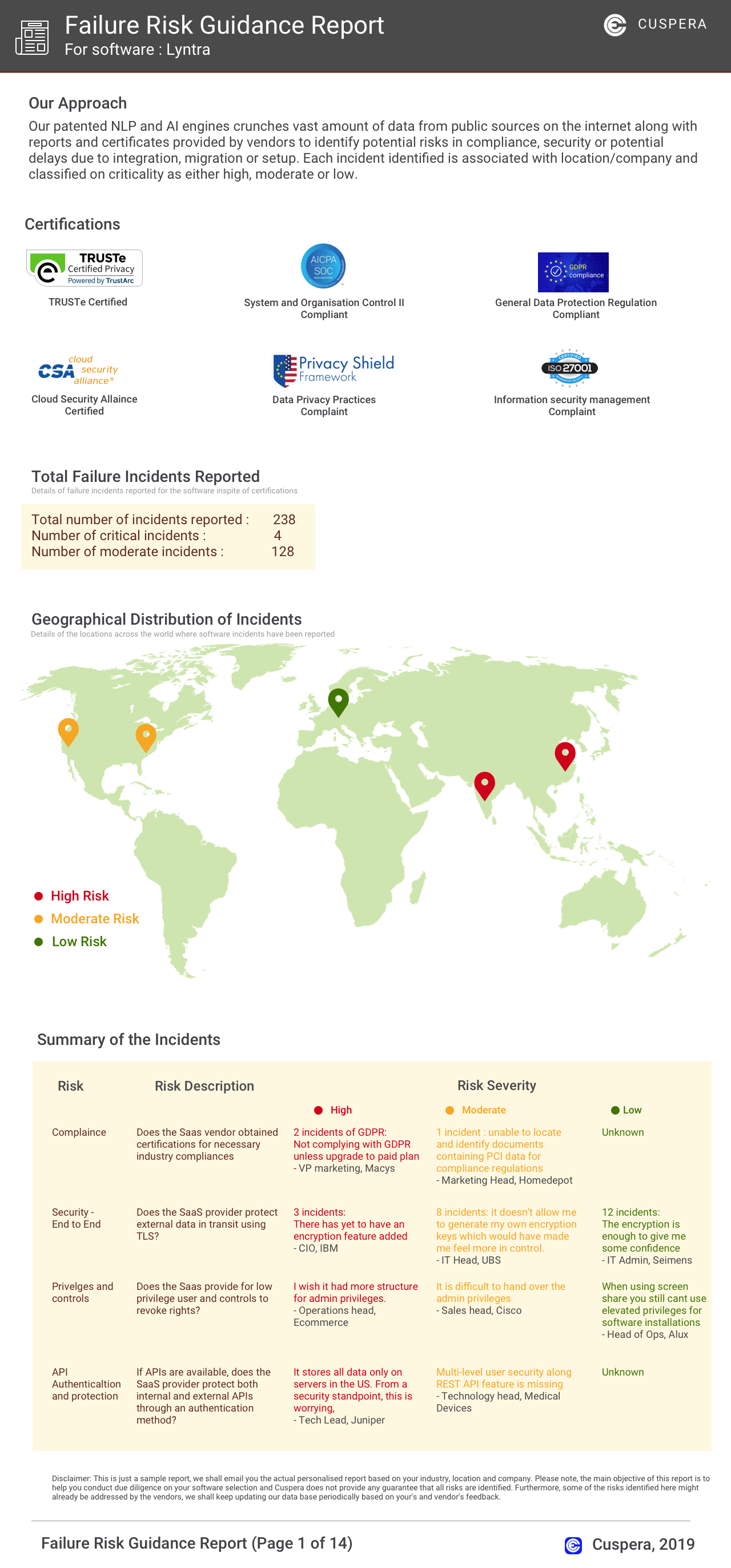
Software Failure Risk Guidance
?for Sightcall
Overall Risk Meter
Top Failure Risks for Sightcall
Sightcall News
New SightCall VISION Console: A Faster, Simpler, and Secure Experience
SightCall has launched its new VISION Console, enhancing remote visual support with a redesigned interface, improved accessibility, and expanded capabilities. Key features include live video docking, WhatsApp meeting invites, image annotation, and AI face blur for privacy. The update aims to boost productivity and compliance across industries like field service, customer service, insurance, and telehealth.
Elevating the Claims Experience with Remote Visual Support
SightCall's VISION platform enhances insurance claims processing with remote visual support, integrating live video and AI to reduce cycle times and operational costs. This technology improves customer satisfaction by offering real-time claim assessments, cutting processing times by up to 60%, and lowering costs by around 30%. It supports compliance across major regions and is rapidly becoming a standard in the industry.
Introducing SightCall Snap: Visual Customer Support Embedded in NiCE CXone Interactions
SightCall introduces SightCall Snap, a visual customer support tool embedded in NiCE CXone, enabling agents to receive real-time visual media from customers without live video calls. This integration enhances customer service by reducing handle times and improving first contact resolution, particularly in high-volume sectors like e-commerce and telecom.
Sightcall Profile
Company Name
Sightcall
Company Website
https://sightcall.com/HQ Location
330 Townsend St, Suite 209 San Francisco, CA 94107, US
Employees
51-100
Social


Financials
SERIES A