

Caspio Overview
Caspio's low-code platform is all about empowering users to create online database applications with minimal coding. It's a go-to for building web apps and automating tasks, offering a flexible and efficient approach to app development. Whether you're crafting data-driven applications or looking to scale operations, Caspio provides the tools needed to achieve these goals. One standout feature is its AI integration, which boosts efficiency by automating complex processes. Trusted by over 15,000 organizations, Caspio supports diverse business needs, making it a versatile choice for those looking to innovate without getting bogged down in code.
Use Cases
Customers recommend Helpdesk Management, Business Development, Sending & Publishing Communications, as the business use cases that they have been most satisfied with while using Caspio.
Business Priorities
Enhance Customer Relationships and Scale Best Practices are the most popular business priorities that customers and associates have achieved using Caspio.
Caspio Use-Cases and Business Priorities: Customer Satisfaction Data
Caspio works with different mediums / channels such as Website. and Video.
Caspio's features include Personalization, Dashboard, Recording, etc. and Caspio support capabilities include Chat Support, Email Support, 24/7 Support, etc. also Caspio analytics capabilities include Custom Reports, and Analytics.
Reviews
"...If you want to publish videos online, you use YouTube...." Peer review by Joe Conway, Director, Print and E-Media, Houston Community College
Peer review evidence (same sources as the product rating summary)
"...necessary Robust relational database Customer Support is extremely helpful Super Easy to Use and minimal code..." Peer review by Erin Fry
"...Caspio Named a Leader in Low-Code Platforms for Business Developers by Independent Research Firm ..." News and Press
"...Caspio s plug-and-play solutions allow us to do exactly that, and more easily publish intensely local and unique data and information about the communities in which we operate...." Peer review by Sean Polay, Product Manager for Distributed Media, Dow Jones Local Media Group
Caspio, ExpertSender, Lead Liaison, Pipefy, monday marketer, etc., all belong to a category of solutions that help Marketing Automation. Each of them excels in different abilities. Therefore, determining the best platform for your business will depend on your specific needs and requirements.
Caspio enables the creation of powerful online database applications using a low-code platform. Web apps and task automation can be achieved with minimal coding.
Popular Business Setting
for Caspio
Top Industries
- Information Technology and Services
- Human Resources
- Entertainment
Popular in
- Small Business
- Mid Market
- Large Enterprise
Caspio is popular in Information Technology And Services, Human Resources, and Entertainment and is widely used by Small Business, Mid Market, and Large Enterprise.
Caspio Customer wins, Customer success stories, Case studies
What makes Caspio ideal for Helpdesk Management?
What makes Caspio ideal for Business Development?
Why is Caspio the best choice for Sending & Publishing Communications?
How can Caspio optimize your Workflow Management Workflow?
Why is Caspio the best choice for Onboarding?
Albuquerque Area Indian Health Board Powers Tribal Data Sovereignty With Caspios No-Code Platform - News By Wire
Center for Plant Conservation at San Diego Zoo - Non Profit Organization Management - Small
Frequently Asked Questions (FAQ)
What buyers ask before choosing Caspio
Integrations What CRM integrations are available with Caspio?
Caspio offers a variety of CRM integrations that enhance its low-code application development capabilities, allowing businesses to streamline their customer relationship management processes. Notably, Caspio can integrate with popular platforms such as Salesforce, HubSpot, and Zoho CRM, enabling seamless data flow between systems. This integration capability ensures that customer data is synchronized across platforms, reducing the risk of duplicate entries and improving overall efficiency. Additionally, Caspio's built-in database system allows for easy management of customer interactions and data, while its automation features help to optimize workflows. By leveraging these integrations, businesses can create a customized CRM solution that aligns with their specific needs and enhances their sales and customer service operations.
Integrations How does Caspio connect to Salesforce and HubSpot?
Caspio connects to Salesforce and HubSpot through its built-in integration with Zapier, allowing users to link over 5,000 cloud-based services seamlessly. This integration enables the automatic transfer of data between Caspio and these popular CRM platforms, facilitating real-time updates and synchronization of customer information. Users can set up automated workflows that trigger actions in Salesforce or HubSpot based on data changes in Caspio, enhancing efficiency in sales and marketing operations. Additionally, Caspio supports data exports and imports, allowing businesses to manage their customer data effectively across platforms. By leveraging these integrations, organizations can streamline their processes, improve data accuracy, and enhance overall customer relationship management.
Integrations What are the setup steps for integrating Caspio with Marketo?
To integrate Caspio with Marketo, start by ensuring you have an active Caspio account with API access. First, create an API profile in your Caspio account, which will allow you to configure the specific tables and views that Marketo can access. Next, set up the necessary permissions to control what data is available for Marketo and what actions it can perform. After configuring your API profile, use Marketo's webhook feature to connect to Caspio's API, enabling data exchange between the two platforms. Finally, test the integration to ensure that data flows correctly and that both systems are communicating as expected. This integration allows you to leverage Caspio's low-code capabilities alongside Marketo's marketing automation tools, enhancing your overall marketing strategy.
Integrations How does data flow between Caspio and third-party applications like Zapier?
Data flows between Caspio and third-party applications like Zapier through a seamless integration that allows users to automate workflows without coding. When a specific event occurs in Caspio, such as a new record being created or updated, it can trigger an action in a connected app via Zapier. For instance, you can set up a Zap that automatically sends new Caspio data to a CRM like Salesforce or updates a mailing list in Mailchimp. This integration supports over 5,000 cloud-based services, enabling users to sync data effortlessly across platforms like Office 365, Google Drive, and Dropbox. By utilizing this integration, businesses can streamline their operations, reduce manual data entry, and enhance overall productivity, making it easier to manage data across various applications.
Integrations What are the limitations of Caspio's API access for integrations?
Caspio's API access for integrations offers robust capabilities, but it does come with certain limitations. Primarily, users must create an API profile within their Caspio account and configure access permissions for specific tables and views, which can restrict the data available for integration. Additionally, while Caspio supports REST APIs and webhooks, the complexity of certain integrations may require a deeper understanding of API functionalities, which could be a barrier for non-technical users. Furthermore, the API may have rate limits that restrict the number of requests that can be made in a given timeframe, potentially impacting performance during high-demand periods. Overall, while Caspio provides powerful integration options, users should be aware of these limitations to effectively plan their application development and data management strategies.
Integrations How can I configure sync behavior between Caspio and other data providers?
To configure sync behavior between Caspio and other data providers, you can utilize Caspio's built-in integration with Zapier, which allows you to connect with over 5,000 cloud-based services, including popular platforms like Salesforce, Office 365, and Mailchimp. Start by creating an API profile in your Caspio account, where you can specify which tables and views the integration can access. Then, set up tasks within Zapier to automate data transfers, ensuring that data is synchronized according to your specified triggers and schedules. Additionally, you can use scheduled tasks and REST API capabilities within Caspio to further customize how and when data is synced, providing you with flexibility and control over your data management processes.
Features What does the automated workflow engine in Caspio do?
The automated workflow engine in Caspio streamlines and automates various business processes, significantly enhancing operational efficiency. It allows users to create custom workflows that can manage tasks such as approvals, data entry, and notifications without the need for extensive coding knowledge. By automating repetitive tasks, the engine reduces manual effort, minimizes errors, and accelerates project timelines. Additionally, it supports real-time collaboration by enabling users to track the status of workflows and access information instantly. This functionality is particularly beneficial for organizations looking to optimize their operations, as it provides a more robust alternative to traditional methods like email communication and manual tracking, ultimately freeing up time for more strategic activities.
Features How do I configure document flow automation in Caspio?
To configure document flow automation in Caspio, start by accessing the Caspio platform and navigating to the "Automations" section. Here, you can create a new automation by selecting the type of document flow you wish to automate, such as approvals or notifications. Utilize the visual application builder to define the triggers for your automation, such as form submissions or scheduled tasks. Next, set up the actions that will occur when these triggers are activated, which may include sending emails, updating records, or generating documents. You can also incorporate REST API calls for more complex integrations. Finally, test your automation to ensure it functions as intended, and make adjustments as necessary to optimize the document flow process. This streamlined approach will enhance efficiency and reduce manual intervention in your document management tasks.
Features What features are included in Caspio's cross platform web app?
Caspio's cross-platform web app includes a variety of powerful features designed to facilitate the creation and management of custom applications without extensive coding knowledge. Key features include a visual app builder that utilizes a WYSIWYG drag-and-drop interface, allowing users to design professional-looking applications effortlessly. The platform supports DataPages, which serve as web interfaces for building custom web forms, and offers enterprise-grade identity services for managing user authentication and permissions. Additionally, Caspio enables collaboration among unlimited app creators, promoting teamwork across departments. Users can also leverage modular components to build dynamic applications and extend functionality with scripting when necessary. Overall, these features empower businesses to streamline their operations and enhance user engagement effectively.
Features How do I create dynamic dashboards using Caspio's chart applications?
To create dynamic dashboards using Caspio's chart applications, start by signing up for a free trial and logging into your Caspio account. You can import data from Excel spreadsheets or Access databases to serve as the foundation for your dashboard. Next, utilize Caspio’s guided development workflow, which simplifies the process of building custom interfaces without any coding required. Choose from various chart types to visualize your data effectively, and customize your dashboard to display key metrics relevant to your business needs, such as sales performance or project management stats. Once your dashboard is ready, you can seamlessly deploy it on any website, intranet, or CMS, similar to embedding a YouTube video, allowing for easy access and interaction with your data.
Features What is the process for automating workflows in Caspio?
Automating workflows in Caspio involves several straightforward steps designed to streamline your processes without requiring extensive coding knowledge. First, you begin by identifying the specific manual tasks you want to automate, such as data entry or approval processes. Next, you can utilize Caspio's low-code platform to create custom applications that integrate various data sources into a single workflow. Using the guided development workflow, you can build DataPages and set up automation rules that dictate how data flows between different stages of your process. Additionally, you can implement triggers and scheduled tasks to ensure that actions occur automatically based on predefined conditions. Finally, you can test and refine your automated workflows to ensure they meet your business needs, ultimately enhancing efficiency and productivity across your organization.
Features How do I use Caspio to develop a no-code application?
To develop a no-code application using Caspio, start by signing up for a free trial, which requires no credit card. Once registered, you can choose an application template or begin with a clean slate. Identify the specific business problem you want to solve and map out the requirements of your app, such as user interface design and data storage needs. Utilize Caspio's visual app builder, which features a drag-and-drop interface, to create your application without writing any code. You can also integrate customizable web forms to gather and manage data effectively. As you build, leverage Caspio's database capabilities to ensure your app is robust and compliant with necessary regulations. Finally, test your application and make adjustments as needed before deployment.
ROI & pricing What measurable business value can I expect from using Caspio?
Using Caspio can deliver significant measurable business value by streamlining operations and enhancing data management. With its low-code platform, organizations can quickly build custom applications that automate workflows, reducing manual processes and minimizing errors. This leads to increased efficiency and productivity, as teams can focus on higher-value tasks rather than administrative work. Caspio's interactive dashboards provide real-time insights into key metrics, enabling data-driven decision-making that can improve sales performance and customer service. Additionally, by integrating various data sources into a single platform, businesses can eliminate the risks associated with spreadsheets and ensure data governance. Overall, Caspio empowers organizations to modernize their operations, enhance collaboration, and achieve better outcomes, ultimately driving growth and profitability.
ROI & pricing How does Caspio help in reducing operational costs for my business?
Caspio helps reduce operational costs for your business by automating manual processes and eliminating the need for extensive coding or IT resources. With its low-code platform, businesses can create reliable online databases and applications quickly, which streamlines workflows and minimizes time spent on repetitive tasks. This efficiency not only accelerates project development but also reduces labor costs associated with manual data entry and management. By replacing traditional tools like MS Excel and Access, Caspio enables organizations to consolidate their data management into a centralized system, further cutting down on operational expenses. Additionally, the platform's ability to provide real-time updates and insights allows businesses to make informed decisions swiftly, ultimately leading to cost savings and improved resource allocation.
ROI & pricing What is the total cost of ownership for using Caspio's platform?
The total cost of ownership (TCO) for using Caspio's platform includes various factors such as subscription fees, onboarding costs, and potential additional expenses for support and training. Caspio offers multiple subscription plans, starting from a Lite Plan for simpler projects to more comprehensive Enterprise Plans that provide advanced features and security. Onboarding programs range from $600 for Jumpstart Onboarding to $1,800 for Enterprise Onboarding, which can enhance your implementation experience. Additionally, users can take advantage of a free trial to explore the platform without upfront costs, and ongoing support is available 24/7. To accurately assess the TCO, consider your specific project requirements, the plan that best fits your needs, and any additional services you may require.
ROI & pricing How quickly can I see a return on investment after implementing Caspio?
The return on investment (ROI) after implementing Caspio can be seen quite rapidly, often within days to weeks, depending on the complexity of your application. Caspio's low-code platform allows organizations to launch their first working version quickly, leveraging its visual development environment and pre-built templates. This accelerated deployment means you can start using the platform to streamline operations, enhance customer service, or develop custom applications almost immediately. Additionally, the ability to refine and expand functionality as your needs evolve further contributes to long-term ROI. By reducing development time and costs compared to traditional coding methods, businesses can achieve significant savings and improved efficiency, ultimately leading to a faster realization of ROI.
ROI & pricing What are the different pricing plans available for Caspio, and what do they include?
Caspio offers a range of pricing plans designed to cater to different project needs, starting with a Free Account suitable for simple projects. The Lite Plan is ideal for individuals and small teams creating their first applications, while the Corporate Plans are tailored for growing businesses that require automation and compliance features. For larger organizations, Caspio provides Enterprise Plans that include advanced security, full governance, and guaranteed performance levels. Each plan allows for unlimited users, and there are options for discounts, such as a 10% reduction for annual billing or for nonprofits. To determine which plan best fits your requirements, you can compare the pricing options directly on the Caspio website.
ROI & pricing How does Caspio's unlimited user pricing model impact my overall costs?
Caspio's unlimited user pricing model significantly impacts overall costs by eliminating per-user fees, allowing businesses to scale their applications without worrying about increasing expenses as their user base grows. This model is particularly beneficial for organizations with fluctuating or large numbers of users, such as employees, customers, or partners, as it provides predictable budgeting without hidden costs. With no restrictions on user access, companies can deploy applications across their entire organization, enhancing collaboration and efficiency. Additionally, this pricing structure supports tech entrepreneurs and small teams by enabling them to enter the market quickly and affordably, making Caspio an attractive option for businesses looking to leverage low-code solutions without incurring escalating costs.
Capabilities What types of applications can be built using Caspio's low-code platform?
Caspio's low-code platform enables organizations to build a diverse array of custom business applications tailored to their specific needs, significantly reducing the complexity and time associated with traditional development. Users can create applications for various sectors, including healthcare, education, finance, government, energy, media, consulting, and nonprofit organizations. Common applications include customer relationship management (CRM) systems, data management tools, and internal operational workflows. Additionally, Caspio supports the development of HIPAA-compliant applications, making it suitable for sensitive data environments. By leveraging Caspio's intuitive visual interface and drag-and-drop components, businesses can quickly digitize processes, enhance customer service operations, and streamline data management, ultimately driving efficiency and innovation across their operations.
Capabilities Can Caspio support enterprise-level security and compliance requirements?
Yes, Caspio can support enterprise-level security and compliance requirements, making it a trusted choice for organizations with stringent standards. The platform is designed to meet various regulatory frameworks, including HIPAA, SOC 2 Type II, GDPR, and FERPA, ensuring that sensitive data is handled securely. Caspio offers features such as data encryption at rest and in transit, granular access controls, version history, and audit trails, which enhance data governance and transparency. Additionally, for organizations needing enhanced isolation and control, Caspio provides options for private cloud deployment. With its comprehensive security measures and compliance capabilities, Caspio enables enterprises to scale applications confidently while maintaining a secure and compliant environment.
Capabilities Does Caspio provide scalability for growing organizations without limits?
Yes, Caspio provides unparalleled scalability for growing organizations without limits. With its unique pricing model, there are no per-user fees or hidden costs, allowing unlimited users—be they employees, customers, or partners—to access applications without financial constraints. This means organizations can expand their applications seamlessly as their user base grows, ensuring that costs remain predictable and manageable. Caspio's robust infrastructure, built on best-of-breed technologies like AWS and Microsoft SQL, supports enterprise-grade performance and reliability, making it an ideal choice for businesses looking to modernize operations and scale efficiently. Additionally, Caspio's compliance with global standards such as HIPAA and GDPR ensures that as your organization grows, it can do so securely and in accordance with regulatory requirements.
Capabilities Can non-technical users create applications on Caspio without extensive coding skills?
Yes, non-technical users can create applications on Caspio without extensive coding skills. Caspio is a no-code platform designed specifically for business users, enabling them to build robust applications using visual development tools. This means that individuals without programming experience can easily select and connect pre-built components to create custom workflows and applications. The platform's guided development workflow simplifies the process, allowing users to focus on their application requirements rather than coding complexities. Additionally, Caspio provides templates and a user-friendly interface, making it accessible for anyone looking to digitize manual processes or solve specific business problems. With Caspio, organizations can empower their employees to become citizen developers, significantly reducing the reliance on IT resources for application development.
Capabilities Does Caspio offer built-in workflow automation features for application development?
Yes, Caspio offers built-in workflow automation features that significantly enhance application development. The platform includes an automated workflow engine that allows users to streamline and automate manual processes, driving efficiency and productivity. With Caspio's visual workflow builder, users can create complex workflows without needing extensive coding knowledge, making it accessible for business users. This feature is particularly valuable for automating tasks such as document flow, sales processes, and customer service operations. Additionally, Caspio supports integrations with various platforms, enabling seamless automation across different systems. By leveraging these workflow automation capabilities, businesses can reduce operational bottlenecks and improve overall performance in their application development efforts.
Capabilities Can Caspio help organizations comply with GDPR and other global data protection regulations?
Yes, Caspio can significantly assist organizations in complying with GDPR and other global data protection regulations. The platform offers the Caspio EU Compliance Edition, specifically designed to help European customers navigate the complexities of GDPR compliance. This edition includes enhanced security and infrastructure capabilities that ensure data protection and privacy laws are met. Additionally, Caspio supports various regulatory standards, including HIPAA, SOC 2 Type II, and FERPA, providing a comprehensive solution for organizations needing to adhere to strict data regulations. With features like data encryption at rest and in transit, along with native connectors and APIs for integrating with other systems, Caspio enables businesses to manage their data securely and efficiently while maintaining compliance with applicable laws.
Use cases How can SDRs use Caspio to automate their lead tracking and reporting processes?
Sales Development Representatives (SDRs) can leverage Caspio's low-code platform to automate their lead tracking and reporting processes effectively. By utilizing Caspio's dynamic online forms, SDRs can capture lead information in real-time, integrating this data directly into their workflows for seamless management. The platform allows for the creation of custom dashboards that visualize key metrics, enabling SDRs to monitor lead performance and conversion rates at a glance. Additionally, Caspio automates multi-step reviews and approvals, streamlining the reporting process and reducing manual data entry. With its ability to consolidate data from various sources into a master form, SDRs can ensure they have a comprehensive view of their leads, ultimately enhancing productivity and decision-making. This automation not only saves time but also minimizes errors, allowing SDRs to focus on nurturing leads rather than managing data.
Use cases What are the best use cases for marketers to leverage Caspio in their campaign management workflows?
Caspio is an excellent tool for marketers looking to enhance their campaign management workflows through its low-code platform. Key use cases include creating dynamic online forms for lead generation, which can be integrated directly into marketing campaigns to capture valuable customer data. Marketers can also utilize Caspio's reporting and analytics features to gain insights into campaign performance, allowing for data-driven decision-making and optimization of strategies. Additionally, the platform supports workflow automation, enabling marketers to streamline multi-step processes such as approvals and follow-ups, thus improving efficiency. With interactive dashboards, teams can visualize key metrics in real-time, ensuring that all stakeholders are aligned and informed throughout the campaign lifecycle. Overall, Caspio empowers marketers to build customized solutions that enhance engagement and drive results.
Use cases In what scenarios should RevOps teams consider using Caspio for process automation and data management?
RevOps teams should consider using Caspio for process automation and data management in scenarios where they need to streamline manual, paper-based processes and enhance operational efficiency. For instance, if a team is struggling with data compilation from multiple sources or relies heavily on spreadsheets like MS Excel and Access, Caspio can provide a robust, low-code solution to create a centralized online database without the need for extensive coding skills. Additionally, Caspio's capabilities in automating workflows, such as approvals and scheduling, can significantly reduce time spent on repetitive tasks, allowing teams to focus on strategic initiatives. The platform also supports real-time data visibility through interactive dashboards, making it easier for RevOps teams to analyze performance metrics and make informed decisions.
Use cases How can sales leaders implement Caspio to streamline their CRM systems and improve sales reporting?
Sales leaders can implement Caspio to streamline their CRM systems and enhance sales reporting by leveraging its low-code platform to create customized solutions tailored to their specific needs. First, they can utilize Caspio's intuitive visual builder to design interactive dashboards that provide real-time insights into sales activities, conversion rates, and deal analytics. By integrating dynamic online forms, sales leaders can capture essential customer data directly into their workflows, eliminating the risks associated with static spreadsheets. Additionally, they can automate routine tasks and multi-step processes, such as approvals and reviews, to improve efficiency. With Caspio's robust reporting and analytics capabilities, sales leaders can generate custom reports that forecast sales trends based on historical data, enabling informed decision-making and optimized sales strategies for sustainable growth.
Use cases What specific workflows can auto dealerships automate using Caspio to enhance their operational efficiency?
Auto dealerships can automate a variety of workflows using Caspio to significantly enhance their operational efficiency. For instance, they can streamline the customer relationship management (CRM) process by automating lead tracking, follow-ups, and appointment scheduling, which reduces manual data entry and minimizes errors. Additionally, dealerships can automate inventory management by integrating real-time data on vehicle availability and sales reports, allowing for better decision-making and resource allocation. Caspio also enables the creation of custom forms for service requests and customer feedback, which can be processed automatically, improving response times and customer satisfaction. By leveraging Caspio's low-code platform, auto dealerships can rapidly develop and deploy these automated workflows, ultimately leading to increased productivity and reduced operational costs.
Use cases How can citizen developers within an organization effectively adopt Caspio for building custom applications?
Citizen developers within an organization can effectively adopt Caspio for building custom applications by leveraging its low-code platform, which is designed for users with varying levels of technical expertise. To get started, they should first sign up for a free trial and familiarize themselves with the guided development workflow that Caspio offers. This intuitive interface allows them to import existing data from sources like Excel spreadsheets and Access databases, serving as a foundation for their applications. By utilizing the WYSIWYG drag-and-drop builder, citizen developers can create professional-looking applications without needing extensive coding knowledge. Additionally, collaboration features enable teams to work together on projects, promoting data sharing and cross-functional development. With Caspio's robust support and resources, citizen developers can confidently create and deploy applications tailored to their organization's needs.
Alternatives What are the best alternatives to Caspio for low-code application development?
When considering alternatives to Caspio for low-code application development, several notable platforms stand out. OutSystems is known for its robust capabilities in building enterprise-grade applications, offering extensive integration options and scalability. Mendix is another strong contender, emphasizing collaboration between business and IT users, which accelerates the development process. Quick Base focuses on empowering business users to create applications quickly with a user-friendly interface and strong project management features. Each of these platforms provides unique strengths, such as OutSystems' enterprise focus, Mendix's collaborative tools, and Quick Base's ease of use, making them viable options depending on your specific business needs and development goals.
Alternatives Caspio vs Quickbase: Which platform offers better reliability and performance?
When comparing Caspio and Quickbase in terms of reliability and performance, Caspio stands out with its impressive track record of 99.99% uptime over the past five years, as verified by third-party monitoring services. This level of reliability is crucial for businesses that depend on consistent application performance. In contrast, Quickbase has faced repeated service outages, which have led to concerns about lost business profits and productivity for its users. Caspio also offers a hassle-free migration package for Quickbase customers looking to transition smoothly without disruption. Overall, Caspio's robust performance metrics and commitment to uptime make it a more reliable choice for organizations seeking dependable database solutions.
Alternatives How does Caspio compare to OutSystems in terms of user experience and features?
Caspio and OutSystems both offer low-code platforms, but they cater to different user experiences and feature sets. Caspio is designed for business users with a guided development workflow that allows individuals without technical expertise to create custom web forms and applications quickly. Its drag-and-drop interface simplifies the app-building process, making it accessible for a broader audience. In contrast, OutSystems targets enterprise-level developers, providing a more robust set of features for complex application development, including advanced integrations and scalability options. While Caspio excels in ease of use and rapid deployment, OutSystems offers greater flexibility and customization for larger organizations with more intricate needs. Ultimately, the choice between the two will depend on the specific requirements of your business and the technical capabilities of your team.
Alternatives What are the key differentiators between Caspio and Mendix?
Caspio and Mendix are both low-code platforms, but they cater to different user needs and business scenarios. Caspio is designed for business users with no coding experience, offering a visual app builder that allows for rapid development of applications, particularly suited for small and medium-sized enterprises (SMEs) looking for flexibility and ease of use. It emphasizes seamless integration with existing applications and the ability to create custom web forms through its DataPages. In contrast, Mendix targets larger enterprises and developers, providing a more robust environment for complex applications with extensive collaboration features and advanced capabilities for professional developers. While Caspio focuses on empowering non-technical users to build applications quickly, Mendix offers a comprehensive suite for teams that require deeper customization and scalability.
Alternatives Why should I switch from Caspio to another low-code platform?
Switching from Caspio to another low-code platform may be considered for various reasons, including specific feature sets, pricing structures, or integration capabilities that better align with your business needs. For instance, if you require more advanced customization options or a different user interface, platforms like OutSystems or Mendix might offer the flexibility you seek. Additionally, if your organization prioritizes certain integrations, such as with Salesforce or HubSpot, you may find that other platforms provide more seamless connectivity. However, it's essential to weigh these factors against Caspio's strengths, such as its user-friendly interface and robust data management capabilities, to ensure that any transition aligns with your operational goals and enhances your application development process.
Alternatives Caspio vs Microsoft Access: Which is the better choice for online database management?
When comparing Caspio and Microsoft Access for online database management, Caspio emerges as the superior choice for businesses seeking cloud-based solutions. While Microsoft Access is suitable for smaller, personal projects and operates primarily on a single workstation, it struggles with scalability, collaboration, and online availability. In contrast, Caspio offers a robust online platform designed specifically for creating web applications without programming, enabling users to easily migrate their Access databases online using its Access Migration Kit. Caspio's point-and-click interface allows for rapid application development and deployment across various platforms, ensuring real-time access and operational scalability. Therefore, for organizations needing a scalable, collaborative, and accessible database solution, Caspio is the better option.
Caspio Competitors


Caspio Features
- Low
- Medium
- High
| FEATURE | RATINGS AND REVIEWS |
|---|---|
| Custom Reports | Read Reviews (239) |
| Analytics | Read Reviews (20) |
| CAPABILITIES | RATINGS AND REVIEWS |
|---|---|
| Custom Reports | Read Reviews (239) |
| Analytics | Read Reviews (20) |
Caspio Integrations
Caspio integrates with a wide range of software applications through its robust data import and export capabilities.


Few API Integrations for Caspio


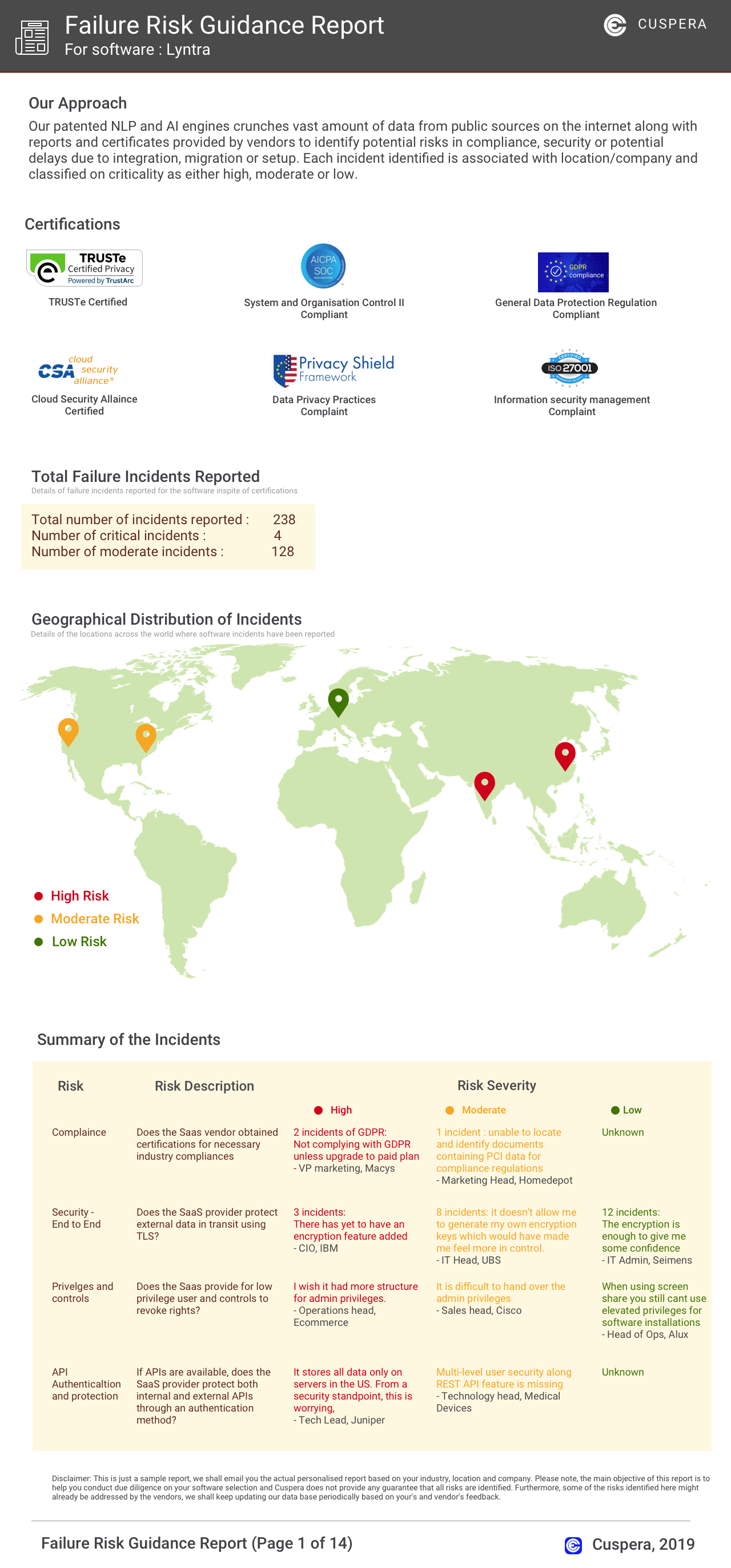
Software Failure Risk Guidance
?for Caspio
Overall Risk Meter
Top Failure Risks for Caspio
Caspio, Inc. Profile
HQ Location
2953 Bunker Hill Lane, Suite 201, Santa Clara, CA 95054
Employees
51-100
Social


Financials
PRIVATE