


Total Expert overview: capabilities, features, use cases, and value by role
Total Expert is a purpose-built customer engagement platform serving financial services organizations.
Top capabilities of Total Expert
Customer Intelligence
Read detailsTotal Expert's **Customer Intelligence** enriches customer profiles by combining existing data with aggregated third-party data, then surfaces real-time alerts for life events, credit inquiries, equity thresholds, and property listings so financial institutions can act on high-quality opportunities at the right moment. The results speak for themselves: Dart Bank says, "Customer Intelligence has been an absolute game changer in allowing us to uncover sales opportunities", and Lake Michigan Credit Union puts it this way: "Customer Intelligence (CI) almost doubles our sales force. It's those CI alerts that really get our loan officers excited". Wintrust Mortgage tied $200M of overall loan volume in 2024 directly to Customer Intelligence insights, while NFM Lending attributed $37M in funded loan volume to the same capability.
Marketing Automation
Read detailsTotal Expert's Marketing Automation delivers personalized, omnichannel campaigns for financial institutions through outbound campaigns, intelligent journey orchestration, always-on nurture programs, and pre-built expert content — capabilities that customers call "The GOLD standard in mortgage CRM and marketing platform." One customer puts it plainly: "Total Expert changes the marketing game."
Personalization
Read detailsTotal Expert connects behavioral insights, transaction history, and real-time performance data to trigger personalized communications across both digital and human channels through automation. As FirstBank puts it, "Focusing on personalization driven by data transformed how we were able to target our communication to our borrowers". Mortgage Investors Group puts it this way: "Total Expert has allowed our team to work more strategically, automate important customer communications, find new opportunities for personalization, and create significant value for our customers."
Journey Orchestration
Read detailsTotal Expert's Journey Orchestration gives teams a no-code way to build and run multichannel customer journeys that respond to individual behavior and financial activity. A drag-and-drop editor brings together email, SMS, video, print, and human outreach into a single sequence. The journeys adapt as customers act, rather than following a fixed script. One example of the feature in action: 36+ dynamic Journeys launched in 2024 alone, each translated into Spanish and optimized for mobile and cross-browser performance.
Sales Productivity
Read detailsTotal Expert's Sales Productivity capability brings together prioritized lead lists, a 360-degree customer view, two-way SMS, lead management, co-marketing, workflow management, dashboards, and an AI Sales Assistant to streamline daily sales workflows and support cross-team collaboration for financial institutions.
Total Expert mobile app
Read detailsTotal Expert's mobile app puts loan officers in a position to respond to customers from anywhere, in real time. The app surfaces alerts as they happen and enables customer engagement without requiring a desk. Teams can act on inquiries immediately rather than waiting to get back to the office.
TrueIntent module (voice of the customer)
Read detailsTotal Expert's TrueIntent module lets financial institutions collect zero-party data through branded survey experiences. Those surveys capture customer intent, satisfaction, and feedback, then map responses directly to individual customer profiles. The captured data feeds into more personalized and relevant customer engagement across the platform.
Top features of Total Expert
Co-Marketing
Read detailsTotal Expert's Co-Marketing feature lets loan officers and relationship managers build co-branded campaigns with realtors and professional partners directly inside the platform. Templates are pre-approved and RESPA-compliant. Distribution runs across multiple channels, and real-time performance dashboards are paired with approval and audit-trail workflows. One lender reached 1,117 agent connections through the co-marketing partner portal. In one customer's words, "This software is great for co-marketing with realtors. The property listing web pages are beautiful and versatile."
Design Studio
Read detailsTotal Expert's Design Studio puts enterprise designers in control of branded, compliant marketing templates — and keeps end users from breaking those standards. The suite is powered by MAXA and operates as a self-service design environment. Designers can build templates and lock them down, so brand and regulatory guardrails stay intact no matter who touches the asset later. The suite ships with royalty-free assets and an InDesign uploader, giving teams a practical on-ramp whether they're starting from scratch or bringing existing work in. Point-and-click data-field personalization means end users can customize content without needing design skills. Web-to-print and direct mail capabilities round out the production side.
Engage SMS
Read detailsEngage SMS brings compliant, two-way conversational SMS messaging directly into the Total Expert platform and mobile app. Users get unique local phone numbers and the ability to send bulk messages to segmented contact lists. Built-in TCPA guardrails and 10DLC registration support handle deliverability and regulatory compliance. As NewFed Mortgage Corporation puts it, "Leading our full relaunch and integrating capabilities likeCustomer Intelligence, Vist by BombBomb, Engage SMS, and Integrated Design Studio has transformed how our loan officers connect with clients."
Lead Management
Read detailsTotal Expert's Lead Management captures, categorizes, and routes incoming leads through configurable auto-assignment workflows. It then engages those leads with automated Journeys driven by real-time data insights. Loan officers and sales managers gain full pipeline visibility through contact-level data, engagement history, and performance reports. NFM Lending credits the platform directly, saying "The biggest improvement we've seen with our partnership has been on things like integrating with various platforms, better contact routing through automation, and lead management development."
AI Sales Assistant
Read detailsTotal Expert's AI Sales Assistant is an agentic voice AI system built for mortgage professionals. It engages borrowers in personalized, compliance-ready conversations, capturing intent, scheduling appointments, triggering Journey actions, and logging CRM data. The system continuously learns from team feedback and operates within RESPA, TILA, TCPA, and 10DLC regulations.
360-Degree Customer View
Read detailsTotal Expert builds every customer interaction around a single, unified profile — one that pulls together behavioral data, contact information, financial goals, and communication preferences from 70+ industry-leading integrations. Customer-facing teams use that consolidated view to deliver personalized, consistent experiences at every stage of the financial journey.
Nurture Program
Read detailsTotal Expert's Nurture Program uses intelligent automation and Customer Intelligence behavioral data to run continuous campaigns across print, direct mail, email, social, and digital channels. The campaigns run without manual intervention, keeping prospects and customers engaged at every stage of their financial journey.
Content Library
Read detailsTotal Expert's Content Library ships ready to use, with pre-built content developed by industry experts across landing pages, emails, social media, and print. Teams can deploy it as-is or customize it to fit their brand. The library also covers co-branded marketing collateral, with RESPA compliance tracking built in.
Target Campaign
Read detailsTotal Expert's Target Campaign feature gives marketing teams a precise way to build contact lists and run outbound campaigns from them. Inclusion and exclusion rules do the filtering work, so teams can isolate exactly the contacts they want before a campaign goes out. Those refined lists then feed campaigns covering lead generation, onboarding, and cross-sell. Real-time dashboards track performance as it happens, and dynamic reporting breaks results down by audience demographics, engagement metrics, and conversions.
Profile Enrichment
Read detailsProfile Enrichment continuously updates customer records with real-time financial data, including equity information, current loan-to-value, and rate eligibility. When thresholds are met, it automatically fires targeted alerts to loan officers. That makes proactive outreach possible even for the 34% of applicants whose loan applications are denied due to poor credit.
Prioritized Lead Lists
Read detailsPrioritized Lead Lists ranks contact lists automatically for loan officers and relationship managers, using business goals and customer intelligence to surface time-sensitive opportunities like incomplete applications and pre-approval expirations. Call logging, follow-up tasks, and communication history are all centralized in one tool.
Dashboards & Pipeline Views
Read detailsTotal Expert's Dashboards & Pipeline Views feature surfaces pre-built and dynamic reporting dashboards that display real-time performance metrics, lead conversion data, and contact-level insights, allowing teams to evaluate campaign performance by channel, audience, or time period and keep leadership updated on business outcomes.
Workflow Management
Read detailsTotal Expert's Workflow Management consolidates lead and contact management into a centralized platform, combining dynamic dashboards, one-click multichannel communication triggers, follow-up task creation, and approval routing to reduce administrative overhead for customer-facing teams.
Pre-Configured Workflows
Read detailsTotal Expert's Pre-Configured Workflows keeps sales and marketing assets aligned with brand and regulatory standards before distribution. Disclaimer and footer management is centralized in one place. Content routes through required approvals automatically, and the system maintains comprehensive audit trails throughout. Compliance reports are available on demand.
Contact Segmentation
Read detailsTotal Expert's Contact Segmentation pulls data together from across the tech stack to sort contacts by demographics, recent activity, transaction history, and financial thresholds. Inclusion and exclusion rules can then be applied at the campaign or email level. The result is that each customer receives only the most relevant messages.
Top use cases for Total Expert
Manage regulatory and brand compliance across all communications
Read detailsTotal Expert's Compliance product keeps financial institutions on the right side of RESPA, TCPA, CPPA, and CAN-SPAM — without adding manual burden to marketing or compliance teams. It enforces those requirements through pre-configured approval workflows, dynamic disclosure libraries, and audit reporting. Every brand asset is reviewed and distributed through that same system, so nothing slips through outside the process.
Run compliant co-marketing campaigns with referral partners
Read detailsTotal Expert's Co-Marketing tools let loan officers and marketing teams run co-branded campaigns alongside realtors and professional contacts while staying inside RESPA and other regulatory requirements. Pre-approved content is distributed across multiple channels, so teams aren't building compliance reviews into every send. Partnership performance is trackable, and the campaigns are designed to generate new leads throughout.
Build and distribute compliant branded marketing content at scale
Read detailsTotal Expert's Integrated Design Studio gives enterprise designers and marketing administrators at financial institutions direct control over compliant, branded template creation. Loan officers can then personalize those locked templates with a few clicks. No design skills required, no manual review bottlenecks. Content reaches both digital and print channels from a single workflow.
Prioritize and convert high-value leads faster
Read detailsTotal Expert's Prioritized Lead Lists take the manual work out of finding high-value opportunities — loan officers and relationship managers no longer need to search databases by hand. The lists surface the highest-value opportunities automatically, based on business goals. Centralized communication history keeps follow-ups streamlined. Together, these capabilities help accelerate application conversions.
Nurture and convert prospects through automated journeys
Read detailsTotal Expert's Journey Orchestration is a campaign engine built specifically for financial institutions, coordinating marketing and sales efforts across multiple channels in a single automated workflow. It pulls together Customer Intelligence, personalized content, and conditional human touchpoints. The result is a guided path that moves prospects through financial milestones and converts them into customers.
Engage customers compliantly via SMS and multichannel messaging
Read detailsTotal Expert's Engage SMS equips loan officers and sales teams to run real-time, two-way compliant text conversations with borrowers and partners, combining bulk messaging, TCPA and 10DLC guardrails, and integration with automated Journeys to lift response rates and drive conversions.
Automate AI-driven borrower conversations at scale
Read detailsTotal Expert's AI Sales Assistant brings agentic voice AI to mortgage lending. The system autonomously engages borrowers in personalized, compliant conversations at scale — without manual prompting. It identifies intent signals, schedules appointments, logs CRM data, and routes qualified prospects directly to human loan officers.
Build unified customer profiles to drive personalized engagement
Read detailsTotal Expert's 360-Degree Customer View pulls data from 70+ integrations into a single source of truth for customer-facing teams at financial institutions. Behavioral insights and segmentation layer on top of that consolidated data. Together, they drive personalized, multichannel communications tied to each customer's unique financial goals at every stage of their journey.
Cross-sell financial products to existing customers
Read detailsTotal Expert's Customer Intelligence helps lenders, banks, and credit unions identify existing customers who are ready for new financial products. It combines profile enrichment, insights and alerts, contact segmentation, and dynamic journeys to surface those opportunities. From there, the platform delivers personalized cross-sell campaigns designed to drive relationship growth within the first six months.
Retain existing borrowers by intercepting competitive threats
Read detailsTotal Expert's Customer Intelligence keeps loan officers and mortgage teams from losing borrowers they already have a relationship with. It monitors databases for competitive credit inquiries, equity thresholds, rate qualifications, and property listings. When any of those signals appear, the system triggers automated alerts so teams can re-engage borrowers before those borrowers close with a competing lender.
Measure and optimize marketing and sales performance
Read detailsTotal Expert's Dashboards and Pipeline Views deliver real-time performance metrics to sales leaders, marketing teams, and internal stakeholders. Teams can evaluate campaign effectiveness by channel and audience. That shared visibility makes it easier to align around data-driven strategies, identify gaps faster, and improve ROI across customer engagement programs.
Value delivered by role with Total Expert
Loan Officers
Read detailsTotal Expert gives loan officers compliant, human-like voice and text communications to nurture leads, qualify prospects, and move loan applications forward — while cutting the administrative work that pulls them away from relationships and closings. Automated campaigns, prioritized call lists, and real-time Customer Intelligence alerts handle the administrative load. A 360-degree contact view surfaces equity insights, credit triggers, and behavioral signals at the right moment. Loan officers can also self-serve their marketing needs through integrated tools for co-marketing, personalized collateral, and automated Journeys — without routing every request through the marketing team. That self-sufficiency shows up in how customers describe the platform. As Wintrust Mortgage puts it, "Our loan originators love the 'set it and forget it' aspect Total Expert offers. It ensures customers stay engaged with minimal manual effort." Mutual of Omaha Mortgage makes the same point about collateral creation: "Assets that include things like buydown or rate scenarios are time-consuming to create internally, especially if there's a backlog of other requests. Total Expert allows our loan officers to be more self-sufficient." Adoption reflects that independence: 52% of originators sent direct emails through Total Expert in Q1 2025, 21% higher than the industry average, and 7 of the top 10 originators leverage the platform.
What customers say about Total Expert: ratings, outcomes and feedback
Total Expert's customer experience spans two dimensions: what customers value in day-to-day use, and where they see room for improvement. Both sides of that picture are covered below.
What works well
Lake Michigan Credit Union puts it plainly: "Do just these two things and 12 years later you will still be hearing from your clients." Dart Bank speaks to growth over time: "Our bank has been around for over 97 years. Since we added Total Expert, we've excelled and expanded in ways we never thought were possible." Customers also describe how they use Total Expert to drive engagement inside their own teams. One organization ran a gamification challenge to get users excited about Instagram and other social media, tracking who could post the most over a 60-day period. On the lending side, one lender saw incredible outcomes from their first Credit Improvement Journey in only six months, between November 2024 and April 2025.
Where customers see room for improvement
Total Expert draws relatively few complaints overall, but the concerns customers do raise cluster around usability, technical reliability, and support responsiveness. The most widely reported friction involves technical difficulties and slow resolution when something goes wrong. One heavy user notes, "I find that there are many technical difficulties. I work out of this platform 75% of every day, so I find every error in the system." When issues do surface, customers say it takes a long time to get them resolved, and the UI is sometimes described as faulty alongside slow customer support. Usability gaps come up across several areas. The mobile app draws criticism for not being user-friendly — one customer wishes it supported tasks like creating flyers. Creating social posts involves too many steps. Assigning or unassigning Journeys is seen as needlessly complicated. One customer points out that you can't pull up a report to show possible duplicate entries to merge, making database hygiene harder to manage. Database management more broadly is described by one customer as not user-friendly, with lists being very hard to keep scrubbed and refined to certain target markets. Uploading contacts is singled out by one customer as a painful process. One customer also flags that profile pictures for any user are limited to less than 1MB in file size which is CRAZY small — a small but pointed annoyance. It is worth noting that at least one customer reports nothing to dislike about the system at all.
Total Expert Customer wins, Case studies
Frequently Asked Questions (FAQ)
What buyers ask before choosing Total Expert
Integrations What CRM integrations are available with Total Expert?
Total Expert offers several valuable integrations to enhance its CRM capabilities, allowing businesses to streamline their operations and improve customer engagement. Notably, Total Expert integrates with Zapier, enabling users to connect with thousands of other applications for automated workflows. Additionally, it supports integration with Okta for secure identity management and single sign-on solutions. These integrations facilitate seamless data sharing and enhance user experience across platforms. By leveraging these integrations, businesses can automate processes, improve data accuracy, and create a more cohesive customer journey, ultimately driving better engagement and efficiency in their marketing and sales efforts.
Integrations How does Total Expert connect to Salesforce and HubSpot?
Total Expert connects to Salesforce and HubSpot through robust integration capabilities that enhance customer relationship management and marketing automation. For Salesforce, Total Expert allows users to sync customer data seamlessly, enabling financial services organizations to leverage their existing CRM data for personalized marketing campaigns and improved customer engagement. This integration helps streamline workflows and ensures that sales teams have access to up-to-date information. Similarly, the integration with HubSpot facilitates the automation of marketing processes, allowing users to create targeted campaigns based on customer insights gathered within Total Expert. By connecting these platforms, businesses can unify their marketing efforts, enhance lead generation, and ultimately drive better customer experiences across all touchpoints.
Integrations What are the setup steps for integrating Total Expert with Marketo?
To integrate Total Expert with Marketo, begin by ensuring you have administrative access to both platforms. First, log into your Total Expert account and navigate to the integrations section. Here, select Marketo from the list of available integrations. You will need to provide your Marketo API credentials, which can be obtained from your Marketo account under the Admin settings. Once you enter the API credentials in Total Expert, configure the data mapping settings to ensure that leads and customer data flow correctly between the two systems. After saving your settings, conduct a test to verify that the integration is functioning as expected. This integration allows for streamlined marketing automation and enhanced customer engagement, making it easier to manage campaigns across both platforms effectively.
Integrations Can I access the Total Expert API for custom integrations?
Yes, you can access the Total Expert API for custom integrations, allowing you to connect the platform with other systems and tools that your organization uses. The API facilitates seamless data exchange and enhances functionality by enabling you to build tailored solutions that meet your specific business needs. This capability is particularly beneficial for financial services companies looking to streamline operations and improve customer engagement. Additionally, Total Expert integrates with various platforms, such as Zapier and Okta, which can further enhance your integration possibilities. By leveraging the Total Expert API, you can create a more cohesive MarTech stack that aligns with your operational goals and enhances overall efficiency.
Integrations Is there API access for Total Expert integrations, and how does it work?
Yes, Total Expert provides API access for integrations, allowing businesses to connect their existing systems and applications seamlessly. The API facilitates data exchange between Total Expert and other platforms, enabling users to automate workflows, synchronize customer data, and enhance overall operational efficiency. By leveraging the API, organizations can integrate with various tools such as Zapier for workflow automation, Okta for identity management, and other marketing technologies to create a customized MarTech stack. This flexibility empowers financial services customers to tailor their technology solutions to meet specific business needs, ultimately improving customer engagement and streamlining processes. For detailed documentation and support on how to implement these integrations, users can refer to the Total Expert resources available on their website.
Integrations What is the data flow between Total Expert and other marketing automation platforms?
The data flow between Total Expert and other marketing automation platforms typically involves seamless integration that allows for the exchange of customer information, campaign data, and engagement metrics. Total Expert can connect with various platforms such as Salesforce, HubSpot, and Marketo, enabling users to synchronize leads, track customer interactions, and automate marketing workflows. This integration ensures that data is consistently updated across systems, allowing for personalized marketing efforts and improved customer engagement. By leveraging APIs and webhooks, Total Expert facilitates real-time data transfer, ensuring that marketing teams have access to the most current information for decision-making and strategy optimization. This interconnectedness enhances the overall efficiency of marketing operations and helps businesses deliver targeted communications to their audiences.
Integrations Are there any limitations to the integrations available with Total Expert?
Total Expert offers a range of integrations with popular platforms such as Salesforce, HubSpot, Dynamics 365, and Zapier, enabling users to streamline their marketing and customer engagement efforts. However, potential limitations may arise depending on the specific integration requirements of your business. For instance, while Total Expert provides robust integration capabilities, some users may find that certain features or functionalities are not fully supported across all platforms, which could impact data synchronization or workflow automation. Additionally, the complexity of integrating with legacy systems or custom applications may pose challenges. It's essential for businesses to assess their specific needs and consult with Total Expert's support team to understand any limitations and ensure a seamless integration experience tailored to their operational requirements.
Features What does the lead management system feature do?
A lead management system feature is designed to streamline the process of capturing, tracking, and nurturing leads throughout the sales funnel. This feature typically includes functionalities such as lead capture from various sources (like websites and social media), lead scoring to prioritize prospects based on their engagement and likelihood to convert, and lead nurturing through personalized communication. The business value of implementing a lead management system lies in its ability to enhance efficiency in sales processes, improve conversion rates, and provide better visibility into the sales pipeline. By automating these tasks, businesses can focus on building relationships with potential customers, ultimately leading to increased revenue and a more organized approach to managing leads.
Features How do I configure the lead organizer in Total Expert?
To configure the Lead Organizer in Total Expert, start by logging into your Total Expert account and navigating to the Lead Management section. Here, you can access the Lead Organizer tool, which allows you to customize how leads are categorized and prioritized. Use the settings to define lead sources, assign lead statuses, and set up automated notifications for new leads. You can also create custom tags to better segment your leads based on specific criteria. Once your configurations are set, save your changes and test the setup by adding a few sample leads to ensure everything functions as intended. This streamlined organization helps improve lead routing and enhances borrower engagement, ultimately optimizing your sales pipeline.
Features What is the purpose of the marketing lead tracking feature?
The marketing lead tracking feature is designed to monitor and analyze the interactions and behaviors of potential customers throughout their journey with your brand. This functionality allows businesses to capture data on how leads engage with marketing materials, such as emails, website visits, and social media interactions. By tracking these activities, companies can gain valuable insights into lead interests and readiness to purchase, enabling more effective lead nurturing strategies. The business value lies in its ability to optimize marketing efforts, improve targeting, and ultimately increase conversion rates by ensuring that communications are timely and relevant. This feature is essential for creating personalized experiences that resonate with leads, enhancing the overall effectiveness of marketing campaigns.
Features How can I use the automation features to streamline workflows?
To streamline workflows using automation features in a marketing automation platform (MAP), start by identifying repetitive tasks that can be automated, such as email marketing, lead scoring, and social media posting. Utilize the platform's workflow builder to create automated sequences that trigger actions based on specific user behaviors or time intervals. For instance, you can set up automated email responses for new leads or reminders for follow-ups. Additionally, leverage integrations with tools like Salesforce or HubSpot to ensure seamless data flow between your marketing and sales teams, enhancing collaboration. Regularly review and optimize these workflows based on performance metrics to ensure they align with your business goals and improve efficiency over time. By effectively utilizing these automation features, you can save time, reduce manual errors, and focus on strategic initiatives.
Features How can I use the automation features to streamline my workflows?
To streamline your workflows using automation features in a marketing automation platform (MAP), start by identifying repetitive tasks that can be automated, such as email marketing, lead scoring, and social media posting. Utilize features like triggered campaigns, which automatically send messages based on user actions, and progressive profiling to gather data without overwhelming prospects. Implement workflows that integrate with tools like Salesforce or HubSpot to ensure seamless data flow between your marketing and sales teams. Additionally, take advantage of analytics to monitor performance and adjust your strategies accordingly. By automating these processes, you can save time, reduce human error, and enhance overall efficiency, allowing your team to focus on more strategic initiatives.
Features What insights does the Customer Intelligence module provide?
The Customer Intelligence module of Total Expert provides valuable insights by enriching customer data with behavioral insights and consent-aware information, which enhances engagement strategies in mortgage banking and consumer lending. This module enables businesses to understand customer preferences and behaviors more deeply, allowing for personalized marketing efforts that can significantly improve conversion rates and loan volumes. By leveraging predictive analytics and AI-driven insights, users can track key metrics such as customer interactions, engagement levels, and campaign responses. This data-driven approach not only helps in optimizing marketing strategies but also facilitates timely and relevant communication with prospects, ultimately leading to better customer satisfaction and retention.
Features How do I set up personalized campaigns using Total Expert?
To set up personalized campaigns using Total Expert, start by logging into your Total Expert account and navigating to the campaign creation section. Utilize the platform's automation features to segment your audience based on specific criteria such as demographics, behavior, or engagement levels. Next, create tailored content for each segment using the customizable templates provided by Total Expert, ensuring that your messaging resonates with the unique needs of each group. Incorporate dynamic fields to personalize emails with recipient names or other relevant information. Once your campaign is designed, schedule it for optimal delivery times and monitor performance metrics through Total Expert's analytics dashboard to refine future campaigns. This approach not only enhances customer engagement but also drives better results by delivering relevant content to your audience.
Features How do I set up personalized campaigns using Total Expert's marketing automation suite?
To set up personalized campaigns using Total Expert's marketing automation suite, start by defining your target audience segments based on demographics, behaviors, or preferences. Next, utilize the platform's user journey mapping feature to outline the customer experience and identify key touchpoints for engagement. Create tailored content for each segment, ensuring it resonates with their specific needs and interests. Use Total Expert's automated email capabilities to schedule and send personalized messages at optimal times. Additionally, leverage analytics tools within the suite to monitor campaign performance and make data-driven adjustments. By continuously refining your approach based on insights, you can enhance customer engagement and drive better results from your marketing efforts.
ROI & pricing What measurable business outcomes can I expect from using Total Expert?
Using Total Expert can lead to significant measurable business outcomes, particularly in the financial services sector. For instance, Assurance Financial experienced a boost in conversions by leveraging customer intelligence features that provided actionable insights, resulting in improved marketing outcomes. Similarly, a top 10 lender re-engaged 2,000 previously denied mortgage applicants, generating 316 new applications and $84 million in loan volume within six months. Total Expert's platform enhances customer engagement through its comprehensive solutions for lead generation, onboarding, and retention, ultimately driving higher conversion rates and customer satisfaction. By implementing data-driven marketing strategies and automating customer journey mapping, businesses can expect to see increased efficiency and effectiveness in their marketing efforts, leading to a stronger bottom line.
ROI & pricing How does Total Expert help improve ROI for financial services companies?
Total Expert enhances ROI for financial services companies by providing a comprehensive platform that streamlines marketing and customer engagement processes. By leveraging features like Customer Intelligence, companies can gain actionable insights into client behavior, enabling timely and personalized outreach that boosts conversion rates. For instance, Assurance Financial utilized Total Expert to improve their marketing outcomes significantly by acting on customer insights through their CRM's alert system. Additionally, the platform automates customer journeys, as seen with United Community Bank Mortgage Services, which nurtured prospects and improved communication, ultimately increasing conversion chances. Integrations with tools like Mortgage Coach and Encompass further enhance lead tracking and outreach efficiency. Overall, Total Expert empowers financial services firms to optimize their marketing efforts, reduce manual work, and ultimately drive higher returns on investment.
ROI & pricing What are the different pricing plans available for Total Expert and what do they include?
Total Expert offers a range of pricing plans tailored to meet the needs of various businesses, particularly in the financial services sector. While specific pricing details are not publicly disclosed, the plans typically include features such as marketing automation, customer relationship management (CRM) tools, and omni-channel engagement capabilities. Each plan may vary in terms of the number of users, available integrations, and advanced functionalities like lead management and customer journey mapping. To get precise pricing and a detailed breakdown of what each plan includes, it is recommended to contact Total Expert directly or visit their website for the most current information. This approach ensures that potential customers receive a customized solution that aligns with their specific business requirements.
ROI & pricing What are the different pricing plans available for Total Expert, and what do they include?
Total Expert offers a range of pricing plans tailored to meet the needs of various businesses, particularly in the financial services sector. While specific pricing details are not publicly disclosed, the plans typically include features such as marketing automation, customer relationship management (CRM) tools, and omni-channel engagement capabilities. Each plan is designed to enhance customer experience and streamline marketing efforts, allowing businesses to personalize communication and automate workflows effectively. To get precise pricing information and a detailed breakdown of what each plan includes, it is recommended to contact Total Expert directly or visit their website for the most accurate and up-to-date information.
ROI & pricing How can Total Expert contribute to cost savings for my business?
Total Expert can significantly contribute to cost savings for your business by streamlining marketing workflows and automating customer communications. By replacing outdated email platforms with Total Expert, businesses like Tucson Federal Credit Union have reported reduced campaign preparation time from weeks to mere minutes, allowing teams to focus on strategic initiatives rather than manual tasks. Additionally, the platform's automation features enable personalized and professional email campaigns at scale, which can lead to higher engagement rates and improved conversion metrics. With tools that provide actionable customer insights, businesses can make data-driven decisions that optimize marketing spend and enhance overall efficiency. This combination of automation, personalization, and intelligence not only boosts productivity but also helps in maximizing return on investment, ultimately leading to substantial cost savings.
ROI & pricing What is the typical time-to-value when implementing Total Expert in a financial institution?
The typical time-to-value when implementing Total Expert in a financial institution can vary based on the organization's size and specific needs, but many clients report significant results within the first 90 days. For instance, First United Bank equipped over 100 loan officers with Total Expert's unified CRM and marketing platform, leading to millions in loan volume directly tied to Customer Intelligence alerts in just three months. Similarly, First Heritage Mortgage saw a marked increase in engagement and efficiency shortly after centralizing their marketing activities. By leveraging Total Expert's features, such as automated campaigns and actionable insights, financial institutions can quickly enhance their customer engagement and operational efficiency, ultimately driving measurable ROI in a relatively short timeframe.
ROI & pricing What is the typical time-to-value when implementing Total Expert in a financial services organization?
The typical time-to-value when implementing Total Expert in a financial services organization can vary based on the specific needs and existing infrastructure of the organization. However, many users report significant improvements within a few months of deployment. For instance, organizations like Tucson Federal Credit Union experienced a transformation where email campaigns that previously took weeks to execute were completed in minutes, showcasing immediate productivity gains. Additionally, First Heritage Mortgage noted that their marketing activities became centralized and more efficient shortly after implementation. Overall, with Total Expert's focus on automation and customer intelligence, financial services organizations can expect to see enhanced engagement and operational efficiency relatively quickly, often within the first six months of use.
ROI & pricing How does Total Expert demonstrate its value in terms of revenue impact for users?
Total Expert demonstrates its value in terms of revenue impact by providing tools that enhance customer engagement and streamline marketing efforts for financial services. For instance, Assurance Financial utilized Total Expert's Customer Intelligence to boost conversions by leveraging actionable insights from their CRM, resulting in improved marketing outcomes. Additionally, a top 10 lender re-engaged 2,000 previously denied mortgage applicants using Total Expert’s Journeys, generating 316 new applications and $84 million in loan volume within six months. These case studies highlight how Total Expert not only helps users optimize their marketing strategies but also translates those strategies into tangible revenue growth, showcasing its effectiveness in driving business results for its clients.
ROI & pricing How does Total Expert impact revenue generation for businesses in the mortgage industry?
Total Expert significantly impacts revenue generation for businesses in the mortgage industry by streamlining marketing efforts and enhancing customer engagement. The platform centralizes marketing activities, allowing mortgage originators to efficiently manage email, print, and customer journeys, which reduces manual work and boosts productivity. For instance, First Heritage Mortgage saw 52% of originators sending direct emails, well above the industry average, while automated campaigns helped United Community Bank Mortgage Services nurture prospects and improve communication. Additionally, integrations with tools like Mortgage Coach and Encompass enable smarter outreach and lead tracking, resulting in higher conversion rates. By leveraging Customer Intelligence alerts and personalized campaigns, businesses can turn lost opportunities into new applications, ultimately driving increased loan volume and revenue.
Capabilities What capabilities does Total Expert offer for automating customer engagement?
Total Expert offers a comprehensive suite of capabilities designed to automate customer engagement, particularly in the financial services sector. The platform enables users to create personalized marketing campaigns that nurture leads through automated workflows, ensuring timely communication based on client life events and rate changes. Features such as Customer Intelligence alerts help staff stay informed about important client updates, while custom workflows streamline tasks like lead assignment and follow-up emails. Additionally, Total Expert's tools facilitate the mapping of customer journeys, allowing businesses to enhance their outreach strategies effectively. By automating these processes, organizations can focus on building stronger relationships with clients, ultimately improving conversion rates and customer satisfaction.
Capabilities What can Total Expert do for automating customer engagement?
Total Expert automates customer engagement by providing a comprehensive platform designed specifically for the financial services industry, including mortgage lending, banking, and insurance. It enables businesses to create personalized communication strategies through automated workflows that manage lead assignments, document reminders, and follow-up emails. The platform's Customer Intelligence feature alerts staff about significant client life events and market changes, allowing for timely and relevant outreach. By automating routine tasks, Total Expert frees up loan officers and other professionals to focus on building stronger relationships with clients, ultimately enhancing customer satisfaction and increasing conversion rates. This streamlined approach not only improves operational efficiency but also ensures that customers receive consistent and meaningful interactions throughout their journey.
Capabilities Can Total Expert support custom workflows for lead assignment and follow-up tasks?
Yes, Total Expert can support custom workflows for lead assignment and follow-up tasks, making it an effective solution for managing client engagement in the financial services sector. The platform allows users to create tailored workflows that automate lead assignment, document reminders, and follow-up emails, ensuring that loan officers can focus on building relationships rather than getting bogged down by routine tasks. This capability enhances efficiency and responsiveness, as the system can notify staff about client life events and rate changes, allowing for timely and personalized outreach. By leveraging Total Expert's custom workflow features, businesses can streamline their processes and improve overall lead management, ultimately leading to stronger client connections and increased productivity.
Capabilities Does Total Expert support custom workflows for lead assignment?
Yes, Total Expert supports custom workflows for lead assignment through its Lead Management solution, which is part of the Customer for Life Platform. This feature allows businesses, particularly in the retail and hybrid lending sectors, to tailor lead routing processes according to their specific needs. Users can create rules and criteria for assigning leads to the appropriate team members, enhancing borrower engagement and ensuring that leads are managed efficiently throughout the sales pipeline. By implementing these custom workflows, organizations can improve response times and optimize their lead management strategies, ultimately driving better conversion rates and customer satisfaction.
Capabilities Does Total Expert provide tools for managing compliance in financial services?
Total Expert does provide tools that can assist in managing compliance within financial services, although its primary focus is on enhancing customer relationship management and engagement. The platform offers features such as automated member communications and strategic reporting, which can help organizations maintain compliance by ensuring that communications are timely and relevant. Additionally, Total Expert integrates with other systems like Mortgage Coach and Encompass, which can further streamline compliance processes by centralizing data and workflows. While it may not be a dedicated compliance management tool, its capabilities in automating tasks and providing insights can support compliance efforts by reducing the risk of errors and ensuring adherence to regulatory requirements.
Capabilities Can Total Expert help improve loan officer efficiency in financial services?
Yes, Total Expert can significantly improve loan officer efficiency in financial services by automating various tasks and streamlining workflows. For instance, the platform's Customer Intelligence alerts notify loan officers about client life events and rate changes, enabling timely and personalized outreach. This automation allows loan officers to focus on building relationships rather than managing routine tasks, ultimately enhancing productivity. Additionally, Total Expert integrates with loan origination systems and pricing engines, which helps unify processes and reduce manual work. Case studies show that organizations like NFM Lending and Atlantic Bay Mortgage Group have successfully leveraged Total Expert to send millions of emails and launch numerous customer journeys, resulting in increased engagement and substantial loan volume. By centralizing marketing activities and automating customer journeys, Total Expert empowers loan officers to work more efficiently and effectively.
Capabilities Can Total Expert help improve team collaboration across different departments?
Yes, Total Expert can significantly enhance team collaboration across different departments, particularly in financial services. By providing a centralized platform for customer relationship management (CRM) and marketing automation, Total Expert enables teams to access shared data and insights, fostering better communication and alignment on goals. For instance, loan officers can utilize the platform to manage relationships and collaborate with marketing teams to create personalized campaigns, ensuring that everyone is on the same page regarding customer engagement strategies. Additionally, the automation features streamline workflows, allowing teams to focus on strategic initiatives rather than manual tasks. This collaborative environment not only improves efficiency but also enhances the overall customer experience, as departments work together seamlessly to meet client needs.
Capabilities What features does Total Expert offer for managing customer data?
Total Expert offers a comprehensive suite of features for managing customer data, primarily through its Customer for Life Platform. Key functionalities include advanced lead management tools that enhance lead routing, borrower engagement, and pipeline visibility, ensuring that businesses can effectively track and nurture leads throughout the customer journey. Additionally, Total Expert provides capabilities for digital customer management, allowing organizations to personalize communication and automate customer interactions at scale. The platform also integrates seamlessly with various CRM systems, enhancing data synchronization and accessibility. By leveraging these features, businesses can create data-driven marketing strategies, improve customer experience, and ultimately drive better engagement and conversion rates.
Capabilities What features does Total Expert have for enhancing customer intelligence and insights?
Total Expert offers a robust suite of features designed to enhance customer intelligence and insights, particularly for the financial services sector. Key functionalities include an advanced customer data platform that aggregates and analyzes customer information, enabling businesses to create data-driven marketing strategies. The platform's alert system within the CRM allows teams to act swiftly on customer insights, improving engagement and conversion rates. Additionally, Total Expert's Customer IQ feature enriches customer data with behavioral insights, facilitating personalized communication at scale. This comprehensive approach not only streamlines customer journey mapping but also automates feedback collection, as seen in successful integrations with platforms like Birdeye, ultimately driving better marketing outcomes and customer satisfaction.
Capabilities Can Total Expert provide insights for proactive member communications?
Yes, Total Expert can provide valuable insights for proactive member communications through its Customer Intelligence features. This functionality allows organizations to leverage customer data and insights to enhance their marketing strategies and communication efforts. For instance, Assurance Financial utilized Total Expert's alert system within their CRM to act on customer insights quickly, leading to improved marketing outcomes. By automating member communications and utilizing data-driven strategies, financial institutions can foster stronger relationships with their members, ensuring timely and relevant interactions. This proactive approach not only enhances member engagement but also supports the overall growth and success of the organization.
Capabilities Does Total Expert support automated communications for proactive member engagement?
Yes, Total Expert supports automated communications that enhance proactive member engagement. The platform enables financial institutions, such as Tucson Federal Credit Union and United Community Bank Mortgage Services, to automate customer journeys and personalize communications effectively. By utilizing automation features, organizations can send timely and relevant messages to members, improving engagement and retention rates. For instance, Total Expert's automation capabilities allow for the creation of tailored email campaigns that can be executed quickly, significantly reducing the time spent on manual processes. This not only boosts productivity but also ensures that members receive consistent and meaningful interactions, ultimately fostering stronger relationships and enhancing overall customer experience.
Capabilities Does Total Expert support compliance management for financial institutions?
Total Expert does support compliance management for financial institutions by providing tools that help streamline and automate various compliance-related processes. The platform enables financial organizations to maintain regulatory standards through features like automated client communications, which ensure that messaging adheres to compliance requirements. Additionally, Total Expert's Customer Intelligence alerts can assist in monitoring client interactions and identifying potential compliance issues proactively. By centralizing marketing efforts and integrating with other systems, such as Mortgage Coach and Encompass, Total Expert helps financial institutions manage their compliance obligations more efficiently, reducing the risk of errors and enhancing overall operational effectiveness. This focus on compliance management ultimately supports financial institutions in building trust with clients while navigating the complex regulatory landscape.
Use cases How can SDRs use Total Expert to improve their outreach and engagement with potential clients?
Sales Development Representatives (SDRs) can leverage Total Expert to enhance their outreach and engagement with potential clients through its robust automation and customer intelligence features. By utilizing the platform's custom workflows, SDRs can automate lead assignment, follow-up emails, and document reminders, allowing them to focus more on building relationships rather than managing routine tasks. Total Expert's Customer Intelligence alerts notify SDRs about significant client life events and rate changes, enabling timely and personalized outreach. Additionally, the platform's analytics provide insights into client behavior, helping SDRs tailor their communication strategies effectively. This combination of automation and data-driven insights ultimately leads to stronger client connections and improved engagement rates, making outreach efforts more efficient and impactful.
Use cases How can SDRs use Total Expert to improve their lead management and outreach efforts?
Sales Development Representatives (SDRs) can leverage Total Expert to enhance their lead management and outreach efforts by utilizing its robust lead management tools integrated within the Customer for Life Platform. This solution streamlines lead routing, ensuring that leads are assigned to the right SDRs promptly, which improves response times and engagement. SDRs can automate their email outreach through Total Expert's sales email automation features, allowing them to send personalized messages at scale while tracking engagement metrics. Additionally, the platform's integration with CRM systems like Salesforce and tools such as Mortgage Coach and Encompass enables SDRs to access comprehensive lead data, facilitating informed conversations and follow-ups. By centralizing marketing activities and automating customer journeys, SDRs can focus on building relationships and converting leads more effectively.
Use cases What specific workflows can marketers implement using Total Expert to enhance customer journey mapping?
Marketers can implement a variety of specific workflows using Total Expert to enhance customer journey mapping, which is crucial for optimizing customer experiences. For instance, they can automate personalized email campaigns that trigger based on customer behavior, ensuring timely and relevant communication. Additionally, marketers can create segmented customer journeys that adapt to individual preferences and interactions, allowing for targeted messaging that resonates with different audience segments. Total Expert also enables the integration of data analytics to track customer engagement and ROI, helping marketers refine their strategies over time. By utilizing these workflows, businesses can improve customer engagement, drive conversions, and ultimately foster long-term relationships with their clients.
Use cases What are the best practices for marketers to implement automated campaigns using Total Expert?
To implement automated campaigns effectively using Total Expert, marketers should start by clearly defining their target audience and segmenting their contacts based on relevant criteria such as demographics or behavior. Next, they should create personalized content that resonates with each segment, leveraging Total Expert's marketing automation features to tailor messages. It's essential to set up a well-structured customer journey, utilizing automated workflows to guide prospects through the sales funnel. Marketers should also regularly analyze campaign performance metrics provided by Total Expert to refine strategies and improve engagement. Additionally, integrating Total Expert with CRM systems like Salesforce can enhance data management and streamline communication efforts, ensuring that campaigns are both efficient and effective. Finally, continuous testing and optimization of email subject lines, content, and timing can significantly boost campaign success.
Use cases In what scenarios should sales leaders leverage Total Expert's Customer Intelligence alerts for better client communication?
Sales leaders should leverage Total Expert's Customer Intelligence alerts in scenarios where timely and personalized client communication can significantly impact engagement and conversion rates. For instance, when a client experiences a life event, such as a marriage or the birth of a child, the alerts can prompt loan officers to reach out with tailored financial solutions. Additionally, alerts regarding rate changes can help identify clients who may benefit from refinancing opportunities, allowing for proactive communication that addresses their needs. By utilizing these alerts, sales leaders can ensure their teams act on critical insights quickly, fostering stronger relationships and enhancing the overall client experience, ultimately driving better business outcomes.
Use cases In what scenarios should RevOps teams leverage Total Expert for customer journey mapping?
RevOps teams should leverage Total Expert for customer journey mapping in scenarios where they aim to enhance customer engagement and streamline communication throughout the sales process. This platform is particularly beneficial for organizations in the financial services sector, such as mortgage lending and banking, where understanding customer interactions is crucial. Total Expert allows teams to automate customer journeys based on specific characteristics, enabling personalized marketing campaigns that nurture leads effectively. Additionally, it provides insights into ROI and customer behavior, helping RevOps teams make data-driven decisions to optimize their strategies. By utilizing Total Expert, teams can improve cross-sell initiatives and ensure that customer experiences are tailored, ultimately driving business growth and increasing conversion rates.
Use cases How can RevOps teams utilize Total Expert to track ROI and optimize cross-sell initiatives in financial services?
RevOps teams can utilize Total Expert to track ROI and optimize cross-sell initiatives in financial services by leveraging its Customer Intelligence features and integrated CRM capabilities. By analyzing actionable insights generated from customer interactions, teams can identify cross-sell opportunities based on client life events and preferences. The platform's automated campaigns enable timely outreach, ensuring that marketing efforts align with customer needs, which can significantly enhance conversion rates. Additionally, Total Expert's reporting tools allow teams to measure the effectiveness of their cross-sell strategies, providing clear visibility into ROI. By centralizing marketing activities and streamlining workflows, RevOps teams can improve collaboration among sales and marketing, ultimately driving better customer engagement and increasing revenue from existing clients.
Use cases How can sales leaders utilize Total Expert to enhance communication and collaboration among loan officers?
Sales leaders can utilize Total Expert to enhance communication and collaboration among loan officers by leveraging its integrated CRM and marketing automation features. The platform allows for the automation of customer journeys, which streamlines communication and ensures timely outreach to clients. By using Customer Intelligence alerts, loan officers receive real-time insights about client life events and rate changes, enabling them to engage more effectively. Additionally, Total Expert facilitates collaboration through shared workflows and centralized data access, allowing loan officers to work together seamlessly on leads and campaigns. This unified approach not only boosts productivity but also fosters stronger relationships with clients, as loan officers can focus on personalized interactions rather than routine tasks. Overall, Total Expert empowers sales leaders to create a more cohesive and efficient sales environment.
Use cases What are the best practices for loan officers to adopt Total Expert for automating client engagement and follow-ups?
To effectively adopt Total Expert for automating client engagement and follow-ups, loan officers should start by familiarizing themselves with the platform's features, particularly Customer Intelligence alerts that notify them of client life events and rate changes. Establishing custom workflows for lead assignment, document reminders, and follow-up emails can streamline routine tasks, allowing officers to focus on relationship-building. It's also beneficial to leverage the platform's integration capabilities with existing loan origination systems and pricing engines to ensure a seamless experience. Regularly reviewing analytics, such as email open rates and engagement metrics, will help refine outreach strategies. Finally, participating in training sessions and pilot groups can enhance user adoption and gather valuable feedback for continuous improvement. By following these best practices, loan officers can maximize the benefits of Total Expert and improve their client engagement efforts.
Use cases What specific workflows can loan officers automate with Total Expert to increase efficiency in client engagement?
Loan officers can automate a variety of workflows with Total Expert to enhance efficiency in client engagement. The platform allows for the automation of lead assignment, ensuring that new prospects are quickly directed to the appropriate loan officer. Additionally, document reminders can be set up to notify clients about necessary paperwork, reducing delays in the loan process. Follow-up emails can also be automated, allowing loan officers to maintain consistent communication without manual effort. Furthermore, Total Expert's Customer Intelligence alerts notify staff about significant client life events and rate changes, enabling timely and personalized outreach. By automating these tasks, loan officers can focus more on building relationships and closing deals, ultimately leading to improved client satisfaction and increased productivity.
Use cases How can marketing teams use Total Expert to personalize customer communication at scale during campaigns?
Marketing teams can leverage Total Expert to personalize customer communication at scale by utilizing its robust marketing automation features. The platform allows teams to create targeted email campaigns using customizable templates that can be tailored to specific audience segments based on their behaviors and preferences. By automating customer journey mapping, teams can deliver timely and relevant messages that resonate with individual customers, enhancing engagement and conversion rates. Additionally, Total Expert's integration capabilities with CRM systems enable seamless data flow, allowing marketers to track customer interactions and adjust strategies in real-time. This data-driven approach not only streamlines communication but also fosters stronger relationships with customers, ultimately driving business growth and improving campaign effectiveness.
Use cases How does Total Expert support cross-selling initiatives for financial services teams?
Total Expert supports cross-selling initiatives for financial services teams by providing a unified CRM and marketing platform that leverages Customer Intelligence to deliver actionable insights. This enables teams to identify opportunities for cross-selling based on client life events and preferences. For instance, alerts notify staff about significant changes, allowing them to engage clients with timely, relevant offers. The platform also automates workflows, ensuring that loan officers can focus on building relationships rather than managing routine tasks. By centralizing marketing activities and integrating with tools like Mortgage Coach and Encompass, Total Expert enhances lead tracking and outreach, ultimately driving higher engagement and conversion rates for cross-selling efforts. This strategic approach helps financial services teams maximize their existing client relationships and increase overall revenue.
Alternatives How does Total Expert compare to HubSpot in terms of marketing automation?
Total Expert and HubSpot both offer robust marketing automation solutions, but they cater to different business needs. Total Expert is particularly focused on the financial services sector, providing tailored features for compliance and customer engagement, which can be crucial for industries with strict regulations. It excels in personalizing customer communication at scale and automating customer journey mapping. In contrast, HubSpot is a more generalist platform that offers a comprehensive suite of marketing, sales, and service tools, making it suitable for a wide range of industries. HubSpot's strengths lie in its user-friendly interface and extensive integrations, which can enhance overall marketing strategies. Ultimately, the choice between Total Expert and HubSpot depends on specific business requirements, industry focus, and the desired level of customization in marketing automation.
Alternatives How does Total Expert compare to HubSpot in terms of marketing automation features?
Total Expert and HubSpot both offer robust marketing automation features, but they cater to different business needs. Total Expert focuses on personalized customer communication at scale, making it particularly beneficial for industries like financial services and real estate, where tailored messaging is crucial. It excels in automating customer journey mapping and compliance risk reduction, which is vital for regulated industries. In contrast, HubSpot provides a more comprehensive inbound marketing platform, integrating CRM, content management, and analytics, making it suitable for a broader range of businesses. HubSpot's user-friendly interface and extensive educational resources are also significant advantages. Ultimately, the choice between Total Expert and HubSpot depends on your specific industry requirements and the level of personalization needed in your marketing efforts.
Alternatives What are the key differences between Total Expert and Marketo?
Total Expert and Marketo are both powerful marketing automation platforms, but they cater to different needs and industries. Total Expert is specifically designed for the financial services sector, offering features that focus on compliance, personalized customer communication, and automating customer journey mapping. It emphasizes creating data-driven marketing strategies tailored to financial institutions. In contrast, Marketo is a more general-purpose marketing automation tool that serves a wide range of industries, providing robust capabilities for lead management, email marketing, and analytics. While both platforms enable marketers to automate processes and enhance customer engagement, Total Expert's specialization in financial services gives it a unique edge in that sector, whereas Marketo's versatility makes it suitable for diverse business environments.
Alternatives Is Pardot a better choice than Total Expert for email marketing?
When comparing Pardot and Total Expert for email marketing, both platforms offer unique strengths tailored to different business needs. Pardot, a Salesforce product, excels in B2B marketing automation with robust features for lead nurturing, scoring, and integration with Salesforce CRM, making it ideal for companies heavily invested in the Salesforce ecosystem. On the other hand, Total Expert focuses on personalized customer communication at scale, providing tools specifically designed for financial services and other regulated industries, which can help reduce compliance risks. Ultimately, the better choice depends on your specific requirements: if you prioritize deep CRM integration and advanced lead management, Pardot may be preferable; however, if you seek a solution that emphasizes compliance and customer engagement, Total Expert could be the right fit.
Alternatives Is Pardot a better choice than Total Expert for lead management?
When comparing Pardot and Total Expert for lead management, both platforms offer distinct advantages tailored to different business needs. Pardot, a Salesforce product, excels in integrating with Salesforce CRM, providing robust marketing automation features, and offering advanced analytics for tracking lead engagement. It is particularly beneficial for businesses already using Salesforce, as it streamlines data flow and enhances lead nurturing capabilities. On the other hand, Total Expert focuses on the financial services sector, offering specialized tools for lead routing, borrower engagement, and pipeline visibility, making it ideal for retail and hybrid lenders. Ultimately, the choice between Pardot and Total Expert depends on your specific industry requirements and existing technology stack, as each platform caters to different user needs and operational contexts.
Alternatives What features make Total Expert stand out compared to its competitors?
Total Expert stands out among its competitors, such as HubSpot, Marketo, and Pardot, by offering a comprehensive suite of features specifically designed for the financial services industry. Key differentiators include its robust customer data platform that enables personalized communication at scale, advanced marketing automation capabilities that streamline customer journey mapping, and tools for effective lead management and tracking. Additionally, Total Expert integrates seamlessly with platforms like Salesforce, enhancing its functionality for users. The platform's focus on compliance risk reduction and data-driven marketing strategies further solidifies its position as a leader in the market, making it an ideal choice for mortgage lenders and financial institutions looking to optimize their marketing efforts and improve customer engagement.
Alternatives What are the top competitors to Total Expert in the financial services sector?
In the financial services sector, Total Expert faces competition from several notable platforms that offer similar functionalities. Key competitors include HubSpot, which provides robust marketing automation and CRM capabilities, making it suitable for businesses looking to enhance customer engagement and streamline marketing efforts. Marketo is another strong contender, known for its advanced marketing automation features tailored for larger enterprises. Additionally, Pardot, a Salesforce product, focuses on B2B marketing automation and lead management, appealing to financial institutions seeking integrated solutions. Other alternatives include Microsoft Dynamics for comprehensive CRM and marketing campaign automation, and Encompass, which specializes in mortgage management. Each of these competitors offers unique strengths, allowing businesses to choose a solution that best fits their specific needs in the financial services landscape.
Alternatives Why should businesses consider switching from Total Expert to another CRM solution?
Businesses may consider switching from Total Expert to another CRM solution for several reasons, including specific feature needs, pricing, or integration capabilities. For instance, while Total Expert excels in marketing automation and customer engagement, companies might find that alternatives like HubSpot offer more comprehensive sales tools or user-friendly interfaces. Additionally, platforms such as Marketo may provide advanced analytics and reporting features that better suit a company's data-driven marketing strategies. If a business is looking for a more tailored solution, they might explore options like Salesforce, which offers extensive customization and integration with various applications. Ultimately, the decision to switch should be based on a thorough evaluation of how well the current CRM aligns with the organization's evolving needs and objectives.
Alternatives Total Expert vs Salesforce: Which platform offers better customer journey mapping?
When comparing Total Expert and Salesforce for customer journey mapping, both platforms offer unique strengths tailored to different business needs. Total Expert specializes in the financial services sector, providing a streamlined approach to customer journey mapping that integrates seamlessly with its marketing automation tools, making it ideal for organizations focused on personalized customer experiences. On the other hand, Salesforce offers a more comprehensive CRM solution with robust customer journey mapping capabilities, supported by extensive customization options and a vast ecosystem of integrations. This makes Salesforce suitable for businesses across various industries looking for a versatile platform. Ultimately, the choice between Total Expert and Salesforce depends on your specific industry requirements and the level of customization you need for your customer journey mapping efforts.
Who uses Total Expert: customer base, geography, and industries
ALCOVA Mortgage, Alerus Financial Corporation, Arvest Bank, and Atlantic Bay Mortgage Group are among the representative customers. Most customers are in North America. Where industry is known, the leading categories are Diversified Financial Services, Diversified Banks, and Mortgage. Mid-Market companies make up the largest segment by size, followed by Enterprise. Total Expert itself markets to Mortgage Lending, Banking, Credit Unions, Insurance.
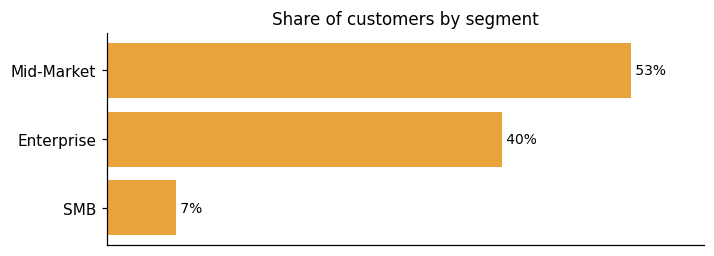
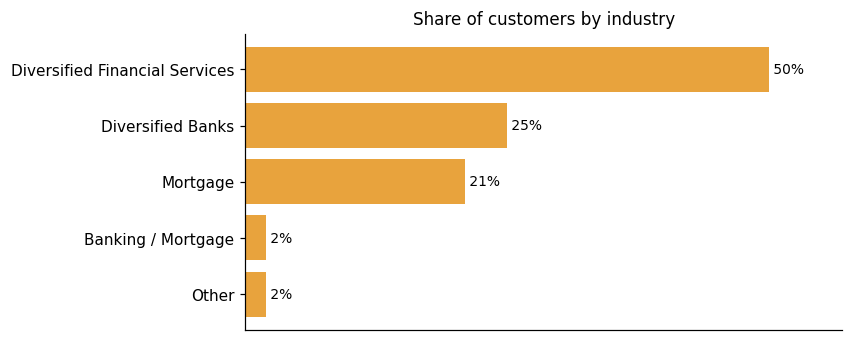
Representative customers: 51-200 employees, ALCOVA Mortgage, Alerus Financial Corporation, American Pacific Mortgage, Arvest Bank, Assurance Financial, Atlantic Bay Mortgage Group
How Total Expert uses AI in practice
Total Expert applies AI across several features of its financial services CRM and marketing platform, most notably through an AI Sales Assistant built for conversational AI engagement for modern lending teams, alongside AI-enhanced design tools. The platform is positioned as describing this Sales Assistant as agentic — meaning the vendor characterizes it as capable of handling borrower engagement with a degree of autonomy. AI is a meaningful part of what Total Expert does, but it sits within a broader CRM and marketing platform rather than being the product's sole purpose.
Agentic AI
Read detailsTotal Expert's AI Sales Assistant runs borrower outreach on its own, without a person triggering each step. It works across both voice and text channels. The assistant engages borrowers in personalized, compliance-ready conversations and captures intent signals along the way. It can schedule appointments and trigger CRM actions directly from those interactions. When a prospect is qualified, the assistant routes them to a human loan officer — autonomously, without manual prompting.
Generative AI
Read detailsTotal Expert's Integrated Design Studio puts AI-generated content and a built-in media library in the same place, so marketing teams can build finished templates without going outside the tool. The AI generates design options without a predefined limit. The Studio also includes a library of royalty-free images, videos, and other media assets.
Total Expert pricing and value: what the evidence shows
Total Expert does not publish pricing on its website, so evaluating value requires looking at what customers report. Five customers have reported ROI results from the platform. One lender saw incredible outcomes from their first Credit Improvement Journey in only six months, from November 2024 to April 2025. Another customer found that using the pre-built content in the system with the MLS data integration meant they saved a lot of time in their processes but also helped them get to market faster. A third customer now saves an average of three hours per new hire — which equated to more than 90 hours of time saved in Q1 2023 alone. Because pricing is not disclosed publicly, buyers will need to engage Total Expert directly to assess fit against their budget.
ROI evidence from 5 customers
- In only six months (November 2024 to April 2025), this lender saw incredible outcomes from their first Credit Improvement Journey
- Using the pre-built content in the system with the MLS data integration meant we saved a lot of time in our processes but also helped us get to market faster
- They now save an average of three hours per new hire—which equated to more than 90 hours of time saved in Q1 2023 alone
- it alerts our loan officers with actionable items, and, overall, it continues to generate more loans for the bank and increase our ROI
Time-to-value: what implementations take
- Total Expert implemented and actively used across the mortgage team within 90 days
- Within just six months of implementation, NFM Lending launched 250+ active journeys
Who it fits: value by company size
One concern that comes up is cost: at least one customer notes the cost seems a bit inflated for what it offers, even while recognizing the product as unique in this market. A separate practical issue is content management — adding new content can be difficult or pricey without a skilled developer available.
No dedicated pricing page detected; pricing is undisclosed on the vendor site.
Total Expert enterprise readiness: security, compliance, migration, and support
Total Expert's enterprise readiness spans four dimensions: security, compliance, migration, and customer support. These are the areas where the platform has documented coverage for buyers evaluating it at an enterprise level.
Security controls and assurance
Total Expert's security approach is shaped by the NIST Cybersecurity Framework and AWS Well-Architected Framework. The platform holds ISO 27001 certification and a SOC 2 attestation. Infrastructure runs on AWS, with U.S.-based data centers that feature 24/7 physical security. On access control, Total Expert supports SSO capabilities that greatly simplify the login process while adding multi-factor authentication. Beyond login, adaptive authentication technologies assess device reputation, user location, IP address, and user behavior on an ongoing basis. Session monitoring enforces privilege boundaries and guards against man-in-the-middle attacks.
Compliance and data protection
Total Expert holds ISO 27001 and SOC 2 certifications. On the regulatory side, Total Expert complies with CCPA as an approved service provider under that framework, processing personal information only on behalf of customers under written contracts and never selling that data to third parties. Communications compliance is supported through automated workflows for approvals, reporting and auditing across email and texting systems.
Migration from competing platforms
First Heritage Mortgage returned to Total Expert after recognizing gaps in service, innovation, and customization on an alternative platform. The contrast in day-to-day usability was stark: "As a former user of Surefire for eight years, I rarely logged in and used that platform because it was cumbersome and not user-friendly. Having used Total Expert for just three months, I already love it! Total Expert is incredibly easy to navigate; I'm logging in more than once a day, which I never did with Surefire."| Ed Jarosik On the implementation side, the onboarding experience draws positive signals. One user described it this way: "This was one of the first implimentation and integration that I was a part of and it was a breeze!" First United's mortgage team, for its part, reached a unified platform aligning marketing, sales, and data within months of going live, with loan officers equipped with workflows and campaigns that delivered immediate impact.
Support and success
Total Expert supports customers through multiple channels — a knowledge base help center, email, and live chat — with coverage Monday through Friday 8 a.m.–7 p.m. CT and Saturday 9 a.m.–5 p.m. CT. For ongoing enablement, Expert Academy is a complimentary monthly training program covering onboarding series and sessions for experienced users. It addresses platform features, automation, journey building, and lead management for both loan officers and administrators. Atlantic Bay Mortgage Group's implementation produced an onboarding Journey open rate of 75%. Luminate Home Loans notes that Total Expert has done a really good job of listening to our concerns and ensuring that the platform is set up to support our goals. Customer satisfaction outcomes reinforce the support model. Rate reports that By capturing customer feedback during the loan and automating our review request process, we've seen a significant boost in our overall review ratings and NPS, and cites an 88.2 Net Promoter Score (NPS), reflecting strong customer loyalty and satisfaction.
Total Expert alternatives and competitive landscape


Connect Total Expert with your stack: integrations and partner ecosystem
Total Expert connects to a wide range of external systems through 16 native integrations and 2 integration partnerships across 12 partner categories. Those categories span areas as varied as Cloud Infrastructure, Credit Bureau, and Design Software, among others.
Total Expert is built around a broad integration layer that pulls scattered data into one place for both the organization and its customers. It connects to 70+ integrations, consolidating a tech stack into a single source of truth. The API connection to a loan origination system handles contact migration and mapping in real time. In one customer's words, "Total Expert is hands down the best all-in-one CRM I've ever used. The wide range of integrations it provides to automate the entire loan process through dynamic journeys is truly top-notch, making it a game-changer for marketing teams."
| Partner category | Integration partners | Native count | Flow direction |
|---|---|---|---|
| Cloud Infrastructure | Amazon Web Services | 0 | Upstream |
| Credit Bureau | Equifax, Experian, TransUnion | 3 | Upstream |
| Design Software | Adobe InDesign, MAXA | 1 | Bidirectional, Unknown |
| Digital Advertising | Adwerx, Evocalize | 2 | Bidirectional, Downstream |
| Direct Mail | DirectMailers | 1 | Downstream |
| Financial Wellness & Education | CredEvolv | 1 | Bidirectional |
| Gifting | Box+Bestow, Tiff's Treats | 2 | Downstream |
| Home Services | OneSource | 1 | Unknown |
| Insurance Agency Management System | Covered | 1 | Bidirectional |
| Market Intelligence | InGenius | 1 | Upstream |
| Real Estate Data & Intelligence | RETR | 1 | Upstream |
| Reputation Management | Birdeye, Experience.com | 2 | Bidirectional |
Total Expert Inc News
Total Expert Declares the End of the CRM Era, Introduces the Customer ...
Total Expert introduces its Customer Operating System, marking a shift from traditional CRM to a platform that integrates Customer IQ, Lead Management, and AI Sales Assistants. This system enhances customer engagement by leveraging AI and human interaction to optimize customer lifetime value in financial services.
Total Expert Targets Lead Response Gap With New Lead Management Tools
Total Expert has launched a new Lead Management solution within its Customer for Life Platform, aimed at retail and hybrid lenders. This tool enhances lead routing, borrower engagement, and pipeline visibility, integrating with Total Experts AI Sales Assistant. It addresses workflow fragmentation and speed-to-lead issues, crucial in a competitive, high-rate market. Early adoption has been strong, with plans for further integration and support enhancements.
Total Expert Announces Enhanced Lead Management Capabilities
Total Expert has introduced enhanced lead management capabilities to its customer engagement platform. These improvements aim to streamline lead tracking and conversion processes for users, offering more efficient tools for managing customer interactions.
Total Expert Inc Profile
Company Name
Total Expert Inc
Company Website
//totalexpert.comHQ Location
1600 Utica Ave S, Suite 600, St. Louis Park, Minnesota 55416, US
Employees
101-250
Social


Financials
SERIES B