

Smartling Overview
Smartling enhances global brand connectivity through its AI-powered translation and content localization platform. It enables businesses to translate, automate, and manage content seamlessly across various platforms. With real-time analytics, Smartling offers insights into translation efficiency and effectiveness, allowing for data-driven decision-making. This platform is particularly beneficial for enterprises seeking to streamline their translation processes while maintaining a human touch in language adaptation. Smartling's unique value lies in its ability to simplify complex localization tasks, making it an essential tool for businesses aiming to reach a global audience efficiently.
Use Cases
Customers recommend Workflow Management, Content Management, Helpdesk Management, as the business use cases that they have been most satisfied with while using Smartling.
Business Priorities
Enter New Markets Internationally Or Locally and Scale Best Practices are the most popular business priorities that customers and associates have achieved using Smartling.
Smartling Use-Cases and Business Priorities: Customer Satisfaction Data
Smartling works with different mediums / channels such as Website.
Smartling's features include Personalization, Dashboard, Alerts: Popups & Notifications, etc. and Smartling support capabilities include Chat Support, Phone Support, Email Support, etc. also Smartling analytics capabilities include Analytics, and Custom Reports.
Reviews
"...We were able to cut our translation time in half and maintain accuracy while improving our collaboration with translators and internal reviewers...." Peer review by Jason G. L, Global Product Content Manager, Internet
Peer review evidence (same sources as the product rating summary)
"...Great keyboard shortcuts for quick workflow...." Peer review by Executive Sponsor
"...With more content being created and translated, the margin for error and gain also increases...." AI-Driven Translation Management Platform
"...so you can translate website pages, landing pages, help centers and more without leaving the tools you already know...." Smartling Platform Technology Integrations
Smartling, Easygenerator, Articulate Storyline, Buzzsprout, SproutVideo, etc., all belong to a category of solutions that help Authoring and Publishing. Each of them excels in different abilities. Therefore, determining the best platform for your business will depend on your specific needs and requirements.
Smartling connects brands with global customers by translating and managing content across platforms. Real-time analytics and reporting are provided to automate the process.
Popular Business Setting
for Smartling
Top Industries
- Computer Software
- Internet
- Information Technology and Services
Popular in
- Enterprise
- Mid Market
- Large Enterprise
Smartling is popular in Computer Software, Internet, and Information Technology And Services and is widely used by Enterprise, Mid Market, and Large Enterprise.
Smartling Customer wins, Customer success stories, Case studies
How does Smartling address your Workflow Management Challenges?
How does Smartling address your Content Management Challenges?
What Are the key features of Smartling for Helpdesk Management?
How can Smartling enhance your Engagement Management process?
Why is Smartling the best choice for Collaboration?
Smartlings AI Translation Platform Enables IBM to Cut Localization Time in Half, Scaling Marketing Across 170 Countries
Smartlings AI Translation Platform Enables IBM to Cut Localization Time in Half, Scaling Marketing Across 170 Countries
How to launch new languages with AI | Smartling Events
Frequently Asked Questions (FAQ)
What buyers ask before choosing Smartling
Integrations What CRM integrations are available for Smartling?
Smartling offers several CRM integrations that enhance its translation management capabilities, making it easier for businesses to manage their localization processes. Notably, Smartling integrates with platforms such as Marketo and Zendesk, allowing users to streamline their marketing and customer support workflows while ensuring consistent messaging across multiple languages. These integrations help automate the localization process, reducing manual work and improving efficiency. By connecting Smartling with these CRM systems, companies can enhance their customer engagement and support efforts, ultimately leading to improved user experiences and increased ROI. Additionally, the integration with Contentful and Figma further supports content management and design workflows, making Smartling a versatile choice for businesses looking to optimize their localization strategies.
Integrations How does Smartling connect with Salesforce?
Smartling connects with Salesforce through its integration capabilities, allowing businesses to streamline their translation and localization processes directly within the Salesforce platform. This integration enables users to manage multilingual content efficiently, ensuring that marketing materials, customer communications, and product information are accurately translated and localized for diverse markets. By leveraging Smartling's Global Delivery Network, Salesforce users can automate workflows, reduce manual tasks, and enhance collaboration between translation teams and content creators. This results in faster time-to-market for localized content and improved consistency across all customer touchpoints. Overall, the Smartling-Salesforce integration helps organizations enhance their global reach while maintaining high-quality standards in their communications.
Integrations How does Smartling connect with Salesforce for localization projects?
Smartling connects with Salesforce to streamline localization projects by integrating its translation management system directly with the Salesforce platform. This integration allows businesses to automate the translation of content within Salesforce, reducing manual effort and minimizing errors. Users can easily manage and track translation workflows, ensuring that marketing materials, customer communications, and other critical content are localized efficiently. By leveraging Smartling's capabilities, organizations can enhance their global reach and improve the consistency of messaging across different languages. This integration not only accelerates the localization process but also helps maintain high-quality translations, ultimately leading to better user experiences and increased engagement with international audiences.
Integrations Can Smartling integrate with HubSpot and Marketo?
Smartling does not specifically mention integration with HubSpot in the provided context, but it does integrate seamlessly with Marketo, along with other platforms like Talkdesk's CMS and Figma. This integration allows businesses to automate their localization processes, reducing manual work and improving efficiency in managing multilingual content. By leveraging Smartling's Global Delivery Network, companies can ensure consistent messaging across different languages and regions, which is crucial for maintaining brand integrity. If HubSpot integration is a requirement for your localization strategy, it may be worth reaching out to Smartling's support team for the latest updates or potential workarounds. Overall, Smartling's capabilities with Marketo can significantly enhance your marketing efforts by streamlining the translation and localization workflow.
Integrations Can Smartling integrate with HubSpot for automated translation workflows?
Yes, Smartling can integrate with HubSpot to facilitate automated translation workflows, enhancing your localization efforts. This integration allows businesses to streamline their content translation processes by connecting Smartling's translation management system with HubSpot's marketing platform. By automating the transfer of content between the two systems, companies can ensure that their marketing materials are quickly and accurately translated into multiple languages, reducing manual effort and turnaround time. This capability not only improves efficiency but also helps maintain consistency in messaging across different markets. For businesses looking to expand globally, integrating Smartling with HubSpot can significantly enhance their ability to deliver localized content that resonates with diverse audiences.
Integrations What are the setup steps for integrating Smartling with third-party tools?
To integrate Smartling with third-party tools, start by identifying the specific platforms you want to connect, such as Contentful, Zendesk, or Figma, as these are commonly used with Smartling. Next, access your Smartling account and navigate to the integration settings, where you can find detailed documentation for each supported tool. Follow the step-by-step instructions provided to establish the connection, which typically involves generating API keys or tokens from both Smartling and the third-party tool. Ensure that you configure the necessary permissions and settings to allow seamless data transfer between the systems. Finally, test the integration to confirm that content flows correctly and translations are processed as expected, allowing you to automate localization and improve efficiency in your workflows.
Integrations What are the setup steps for integrating Smartling with Marketo?
To integrate Smartling with Marketo, start by ensuring you have administrative access to both platforms. First, log into your Smartling account and navigate to the integrations section. Select Marketo from the list of available integrations and follow the prompts to connect your Marketo account by entering your Marketo API credentials. Once connected, configure the settings to define how content will be localized, including specifying which assets to sync between Smartling and Marketo. After setting up the integration, test the connection by sending a sample asset from Marketo to Smartling to ensure everything is functioning correctly. Finally, monitor the integration for any issues and adjust settings as necessary to optimize your localization workflow. This integration will streamline your marketing efforts by automating the localization process, allowing for quicker and more efficient updates across multiple languages.
Integrations How does data flow between Smartling and other systems like Zendesk and Figma?
Data flows between Smartling and other systems like Zendesk and Figma through seamless integrations that automate the localization process. When content is created or updated in Zendesk or Figma, Smartling's integration captures this data and initiates the translation workflow automatically, eliminating the need for manual uploads. This ensures that all content is consistently localized across different languages and platforms. Once translations are completed, Smartling pushes the localized content back to Zendesk or Figma, allowing teams to access the updated materials without delay. This streamlined data flow not only enhances efficiency but also improves translation quality and reduces time-to-market, enabling businesses to maintain a consistent global presence while focusing on their core marketing and development efforts.
Integrations How does data flow between Smartling and third-party tools like Zendesk?
Data flows between Smartling and third-party tools like Zendesk through seamless integrations that automate the localization process. Smartling's Global Delivery Network allows for direct connections with Zendesk, enabling teams to manage translation projects efficiently without manual intervention. When content is updated in Zendesk, Smartling automatically retrieves this data for translation, ensuring that all customer support materials are localized promptly. Once translations are completed, Smartling pushes the localized content back to Zendesk, maintaining consistency and accuracy across all languages. This integration not only reduces the workload for teams but also accelerates time-to-market for localized content, ultimately enhancing customer experience and engagement in diverse markets.
Integrations Are there any limitations to Smartling's API access for integrations?
Smartling's API access for integrations is robust, allowing users to connect with various platforms such as Contentful, Zendesk, and Figma, which enhances localization workflows and reduces manual tasks. However, some limitations may exist, particularly regarding the complexity of certain functionalities that can require additional training or practice to navigate effectively. Users have noted that while the API provides extensive control over translation management, some features may not be as intuitive, potentially leading to challenges in finding specific functionalities. Additionally, the need for a well-structured integration process means that businesses should be prepared to invest time in setup and training to fully leverage Smartling's capabilities. Overall, while Smartling's API is powerful, understanding its limitations is crucial for maximizing its effectiveness in your localization strategy.
Features What does Smartling's automated translation feature do?
Smartling's automated translation feature leverages AI-powered technology to streamline the translation process for businesses, significantly enhancing efficiency and reducing costs. This feature automates the localization of content across various platforms, allowing companies to translate large volumes of text—such as websites, marketing materials, and product content—quickly and accurately. For instance, companies like Talkdesk and Netskope have utilized Smartling to automate their website localization, resulting in a 95% reduction in turnaround time and substantial cost savings. By integrating with content management systems (CMS) like Marketo and Figma, Smartling eliminates manual steps, ensuring consistent messaging and freeing up resources for other marketing initiatives. Overall, this automation not only accelerates time to market but also maintains high translation quality, making it a valuable tool for global businesses.
Features How do I configure the linguistic quality assurance feature in Smartling?
To configure the linguistic quality assurance (LQA) feature in Smartling, first, log into your Smartling account and navigate to the project settings for the specific project you want to enhance. Under the "Quality" tab, you will find options to set up your LQA criteria, including defining the metrics you want to use for evaluation, such as accuracy, fluency, and terminology consistency. You can also customize the scoring system and establish thresholds for acceptable quality levels. Once configured, ensure that your translation team is aware of these standards and integrates them into their workflow. Regularly review the LQA reports generated by Smartling to monitor performance and make adjustments as necessary to maintain high translation quality. This feature helps ensure that your localized content meets the desired linguistic standards, ultimately enhancing user experience across different languages.
Features What is the purpose of the style guide feature in Smartling?
The style guide feature in Smartling serves to ensure consistency and adherence to brand voice across all translated content. By providing clear guidelines on tone, terminology, formatting, and style preferences, the style guide helps translators understand the specific requirements for each project, which is crucial for maintaining brand integrity in different languages. This feature is particularly valuable for businesses operating in multiple markets, as it streamlines the translation process and reduces the likelihood of errors or misinterpretations. Ultimately, the style guide enhances the quality of translations, fosters a cohesive brand image, and improves the overall customer experience by delivering content that resonates with diverse audiences while aligning with the company's messaging standards.
Features What is the purpose of Smartling's style guide feature?
Smartling's style guide feature serves to ensure consistency and adherence to brand voice across all translated content. By providing a centralized repository of guidelines, it allows organizations to define specific terminology, tone, and stylistic preferences that translators must follow. This is particularly valuable for businesses operating in multiple languages, as it helps maintain a cohesive brand identity and enhances the overall quality of translations. The style guide can include examples of preferred phrases, formatting rules, and cultural considerations, which aids translators in delivering content that resonates with target audiences. Ultimately, this feature streamlines the localization process, reduces the need for revisions, and fosters a stronger connection with customers in diverse markets.
Features How do I use Smartling's glossary management functionality?
To use Smartling's glossary management functionality, start by accessing the Smartling platform and navigating to the "Glossary" section within your project. Here, you can create a new glossary or upload an existing one in a compatible format. Once your glossary is set up, you can add terms, definitions, and context to ensure consistency across translations. It's essential to categorize terms appropriately and provide translations for each language you are working with. After populating your glossary, you can enable it for use in translation workflows, allowing translators to reference it while working on projects. This functionality helps maintain brand terminology and improves translation quality, ultimately enhancing the localization process for your content.
Features What does the translation asset management feature in Smartling do?
The translation asset management feature in Smartling allows businesses to efficiently manage and organize their translation assets, such as glossaries, translation memories, and style guides. This feature enhances the localization process by ensuring consistency across translations and enabling teams to reuse previously translated content, which can significantly reduce costs and turnaround times. By centralizing these assets, Smartling helps maintain brand voice and terminology across multiple languages, making it easier for companies to scale their global communications. Additionally, the integration of this feature with platforms like Contentful, Zendesk, and Figma streamlines workflows, allowing for seamless updates and collaboration among teams. Overall, Smartling's translation asset management empowers organizations to optimize their localization efforts and improve the quality of their multilingual content.
Features How can I set up real-time translation updates in Smartling?
To set up real-time translation updates in Smartling, you need to integrate your content management system (CMS) with Smartling's Global Delivery Network. Begin by accessing the Smartling dashboard and navigating to the integration settings. Choose your CMS from the list of supported platforms, such as Marketo or Figma, and follow the provided instructions to connect your account. Once integrated, configure the settings to enable automatic content synchronization, ensuring that any updates made in your CMS are instantly sent to Smartling for translation. Additionally, set up notifications to alert your team when translations are completed, allowing for timely updates across your global content. This streamlined process will enhance your localization efforts and ensure that your content remains consistent and up-to-date in multiple languages.
ROI & pricing What measurable business value can Smartling provide for my organization?
Smartling provides significant measurable business value by enhancing translation efficiency and reducing costs for organizations. For instance, a Fortune 500 software company saved $3.4 million in one year by utilizing Smartling's AI-powered human translation, translating over 50 million words annually while achieving a 99+ MQM quality score. Additionally, companies like Canva and IMVU have experienced substantial growth in user engagement, with Canva reaching 30 million non-English speaking users and IMVU increasing iOS app registrations by 45%. Smartling's translation management system streamlines localization processes, cutting time to market by up to 50% and reducing project management efforts by 75%. These efficiencies not only improve operational productivity but also enable businesses to expand their global reach and enhance customer experiences, ultimately driving revenue growth.
ROI & pricing How does Smartling impact ROI and cost savings for businesses?
Smartling significantly impacts ROI and cost savings for businesses by streamlining the localization process through its AI-powered translation management system. For instance, a Fortune 500 software company saved $3.4 million in translation costs within a year by utilizing Smartling, which enabled them to translate over 50 million words annually while achieving a 99+ MQM quality score. Additionally, companies like Netskope experienced a 95% reduction in website translation turnaround time, allowing for rapid updates in multiple languages and enhancing engagement. By automating and centralizing localization efforts, Smartling not only reduces manual work and project management costs but also accelerates time to market, ultimately leading to a strong return on investment and improved global reach for businesses.
ROI & pricing What are the different pricing plans and tiers available for Smartling?
Smartling does not publicly disclose specific pricing plans or tiers on their website, as their pricing is typically customized based on the unique needs of each business. Factors influencing the cost include the volume of content to be translated, the number of languages required, and the specific features or integrations needed, such as those with platforms like Adobe CQ, Drupal, or Zendesk. To get an accurate quote, potential customers are encouraged to contact Smartling directly for a personalized consultation. This approach allows businesses to tailor their translation management system to fit their operational requirements and budget, ensuring they receive the most value from Smartling's services.
ROI & pricing What is the total cost of ownership when using Smartling for localization?
The total cost of ownership (TCO) when using Smartling for localization encompasses several factors, including subscription fees, translation costs, and potential savings from increased efficiency. Smartling's AI-powered translation services have helped companies, such as a Fortune 500 software firm, save significant amounts—up to $3.4 million annually—by reducing translation turnaround time by 50% while maintaining high quality, with an MQM score above 99. Additionally, Smartling's integration with platforms like Contentful, Zendesk, and Figma can streamline workflows, further reducing manual labor and associated costs. Companies like Netskope and Talkdesk have also reported substantial reductions in translation costs and improved project management efficiency, indicating that while there are upfront costs, the long-term savings and enhanced productivity can lead to a favorable TCO for businesses looking to localize their content effectively.
ROI & pricing How quickly can I expect to see value from implementing Smartling?
When implementing Smartling, businesses can expect to see value relatively quickly, often within weeks. For instance, IMVU utilized Smartling to launch 15 localized websites in under a month, resulting in a 45% increase in iOS app registrations. Similarly, BMJ experienced a 54% reduction in time to publication, cutting it from 13 weeks to just 6 weeks, while also lowering translation costs by 21%. The efficiency gained through Smartling's translation management system allows teams to manage translations without heavy IT involvement, leading to faster project completion and improved quality. Overall, companies often report significant improvements in localization speed and cost-effectiveness shortly after adopting Smartling, making it a valuable investment for global expansion.
ROI & pricing What are the implementation costs associated with using Smartling?
The implementation costs associated with using Smartling can vary significantly based on several factors, including the scale of your translation needs, the complexity of your content, and the specific features you choose to utilize. While Smartling does not publicly disclose a standard pricing model, businesses typically incur costs related to subscription fees for the translation management system, integration expenses with existing platforms like Contentful or Zendesk, and potential training for staff to effectively use the tool. Additionally, companies may need to budget for translation services, whether through Smartling's AI-powered human translation or other options. To get a precise estimate tailored to your organization's requirements, it is advisable to contact Smartling directly for a customized quote based on your specific use case and anticipated volume of translations.
Capabilities Can Smartling automate translation workflows?
Yes, Smartling can automate translation workflows, significantly enhancing efficiency and reducing manual effort. By leveraging Smartling's AI-powered translation capabilities, companies can streamline their localization processes, as demonstrated by Talkdesk, which integrated Smartling with its CMS, Marketo, and Figma. This integration allowed Talkdesk to automate website localization across six languages, eliminating slow and error-prone manual translation steps. As a result, they were able to launch localized sites quickly while maintaining consistent messaging. Additionally, Smartling's Global Delivery Network facilitates rapid updates and ensures that content remains culturally relevant, ultimately freeing up resources for other marketing initiatives. This automation not only accelerates time to market but also improves translation quality, making Smartling a valuable tool for businesses looking to optimize their translation workflows.
Capabilities Does Smartling support real-time translation updates?
Yes, Smartling supports real-time translation updates through its advanced translation management system and AI-powered tools. This capability allows businesses to automate and streamline their localization processes, enabling them to make fast updates to their content in multiple languages without significant delays. For instance, companies like Netskope have utilized Smartling to reduce website and marketing content turnaround time by 95%, ensuring that their localized assets are always current and culturally relevant. Additionally, Smartling's Global Delivery Network facilitates quick content launches, allowing teams to manage translations efficiently without needing extensive IT support. This real-time update feature is particularly beneficial for organizations that require timely translations to maintain engagement and meet market demands.
Capabilities Can Smartling manage multilingual content across different teams?
Yes, Smartling can effectively manage multilingual content across different teams by utilizing its robust translation management system (TMS) and AI-powered tools. The platform allows for seamless collaboration among various teams, enabling them to centralize their localization processes and automate workflows. For instance, companies like Talkdesk and Mailgun have successfully integrated Smartling with their content management systems (CMS) such as Marketo and Contentful, which streamlined their translation efforts and reduced manual work. This integration facilitates real-time updates and ensures consistency in messaging across languages, making it easier for teams to manage multilingual content efficiently. Additionally, Smartling's Global Delivery Network supports quick localization, allowing teams to focus on strategic projects while maintaining high translation quality.
Capabilities Does Smartling provide linguistic quality assurance features?
Yes, Smartling provides linguistic quality assurance features that are integral to its translation management system. The platform employs AI-powered human translation, which ensures high-quality outputs, as evidenced by an average MQM score above 99 for its translations. This quality assurance is further supported by centralized processes and glossaries that help maintain consistency and accuracy across translations. Additionally, Smartling's detailed interface allows users to control various aspects of the translation process, enabling teams to implement their own quality checks. This combination of AI technology and human oversight not only enhances the quality of translations but also streamlines the localization process, making it suitable for businesses that require precise and culturally relevant content for global markets.
Capabilities Can Smartling handle continuous localization processes?
Yes, Smartling is well-equipped to handle continuous localization processes, making it an ideal choice for businesses that require ongoing updates and translations. Its AI-powered translation management system automates the localization workflow, significantly reducing manual steps and turnaround times. For instance, companies like Talkdesk have successfully integrated Smartling with their content management systems, such as Marketo and Figma, to streamline the localization of their websites into multiple languages. This automation allows teams to quickly launch localized content while maintaining consistency and quality across regions. Additionally, Smartling's Global Delivery Network ensures that updates can be made rapidly, enabling businesses to keep pace with evolving content needs and market demands, ultimately enhancing user experience and engagement.
Capabilities Does Smartling offer terminology management capabilities?
Yes, Smartling does offer terminology management capabilities as part of its comprehensive translation management system. This feature allows businesses to maintain consistency in their translations by managing and standardizing key terms across multiple languages. By utilizing Smartling's terminology management, companies can ensure that specific terms are translated uniformly, which is crucial for brand identity and clarity in communication. This capability not only enhances the quality of translations but also streamlines the localization process, making it easier for teams to collaborate and maintain accuracy. Overall, Smartling's terminology management is a valuable tool for organizations looking to improve their multilingual content management and localization efforts.
Use cases How can SDRs use Smartling to improve their outreach in multilingual markets?
Sales Development Representatives (SDRs) can leverage Smartling to enhance their outreach in multilingual markets by utilizing its automated localization capabilities. By integrating Smartling with their existing tools, such as CRM systems and marketing platforms, SDRs can quickly translate and adapt outreach materials, ensuring that messaging resonates with diverse audiences. Smartling’s Global Delivery Network allows for real-time updates and consistent messaging across multiple languages, which is crucial for maintaining brand integrity. Additionally, the platform's AI-powered translation ensures high-quality content that meets local cultural nuances, improving engagement rates. This streamlined process not only saves time but also enables SDRs to focus on strategic outreach efforts, ultimately driving better results in global markets.
Use cases How can SDRs use Smartling to improve their outreach to multilingual markets?
Sales Development Representatives (SDRs) can leverage Smartling to enhance their outreach to multilingual markets by utilizing its automated localization capabilities. By integrating Smartling with their existing tools, such as CRM systems and marketing platforms, SDRs can quickly translate and adapt outreach materials into multiple languages, ensuring that messaging resonates with diverse audiences. This automation reduces the time and effort spent on manual translations, allowing SDRs to focus on building relationships rather than managing language barriers. Additionally, Smartling's AI-powered translation ensures high-quality content that maintains brand consistency across different regions. By effectively communicating in the native languages of potential clients, SDRs can significantly improve engagement rates and expand their reach in global markets, ultimately driving more qualified leads and enhancing overall sales performance.
Use cases What are the best practices for marketers to implement Smartling in their content localization workflows?
To effectively implement Smartling in content localization workflows, marketers should start by clearly defining their localization goals and target markets. Establish a centralized content repository to streamline access and management of translation assets. Utilize Smartling's integration capabilities with platforms like Contentful, Zendesk, and Figma to automate workflows and reduce manual tasks. Regularly engage with Smartling's customer support and leverage their comprehensive help center for training and troubleshooting. It's also essential to maintain consistent communication with translation partners to ensure quality and alignment with brand messaging. Finally, monitor performance metrics to assess the impact of localization efforts on website traffic and conversion rates, allowing for continuous improvement in the localization strategy.
Use cases In what scenarios should RevOps teams consider using Smartling for translation asset management?
RevOps teams should consider using Smartling for translation asset management in scenarios where they need to efficiently localize content across multiple languages and platforms. For instance, if a company operates in diverse markets and requires consistent messaging in various languages, Smartling's translation management system can streamline this process. It is particularly beneficial for organizations using content management systems like Adobe CQ, Drupal, or Magento, as it integrates seamlessly with these platforms. Additionally, teams looking to enhance user experience for non-English speaking audiences, as seen with companies like Goldcast and IMVU, can leverage Smartling to automate and manage translation workflows, significantly reducing turnaround times and costs while maintaining high-quality translations. This makes Smartling an ideal choice for RevOps teams focused on global expansion and effective communication.
Use cases How can sales leaders leverage Smartling to enhance their global sales strategies?
Sales leaders can leverage Smartling to enhance their global sales strategies by utilizing its robust translation management system to localize marketing materials, product information, and sales content efficiently across multiple languages. By integrating Smartling with platforms like Marketo and CMS tools, sales teams can automate the localization process, ensuring that messaging is consistent and culturally relevant for diverse markets. This not only accelerates time-to-market for localized content but also improves customer engagement and conversion rates by catering to non-English speaking audiences. Additionally, Smartling's AI-powered human translation capabilities help maintain high-quality translations, allowing sales leaders to focus on strategic initiatives rather than manual translation tasks, ultimately driving global growth and increasing revenue opportunities.
Use cases How can sales leaders leverage Smartling to enhance their global sales presentations and materials?
Sales leaders can leverage Smartling to enhance their global sales presentations and materials by utilizing its powerful translation management system to automate and streamline the localization process. By integrating Smartling with platforms like Marketo and Figma, sales teams can ensure that their presentations are accurately translated into multiple languages, allowing them to effectively communicate with diverse audiences. Smartling's AI-powered human translation ensures high-quality content that resonates with local markets, while its Global Delivery Network facilitates faster updates and consistent messaging across regions. This not only saves time and reduces manual errors but also enables sales leaders to focus on strategic initiatives, ultimately driving global growth and improving customer engagement in non-English speaking markets.
Use cases What specific challenges in localization can Smartling help address for marketing teams?
Smartling addresses several key challenges in localization that marketing teams often face. One major issue is the slow and error-prone nature of manual translation, which can hinder timely updates and consistent messaging across different markets. Smartling's automation capabilities streamline the localization process, significantly reducing translation turnaround times—such as the 95% reduction experienced by Netskope. Additionally, Smartling integrates seamlessly with various platforms like Contentful, Marketo, and Figma, which helps eliminate manual steps and reduces developer workload. This integration allows marketing teams to quickly launch localized content, freeing up resources for other strategic projects. Furthermore, Smartling's AI tools enhance translation quality, ensuring that marketing materials resonate culturally with target audiences, ultimately driving engagement and improving the overall user experience.
Use cases When is the right time for a company to adopt Smartling for continuous localization in their digital assets?
The right time for a company to adopt Smartling for continuous localization is when it experiences rapid growth in global markets or when it needs to manage a high volume of content across multiple languages. Companies that frequently update their digital assets, such as websites, marketing materials, or product documentation, will benefit significantly from Smartling's AI-powered translation and automation capabilities. If your organization struggles with manual translation processes, faces challenges in maintaining translation quality, or requires compliance with local regulations, implementing Smartling can streamline workflows and enhance efficiency. Additionally, if your team aims to improve user experience and engagement in diverse markets, adopting Smartling will enable you to deliver culturally relevant content quickly and effectively, ensuring that your messaging resonates with international audiences.
Use cases How do teams typically adopt Smartling for continuous localization in their existing workflows?
Teams typically adopt Smartling for continuous localization by integrating it into their existing workflows through its robust translation management system and Global Delivery Network. First, they assess their current localization processes and identify areas for improvement, such as reducing manual translation steps and enhancing collaboration among teams. Next, they leverage Smartling's integrations with popular platforms like Contentful, Marketo, and Figma to streamline content updates and ensure consistency across languages. By utilizing Smartling's AI-powered tools and visual context features, teams can enhance translation quality and speed, allowing them to focus on strategic initiatives rather than administrative tasks. Continuous localization becomes achievable as teams set up automated workflows that facilitate real-time updates, enabling them to respond quickly to market changes and maintain a competitive edge.
Alternatives What are the key differences between Smartling and Memsource?
Smartling and Memsource are both robust translation management systems, but they cater to different needs and workflows. Smartling excels in providing in-context translation capabilities, which allows users to see translations within the actual context of their content, enhancing accuracy and relevance. It also offers strong AI and automation tools that streamline the localization process, making it ideal for companies looking to scale quickly. In contrast, Memsource is known for its user-friendly interface and flexibility, making it suitable for teams that prioritize ease of use and integration with various platforms. While Smartling focuses on comprehensive support and customer service, Memsource emphasizes a more straightforward approach to translation management. Ultimately, the choice between Smartling and Memsource will depend on your specific localization needs and team dynamics.
Alternatives How does Smartling compare to TextMaster in terms of features?
Smartling and TextMaster both offer translation management solutions, but they cater to different needs and feature sets. Smartling is known for its AI-powered human translation capabilities, which streamline the localization process and integrate seamlessly with various platforms like Marketo and Figma, making it ideal for companies looking to automate and manage large-scale translation projects efficiently. It also provides a comprehensive help center and excellent customer support. In contrast, TextMaster focuses more on providing a marketplace for freelance translators, which can be beneficial for businesses seeking a more hands-on approach to selecting translators. While Smartling excels in automation and integration, TextMaster may appeal to those who prefer flexibility in choosing translation resources. Ultimately, the choice between Smartling and TextMaster depends on whether a business prioritizes automation and integration or a more customizable freelance translation experience.
Alternatives What are the advantages of using Phrase over Smartling?
Phrase offers several advantages over Smartling that may appeal to different businesses. One key benefit is its user-friendly interface, which simplifies the localization process and can reduce the learning curve for new users. Phrase also emphasizes flexibility with its integration capabilities, allowing seamless connections with various platforms and tools, which can enhance workflow efficiency. Additionally, Phrase provides a strong focus on collaborative features, enabling teams to work together more effectively on translation projects. While Smartling is known for its AI-powered human translation and high-quality output, Phrase may be more suitable for companies seeking a straightforward, collaborative approach to localization. Ultimately, the choice between Phrase and Smartling will depend on specific business needs and preferences regarding usability and integration.
Alternatives Is Crowdin a better alternative to Smartling for translation management?
When comparing Crowdin and Smartling for translation management, both platforms offer unique advantages tailored to different business needs. Smartling is known for its AI-powered human translation capabilities, which have helped companies like Netskope significantly reduce translation costs and turnaround times while maintaining high quality. It excels in automating website localization and providing comprehensive support. On the other hand, Crowdin is often praised for its user-friendly interface and collaborative features, making it suitable for teams that prioritize ease of use and real-time collaboration. Ultimately, the choice between Crowdin and Smartling depends on your specific requirements, such as the complexity of your projects, the need for automation, and the level of support you desire. Evaluating these factors will help determine which solution aligns best with your translation management goals.
Alternatives What makes XTM stand out compared to Smartling?
XTM and Smartling are both robust translation management systems (TMS), but they cater to different needs and preferences. XTM is known for its user-friendly interface and strong focus on automation, which can streamline workflows for teams looking to enhance efficiency. It also offers advanced features like a built-in translation memory and glossary management, making it suitable for organizations that prioritize consistency across translations. In contrast, Smartling excels in providing AI-powered human translation and has a strong emphasis on customer support, which is highly valued by users. Smartling's integration capabilities with platforms like Contentful, Zendesk, and Figma further enhance its appeal for businesses needing seamless localization processes. Ultimately, the choice between XTM and Smartling will depend on specific organizational needs, such as the level of automation desired and the importance of customer service.
Alternatives What are the best alternatives to Smartling for localization projects?
When considering alternatives to Smartling for localization projects, several notable options stand out. Memsource is a strong competitor, offering a cloud-based translation management system that emphasizes automation and collaboration. TextMaster provides a marketplace for professional translators, focusing on quality and flexibility for various content types. Phrase is another alternative, known for its user-friendly interface and integration capabilities, making it suitable for developers. Crowdin offers a robust platform for managing localization workflows, particularly for software and web applications. Lastly, XTM is recognized for its enterprise-level features and scalability, catering to larger organizations with complex localization needs. Each of these alternatives has unique strengths, so the best choice will depend on specific project requirements and team capabilities.
Smartling Competitors


Smartling Features
- Low
- Medium
- High
| FEATURE | RATINGS AND REVIEWS |
|---|---|
| AI Powered | Read Reviews (14) |
| Analytics | Read Reviews (39) |
| Custom Reports | Read Reviews (106) |
| CAPABILITIES | RATINGS AND REVIEWS |
|---|---|
| AI Powered | Read Reviews (14) |
| Analytics | Read Reviews (39) |
| Custom Reports | Read Reviews (106) |
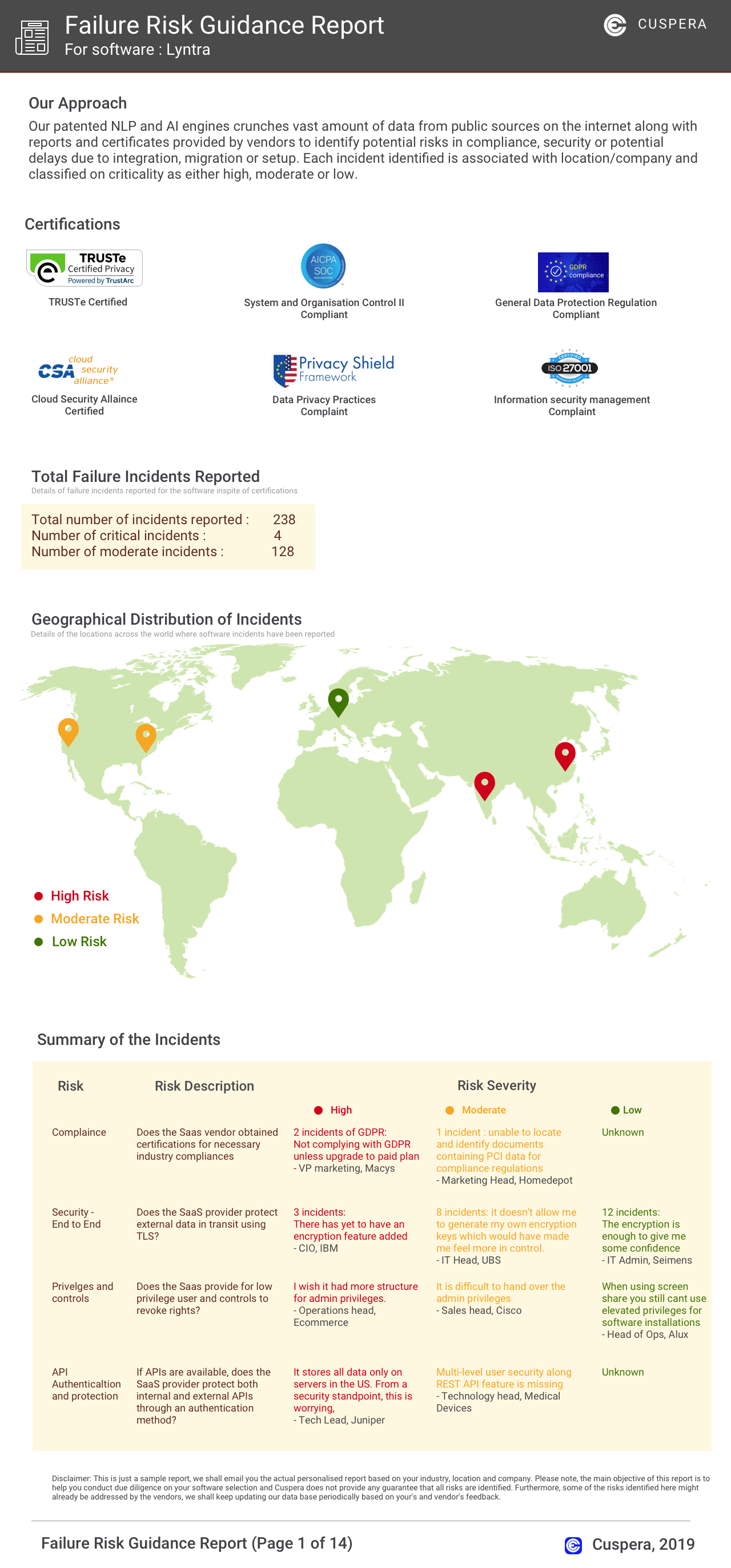
Software Failure Risk Guidance
?for Smartling
Overall Risk Meter
Top Failure Risks for Smartling
Smartling, Inc. News
Vitruvian Partners Acquires Majority Stake in Smartling to Scale AI Translation Platform
Vitruvian Partners has acquired a majority stake in Smartling from Battery Ventures to enhance its AI translation platform. The investment will support Smartling's product development, international expansion, and strategic acquisitions. Smartling aims to advance its LanguageAI platform with improved quality assurance and workflow automation, positioning itself as a leader in AI-driven enterprise localization.
Smartling Deepens Investment in Europe, Names Anna Schlegel GM, EMEA
Smartling appoints Anna Schlegel as General Manager for EMEA, enhancing its regional leadership and investment in Europe. Schlegel will lead the go-to-market strategy, focusing on customer relationships and AI-powered translation adoption. Her experience will help European enterprises scale globally, aligning with AI and data privacy expectations.
Smartling Named an OpenAI Select Partner and Launches Plugin for ChatGPT
Smartling has become an OpenAI Select Partner, launching a ChatGPT plugin that integrates Smartling's translation capabilities directly within ChatGPT. This partnership aims to enhance AI-driven multilingual content management, enabling enterprises to manage translation tasks efficiently and expand globally. The collaboration leverages OpenAI's models to improve translation quality and automation.
Smartling Wins 2026 AI Breakthrough Award as Enterprise AI Translation ...
Smartling has been awarded the 2026 AI Breakthrough Award for Machine Translation Innovation, highlighting its leadership in AI-powered translation. The company has seen significant growth in AI translation usage, with enterprises adopting its solutions at scale. This recognition underscores Smartling's role in enabling global growth through advanced translation and localization services.
Smartling, Inc. Profile
HQ Location
1375 Broadway 14th Floor New York, NY 10018
Employees
101-250
Social


Financials
SERIES D