

ownCloud Overview
ownCloud tackles the challenge of secure file synchronization and sharing for enterprises. It offers a robust platform that meets high data governance needs, making it ideal for organizations of all sizes. With ownCloud, businesses can manage access to their data, ensuring only authorized users can view sensitive information. Trusted by 200 million users, ownCloud enhances productivity by allowing seamless file sharing without compromising control. The platform's Infinite Scale architecture supports scalability, while features like Collabora’s Secure View provide additional layers of security. This makes ownCloud a vital tool for enterprises seeking reliable and secure data management solutions.
Use Cases
Customers recommend Collaboration, Advertisement, Content Sharing, as the business use cases that they have been most satisfied with while using ownCloud.
Business Priorities
Enhance Customer Relationships and Acquire Customers are the most popular business priorities that customers and associates have achieved using ownCloud.
ownCloud Use-Cases and Business Priorities: Customer Satisfaction Data
ownCloud works with different mediums / channels such as Phone Calls. E-Mail. Mobile etc.
ownCloud's features include Personalization, Widgets, Alerts: Popups & Notifications, etc. and ownCloud support capabilities include Email Support, 24/7 Support, Chat Support, etc. also ownCloud analytics capabilities include Custom Reports, and Analytics.
Reviews
"...You can email a link, and share with people outside the company...." Peer review by Verified User, Manager in Other, Education
Peer review evidence (same sources as the product rating summary)
"...Medical research collaboration depends on public trust and cannot risk data breaches...." Ensure Security with ownCloud
"...By submitting this form I agree that I want to to receive notifications and services via email, phone or personalized ads...." ownCloud's easy external sharing lets you keep control, 100%
"...You can email a link, and share with people outside the company...." Peer review by Verified User, Manager in Other, Education
ownCloud, Tubular, Digital Pigeon, eLogger, Cerberus FTP Server, etc., all belong to a category of solutions that help Data Management Platform. Each of them excels in different abilities. Therefore, determining the best platform for your business will depend on your specific needs and requirements.
ownCloud is an open-source file sync, share, and collaboration software enabling teams to work on data from any device, anywhere. It enhances productivity and accessibility for users.
Popular Business Setting
for ownCloud
Top Industries
- Information Technology and Services
- Education
- Computer Software
Popular in
- Small Business
- Mid Market
- Enterprise
ownCloud is popular in Information Technology And Services, Education, and Computer Software and is widely used by Small Business, Mid Market, and Enterprise.
ownCloud Customer wins, Customer success stories, Case studies
What solutions does ownCloud provide for Collaboration?
How can ownCloud enhance your Content Sharing process?
How can ownCloud optimize your Document Sharing Workflow?
What solutions does ownCloud provide for Sending & Publishing Communications?
Landspitali University Hospital - Hospital & Health Care - Large
Frequently Asked Questions (FAQ)
What buyers ask before choosing ownCloud
Integrations What CRM integrations are available for ownCloud?
ownCloud offers several CRM integrations to enhance its functionality and streamline workflows. Notably, it integrates with popular platforms such as Salesforce and HubSpot, allowing users to manage customer relationships and access files directly within their CRM systems. This integration facilitates seamless data sharing and collaboration between teams, ensuring that all relevant information is readily available. Additionally, ownCloud supports third-party apps that can further extend its integration capabilities, enabling businesses to tailor their solutions to specific needs. By leveraging these CRM integrations, organizations can improve efficiency, enhance customer engagement, and maintain a centralized repository of sensitive content, all while ensuring data security and compliance.
Integrations How does ownCloud connect with Microsoft Teams for document sharing?
ownCloud connects with Microsoft Teams through a seamless integration that allows users to access their ownCloud instances directly within the Teams environment. This integration enables organizations to create a dedicated tab for ownCloud in Microsoft Teams, facilitating secure document sharing and collaboration without the need to store sensitive files in the Microsoft Cloud. Users can quickly access and share documents by providing links or collaboratively editing them in Office 365, all while maintaining data security. The setup process is straightforward, requiring just a few easy steps to enable this efficient workflow. By leveraging this integration, teams can enhance productivity while ensuring compliance with data protection standards.
Integrations What are the setup steps for integrating ownCloud with Salesforce?
To integrate ownCloud with Salesforce, you need to follow several setup steps to ensure seamless connectivity between the two platforms. First, ensure you have administrative access to both your ownCloud instance and Salesforce account. Next, install the ownCloud Salesforce integration app from the ownCloud Marketplace, which may require an Enterprise subscription for full functionality. After installation, configure the app by entering your Salesforce API credentials, which can be obtained from your Salesforce account settings. Then, set up the necessary permissions and access rights in both systems to allow data synchronization. Finally, test the integration by attempting to share files from ownCloud directly within Salesforce to confirm that the connection is functioning correctly. This integration enhances collaboration by allowing users to access and share files directly within their Salesforce environment.
Integrations Can ownCloud integrate with marketing automation platforms like HubSpot?
Yes, ownCloud can integrate with marketing automation platforms like HubSpot, enhancing your ability to manage and share content securely while leveraging marketing tools. This integration allows you to streamline workflows, ensuring that sensitive content is easily accessible to your marketing teams without compromising security. By using ownCloud's robust file sharing and collaboration features alongside HubSpot's marketing capabilities, organizations can effectively track and control their content while executing marketing campaigns. To set up this integration, you may need to utilize APIs or third-party connectors that facilitate communication between ownCloud and HubSpot, ensuring a seamless experience for users. For specific guidance on implementation, consulting ownCloud's support resources or documentation is recommended.
Integrations What API access options does ownCloud provide for third-party integrations?
ownCloud provides several API access options for third-party integrations, enabling developers to extend its functionality and connect with other applications. The primary access point is the ownCloud REST API, which allows for operations such as file management, user authentication, and sharing capabilities. Additionally, ownCloud supports WebDAV, enabling seamless integration with various file management systems and applications. For mobile and desktop clients, developers can utilize the ownCloud libraries, which are MIT licensed, to create custom applications that interact with the ownCloud server. Furthermore, ownCloud's Enterprise Edition offers enhanced integration capabilities with proprietary technologies, making it suitable for businesses looking to implement tailored solutions. This flexibility in API access empowers organizations to create a cohesive ecosystem that meets their specific needs.
Integrations What are the data flow limitations when integrating ownCloud with external systems?
When integrating ownCloud with external systems, data flow limitations primarily stem from the need to maintain security and compliance with various regulations. ownCloud supports integration with external storage solutions like S3, Dropbox, and SharePoint, but the data flow can be restricted based on the specific configurations and permissions set within both ownCloud and the external systems. Additionally, while ownCloud allows for the synchronization of files, it is essential to understand that it is not a backup solution; any changes made in one location will reflect across all connected systems. Therefore, organizations must carefully manage access controls and data governance policies to ensure that sensitive information is protected during these integrations. For detailed guidance, consulting the ownCloud documentation or support team is recommended.
Features What does the File Firewall feature do in ownCloud?
The File Firewall feature in ownCloud is designed to enhance security by inspecting access requests to ensure they meet predefined rules and policies. This proactive measure helps IT departments manage file access effectively, allowing them to restrict access based on various criteria such as user groups, IP address ranges, device types, and even geographical locations. For instance, organizations can disable access from high-risk countries or limit file access to specific corporate environments. By preventing unauthorized requests from being executed, the File Firewall significantly reduces the risk of data breaches and enhances overall data protection, making it a vital component for businesses that prioritize security in their file sharing and collaboration processes.
Features How do I configure workflows using metadata in ownCloud?
To configure workflows using metadata in ownCloud, you can leverage the built-in capabilities of the platform to create custom workflows that enhance file management and collaboration. Start by defining the metadata fields relevant to your files, such as project status or document type, through the ownCloud admin interface. Next, utilize the Workflow App, which allows you to set specific triggers and actions based on the metadata values. For example, you can automate notifications or file movements when a document's status changes. Ensure that all users are trained on how to input and update metadata correctly to maintain workflow efficiency. By effectively using metadata, you can streamline processes, improve collaboration, and ensure that files are managed according to your organization's specific needs.
Features What are the capabilities of the Metrics App in ownCloud?
The Metrics App in ownCloud is designed to facilitate the targeted collection of key performance indicators (KPIs), providing users with a clear and practical platform for monitoring and reporting. It enables organizations to gather quantitative data through an API, allowing for the creation of reporting snapshots that can inform decision-making and performance evaluations. This app is particularly valuable for businesses looking to enhance their data governance and operational efficiency, as it can integrate with tools like Splunk to visualize data flows and improve insights. By leveraging the Metrics App, organizations can better track their performance metrics, leading to more informed strategies and improved overall productivity.
Features How can I automate data handling with tags in ownCloud?
To automate data handling with tags in ownCloud, you can utilize the platform's robust metadata-based workflows. Start by defining specific rules and conditions based on file attributes such as size, MIME type, or group membership. Once these criteria are established, ownCloud allows you to automatically assign tags to uploaded files, which can trigger various automated file operations. For instance, you can implement file retention policies that manage the lifecycle of files based on their tags. Additionally, you can extend these functionalities with Workflow Apps available in the ownCloud Marketplace, enhancing your automation capabilities further. This approach not only streamlines data management but also ensures compliance with organizational policies and improves overall efficiency.
Features What does file classification achieve in ownCloud?
File classification in ownCloud is a powerful feature that enables organizations to enhance data security and compliance by automatically tagging and restricting access to files based on their content and metadata. This ensures that sensitive information, such as blueprints or customer data, is only accessible to authorized personnel, thereby preventing unauthorized access and potential data breaches. By implementing rules-based workflows, ownCloud allows IT administrators to enforce policies that restrict access to specific folders or files, such as limiting access to executives or blocking access from certain geographical locations. This proactive approach not only protects valuable data from espionage but also helps organizations comply with local regulations, ultimately safeguarding their data integrity and maintaining control over sensitive information.
Features How do I use the ownCloud app on iOS to create automations?
To create automations using the ownCloud app on iOS, you can leverage the Apple Shortcuts integration, which allows you to build workflows based on specific actions provided by the ownCloud app. Start by opening the Shortcuts app on your iPhone or iPad, then tap the "+" icon to create a new shortcut. From there, you can add actions related to ownCloud, such as accessing files or sharing folders. You can also use Siri to trigger these shortcuts, making it easy to speed up repetitive tasks. This integration not only enhances your productivity by automating workflows but also allows for seamless file management on the go, ensuring you can access and share your data efficiently.
ROI & pricing What measurable business value can ownCloud provide for my organization?
ownCloud provides measurable business value by enhancing data security, improving collaboration, and increasing operational efficiency. As a secure file server, it enables organizations to store, share, and collaborate on files safely, ensuring compliance with data protection regulations. The platform's open-source nature allows for customization and integration with existing systems, which can lead to reduced IT costs and improved adaptability to specific business needs. Additionally, ownCloud's Enterprise Edition offers advanced features such as theming and support for proprietary apps, which can enhance user experience and brand consistency. By streamlining workflows and providing a centralized platform for sensitive content management, ownCloud can significantly boost productivity and drive better decision-making across teams.
ROI & pricing How does ownCloud impact ROI and cost savings for enterprises?
ownCloud can significantly impact ROI and cost savings for enterprises by providing a secure, flexible, and scalable file storage and collaboration solution. As an open-source platform, it allows organizations to customize and extend functionalities without incurring high licensing fees associated with proprietary software. The Enterprise Edition offers advanced features and support, which can enhance productivity and streamline workflows, ultimately reducing operational costs. Additionally, by enabling secure file sharing and collaboration across teams, ownCloud minimizes the need for multiple third-party tools, consolidating expenses. The ability to deploy ownCloud on-premises, in the cloud, or as a hybrid solution also allows enterprises to optimize their IT infrastructure and resources, further contributing to cost efficiency and improved ROI over time.
ROI & pricing What are the different pricing plans available for ownCloud, and what do they include?
ownCloud offers a variety of pricing plans tailored to different organizational needs. For larger organizations with more than 50 users, the Enterprise Edition is recommended, which can be deployed on-premises, as a managed cloud solution, or in a hybrid setup. This edition includes access to Enterprise Apps and comprehensive support. For smaller teams or organizations with fewer than 50 users, ownCloud.online provides a Software-as-a-Service (SaaS) option that is quick to set up and use. Additionally, there are special pricing options available for large deployments or educational institutions. To explore specific features and pricing details, potential customers can visit the ownCloud Pricing Overview page or request a non-binding quote for tailored solutions.
ROI & pricing What is the total cost of ownership for implementing ownCloud in my business?
The total cost of ownership (TCO) for implementing ownCloud in your business can vary significantly based on several factors, including the chosen deployment model (Enterprise Edition, ownCloud.online, or ownCloud Server), the number of users, and any additional services required. For organizations with more than 50 users, the Enterprise Edition may be more suitable, which can involve costs related to licensing, support, and infrastructure, whether on-premises or in a managed cloud setup. Conversely, for smaller teams, ownCloud.online offers a Software-as-a-Service option that is typically more cost-effective and ready to use quickly. Additionally, consider potential costs for customization, training, and ongoing maintenance. To get a precise estimate tailored to your specific needs, it’s advisable to contact ownCloud directly for a non-binding quote.
ROI & pricing How quickly can I expect to see value from using ownCloud after implementation?
After implementing ownCloud, you can expect to see value almost immediately, particularly if you opt for ownCloud.online, the Software-as-a-Service offering that is ready to use in minutes. For organizations with more than 50 users, the Enterprise Edition may take a bit longer to fully configure, but the robust features and security measures will quickly enhance your file storage, collaboration, and sharing capabilities. Users typically report improved efficiency and streamlined workflows within the first few days of use, as they can access and share files securely across devices. Additionally, the adaptability of ownCloud allows for quick customization to fit your specific business needs, further accelerating the realization of value from the platform.
ROI & pricing Are there any special pricing options for large deployments of ownCloud?
Yes, ownCloud offers special pricing options for large deployments, which can be tailored to meet the specific needs of your organization. If you are considering a significant implementation, you can request a non-binding quote that will be valid for 90 days. This allows you to explore various deployment options, whether on-premises, hybrid, or as a managed cloud solution. Additionally, ownCloud provides dedicated deployment managers upon request, ensuring that you receive the necessary support during the onboarding process. For more detailed information on pricing packages and to discuss your requirements, it is advisable to contact ownCloud directly, where they can assist you in finding the best solution for your large-scale deployment.
Capabilities What file sharing capabilities does ownCloud offer for enterprises?
ownCloud offers robust file sharing capabilities tailored for enterprises, enabling secure storage, collaboration, and sharing of files across various devices. With features like advanced user permissions, file versioning, and activity tracking, enterprises can manage their data effectively while ensuring compliance with security protocols. The platform supports integration with popular tools such as SharePoint and Amazon S3, enhancing its functionality within existing workflows. Additionally, ownCloud's Enterprise Edition includes specialized apps designed for large-scale installations, providing enhanced support and customization options. The ability to brand the platform with corporate design through ownBrander further allows enterprises to maintain their identity while leveraging ownCloud's powerful file sharing capabilities. Overall, ownCloud empowers organizations to streamline collaboration while prioritizing data security and accessibility.
Capabilities Can ownCloud support large-scale data processing and automation?
Yes, ownCloud is designed to support large-scale data processing and automation effectively. It can handle vast amounts of data, making it suitable for organizations with extensive data needs, such as CERN and large universities. The platform's scalability allows it to manage petabytes of data and tens of thousands of users without compromising performance. Additionally, ownCloud offers comprehensive automation capabilities through features like Classification, Tags, Workflows, and File Lifecycle management. These tools enable IT administrators to automate data handling processes, ensuring efficient management of data generated by both human interactions and sensors. This combination of scalability and automation makes ownCloud an ideal solution for businesses looking to streamline their data operations while maintaining reliability and compliance with data access policies.
Capabilities Does ownCloud provide encryption for data at rest and in transit?
Yes, ownCloud provides robust encryption for data both at rest and in transit. The platform employs a comprehensive encryption architecture that safeguards data on three levels: during transmission (in transit), while stored on the server (at rest), and optionally through end-to-end encryption. This modular and flexible approach allows organizations to customize their encryption settings based on specific threat levels and regulatory requirements. By utilizing state-of-the-art cryptographic measures, ownCloud ensures that sensitive information remains secure against unauthorized access. This dual-layer encryption not only enhances data protection but also instills confidence in businesses that prioritize security, making ownCloud a suitable choice for industries with stringent data protection needs.
Capabilities Can ownCloud be deployed on-premises or in a hybrid setup?
Yes, ownCloud can be deployed both on-premises and in a hybrid setup, providing organizations with flexibility based on their specific needs. The on-premises deployment allows businesses to maintain complete control over their data and infrastructure, which is crucial for those with stringent security requirements. Alternatively, a hybrid setup combines on-premises and cloud solutions, enabling organizations to leverage the benefits of both environments, such as scalability and ease of access while keeping sensitive data secure. This adaptability makes ownCloud a suitable choice for various industries, ensuring that organizations can tailor their deployment strategy to align with their operational goals and compliance standards.
Capabilities Does ownCloud offer features for managing file lifecycles and workflows?
Yes, ownCloud offers robust features for managing file lifecycles and workflows through its File Lifecycle Management extension. This functionality allows organizations to implement customizable policies for file retention, ensuring compliance with regulations such as GDPR. For instance, files that contain personal data can be set to be deleted automatically after a specified period of inactivity, protecting enterprises from potential penalties. Additionally, ownCloud enables users to track changes and monitor file access, which enhances collaboration and accountability within teams. By automating these processes, ownCloud not only streamlines workflows but also safeguards sensitive information, making it a valuable tool for organizations looking to maintain control over their data management practices.
Capabilities Can ownCloud ensure compliance with data protection regulations?
Yes, ownCloud can ensure compliance with data protection regulations such as GDPR and CCPA by implementing robust data safety standards and privacy measures. As a file server designed for secure storage, collaboration, and sharing, ownCloud provides features like encryption in transit and at rest, as well as optional end-to-end encryption, which helps protect sensitive data from unauthorized access. Additionally, ownCloud includes mechanisms for file classification, rules-based workflow automation, and logging and auditing to ensure that data access aligns with organizational policies and regulatory requirements. By utilizing these features, organizations can maintain control over their data, safeguard consumer privacy, and adhere to the stringent demands of modern data protection legislation.
Use cases How can SDRs use ownCloud to streamline their document sharing and collaboration processes?
Sales Development Representatives (SDRs) can leverage ownCloud to enhance their document sharing and collaboration processes by utilizing its secure file storage and sharing capabilities. With ownCloud, SDRs can easily upload and organize sales materials, presentations, and client documents in a centralized location, ensuring that all team members have access to the latest versions. The platform's collaboration features, powered by integrations with tools like Collabora and ONLYOFFICE, allow SDRs to edit documents in real-time, facilitating seamless teamwork regardless of location. Additionally, ownCloud's robust security measures ensure that sensitive client information remains protected, giving SDRs peace of mind while sharing files. By streamlining document management and collaboration, ownCloud helps SDRs improve productivity and focus on building relationships with potential clients.
Use cases What are the best practices for marketers to implement ownCloud in their content management workflows?
To effectively implement ownCloud in content management workflows, marketers should start by leveraging its secure file sharing and collaboration features. First, establish a centralized repository for all marketing assets, ensuring that team members can easily access and share files. Utilize the ownCloud Marketplace to integrate relevant apps that enhance productivity, such as project management tools or analytics plugins. Implement the theming feature with ownBrander to align the platform with your corporate design, reinforcing brand consistency. Regularly train team members on best practices for file organization and version control to maintain clarity and efficiency. Finally, consider using the Enterprise Edition for advanced features and support, especially if your team exceeds 50 users, to ensure a scalable and robust content management solution.
Use cases In what scenarios should RevOps teams consider using ownCloud for data management and collaboration?
RevOps teams should consider using ownCloud for data management and collaboration in scenarios where secure file storage and sharing are paramount. If your organization prioritizes data sovereignty and compliance, especially in regulated industries, ownCloud's ability to keep data within specific jurisdictions, such as its fully hosted solution in Germany, is a significant advantage. Additionally, for teams that require seamless collaboration across various devices, ownCloud facilitates easy file sharing and access, enhancing productivity. It is particularly beneficial for organizations with more than 50 users, as they can leverage the Enterprise Edition for advanced features and support. Conversely, smaller teams may find ownCloud.online, the Software-as-a-Service offering, to be a quick and efficient solution without the need for infrastructure management. Overall, ownCloud provides a flexible and secure environment for RevOps teams to manage their data effectively.
Use cases How can sales leaders leverage ownCloud to enhance team collaboration while maintaining data security?
Sales leaders can leverage ownCloud to enhance team collaboration by utilizing its secure file sharing and content collaboration features, which allow team members to easily store, access, and share files across devices. With ownCloud, sales teams can collaborate in real-time on documents and presentations, ensuring everyone is on the same page and can contribute effectively. The platform's advanced security capabilities, including multi-factor authentication and encryption, help maintain data security, ensuring sensitive client information and sales strategies are protected. Additionally, ownCloud integrates seamlessly with tools like Microsoft Active Directory for user management, making it easier to control access and permissions. By adopting ownCloud, sales leaders can foster a collaborative environment while ensuring that their data remains secure and compliant with industry regulations.
Use cases What specific use cases in healthcare demonstrate the effectiveness of ownCloud for managing sensitive patient data?
ownCloud effectively addresses several critical use cases in healthcare for managing sensitive patient data. It enables medical teams to create searchable research libraries, allowing authorized individuals and groups to access and edit specific documents while maintaining strict control over sensitive information. For instance, ownCloud facilitates the secure sharing of patient test results and confidential clinical information among healthcare professionals, ensuring compliance with HIPAA regulations. Additionally, it allows for the integration of sensitive patient data with research findings without compromising data security. This capability is particularly valuable for mobile physicians who require access to vital information on-the-go, as ownCloud is deployed within an organization’s IT infrastructure, ensuring that data remains secure and compliant while being easily accessible.
Use cases How can engineering teams utilize ownCloud to improve collaboration and access to files across different locations?
Engineering teams can utilize ownCloud to enhance collaboration and file access across various locations by leveraging its secure file sharing and real-time collaboration features. With ownCloud, team members can easily store, edit, and share files from any device, ensuring that everyone has access to the latest project documents regardless of their physical location. The platform supports integration with tools like OnlyOffice, allowing engineers to collaboratively edit documents directly within the ownCloud interface. Additionally, ownCloud's multi-factor authentication and external storage options, such as integration with Dropbox or SharePoint, provide added security and flexibility. By enabling seamless communication and file management, ownCloud empowers engineering teams to work more efficiently and effectively, ultimately driving project success.
Alternatives What are the best alternatives to ownCloud for file sharing?
When considering alternatives to ownCloud for file sharing, several notable options stand out. Dropbox is a widely used solution known for its user-friendly interface and robust collaboration features, making it ideal for teams. Google Drive offers seamless integration with other Google Workspace tools, providing a comprehensive suite for document creation and sharing. Microsoft OneDrive is another strong contender, especially for organizations already using Microsoft 365, as it allows easy access to files across devices and integrates well with Office applications. Box is tailored for businesses with advanced security and compliance needs, while pCloud offers a unique lifetime subscription model and strong encryption features. Each of these alternatives has its strengths, so the best choice will depend on your specific requirements for collaboration, security, and integration.
Alternatives How does ownCloud compare to Nextcloud in terms of security features?
When comparing ownCloud and Nextcloud in terms of security features, both platforms offer robust capabilities, but they have distinct approaches. ownCloud emphasizes its mature project status, with a strong focus on independent security audits and compliance, making it a preferred choice for industries with high security requirements, such as finance and defense. It provides encryption at three levels: in transit, at rest, and optionally end-to-end, allowing for customizable security setups. Nextcloud, on the other hand, also offers strong encryption and additional features like two-factor authentication and file access control, appealing to users who prioritize collaborative security. Ultimately, the choice between ownCloud and Nextcloud may depend on specific organizational needs and the level of customization required for security protocols.
Alternatives What are the key differentiators between ownCloud and Dropbox for enterprise use?
The key differentiators between ownCloud and Dropbox for enterprise use lie primarily in control, customization, and data privacy. ownCloud is an open-source solution, allowing organizations to audit the code, customize features, and modify the core to fit specific needs, which is particularly valuable for enterprises with unique requirements. In contrast, Dropbox is a proprietary service that offers less flexibility in terms of customization. Additionally, ownCloud provides on-premises deployment options, giving enterprises complete control over their data and compliance with privacy regulations, while Dropbox operates primarily as a cloud-based service. Furthermore, ownCloud emphasizes security with various encryption mechanisms, whereas Dropbox's security features are built into its platform but may not offer the same level of transparency. Ultimately, the choice depends on an organization's specific needs for control, customization, and data privacy.
Alternatives Why should I choose ownCloud over Google Drive for my business?
Choosing ownCloud over Google Drive for your business offers several key advantages, particularly in terms of data control and security. ownCloud is an open-source file server that allows you to host your data on-premises or in a managed cloud environment, ensuring that sensitive information remains within your control and complies with regulatory requirements. Unlike Google Drive, where files are stored and processed on external servers, ownCloud provides customizable encryption options and robust security features, including data protection mechanisms that prioritize confidentiality. Additionally, ownCloud is designed for enterprises, offering a modern user experience and adaptability to specific business needs, making it a more suitable choice for organizations that require tailored solutions and enhanced administrative capabilities.
Alternatives What makes ownCloud a better option than Microsoft OneDrive for data sovereignty?
ownCloud is often considered a better option than Microsoft OneDrive for data sovereignty due to its emphasis on user control and data privacy. Unlike OneDrive, which is a cloud service managed by Microsoft and subject to U.S. laws, ownCloud allows organizations to host their data on-premises or in a private cloud, ensuring that sensitive information remains within their jurisdiction. This self-hosting capability means that businesses can implement their own security measures and compliance protocols, tailored to their specific regulatory requirements. Additionally, ownCloud is open-source, providing transparency and the ability to audit the code, which enhances trust and adaptability compared to proprietary solutions like OneDrive. Overall, ownCloud empowers organizations to maintain full control over their data, making it a compelling choice for those prioritizing data sovereignty.
Alternatives How does ownCloud stack up against Box in terms of collaboration capabilities?
When comparing ownCloud and Box in terms of collaboration capabilities, both platforms offer robust features, but they cater to different needs. ownCloud excels in providing a modular collaboration stack that integrates open-source technologies, allowing for real-time collaboration while ensuring data sovereignty and compliance with data governance standards. It supports browser-based office suites like Collabora, enabling seamless teamwork without data leakage to public clouds. On the other hand, Box is known for its user-friendly interface and strong integration with various third-party applications, making it a popular choice for organizations that prioritize ease of use and extensive app connectivity. Ultimately, the choice between ownCloud and Box will depend on your organization's specific requirements for data control, collaboration features, and integration capabilities.
ownCloud Competitors



ownCloud Features
- Low
- Medium
- High
| FEATURE | RATINGS AND REVIEWS |
|---|---|
| Custom Reports | Read Reviews (40) |
| Analytics | Read Reviews (9) |
| CAPABILITIES | RATINGS AND REVIEWS |
|---|---|
| Custom Reports | Read Reviews (40) |
| Analytics | Read Reviews (9) |
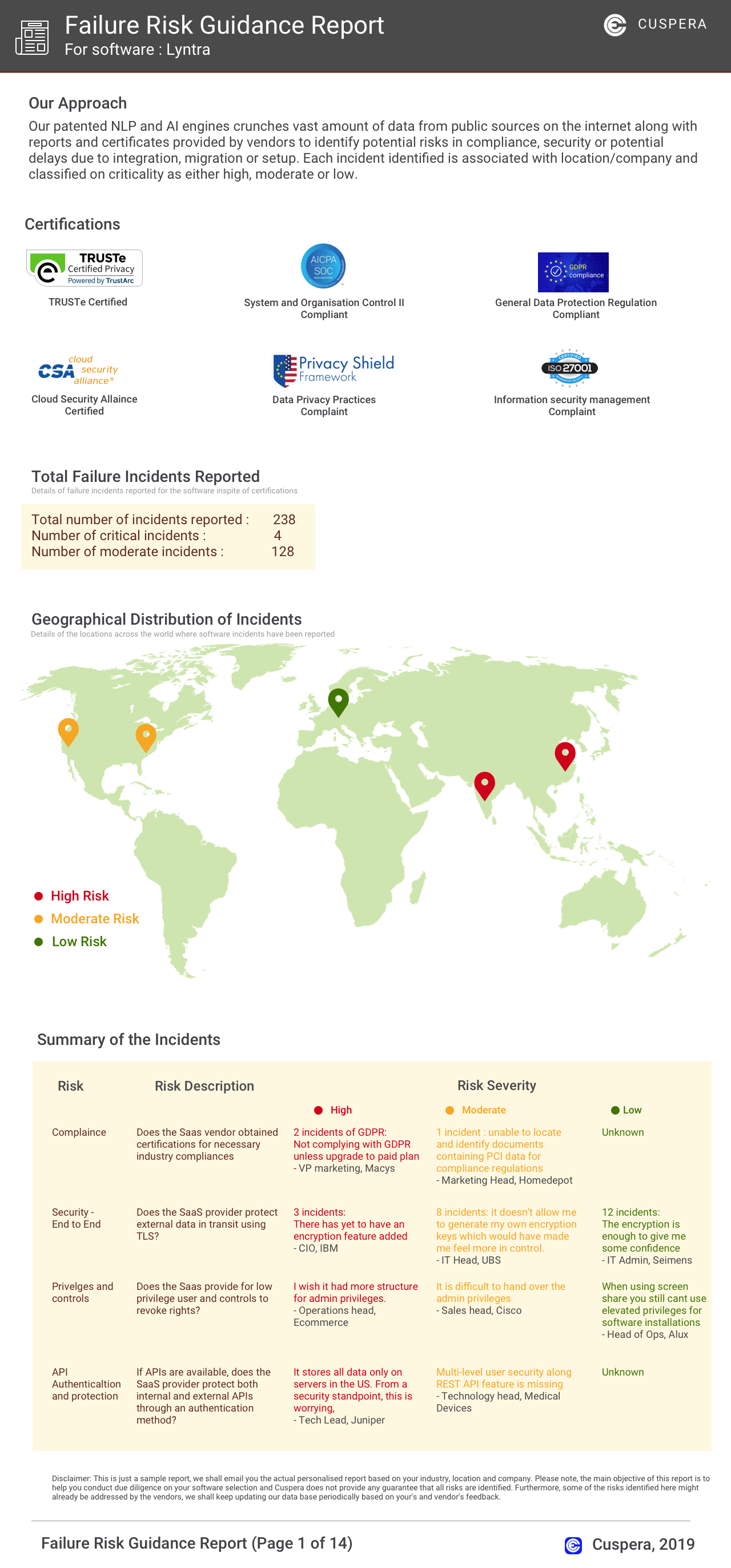
Software Failure Risk Guidance
?for ownCloud
Overall Risk Meter
Top Failure Risks for ownCloud
ownCloud GmbH News
U.S. CISA adds ownCloud, Linux Kernel, and JFrog Artifactory flaws to its Known Exploited Vulnerabilities c... - Security Affairs
The U.S. Cybersecurity and Infrastructure Security Agency (CISA) added a critical vulnerability in ownCloud's WebDAV functionality to its Known Exploited Vulnerabilities catalog. This flaw, identified as CVE-2023-49105, allows unauthorized access to user files in ownCloud Server versions 10.6.0 through 10.13.0. Organizations using affected versions should urgently address this issue to prevent unauthorized file access.
ownCloud Desktop Client 7.1.1 RC1: fixes an OIDC prompt regression breaking Microsoft Entra ID login
ownCloud Infinite Scale 8.0.8 addresses a share-metadata corruption bug, enhances security by patching a WebP decoding DoS issue and a Go stdlib CVE, and improves performance with LDAP lookup caching and optional NATS TLS.
ownCloud Infinite Scale 8.0.7: Correct /me identity resolution and an opt-in LDAP connection pool
ownCloud has released version 8.0.8 of its Infinite Scale platform, addressing a share-metadata corruption issue and enhancing security with patches for WebP decoding and a Go standard library vulnerability. The update also includes LDAP lookup caching and optional NATS TLS support, improving data security and metadata management.
ownCloud Web 12.5.0: Collabora Save-As Support and a New HTML Editor App
ownCloud Infinite Scale 8.0.7 addresses a bug in the /graph/v1.0/me endpoint, ensuring correct identity resolution by reporting the OIDC sub in issuerAssignedId instead of the internal oCIS UUID. The update also introduces an optional LDAP connection pool for enhanced directory services.
ownCloud GmbH Profile
Company Name
ownCloud GmbH
Company Website
https://owncloud.com/HQ Location
ownCloud, GmbH, Nuremberg, DE
Employees
51-100
Social


Financials
SERIES A