

Glassbeam Overview
Glassbeam provides premier machine data analytics for healthcare, offering clear operational insights. Complex data is transformed into actionable intelligence.
Use Cases
Customers recommend Lead Analytics, Generation Of New Leads, Helpdesk Management, as the business use cases that they have been most satisfied with while using Glassbeam.
Business Priorities
Acquire Customers and Improve ROI are the most popular business priorities that customers and associates have achieved using Glassbeam.
Glassbeam Use-Cases and Business Priorities: Customer Satisfaction Data
Glassbeam works with different mediums / channels such as Support Groups. Website. Offline etc.
Glassbeam's features include Alerts: Popups & Notifications, Predictive Analytics, Dashboard, etc. and Glassbeam support capabilities include AI Powered, 24/7 Support, Email Support, etc. also Glassbeam analytics capabilities include Analytics, and Custom Reports.
Reviews
"...Analysis of the intelligence at the grid edge with Glassbeam Edge is both efficient and cheaper as you save unnecessary round-trips to the server, bringing immense benefits to smart grid operators...." Peer review by Vipul Gore, Chief Executive Officer, Gridscape
Peer review evidence (same sources as the product rating summary)
"...Analysis of the intelligence at the grid edge with Glassbeam Edge is both efficient and cheaper as you save unnecessary round-trips to the server, bringing immense benefits to smart grid operators...." Customer Testimonial
"...Through our custom lead generation programs, we provide clients with an ongoing stream of leads that turn into sales opportunities and build databases...." Machine Log Data Analytics, IoT Analytics Platform, Solutions for Services, Support, and Operations
"...not only helps our support team become more proactive at solving escalations but has also helped us automate knowledge base of known issues for internal support group efficiency...." Peer review by Nicola Buckely, Senior Director, Global Customer Service, Dell EMC
Glassbeam, CARTO Platform, Hevo, Hyland, Skyvia Platform, etc., all belong to a category of solutions that help Business Intelligence. Each of them excels in different abilities. Therefore, determining the best platform for your business will depend on your specific needs and requirements.
Popular Business Setting
for Glassbeam
Top Industries
- Manufacturing
- Computer Software
Popular in
- Enterprise
Glassbeam is popular in Manufacturing, and Computer Software, and is widely used by Enterprise,
Glassbeam Customer wins, Customer success stories, Case studies
How does Glassbeam address your Lead Analytics Challenges?
What solutions does Glassbeam provide for Generation Of New Leads?
Why is Glassbeam the best choice for Collaboration?
Why is Glassbeam the best choice for Contract Management?
Gateway Diagnostic Imaging (GDI) - Hospital & Health Care
RENOVO Solutions - Healthcare Technology Management
Frequently Asked Questions (FAQ)
What buyers ask before choosing Glassbeam
Integrations What CRM integrations are available with Glassbeam?
Glassbeam offers several CRM integrations to enhance its machine data analytics capabilities, allowing businesses to streamline their operations and improve customer interactions. Notably, Glassbeam integrates with platforms like Salesforce and HubSpot, enabling users to connect machine data insights directly into their customer relationship management workflows. This integration facilitates seamless navigation from service tickets to corresponding machine health data, empowering support staff with actionable insights. Additionally, the integration with Slack allows for real-time communication and updates regarding machine performance and service metrics. By leveraging these CRM integrations, organizations can enhance their operational efficiency, improve customer service, and make data-driven decisions that ultimately benefit their bottom line.
Integrations How does Glassbeam connect to Salesforce and HubSpot?
Glassbeam connects to Salesforce and HubSpot through its robust integration capabilities, allowing businesses to leverage machine data analytics alongside their customer relationship management (CRM) and marketing automation efforts. By integrating with Salesforce, Glassbeam enables users to enhance their service ticket workflows with system health check dashboards, providing support staff with actionable insights directly within the Salesforce platform. Similarly, the integration with HubSpot allows for the automation of marketing efforts based on machine performance data, helping businesses to tailor their outreach and improve customer engagement. These integrations facilitate a seamless flow of information, empowering organizations to make data-driven decisions that enhance operational efficiency and customer satisfaction.
Integrations What are the setup steps for integrating Glassbeam with Marketo?
To integrate Glassbeam with Marketo, start by ensuring you have administrative access to both platforms. First, log into your Glassbeam account and navigate to the integration settings. Here, you will find options to connect with Marketo. You will need to provide your Marketo API credentials, which can be obtained from your Marketo account under the Admin section. Once you input the API credentials in Glassbeam, configure the data mapping settings to define how data will flow between the two systems, such as specifying which machine data insights should trigger actions in Marketo. Finally, test the integration to ensure data is syncing correctly and that workflows in Marketo are functioning as intended. This setup allows you to leverage machine data analytics from Glassbeam to enhance your marketing automation efforts in Marketo.
Integrations Can I access the Glassbeam API for custom integrations?
Yes, you can access the Glassbeam API for custom integrations, allowing you to tailor the platform to meet your specific business needs. The Glassbeam API provides a robust interface for developers to interact with the machine data analytics capabilities, enabling seamless integration with other systems and applications. This flexibility allows businesses to automate workflows, enhance data sharing, and create custom dashboards that align with their operational requirements. By leveraging the API, organizations can extract valuable insights from their machine data and incorporate them into their existing processes, ultimately improving efficiency and decision-making. For detailed documentation and support on how to utilize the Glassbeam API, you can visit the Glassbeam website or contact their support team for assistance.
Integrations What is the data flow between Glassbeam and other systems like Slack and BigQuery?
The data flow between Glassbeam and other systems like Slack and BigQuery involves seamless integration that enhances operational efficiency and data accessibility. When machine data is collected and analyzed by Glassbeam, insights can be automatically shared with teams via Slack, allowing for real-time communication and collaboration on system performance and user behavior. Additionally, Glassbeam can integrate with BigQuery to store and analyze large datasets, enabling businesses to leverage advanced analytics and machine learning capabilities. This integration allows users to extract actionable insights from complex machine data, facilitating informed decision-making and proactive problem identification. Overall, the data flow between Glassbeam and these platforms ensures that critical information is readily available to support various business processes.
Integrations Are there any limitations to the integrations offered by Glassbeam?
While Glassbeam offers a range of integrations, including connections with platforms like BigQuery, Slack, and LinkedIn Ads, there may be limitations based on specific use cases or the complexity of the data being processed. For instance, while these integrations facilitate data sharing and enhance collaboration, they may not support all functionalities of the connected platforms or could require additional configuration for optimal performance. Additionally, the effectiveness of these integrations can depend on the existing infrastructure and the specific needs of your organization. It's essential to evaluate your integration requirements and consult with Glassbeam's support team to understand any potential constraints and ensure that the integrations align with your business objectives.
Features What does Glassbeam's predictive analytics feature do?
Glassbeam's predictive analytics feature leverages advanced machine learning and artificial intelligence to analyze data generated by connected medical devices, such as MRI and CT scanners. This functionality enables organizations to anticipate potential machine failures before they occur, thereby maximizing uptime and operational efficiency. By utilizing real-time data analysis, Glassbeam can identify patterns and anomalies in machine performance, allowing healthcare providers to proactively address issues and schedule maintenance as needed. This not only enhances the reliability of critical medical equipment but also improves patient care by minimizing delays and ensuring that machines are available when needed. Ultimately, Glassbeam's predictive analytics transforms raw machine data into actionable insights, empowering organizations to make informed decisions that enhance service delivery and operational margins.
Features How do I use the machine learning toolset in Glassbeam?
To use the machine learning toolset in Glassbeam, start by integrating your machine data with the platform, leveraging its seamless connection with Apache Spark. Once your data is ingested, utilize the inbuilt machine learning models to identify anomalies and predict component failures. You can train these models using your specific datasets to tailor predictions to your operational needs. Glassbeam's user-friendly interface allows you to create, train, and deploy machine learning models efficiently. Additionally, you can automate support processes by embedding insights into service ticket workflows, enhancing your team's ability to proactively address issues. By harnessing these capabilities, you can improve operational efficiency and reduce downtime, ultimately driving better business outcomes.
Features What functionality does the Glassbeam Workbench provide for data visualization?
The Glassbeam Workbench provides robust data visualization capabilities that leverage Tableau’s versatile charting tools to transform complex machine log data into actionable business insights. This functionality allows users to create a variety of visual representations, such as charts and dashboards, which help in understanding operational metrics and trends. By utilizing these visualizations, organizations can make informed decisions regarding machine performance, downtime, and user behavior. The Workbench enables users to drill down into specific data points, facilitating a granular analysis of their install base and operational efficiency. This empowers businesses to proactively address issues, optimize resource allocation, and ultimately enhance overall performance, making it a vital tool for data-driven decision-making in the Industrial IoT sector.
Features How can I configure real-time monitoring for medical devices using Glassbeam?
To configure real-time monitoring for medical devices using Glassbeam, start by deploying the Glassbeam cloud-based platform, which is designed for seamless integration with a variety of medical equipment, including MRI and CT scanners. Once deployed, connect your devices to the platform, allowing it to collect and analyze multi-structured data generated by your equipment. Utilize the platform's machine learning and predictive analytics capabilities to set up alerts and notifications for potential issues, ensuring proactive maintenance. You can also create customized dashboards that provide real-time visibility into device performance, uptime, and operational efficiency. By leveraging these features, you can enhance your monitoring capabilities, reduce downtime, and ultimately improve patient care. For detailed guidance, consider accessing Glassbeam's support resources or scheduling a demo to explore the platform's functionalities further.
Features What are the steps to analyze multi-structured data with Glassbeam's platform?
To analyze multi-structured data with Glassbeam's platform, start by uploading your machine logs into the Glassbeam cloud-based system, which is designed to handle complex data from connected machines. Next, utilize Glassbeam's patented SPL language to extract relevant insights from the logs, enabling you to identify patterns and anomalies in system performance and user behavior. Once the data is indexed, leverage the platform's multi-dimensional applications to visualize the information through user-friendly dashboards, which can help in making informed operational decisions. Additionally, integrate with tools like Tableau for enhanced data visualization and Vertica for structured data storage, ensuring that your analysis is both comprehensive and actionable. Finally, continuously monitor the insights generated to drive proactive decision-making and improve overall machine uptime and utilization.
Features How does Glassbeam's anomaly detection feature work?
Glassbeam's anomaly detection feature leverages advanced machine learning algorithms to analyze vast amounts of machine data in real-time, identifying patterns and deviations that indicate potential issues. By integrating with Apache Spark, Glassbeam processes multi-structured logs from connected medical devices, such as MRI and CT scanners, to detect anomalies that may signify component failures or operational inefficiencies. The system continuously learns from historical data, improving its predictive capabilities over time. This proactive approach allows organizations to address problems before they escalate, ultimately enhancing machine uptime and operational efficiency. By providing actionable insights, Glassbeam empowers support teams to make informed decisions, reducing downtime and associated costs while ensuring optimal performance of critical medical equipment.
ROI & pricing What measurable business value can Glassbeam provide to my organization?
Glassbeam delivers measurable business value by transforming complex machine data into actionable insights that enhance operational efficiency across various functions such as sales, support, and engineering. By utilizing advanced analytics, organizations can proactively identify machine failures, optimize asset uptime, and improve service delivery, ultimately leading to increased revenue and reduced operational costs. For instance, healthcare enterprises leveraging Glassbeam's Clinsights can mine asset utilization data to make informed decisions that enhance patient care and satisfaction. Additionally, the platform's ability to centralize knowledge and automate support processes empowers teams to respond more effectively to customer needs, thereby improving overall productivity. This comprehensive approach not only drives immediate ROI but also fosters long-term strategic advantages in a competitive landscape.
ROI & pricing How does Glassbeam impact ROI and cost savings for businesses?
Glassbeam significantly impacts ROI and cost savings for businesses by transforming complex machine data into actionable insights that enhance operational efficiency. By shifting from an onsite to an online model, organizations can proactively identify machine failures and optimize parts shipments, which reduces Mean Time to Repair (MTTR) and improves overall service delivery. The platform's ability to centralize knowledge and automate support processes leads to lower support costs and increased device uptime, ultimately driving revenue growth. In a recent survey, businesses reported substantial ROI across various functions, including sales and support, demonstrating that Glassbeam's analytics not only streamline operations but also empower teams to make data-driven decisions that enhance productivity and profitability.
ROI & pricing What are the different pricing plans available for Glassbeam solutions?
The specific pricing plans for Glassbeam solutions are not publicly detailed on their website, as pricing can vary based on the unique needs of each business and the scale of implementation. Glassbeam typically offers customized pricing tailored to the requirements of organizations, particularly in sectors like healthcare and industrial IoT. To get accurate pricing information, potential customers are encouraged to schedule a demo or consultation with Glassbeam representatives, who can provide insights into the various features and services included in their offerings. This approach ensures that businesses receive a solution that aligns with their operational goals and budget constraints, maximizing the value derived from Glassbeam's machine data analytics capabilities.
ROI & pricing What is the total cost of ownership when using Glassbeam for log analytics?
The total cost of ownership (TCO) when using Glassbeam for log analytics encompasses several factors, including subscription fees, implementation costs, and ongoing operational expenses. Glassbeam's cloud-based platform is designed to transform and analyze complex machine data, which can lead to significant savings by reducing downtime and improving operational efficiency. While initial costs may seem higher compared to building an in-house solution, the long-term benefits include enhanced insights into machine performance, proactive problem identification, and improved decision-making across various business functions such as sales, support, and engineering. Additionally, the integration with tools like Tableau for visualization and Vertica for data storage further enhances the value proposition, making Glassbeam a cost-effective choice for organizations looking to leverage their log data effectively.
ROI & pricing How quickly can I expect to see value from implementing Glassbeam?
When implementing Glassbeam, businesses can expect to see value relatively quickly, often within a few weeks to a couple of months, depending on the complexity of their data and existing systems. Glassbeam's cloud-based platform is designed to rapidly transform and analyze machine data, providing actionable insights that can enhance operational efficiency and decision-making. Many organizations report immediate benefits, such as improved visibility into system performance and user behavior, which can lead to proactive problem identification and reduced downtime. Additionally, the integration of Glassbeam's analytics into existing workflows empowers support staff with real-time dashboards, further accelerating the realization of value. Overall, the speed at which you see results will largely depend on how effectively you leverage the insights provided by Glassbeam in your operational processes.
ROI & pricing What are the potential revenue impacts of using Glassbeam's analytics solutions?
Using Glassbeam's analytics solutions can significantly impact revenue across various business functions by transforming raw machine data into actionable insights. By leveraging predictive and prescriptive analytics, organizations can proactively identify machine failures, optimize service operations, and enhance customer satisfaction, leading to increased retention and repeat business. For instance, the insights gained can help sales teams understand usage patterns and drive future sales strategies, while support staff can improve operational efficiency through better resource allocation. Additionally, the ability to centralize knowledge and automate support processes can reduce costs and improve margins. Overall, Glassbeam empowers organizations to make data-driven decisions that enhance performance and ultimately drive revenue growth.
Capabilities What can Glassbeam do for predictive analytics in connected medical machines?
Glassbeam leverages artificial intelligence, machine learning, and predictive analytics to enhance the performance of connected medical machines, such as MRI and CT scanners. By monitoring these devices in real-time, Glassbeam anticipates potential repairs and maximizes uptime, which is crucial for healthcare providers aiming to deliver timely patient care. The platform transforms complex, multi-structured data into actionable insights, allowing organizations to optimize machine utilization and reduce operational costs. With features like interactive dashboards, healthcare executives can gain a comprehensive view of their connected devices, enabling data-driven decision-making. This proactive approach not only improves operational efficiency but also enhances patient throughput and revenue generation, making Glassbeam an invaluable asset for healthcare organizations.
Capabilities Can Glassbeam monitor medical devices in real-time?
Yes, Glassbeam can monitor medical devices in real-time using its advanced artificial intelligence, predictive analytics, and machine learning capabilities. This cloud-based platform is specifically designed to oversee a heterogeneous fleet of medical equipment, including MRI and CT scanners, allowing healthcare organizations to anticipate needed repairs and maximize uptime. By providing remote access and ease of deployment, Glassbeam enhances operational efficiency, ensuring that medical devices are functioning optimally and that patients receive timely care. This proactive monitoring not only reduces support costs but also minimizes unnecessary delays in patient treatment, making it an invaluable tool for healthcare providers looking to improve their service delivery and operational productivity.
Capabilities Does Glassbeam support compliance with NIST 800-53 standards?
Yes, Glassbeam supports compliance with NIST 800-53 standards, which are essential for ensuring data security and privacy in government and commercial healthcare enterprises. By incorporating NIST 800-53 controls into its cloud-based platform SCALAR™ and Healthcare Application Suite Clinsights™, Glassbeam enhances its security framework, enabling organizations to meet rigorous compliance requirements. This integration not only facilitates the path toward FedRAMP certification but also provides healthcare customers with built-in checks to secure their data in the cloud. As organizations increasingly migrate workloads to the cloud, Glassbeam's adherence to these high standards ensures that clients can rely on its analytics solutions while maintaining peace of mind regarding data security and compliance.
Capabilities What types of data can Glassbeam analyze from medical equipment?
Glassbeam can analyze a wide range of data types generated from medical equipment, particularly focusing on multi-structured data from connected devices such as MRI and CT scanners. The platform is designed to transform and interpret complex logs and performance metrics, enabling healthcare organizations to gain insights into machine performance, operational efficiency, and maintenance needs. By leveraging artificial intelligence, predictive analytics, and machine learning, Glassbeam can monitor real-time data to anticipate repairs and enhance machine uptime. This capability allows organizations to optimize utilization, reduce operational costs, and ultimately improve patient care by ensuring that critical imaging equipment is always operational and available when needed.
Capabilities Can Glassbeam enhance machine uptime and utilization for healthcare organizations?
Yes, Glassbeam can significantly enhance machine uptime and utilization for healthcare organizations by leveraging its advanced data analytics and predictive capabilities. The platform utilizes artificial intelligence and machine learning to monitor medical devices, such as MRI and CT scanners, in real-time, allowing organizations to anticipate repairs before they become critical. This proactive approach minimizes downtime and maximizes equipment availability, which is essential in a healthcare setting where timely patient care is crucial. Additionally, Glassbeam's cloud-based platform centralizes complex data from various medical devices, providing actionable insights that help organizations optimize their operations and improve overall efficiency. By integrating these capabilities, healthcare providers can ensure their imaging equipment operates at peak performance, ultimately benefiting both their operational margins and patient satisfaction.
Capabilities Does Glassbeam provide remote access for monitoring and troubleshooting medical devices?
Yes, Glassbeam provides remote access for monitoring and troubleshooting medical devices, which is a key feature of its cloud-based platform. This capability allows healthcare organizations to remotely monitor devices such as MRI and CT scanners in real-time, significantly enhancing operational efficiency. By leveraging artificial intelligence, predictive analytics, and machine learning, Glassbeam enables proactive troubleshooting and anticipates needed repairs, thereby maximizing device uptime. This remote management feature not only reduces the need for unnecessary travel by technicians but also ensures that healthcare providers can respond swiftly to any issues, ultimately improving patient care and minimizing delays in treatment.
Use cases How can SDRs use Glassbeam to improve their lead qualification process?
Sales Development Representatives (SDRs) can leverage Glassbeam to enhance their lead qualification process by utilizing its powerful machine data analytics capabilities. By analyzing machine data, SDRs can gain insights into customer behavior and system performance, allowing them to identify potential leads that are more likely to convert. Glassbeam's AI/ML engine can automate the extraction of relevant data, enabling SDRs to focus on high-value prospects based on usage patterns and operational efficiency. Additionally, the centralized knowledge base within Glassbeam can empower SDRs with valuable information about customer needs and pain points, facilitating more informed conversations. This proactive approach not only streamlines the qualification process but also increases the likelihood of successful engagements, ultimately driving better sales outcomes.
Use cases What are the best practices for marketers to leverage Glassbeam analytics in their campaigns?
To effectively leverage Glassbeam analytics in marketing campaigns, marketers should focus on utilizing the platform's robust data insights to understand customer behavior and preferences. Best practices include analyzing machine data to identify trends in usage and performance, which can inform targeted messaging and campaign strategies. Marketers should also integrate Glassbeam's utilization analytics to assess the effectiveness of past campaigns, allowing for data-driven adjustments in real-time. Collaborating with sales and support teams can enhance the understanding of customer pain points, enabling the creation of tailored content that addresses specific needs. Additionally, employing Glassbeam's AI/ML capabilities can help automate the segmentation of audiences, ensuring that marketing efforts are both efficient and impactful. By centralizing insights from various business functions, marketers can create cohesive campaigns that resonate with their target audience and drive engagement.
Use cases In what scenarios should RevOps teams implement Glassbeam for operational efficiency?
RevOps teams should consider implementing Glassbeam in scenarios where they need to enhance operational efficiency through data-driven insights. For instance, if an organization is struggling with machine downtime, Glassbeam can provide proactive diagnostics and predictive analytics to identify potential failures before they occur, thereby reducing Mean Time to Repair (MTTR) and improving overall uptime. Additionally, when teams require a centralized view of machine performance across various OEMs and modalities, Glassbeam's ability to collate and analyze machine data can streamline operations and optimize resource allocation. Furthermore, if there is a need to empower support staff with actionable insights embedded in service workflows, Glassbeam's dashboards can facilitate quicker decision-making and enhance customer service. Overall, implementing Glassbeam can lead to significant improvements in operational efficiency and profitability across multiple business functions.
Use cases How can sales leaders utilize Glassbeam insights to enhance their sales strategies?
Sales leaders can utilize Glassbeam insights to enhance their sales strategies by leveraging detailed analytics on machine usage and performance. By accessing insightful reports on consumables and component failures, sales teams can better understand customer behavior and usage patterns, allowing them to tailor their sales pitches and identify upsell opportunities. Additionally, these insights enable account managers to track a hospital's growth profile, ensuring they can proactively address customer needs and align their offerings with market demands. This data-driven approach not only enhances customer engagement but also drives future sales by providing a clear understanding of how products are utilized, ultimately leading to improved operational efficiency and customer satisfaction.
Use cases What workflows can healthcare support teams adopt using Glassbeam to reduce device downtime?
Healthcare support teams can adopt several workflows using Glassbeam to significantly reduce device downtime. By leveraging Glassbeam's real-time monitoring capabilities, teams can proactively identify potential machine failures before they occur, allowing for timely interventions. The integration of system health check dashboards into service ticket workflows empowers support staff to quickly assess device status and prioritize maintenance tasks. Additionally, Glassbeam's AI and machine learning engine can automate the extraction and analysis of machine data, providing actionable insights that inform decision-making. This centralized knowledge base enhances collaboration among team members and streamlines communication, ultimately leading to improved operational efficiency and reduced mean time to repair (MTTR). By shifting from reactive to proactive maintenance strategies, healthcare organizations can maximize device uptime and ensure uninterrupted patient care.
Use cases How can engineering teams integrate Glassbeam data analytics into their product development cycles?
Engineering teams can integrate Glassbeam data analytics into their product development cycles by leveraging its powerful machine data insights to inform design decisions and enhance product performance. To begin, teams should utilize Glassbeam's cloud-based platform to collect and analyze multi-structured logs from connected machines, which provides a granular understanding of system performance and user behavior. By embedding these insights into their workflows, engineers can identify trends and issues early in the development process, allowing for proactive adjustments. Additionally, Glassbeam's partnerships with tools like Tableau for visualization and Vertica for structured data storage enable seamless integration into existing development environments. This data-driven approach not only fosters continuous learning and innovation but also helps in creating more reliable and efficient products that meet market demands.
Alternatives What are the key differences between Glassbeam and GE Predix?
Glassbeam and GE Predix are both platforms designed for machine data analytics, but they cater to different needs and industries. Glassbeam specializes in transforming complex data from connected machines, particularly in the Industrial IoT sector, focusing on medical and data center equipment. Its strengths lie in predictive maintenance, real-time monitoring, and AI-driven insights, which help businesses improve operational efficiency and reduce support costs. In contrast, GE Predix is tailored for industrial applications, emphasizing asset performance management and operational optimization across various sectors. While both platforms offer analytics capabilities, Glassbeam's unique focus on machine learning and user-friendly dashboards may appeal more to organizations seeking in-depth insights into machine behavior, whereas GE Predix is better suited for broader industrial applications and enterprise-level asset management.
Alternatives How does Glassbeam compare to IBM Watson IoT in terms of analytics capabilities?
Glassbeam and IBM Watson IoT both offer robust analytics capabilities tailored for the Industrial IoT sector, but they differ in focus and functionality. Glassbeam specializes in machine data analytics, providing deep insights from complex, multi-structured logs, particularly in healthcare and data center environments. Its platform excels in transforming raw data into actionable intelligence, enabling proactive diagnostics and predictive maintenance. In contrast, IBM Watson IoT leverages advanced AI and machine learning to analyze data from connected devices, offering broader applications across various industries. While both platforms enhance operational efficiency and decision-making, Glassbeam's strength lies in its targeted approach to machine data, whereas IBM Watson IoT provides a more generalized AI-driven analytics framework. Ultimately, the choice between them depends on specific business needs and the type of data being analyzed.
Alternatives What are the advantages of using Glassbeam over PTC for data analytics?
Glassbeam offers several advantages over PTC for data analytics, particularly in the context of machine data from connected devices in the Industrial IoT sector. One key benefit is Glassbeam's ability to extract actionable insights from complex, multi-structured logs, which enhances operational efficiency and decision-making. Glassbeam's platform is specifically designed for industries like healthcare and data centers, providing tailored solutions that focus on improving asset uptime and utilization. Additionally, Glassbeam integrates seamlessly with tools like Tableau for advanced visualizations and Vertica for structured data storage, enabling comprehensive data analysis. In contrast, while PTC also provides data analytics solutions, it may not offer the same level of specialization or integration capabilities that Glassbeam delivers, making it a more suitable choice for organizations seeking deep insights into machine performance and user behavior.
Alternatives In what ways does Glassbeam outperform Hitachi Vantara for predictive maintenance?
Glassbeam outperforms Hitachi Vantara in predictive maintenance primarily through its specialized focus on machine data analytics tailored for healthcare applications. Glassbeam leverages advanced artificial intelligence and machine learning to provide real-time monitoring of medical devices, such as MRI and CT scanners, enabling proactive identification of potential failures before they occur. This results in improved machine uptime and operational efficiency, which is critical in healthcare settings. Additionally, Glassbeam's interactive dashboards offer a comprehensive view of connected devices, facilitating better decision-making for healthcare executives. In contrast, while Hitachi Vantara also provides predictive maintenance solutions, its broader industrial focus may not deliver the same level of specialized insights and operational impact in the medical field as Glassbeam's dedicated approach.
Alternatives What are the best alternatives to Glassbeam for healthcare analytics?
When considering alternatives to Glassbeam for healthcare analytics, several notable options stand out. One prominent competitor is IBM Watson Health, which leverages AI and machine learning to provide insights into patient data and operational efficiency. Another alternative is Tableau, known for its powerful data visualization capabilities, allowing healthcare organizations to analyze and present data effectively. Additionally, Qlik Sense offers robust analytics and business intelligence tools tailored for healthcare, enabling users to explore data relationships and trends. Finally, SAS Health provides advanced analytics solutions specifically designed for the healthcare sector, focusing on predictive modeling and data management. Each of these alternatives has unique strengths, so the best choice will depend on your organization's specific needs and objectives in healthcare analytics.
Alternatives How does Glassbeam stack up against its competitors in the IoT analytics space?
Glassbeam stands out in the IoT analytics space by offering a specialized focus on machine data analytics, particularly for medical and data center equipment, which differentiates it from competitors like GE Predix, IBM Watson IoT, and PTC. While GE Predix excels in industrial applications and IBM Watson IoT provides robust AI capabilities, Glassbeam's strength lies in its ability to transform complex, multi-structured logs into actionable insights through its cloud-based platform. Additionally, Glassbeam integrates with tools like Tableau for visualization and Vertica for data storage, enhancing its analytical capabilities. Unlike some competitors, Glassbeam emphasizes proactive problem identification and remote monitoring, which can significantly reduce support costs and improve device uptime. This unique combination of features positions Glassbeam as a compelling choice for organizations seeking to leverage machine data for operational efficiency and predictive maintenance.
Glassbeam Competitors


Glassbeam Features
- Low
- Medium
- High
| FEATURE | RATINGS AND REVIEWS |
|---|---|
| AI Powered | Read Reviews (93) |
| Analytics | Read Reviews (177) |
| Custom Reports | Read Reviews (169) |
| CAPABILITIES | RATINGS AND REVIEWS |
|---|---|
| AI Powered | Read Reviews (93) |
| Analytics | Read Reviews (177) |
| Custom Reports | Read Reviews (169) |
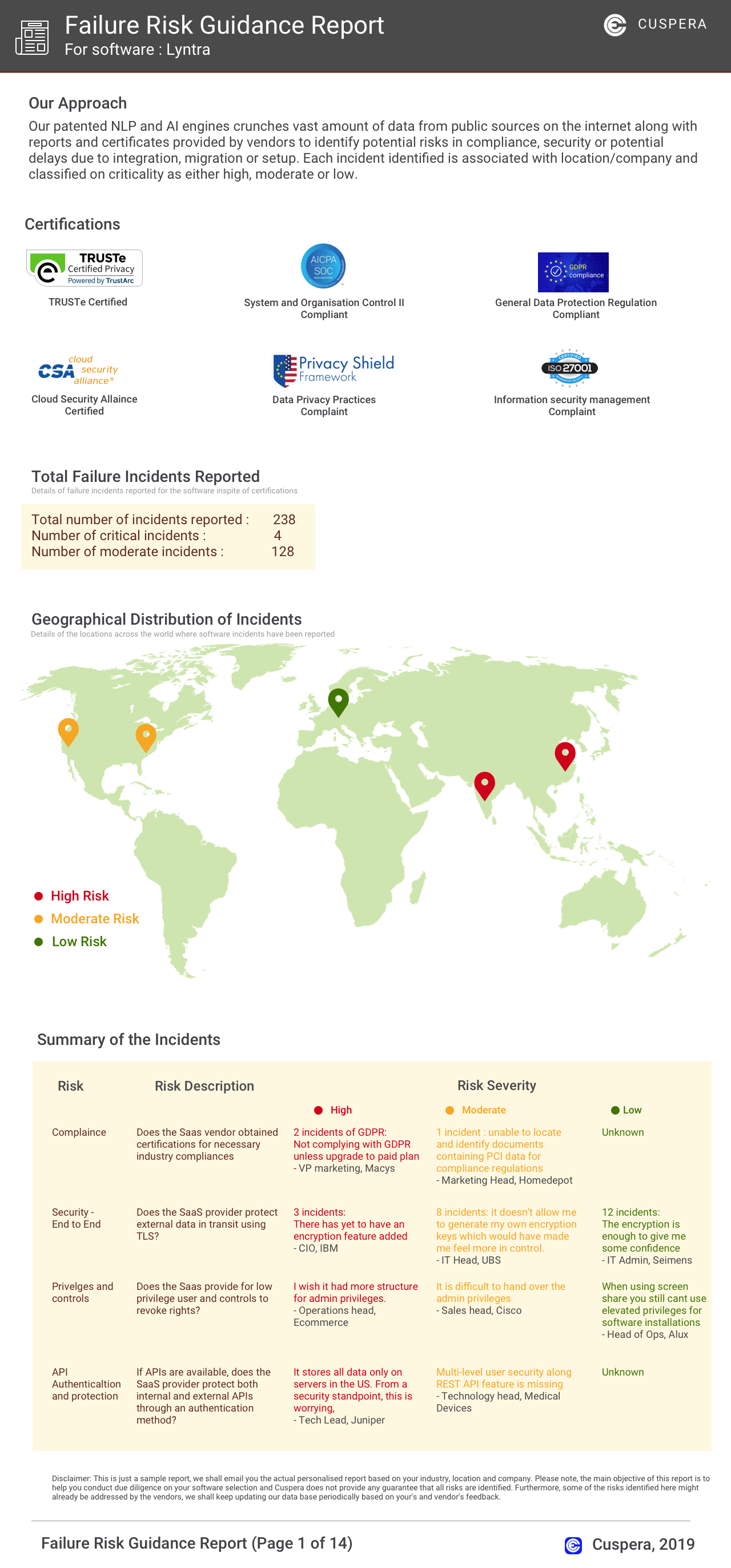
Software Failure Risk Guidance
?for Glassbeam
Overall Risk Meter
Top Failure Risks for Glassbeam
Glassbeam Inc. News
Glassbeam signs with Veterans Health Administration to expand medical device connectivity and predictive analytics - PR Newswire
Glassbeam partners with Veterans Health Administration to enhance medical device connectivity and predictive analytics.
Glassbeam partners with the VA's Healthcare Technology Management program - Mobihealth News
Glassbeam partners with the VA's Healthcare Technology Management program to enhance medical technology management.
Glassbeam Inc. Profile
Company Name
Glassbeam Inc.
Company Website
//glassbeam.comHQ Location
2350 Mission College Blvd., Suite 777, Santa Clara, CA 95054 USA
Employees
11-50
Social


Financials
SERIES C