


Docebo Learning Platform overview: capabilities, features, use cases, and value by role
Docebo Learning Platform is an enterprise learning management system that the vendor describes as an AI-First LMS for Enterprise Learning & Skills.
Top capabilities of Docebo Learning Platform
Learning Intelligence
Read detailsDocebo Learning Platform lets executives, managers, and L&D teams measure training impact on revenue, retention, and performance without needing a data team. The Learning Intelligence capability powers this through pre-built dashboards, KPI dashboards, automated reporting, and customizable evaluations. It draws on 600+ data tables and runs on Snowflake-powered enterprise-grade data infrastructure. Evaluations can align to established frameworks like Kirkpatrick or CIPP. Customers describe the practical effect in concrete terms. As one puts it, "Docebo Learn Data allows us to see all of our learning data where we want to see it, and it allows us to combine that with other business data in a very visual way. It takes our reporting from good to great." Another is more direct: "having Learn Data is like having the keys to the kingdom. You get to go behind the scenes. You can go in and pull out the reports you want yourself. And that's been worth every penny."
Gamification
Read detailsDocebo Learning Platform's Gamification capability draws on 11 pre-built interactive game templates, badges, leaderboards, milestones, and reward shops to drive knowledge retention, with games translatable into 21 languages and built-in reporting covering badges, leaderboard standings, and reward shop activity. One customer credits the gamified rollout directly with early adoption, saying "We made the launch of Docebo competitive, fun, and engaging, and I think that was a big part of what drove the early adoption. People wanted to be a part of it" — a campaign that produced more than 8,000 course completions within six weeks. Some users, however, flag that the platform has No gamification or AI coaching tools and find it Difficult for managers to view their team's upcoming training, pointing to variation in how these features land across deployments.
Content Marketplace
Read detailsContent Marketplace within Docebo Learning Platform draws on 100K+ assets across 250+ skills — sourced from more than 250 publishers including OpenSesame, Go1, and Edflex across 40+ languages — and pairs that library with AI-driven tools that recommend and filter courses by role and goal, version control for content updates, and built-in reporting that ties learning activity to retention, productivity, and revenue.
Content Creator
Read detailsDocebo Learning Platform's Content Creator puts AI-powered course authoring in the hands of instructional designers and subject matter experts — without requiring weeks of production work. The tool supports interactive courses, custom videos, AI avatar simulations, and assessments, all built through drag-and-drop editing. AI functions for rephrasing, rewriting, expanding, and translating text are available directly inside the tool. Finished content deploys in 50+ languages and exports via xAPI by default. On the time savings, Docebo says users can spend 80-99% less time on creation.
Communities
Read detailsCommunities brings social and collaborative learning together in one place within Docebo Learning Platform, letting organizations build centralized spaces where employees, customers, and partners connect through discussion forums, direct messaging, and user-generated content. Gamification and badging keep participation active, while admins use built-in moderation controls and real-time analytics to track engagement, participation, and community growth across every interaction.
Virtual Coaching
Read detailsVirtual Coaching gives learners a space to practice realistic role-plays through voice, chat, or video. It delivers instant AI-driven feedback on soft skills such as clarity, confidence, tone of voice, and assertiveness. Fully embedded in the Docebo Learning Platform as part of the Creator experience, the feature supports customizable scenarios across sales, leadership, HR, and customer support. Deep analytics within the platform help measure training ROI.
Skills Intelligence
Read detailsSkills Intelligence in the Docebo Learning Platform replaces static employee profiles with a living view of workforce capability, built by continuously inferring, normalizing, and validating skills from roles, experience, projects, and learning activity. Five AI agents drive this: Job Architect, Career Coach, Strategic Workforce Planner, Data Analyst, and Skills Validator. Working together, they support internal mobility, workforce planning, targeted upskilling, and skills-based career pathing. One organization showed how quickly adoption can take hold, with the vendor noting that they were activating nearly 52% of our 4,300 users across France, Romania, and Austria by June after launching within three months.
Extended Enterprise
Read detailsDocebo Learning Platform's Extended Enterprise feature enables organizations to train audiences outside their walls — customers, channel partners, resellers, dealers, franchises, and members — from one platform. Each audience gets a custom-branded learning environment, its own content catalog, and granular administrative rights. Built-in eCommerce and payment gateway integrations support training monetization and global compliance. Reporting is unified across all audiences. Users highlight Extended Enterprise (Ability to Segment Users) and Content Compatibility (Able to Accept Almost all/All Content Types in the Market) as standout capabilities of the platform.
Harmony AI
Read detailsDocebo Learning Platform's built-in AI copilot is called Harmony AI, and it combines a conversational engine with workflow automation, intelligent search, and in-platform admin support. It surfaces in two distinct ways: as Harmony Search for natural-language course discovery, and as Harmony for Support for contextual, step-by-step admin guidance. Upcoming capabilities cover content creation and administrative automation. All features are governed through the AI Control Panel. On the admin side, the platform claims users can spend 80% less time on manual tasks like notifications, reports, and bulk enrollments. Content teams, meanwhile, can generate engaging content over 70x faster.
eCommerce
Read detailsDocebo Learning Platform turns learning content into a sellable marketplace product. Organizations can sell individual courses, subscriptions, bundles, and certifications. Payments process globally through Stripe, PayPal, and Adyen. Flexible pricing strategies and virtual training credits simplify procurement. AI-driven automation supports scaling across 50+ languages. Docebo charges no per-transaction fees.
Mobile App Publisher
Read detailsDocebo Mobile App Publisher puts a fully branded learning app in your organization's name on the Apple App Store and Google Play, built on the Go.Learn foundation. The app carries your custom name, icon, splash screen, and color scheme. Push notifications keep learners in the loop. Offline learning means content is accessible without a connection, and biometric login removes friction at sign-in. Catalog filtering helps learners find what they need quickly. Gamification is built in. Mobile App Publisher supports 50-plus languages, and organizations can create as many branded apps as they need without hitting a cap.
Headless Learning
Read detailsHeadless Learning in Docebo Learning Platform separates the front-end learning interface from the back-end LMS, so organizations can embed fully branded, personalized learning experiences directly into existing enterprise applications — CRMs, portals, mobile apps, and custom tools. Delivery runs through APIs, webhooks, workflow automation, and a customizable widget library. Single Sign-On, tokenized access, and full permission inheritance keep the experience secure and frictionless at scale. Customers report an engagement rate of 87% in the first year, alongside a 90% satisfaction rate for both the learning management system and new hires.
Immersive Learning
Read detailsDocebo Learning Platform's Immersive Learning feature covers 360° simulations, branching role plays, and AR/VR-style scenarios across any device. AI builds these experiences in minutes, removing the need for VR headsets or technical expertise. Learners practice in a risk-free, gamified environment grounded in real-world context. Docebo's advanced analytics then tie outcomes directly to business results.
Top features of Docebo Learning Platform
Single Sign-On and authentication connectors
Read detailsDocebo Learning Platform connects to an organization's identity provider through pre-built SSO and authentication connectors. These are available through the Learn LMS native integrations library and deploy without custom development.
Natural-language question answering across courses, lessons, and knowledge bases
Read detailsDocebo Learning Platform includes Harmony Search, a conversational AI tool that lets learners and administrators ask questions in plain language and get contextual answers drawn from courses, lessons, knowledge bases, and more.
AI governance and control settings
Read detailsDocebo Learning Platform centralizes AI control in a dedicated settings interface, giving administrators fine-grained authority over how AI tools interact with their systems and data. Behavior can be managed at the feature level. A data governance guarantee ensures that customer content never trains Docebo's models.
Direct messaging
Read detailsDocebo Communities extends the Docebo Learning Platform's social layer through direct messaging, letting learners hold one-on-one conversations with peers alongside discussion forums to support knowledge sharing and peer-to-peer learning.
APIs and webhooks
Read detailsDocebo Learning Platform's Headless Learning toolkit hands developers the tools to embed learning directly into existing enterprise workflows and external applications. APIs and webhooks do the heavy lifting here. Together they give development teams full control over both the learning environment and how content gets delivered.
Workflow automation platform
Read detailsDocebo Learning Platform's Headless Learning toolkit goes beyond APIs and webhooks by bundling a workflow automation platform that lets organizations embed learning directly into existing enterprise applications and automate how learning is delivered across them.
Drag-and-drop content editor
Read detailsDocebo Learning Platform's Creator tool puts instructional designers and subject-matter experts in direct control of AI-generated course content through a drag-and-drop editing interface. Once content is generated, built-in AI options let authors rephrase, rewrite, or expand it. Translation is available through the same toolset.
Targeted learning path builder
Read detailsDocebo Learning Platform combines AI-driven recommendations, content curation specialists, smart filters, and custom course lists to surface relevant courses from a 100K+ content library and assemble targeted learning paths matched to specific roles and goals.
Chat moderation
Read detailsDocebo Communities gives administrators the tools to review and moderate conversations, keeping community interactions respectful and on-topic as part of the Docebo Learning Platform's broader suite of admin controls.
Unlimited cloud storage
Read detailsDocebo Learning Platform makes unlimited cloud storage a standard feature across all pricing plans, with no additional configuration required and none of the storage caps that other SaaS LMS vendors typically impose.
Widget library (Docebo building blocks)
Read detailsDocebo Learning Platform offers a widget library called Docebo building blocks as part of its Headless Learning toolkit, letting developer teams compose customizable UI components and embed learning directly into enterprise applications without building custom interfaces from scratch.
Tokenized access
Read detailsDocebo Learning Platform keeps learning experiences secure inside enterprise applications through its Headless Learning architecture. The architecture relies on tokenized access, and it pairs that with Single Sign-On and permission inheritance. Together, those mechanisms protect data and users without disrupting seamless content delivery.
Version control and content management
Read detailsDocebo Learning Platform handles version control and centralized content management for training materials through its Extended Enterprise module, letting administrators push updates to courses once and keep content current across all audience instances from a single platform.
Pre-set scenario templates
Read detailsDocebo Learning Platform's AI Virtual Coaching lets teams run role-play scenarios from day one, with no custom design work required. Pre-set templates cover the sales enablement workflows most teams need first: objection handling, pitching, and discovery calls. Because the configurations come ready-made, users can launch immediately.
Multi-language game support (21 languages)
Read detailsDocebo Learning Platform supports global deployment of gamified training by translating games within its gamified learning product into 21 languages, spanning English, Spanish, French, German, Greek, Italian, Russian, Turkish, Portuguese, Traditional and Simplified Chinese, Korean, Japanese, Indonesian, Thai, Hindi, and more. Teams building those programs can draw on 11 pre-built, engaging and interactive game templates.
Reward shop
Read detailsDocebo Learning Platform ties its reward shop directly to the gamification layer, so points and badges learners earn can be redeemed for prizes. Leaderboards and badges live in the same data layer as the reward shop, keeping motivation signals in one place.
Custom push notifications
Read detailsDocebo Learning Platform's Branded App puts custom push notifications under the administrator's direct control, so teams can send configurable, localized messages straight to learners whenever a prompt is needed. Those notifications work alongside games, badges, and social features to sustain engagement over time.
Catalog filtering
Read detailsDocebo Learning Platform's Branded App puts organizations in control of exactly what learners see on mobile — filtering the course catalog by role and audience so the right content reaches the right people.
Biometric login
Read detailsDocebo Learning Platform's Branded App makes biometric login available to mobile learners. Both fingerprint and facial recognition work as authentication methods. These options are part of the Branded App's mobile-first user experience.
Contextual step-by-step admin guidance based on current platform location
Read detailsHarmony for Support is an in-platform AI copilot built into Docebo Learning Platform that delivers contextual, step-by-step instructions to administrators based on their exact location in the platform at that moment, remembers page context, accepts follow-up questions, and can automatically navigate admins to the correct platform section — all aimed at reducing support tickets and friction.
Reporting and insights via chat (Beta)
Read detailsDocebo Learning Platform's Harmony module replaces manual dashboard navigation with a Beta conversational chat interface that lets administrators request reports and data summaries through natural-language prompts.
Harmony Studio – low-code/no-code agent builder (roadmap)
Read detailsHarmony Studio is a planned low-code/no-code agent builder on Docebo Learning Platform's roadmap. It will allow teams to create custom AI agents tailored to specific workflows, business logic, and systems. Harmony Studio sits alongside an AI Agent Marketplace and API access as part of a broader planned rollout.
AI rephrase, rewrite, and expand
Read detailsDocebo Learning Platform puts AI-powered writing tools directly inside its Creator editor, where users can rephrase, rewrite, expand, and translate course text without leaving the drag-and-drop interface. These controls apply to content that has already been generated, so edits happen in context rather than in a separate tool.
Input ingestion from documents and prompts
Read detailsDocebo Learning Platform's Creator tool turns documents, PowerPoint files, PDFs, and plain text prompts into interactive course content — no prior authoring experience or technical skills required from the subject-matter experts building it.
Learner analytics reporting
Read detailsDocebo Learning Platform's Creator tool automatically pulls interactive test and assessment results into simple reports. This gives administrators direct visibility into learner performance. Content is packaged in xAPI by default, supporting future AI systems that benefit from deeper data and learner analytics.
Pedagogically-validated AI output
Read detailsDocebo Learning Platform runs its AI through a deliberate vetting process before anything reaches users. Dedicated AI and education experts test a variety of prompts and models across Creator. Only those that enforce pedagogically sound output are implemented. Rather than relying on a single popular model, Docebo Learning Platform uses multiple models, targeting quality and relevance for instructional design.
Enterprise security and governance controls
Read detailsDocebo Learning Platform's Creator runs inside Docebo's existing environment, honoring the user roles, data access levels, and governance requirements already in place there. Customer content added to the platform is never used to train Docebo's models.
Job Architect agent
Read detailsJob Architect is an AI agent within the 365Talents skills intelligence platform that automatically builds and updates role and skills frameworks, reducing manual effort in role design and workforce planning.
Career Coach agent
Read detailsCareer Coach is an AI agent inside the 365Talents skills intelligence platform that steers employees toward next-best roles and growth opportunities based on their validated skills. It operates alongside a broader suite of AI agents built to reduce manual workforce planning effort.
Skills inference from multiple signals
Read detailsDocebo Learning Platform keeps capability profiles current by pairing with an AI-driven skills inference engine. Instead of relying on static records, the integration draws on live signals: roles, experience, learning activity, projects, and career moves. Skills are continuously inferred, normalized, and validated as work changes.
Learning progression tracking beyond course completion
Read detailsDocebo Learning Platform connects learning investments to real capability gains by tracking employee progression beyond simple course completion. Rather than stopping at whether someone finished a course, Docebo measures skill development across readiness, mobility, and broader workforce outcomes. This gives L&D teams the evidence they need to show that training is building actual capability.
Classic skills (out-of-the-box via Docebo Elevate)
Read detailsDocebo Learning Platform connects learning directly to skills through its built-in Elevate module, covering use cases such as aligning learning to roles and guiding development. Organizations that need skills to power broader workforce decisions beyond learning can extend this foundation with 365Talents.
Auto-generated narrative insights
Read detailsDocebo Learning Platform's Advanced Insights feature handles the work of interpreting your learning data for you. It automatically generates narrative summaries and visualizations that highlight changes, trends, and recommended actions. The result is that administrators no longer need to read through dashboards manually or compile reports by hand. The most important learning data stories surface on their own, saving dozens of hours in the process.
Branded dashboard customization
Read detailsDocebo Learning Platform's Advanced Insights feature lets administrators build custom dashboards for any program or audience and apply their organization's brand look and feel directly inside Docebo. Dashboards can be filtered by organizational structure, from departments to regions, for faster, more relevant reporting.
Organizational-structure filtering
Read detailsDocebo Learning Platform puts organizational filtering inside the platform itself, spanning levels from departments to regions. Teams can scope dashboard data to a specific audience without routing requests through a separate data team.
Modeled data tables (users, enrollments, completions, certifications, skills, assessments)
Read detailsDocebo Learning Platform makes its data analytics-ready before it reaches your BI tools. The Learn Data feature is built around pre-modeled tables that cover users, enrollments, completions, certifications, skills, and assessments. Each table comes documented with lineage, refresh schedules, and governance details. Those governed datasets are then delivered directly to BI tools for cross-functional reporting and automation.
Multi-language storefront support (50+ languages)
Read detailsDocebo Learning Platform's eCommerce storefront covers more than 50 languages, pairing that global reach with AI-driven automation and flexible storefront capabilities to deliver a localized purchasing experience.
No-code eCommerce app setup
Read detailsDocebo Learning Platform's eCommerce App handles course monetization without requiring any coding or developer support. To get started, you select the content you want to sell, add your accepted payment forms, and launch sales immediately. The entire setup is designed for non-technical users.
Zero platform transaction fees
Read detailsDocebo Learning Platform's eCommerce App keeps transaction fees at zero on Docebo's end — though third-party vendors such as Shopify or Stripe may still apply their own fees per their respective terms.
Price display with or without taxes
Read detailsDocebo Learning Platform's eCommerce App puts administrators in control of tax handling — covering both how prices appear to buyers and how taxes get calculated behind the scenes. On the display side, administrators can choose whether to show prices with or without taxes. On the calculation side, the platform supports manual tax entry or fully automatic calculation and collection through Stripe SCA or Stripe taxes.
Course archiving and learner re-enrollment on update
Read detailsDocebo Learning Platform keeps course content under control through a central repository where administrators can archive outdated courses as new versions become available. From there, they can re-enroll learners in the updated version or run both versions side by side. Either way, each learner's progress and achievements are preserved throughout the transition.
Mass messaging / notification engine
Read detailsDocebo Communities handles broad community communications through a built-in notification engine that administrators control directly. The engine can send mass messages to all community users at once, removing the need for individual outreach. It can also surface specific posts and spaces, bringing targeted content to everyone's attention in a single action.
Community content search
Read detailsDocebo Learning Platform connects its Communities feature directly to the main platform, so content moves in both directions between the two. Discussions, files, and ideas posted in Communities become discoverable through platform-wide search.
Native integrations (HRIS, CRM, e-commerce, content authoring, SSO)
Read detailsDocebo Learning Platform supports native integrations across HRIS, CRM, e-commerce, content authoring tools, and SSO through an integrations marketplace, while also allowing organizations to customize integrations or build bespoke workflows beyond those off-the-shelf options.
Per-audience branding and login customization
Read detailsDocebo Learning Platform's Extended Enterprise module enables administrators to customize design, login experience, and content catalog independently for each audience — such as franchisees, channel partners, or customers — with distinct branding elements and administrative rights assigned per group.
Payment gateway integrations
Read detailsDocebo Learning Platform's Extended Enterprise module handles course monetization directly — connecting to PayPal, Authorize.net, Adyen, Web Drop-In, Stripe SCA, CyberSource, Westpac, and wire transfer for payment processing on a global basis.
Subscription, a la carte, upsell, and cross-sell pricing models
Read detailsDocebo Learning Platform's eCommerce app supports multiple pricing models, including subscriptions, pay-by-the-course (a la carte), upselling, and cross-selling. Administrators can configure each model directly within the platform marketplace, giving them full control over how learning is packaged and monetized.
Built-in payments and reporting for course sales
Read detailsDocebo Learning Platform's Extended Enterprise module turns the platform itself into a commerce layer for training, eliminating the need for separate systems to handle payments or revenue tracking. Organizations can sell courses, catalogs, and certifications directly through the platform. Payment processing and reporting tools are built in, so revenue from those sales is tracked in the same place where the learning happens.
Customizable avatar, objectives, context, and prompts
Read detailsInstructional designers control every element of a Docebo Learning Platform AI Virtual Coaching simulation. They can configure the avatar, objectives, context, and conversation prompts to match specific organizational training priorities. The feature supports scenarios across sales, leadership, HR, and customer support.
Assigned badges tracking
Read detailsDocebo Learning Platform keeps badge data in dedicated tables, so administrators can build reports on badge activity and monitor learner achievement. Badges are assigned automatically, which keeps the administrative workload low.
Gamification notifications
Read detailsDocebo Learning Platform connects its gamification tools directly to reporting and notifications, creating a closed loop between play and measurement. Administrators can alert learners to achievements, leaderboard changes, and other gamification events. At the same time, they can track the data stored in badges, leaderboards, and the reward shop.
QR code app download link
Read detailsDocebo Learning Platform's Mobile App Publisher simplifies app distribution by generating a QR code that connects learners directly to a branded mobile learning app in the relevant app stores, covering the full cycle of customizing, listing, and distributing that app.
Custom app name, icon, splash screens, and color scheme
Read detailsDocebo's Branded App covers the full surface of a mobile learning application, from custom name, icon, splash screens, and color scheme to push notifications, catalog filtering, biometric login, and support for over 50 languages.
Localization across 50+ languages
Read detailsDocebo Learning Platform's Branded App delivers a fully localized mobile learning experience in over 50 languages, covering both interface text and push notification content.
Analytics control (Branded App)
Read detailsThe Docebo Branded App's core advantage over the free Go.Learn app is analytics control. Organizations can see exactly how learners engage with mobile content and track usage data. That visibility comes packaged with a custom store presence and notifications, all within the Docebo Learning Platform's Branded App offering.
Multiple branded apps per domain
Read detailsDocebo Learning Platform allows large enterprises to build an unlimited number of branded mobile apps. Each app requires one token per publication. Those tokens apply across multiple app stores, so a team can deploy distinct apps for different audiences or regions without hitting a hard cap on how many they create.
App store publishing (Apple App Store & Google Play)
Read detailsDocebo Learning Platform's Mobile App Publisher puts a branded learning app in both the Apple App Store and Google Play Store, deployed through a single token. Once published, organizations own and manage their app store presence directly. They can also charge customers for the app.
Professional Services publishing support
Read detailsDocebo Learning Platform's Professional Services team handles the work of building a branded mobile learning app and getting it published to both the Apple App Store and Google Play.
Manual agent selection for specific tasks
Read detailsHarmony gives administrators direct control over which AI agent handles a given task. Rather than relying on guesswork, they can manually choose a specific agent — such as Harmony Search or Customer Support — to perform designated work. This capability is listed as coming soon within the Docebo Learning Platform.
Dedicated in-platform Harmony access icon in platform header
Read detailsHarmony for Support in Docebo Learning Platform lives in the AI Control Panel, where it gets switched on. After activation, it appears as a dedicated icon in the platform's top-right header. The icon stays visible as users move between pages. It tracks the user's current location to provide contextual guidance and accepts follow-up questions.
Top use cases for Docebo Learning Platform
Employee Training
Read detailsDocebo Learning Platform serves L&D administrators and people leaders who need to close skill gaps and drive continuous development. It combines AI-powered adaptive learning paths, AI Virtual Coaching for practice and feedback, and a 30,000+ course Content Marketplace. Analytics connect learning activity to productivity, retention, and mobility outcomes. The platform supports blended approaches including ILT, webinars, and virtual classrooms. It also integrates with HRIS and CRM systems for seamless data flow.
Customer Education
Read detailsCustomer success and training teams use Docebo Learning Platform to build structured education programs that accelerate onboarding, drive product adoption, and reduce support dependency. It connects CRM, support, and community tools and applies AI-powered personalization so organizations can measure the impact of learning on renewal rates and satisfaction scores.
Employee Onboarding
Read detailsDocebo Learning Platform handles the full onboarding workflow digitally, from enrollment through outcome tracking, without requiring manual coordination at each step. Enrollment rules run automatically, so new hires enter the right learning paths without HR having to assign them by hand. Those paths are personalized, meaning each hire works through a journey built around their role or needs rather than a one-size program. Docebo connects to existing HRIS and SSO systems, so new hires log in and get routed through tools they already use. Progress analytics then close the loop, linking what happens during onboarding to downstream retention and performance outcomes.
Enterprise
Read detailsDocebo Learning Platform brings employee, customer, and partner learning together in one AI-powered system. The platform handles personalization, gamification, social learning, compliance workflows, certification management, and analytics — all in one place. Organizations use it to connect learning outcomes to revenue and performance results. Docebo operates across 70+ countries and serves millions of users. It holds ISO 27001, SOC 2, GDPR, and CCPA compliance certifications. For integrations, the platform connects with Salesforce, Microsoft Teams, Zoom, and Adobe Connect.
Compliance Training
Read detailsDocebo Learning Platform helps compliance administrators and HR leaders replace manual tracking with automated enrollment, certification lifecycle management, and real-time dashboards. Teams stay audit-ready as roles, regions, and regulations change. AI authoring tools and a 30,000+ course library enable fast content creation and refresh. Integrations with HR and risk systems such as ServiceNow, ADP, and Hibob keep compliance consistent across the organization.
Frontline Training
Read detailsDocebo Learning Platform serves operations and L&D leaders who need to deliver standardized training to deskless and dispersed frontline teams. The platform combines offline-capable mobile learning, gamified engagement, automated certification and renewal workflows, and HRIS integration. It supports 50+ languages and push notifications to reach employees without company email addresses. Those capabilities keep compliance current, reinforce consistent brand standards across locations, and accelerate frontline onboarding and retention.
Partner Enablement
Read detailsDocebo Learning Platform centralizes partner training across products, regions, and partner tiers through branded multi-domain portals. AI-driven personalized learning, gamification, and certification management are all built in. That combination keeps partners selling confidently while compliance stays intact — without piling extra administrative work onto your team. Docebo connects to Salesforce, partner portals, and BI tools so learning activity ties directly to revenue outcomes. It also supports monetization through Shopify, Stripe, and PayPal.
Sales Enablement
Read detailsDocebo Learning Platform gives revenue enablement leaders a single place to build and deliver training programs that tie AI-powered coaching, CRM-connected content, social learning, and performance analytics into one system aimed at cutting seller ramp time and lifting win rates. The platform's coaching layer uses AI-powered virtual simulations so sellers can practice before they're in front of a buyer. Content delivery is CRM-integrated, which means the right material surfaces at the right moment in the sales cycle rather than sitting in a library no one visits. Social learning communities let sellers learn from each other, not just from formal courses. And the analytics are ROI-linked, so enablement leaders can connect training activity to actual business outcomes rather than relying on completion rates alone.
Internal Mobility
Read detailsDocebo Learning Platform and 365Talents work together to build a skills-based internal talent marketplace. The integration matches employees to roles, gigs, and projects based on verified capability and readiness. Skills are continuously refined using role data, experience, and learning activity, so the view of workforce capability stays current. This connects internal mobility directly to targeted learning and development, reducing reliance on external hiring and accelerating project staffing.
Workforce Planning
Read detailsDocebo Learning Platform, paired with 365Talents, reorients workforce planning around skills rather than headcount. The combination surfaces capability gaps and connects those insights to hiring, learning, and internal mobility decisions. Those decisions can span roles, regions, and business units.
Upskilling & Reskilling
Read detailsDocebo Learning Platform and 365Talents work together to give people leaders and L&D teams a direct line between skills intelligence and workforce data. That connection lets teams spot skill gaps tied to specific roles and business priorities. From there, employees are guided through targeted development designed to build real-world capability. Reskilling paths are planned with precision, so development becomes intentional rather than reactive. Progress is tracked throughout, letting teams see how learning translates into performance readiness and internal mobility.
Member Training
Read detailsAssociation and membership organization leaders use Docebo Learning Platform to unify learning, community, and member data across tiers. The platform delivers AI-powered personalized recommendations, gamification, continuing education credit tracking, and monetized certification programs through branded portals. Members stay engaged, administrators reduce manual work, and education becomes a sustainable revenue stream. Docebo Learning Platform integrates with AMS platforms such as Salesforce, Microsoft Dynamics, iMIS, and Association Anywhere, as well as e-commerce gateways and BI tools.
Value delivered by role with Docebo Learning Platform
employees
Read detailsDocebo Learning Platform connects employees to skill-based career paths, role-specific certifications, and flexible on-demand learning, with customers reporting 90% of employees having access to internal growth and learning opportunities — a 50% increase since 2019. One customer notes: "Our field employees are the backbone of our business. Docebo gave us the tools to train and engage them in a way we never could before." At that same organization, 99% of new employees complete onboarding on time and more than 90% of field employees adopted the mobile app. Another customer describes it this way: "Docebo has been the right partner to help Definity super-charge our learning culture with personalized learning experiences for our valued employees and broker partners."
managers
Read detailsDocebo Learning Platform centralizes team training oversight for managers, combining visual dashboards with skill data that supports performance conversations. Customers report that online training saves managers an estimated 14 hours of training each month. The deployment experience extends beyond software: as one customer put it, We were looking for a partner; a vendor we could trust. Our ambitious launch required a collaborative relationship with technical support and the deployment managers.
customer success managers
Read detailsDocebo Learning Platform frees customer success managers from repetitive one-on-one training. One customer reported over 5,420 hours saved, nearly $150,000 in cost savings, and 119% ROI. In that customer's words, "Without Docebo, I couldn't do it. Our customer success managers would go back to having the same conversations five times a day. Our churn would be higher."
Vice President of Learning Development and Documentation
Read detailsDocebo Learning Platform lets organizations tie employee training directly to business outcomes — retaining staff, supporting internal mobility, and shifting customer education away from costly in-person delivery toward flexible self-paced learning. It can also open revenue streams that fund the platform from day one.
Educators
Read detailsDocebo Learning Platform helps educators track learning program effectiveness through blended in-person and digital approaches, with customers reporting 372 hours saved by shifting to online delivery — time redirected toward building competency and skills-based courses, faster onboarding, and a more optimized learning environment.
Executives
Read detailsDocebo Learning Platform gives executives a single source of learning truth, aligning KPIs, data lineage, and measurement standards so leaders at every level measure impact the same way. Customers have reported outcomes ranging from quadrupling revenue potential to saving €135,000 annually. One team reached 87% engagement rates in the first year.
Learning and Development team
Read detailsDocebo Learning Platform automates the administrative work that typically consumes L&D teams, freeing them to focus on higher-value priorities. That shift shows up in things like stakeholder partnerships, expanded course catalogs, and a stronger seat at the leadership table. In one customer's words: "Reducing learner support tickets is a huge win. It gives us more time and opportunity to improve the user experience, work with our stakeholders, and enhance our course catalog."
Senior Talent Development Manager
Read detailsDocebo Learning Platform brings consistent training to employees across both office and field locations. It makes the platform launch competitive and engaging, which drives early adoption. That approach reaches workers who were previously difficult to train at all.
Group Skills Development & Learning Director
Read detailsDocebo Learning Platform serves Skills Development & Learning Directors as a strategic partner for digital transformation in training. The platform delivers accelerated skills development and a self-learning culture across dozens of countries from a single flexible platform. Its scalability lets directors run global programs without proportional increases in operational complexity. Customers report achieving an 87% engagement rate in the first year, with spontaneous positive feedback, by using Docebo's flexibility and intuitive interface to create personalized training paths.
Sr. Director of Customer Education
Read detailsDocebo Learning Platform replaces one-on-one CSM training with a self-serve model, freeing thousands of hours while delivering measurable outcomes such as 3x increases in conversion rates across multiple teams simultaneously.
Vice President of Advanced Solutions
Read detailsDocebo Learning Platform serves Vice Presidents of Advanced Solutions by replacing expensive in-person training with a scalable platform that delivers consistent learning at a fraction of the cost. Customers report saving $1.5 million in instructor time, travel expenses, and content development costs over three years. New employee ramp-up time decreases from months to weeks, giving leadership confidence in the ability to scale the business quickly.
learning operations team
Read detailsDocebo Learning Platform is built to shrink the administrative burden on learning operations teams. Customers report reducing complex program administration by as much as 80% and saving over 800 hours of learning admin time each year. That recovered time allows teams to reallocate resources to other projects and pursue new learning opportunities. Teams can increase learning programs by 30% with minimal impact on operational workload, moving from reactive chaos to proactively collaborating with stakeholders on learning experiences at scale.
administrators
Read detailsDocebo Learning Platform streamlines administrator work through an in-platform AI copilot called Harmony for Support, which delivers real-time contextual guidance and natural-language search, while automated workflows for certification renewals and enrollment management cut manual overhead — with customers reporting savings of over 130 hours per year through automated report generation alone. One customer notes that Docebo matched our key requirements and gave us room to grow as our needs evolve. It provided an intuitive user experience for both learners and administrators. Administrators also gain practical controls that users highlight, such as Reporting learner completion and the ability to log in as users or example user profiles.
Training Manager
Read detailsDocebo Learning Platform is a single system for tracking, managing, and scaling training programs across markets and locations. It replaces fragmented multi-system reporting with unified analytics and automation. Customers report cutting reporting time from half a day to minutes. Administrative burden drops by more than 50%, and on-demand training reaches 3x more customers. The platform shifts training managers away from reactive administration toward proactive strategic planning, with automation handling the execution of programs built in advance.
Manager of Learning and Development
Read detailsDocebo Learning Platform puts L&D managers in control of training delivery, compliance tracking, and program measurement — with less manual work along the way. Real-time data lets teams prove program impact and act on it continuously. Customers report that switching to online learning saved educators 372 hours of in-classroom time and cut new hire orientation hours by 45%.
Field Service Engineers
Read detailsDocebo Learning Platform supports field service engineers through blended learning programs that combine e-learning, instructor-led training, and virtual ILT. Customers report a 40% increase in course completion rates for field service engineers, alongside a 30% reduction in training time for new equipment configurations. The platform's customization and scalability enable delivery of consistent training to a global field workforce.
VP of Learning and Performance Operations Manager
Read detailsDocebo Learning Platform moves VPs of Learning and Performance Operations out of reactive data compilation and into forward-looking strategic planning. Teams use drag-and-drop tools to create audience-specific pages and launch hyper-personalized learning programs, replacing days spent hunting for reports. Robust reporting and analytics make it straightforward to see how learners engage, achieve objectives, and stay compliant. That visibility frees leadership to focus on planning new integrations and enhancements instead of administrative overhead.
HR
Read detailsDocebo Learning Platform covers HR workflows from onboarding through ongoing workforce planning. It digitizes and automates every step of onboarding and training, from enrollment to tracking, so new hires start productively and HR saves time in the process. AI agents Job Architect and Career Coach guide role design, career paths, and workforce planning, reducing manual effort while keeping people in control through governance and validation. Skills data creates a common language for planning conversations across HR, workforce planning, finance, and business leaders, aligning decisions and priorities organization-wide.
Human Resources Development Specialist
Read detailsDocebo Learning Platform cuts new employee ramp-up time in half, with customers reporting a reduction from 9 months to 4.5 months. It standardizes onboarding across global operations, giving HR Development Specialists a consistent foundation to build on. Managers can track training completion rates and steer employees toward the right courses. Dedicated account management supports teams in identifying and implementing the solutions they need.
Learning Technology Administrator
Read detailsDocebo Learning Platform puts learning data directly in the hands of Learning Technology Administrators, giving them self-serve control without depending on outside support. Administrators can build custom ad hoc reports on their own and combine learning data with other business data in visual dashboards. Automated report generation and distribution can save 130+ hours each year. In one customer's words, that level of access feels like "having the keys to the kingdom."
Global Manager of Customer Enablement
Read detailsDocebo Learning Platform shifts customer enablement from reactive support into a proactive, strategic capability. Global Managers of Customer Enablement use it to reach the maximum number of users with foundational content. From there, the platform supports building out a learning center that empowers customers to achieve anything imaginable on the product. CSMs report spending less time on basics and more time on customized solutions.
Director of Product Knowledge
Read detailsDocebo Learning Platform consolidates on-demand product knowledge, course building, and content refresh into one system — replacing legacy platforms that crashed and stalled along the way. Directors of Product Knowledge can build brand-aligned courses and put answers in front of selling associates when they need them. New associates reach the selling floor within days of starting. A content marketplace cycles in new programs continuously, so LMS users avoid seeing the same content repeatedly. Global organizations can move forward with consistent standards once the legacy systems that crashed and stalled are out of the way.
franchise owners
Read detailsDocebo Learning Platform surfaces the connection between training participation and business outcomes such as higher NPS scores and Google ratings at locations with stronger learning engagement. That visibility gives franchise owners data-driven confidence to invest in and champion learning programs. The platform also opens a two-way communication channel, letting corporate teams collect frontline employee feedback on marketing initiatives and menu changes.
Manager of Solution Enablement & Customer Training
Read detailsDocebo Learning Platform puts full branding control in the hands of Managers of Solution Enablement & Customer Training, making a completely customized academy experience possible. Permissions, catalogs, and curriculum ownership are all configurable to the team's needs. That flexibility turns customer training from a cost center into a strategic differentiator for customer satisfaction.
Sr. Manager of Training and Enablement
Read detailsDocebo Learning Platform takes training operations from reactive to proactive — building programs in advance so the platform runs them, freeing teams from ongoing operational overhead while still meeting customer education goals. The interface is straightforward enough for customers to navigate on their own and for training teams to upload and organize content without friction. That same flexibility lets teams build a learning experience that puts what matters most to customers front and center.
Director of L&D
Read detailsDocebo Learning Platform cuts course deployment time from over an hour down to 10 minutes, freeing Directors of L&D for strategic work rather than administrative tasks. Customers report over 5,420 hours of one-on-one training time saved alongside nearly $150,000 in cost savings through faster customer onboarding. Implementation consultants and customer service managers gain real-time visibility into customer learning activity directly within their existing tools.
Senior Learning Manager
Read detailsDocebo Learning Platform is built for senior learning managers who need to move employees from entry-level roles into entirely new functions. Employees can self-direct their learning toward cloud, machine learning, and other emerging skills whenever they need them. The platform's flexibility and ongoing innovation make it a continuous problem-solving partner for both individual growth and organizational capability.
Global Digital Education Specialist
Read detailsDocebo Learning Platform enables Global Digital Education Specialists to deliver expert-level education and consistent brand standards to teams across global markets. The platform supports blended learning that combines in-person and digital instruction. It also empowers brand ambassadors to share expertise and receive peer and mentor recognition for their achievements, raising the experience for both educators and learners at once.
Head of Global Learning
Read detailsDocebo Learning Platform replaces fragmented internal learning and development systems with one unified, deeply integrated ecosystem. The API integration capabilities make learning a seamless part of the digital ecosystem rather than a separate destination. That connected architecture supports consistent learning experiences and visibility across all markets and business units.
Global Training Manager
Read detailsDocebo Learning Platform consolidates training sales tracking and analytics across multiple international markets into a single system, automatically bundling training with software sales so Global Training Managers can replace fragmented oversight with one unified view. Customers report reaching 3x more customers with on-demand training, along with what one customer describes as the "magical transition" of customers buying training before they even open the software.
store managers
Read detailsDocebo Learning Platform puts employee progress monitoring, compliance tracking, and support-gap identification in one place for store managers and field supervisors. Consistent training standards across distributed locations mean frontline teams arrive at job sites and in stores better prepared.
Instructional designers
Read detailsDocebo Learning Platform puts AI-powered scenario design and rapid content authoring in the hands of instructional designers and subject-matter experts. Coaching scenarios can be tailored across objectives, avatars, context, and prompts to replicate real team challenges, from conflict resolution to industry-specific customer interactions. Content creation tools support interactive assessments and multimedia activities, allowing small teams to build personalized e-learning courses quickly and at scale.
Global Head of Training
Read detailsDocebo Learning Platform supports Global Heads of Training in scaling a course library from a handful of SCORM courses to over 80 in a modern, branded microlearning format. That shift also produces a customer-facing learning platform that signals the company's commitment to training. The platform handles niche, highly technical content across diverse industries at global scale.
subject matter experts
Read detailsDocebo Learning Platform puts course ownership directly in the hands of subject matter experts. Without any technical skills, they can build interactive content from documents, presentations, PDFs, or text prompts, all within the platform. Pre-enrollment rules and waitlists handle the logistics. SME-driven training has been able to scale up by 40% as a result.
instructors
Read detailsDocebo Learning Platform takes routine administrative work off instructors' plates through automated notifications and self-serve reporting. Instructors receive alerts when work is ready for review. They can also pull their own attendance and completion reports without waiting on admin support. That automation frees instructors to focus on delivering learning rather than managing logistics. Deep analytics improve visibility into learner progress across the platform.
sales team
Read detailsDocebo Learning Platform connects sales training directly to win rates, pipeline acceleration, and revenue growth. Customers report that an extensive course catalog helps sales associates perform better, driving more sales for both the individual and the organization. Faster ramp time gets new sellers productive quickly — in one customer's words, "Thanks to Docebo, our associates can start on a Tuesday, and by the weekend they're trained and ready to be on the selling floor."
VP HR Operations
Read detailsDocebo Learning Platform reduces the manual work of tracking compliance training while building a learning culture that shapes how people think across the organization. Simplified access to relevant content drives faster adoption and positive feedback. Growing employees through that culture is treated as a strategic investment in organizational innovation.
Senior Manager of Programme Delivery and Academy
Read detailsDocebo Learning Platform centralizes training for Senior Managers of Programme Delivery and Academy roles, pulling more team members into the learning experience while tracking company-wide progress at scale. Customers report growing from a small base to engaging over 17,000 companies with 130,000 course registrations and completions.
Senior Team Lead for Global Learning Management Systems
Read detailsDocebo Learning Platform scales learning programs without proportional increases in cost or operational complexity. Senior Team Leads for Global Learning Management Systems gain the ability to deliver a level of course depth and detail that was impossible with previous solutions. Customers report saving €135,000 annually through platform-driven efficiencies, while the number of courses and level of detail offered to learners expands dramatically.
What customers say about Docebo Learning Platform: ratings, outcomes and feedback
Docebo Learning Platform customers report on two aspects of day-to-day experience: what they value in regular use and where they see room for improvement. These two areas reflect how the platform performs once it is in active use.
What works well
Customers working with Docebo Learning Platform point to a few consistent themes: global reach, faster onboarding, and meaningful customization. On the global side, one customer described the experience of scaling across markets: "it's been great to work with a platform provider who is aligned with us on the global ambition of being able to think big from the get-go in how we reach our audience in more than 180 countries." Speed of onboarding comes up as a tangible win. One customer noted that getting clients up and running quickly had always been a priority. As they put it: "Having our customers onboard in less than 90 days is very important for us...Since we've switched to Docebo, we've been able to hit that goal more consistently. That's a big deal." New employee onboarding has drawn strong reactions too. One organization reported that new employees were overwhelmingly positive about the updated process, with some calling it the best training of their careers. Customization is another recurring point. One customer described needing deep flexibility and found it. In their words, Docebo is a forward-thinking company whose platform gave their team the tools to move from chaos to becoming trusted experts building learning experiences at scale.
Where customers see room for improvement
The company as a whole lacks a fine finish. It is 3 star in all categories and can't achieve excellence source
Docebo Learning Platform Customer wins, Case studies
Frequently Asked Questions (FAQ)
What buyers ask before choosing Docebo Learning Platform
Integrations What CRM integrations are available for the Docebo Learning Platform?
The Docebo Learning Platform offers robust CRM integrations to enhance your learning management experience. Notably, it features a native connector for Salesforce, allowing seamless synchronization of user data and training progress between the two platforms. Additionally, Docebo can connect with other CRM systems through its API, providing flexibility for businesses using various customer relationship management tools. This integration capability enables organizations to streamline their training processes, ensuring that customer-facing teams have access to the necessary learning resources directly within their CRM environment. By leveraging these integrations, companies can improve training efficiency, enhance user engagement, and ultimately drive better customer satisfaction. For a complete list of available CRM integrations, you can refer to Docebo's resources.
Integrations How does Docebo connect with Salesforce and what data can be synchronized?
Docebo connects with Salesforce primarily through its native integration, Docebo for Salesforce (Premium App), which allows users to embed learning directly within Salesforce. This integration facilitates the synchronization of various data types, including users, contacts, and custom objects from Salesforce to Docebo, as well as courses, learning plans, and enrollments from Docebo back to Salesforce. Additionally, Docebo Connect offers a more customizable approach for creating automated workflows that can handle niche objects or specific triggers beyond the standard managed package. For teams seeking complete control over their integration, Docebo also provides APIs, enabling bespoke solutions tailored to unique business needs. This seamless connection enhances the efficiency of sales processes by ensuring that training and learning resources are readily available within the Salesforce environment.
Integrations What are the setup steps for integrating HubSpot with the Docebo Learning Platform?
To integrate HubSpot with the Docebo Learning Platform, you will need to follow several key setup steps. First, ensure you have administrative access to both your HubSpot and Docebo accounts. In Docebo, navigate to the Admin menu and select the Integrations section, where you can find HubSpot among the available options. Follow the prompts to authenticate your HubSpot account by entering your HubSpot API key. Once connected, you can configure the integration settings to sync user data, track learning activities, and automate marketing efforts based on training progress. It’s advisable to consult Docebo’s API documentation for detailed guidance and best practices. After completing these steps, test the integration to ensure data flows correctly between the two platforms.
Integrations Can Docebo integrate with Marketo and what is the sync behavior?
Yes, Docebo can integrate with Marketo, allowing for seamless synchronization between the two platforms. This integration enables users to connect their learning management system with their marketing automation tools, facilitating the flow of data related to learner engagement and training outcomes. The sync behavior typically involves automatic updates of learner data, such as course completions and engagement metrics, which can be utilized for targeted marketing campaigns and lead nurturing within Marketo. This integration enhances the ability to track the effectiveness of training programs and their impact on marketing efforts, ultimately driving better alignment between learning and business objectives. For specific implementation details, you can refer to Docebo's API documentation and integration resources.
Integrations What limitations should I be aware of when integrating Docebo with other data providers?
When integrating Docebo with other data providers, there are several limitations to consider. First, while Docebo supports a wide range of native integrations, including HRIS, CRM, and e-commerce platforms, some integrations may incur additional costs, particularly those that involve embedding Docebo within other software tools like Salesforce or Microsoft Teams. Additionally, custom integrations may require access to a software developer, as each project can vary in complexity and may not be straightforward for non-technical users. Furthermore, while Docebo offers extensive API documentation and resources, the effectiveness of integrations can depend on the compatibility and data structure of the external systems involved. It's essential to evaluate these factors to ensure a seamless integration experience.
Integrations How does the API access work for connecting Docebo with external systems?
API access for connecting Docebo with external systems is designed to facilitate seamless integration and data exchange. Docebo provides a comprehensive set of API resources that allow you to connect with various systems such as HRIS, CRM, ERP, and collaboration tools. Through these APIs, you can automate processes, synchronize data, and enhance functionality across platforms. The integration can be achieved using webhooks and pre-built connectors, which simplify the setup process. Additionally, features like Single Sign-On (SSO) and SCIM support automated user provisioning and access management. While basic integrations may not require extensive technical knowledge, more complex custom integrations might benefit from having a developer or a resource skilled in API implementation to ensure optimal performance and alignment with your business needs.
Features What does the AI-driven personalized learning paths feature do?
The AI-driven personalized learning paths feature in Docebo's learning platform tailors educational experiences to individual learners by analyzing their unique behaviors, preferences, and performance data. This feature utilizes trusted AI models and specialized algorithms to recommend relevant content, ensuring that each learner receives a customized pathway that aligns with their specific needs and learning objectives. By adapting to the learner's progress and engagement levels, the system enhances user experience and accelerates time-to-value, making onboarding smoother and more effective. This personalized approach not only improves learner satisfaction but also increases retention and knowledge retention, ultimately driving better outcomes for organizations looking to optimize their training programs.
Features How do I configure gamification elements like leaderboards and rewards in Docebo?
To configure gamification elements like leaderboards and rewards in Docebo, start by accessing the Admin menu and navigating to the Gamification section. Here, you can enable gamification features and customize settings according to your organization's needs. To set up leaderboards, define the criteria for ranking users, such as points earned through course completions or game participation. You can also create and assign rewards, which may include badges, certificates, or other incentives, to motivate users. Additionally, utilize the reporting tools available in Docebo to track engagement and effectiveness of these gamification elements, ensuring they align with your learning objectives. By tailoring these features, you can enhance user experience and foster a competitive learning environment.
Features What are the social learning tools available in the Docebo Learning Platform?
The Docebo Learning Platform offers a variety of social learning tools designed to enhance engagement and collaboration among users. Key features include community building software that centralizes conversations, files, and ideas, allowing for seamless knowledge sharing across the organization. This integration helps capture legacy knowledge and break down silos, fostering a more connected learning environment. Additionally, Docebo's social learning capabilities enable users to interact through forums, discussions, and peer-to-peer learning, transforming quiet digital spaces into vibrant growth hubs. By leveraging these tools, organizations can create a dynamic learning culture that encourages continuous improvement and knowledge exchange, ultimately driving better business outcomes.
Features How do I create interactive learning courses using Docebo?
To create interactive learning courses using Docebo, start by accessing Docebo Creator, the platform's AI-powered authoring tool designed for efficient course development. First, log into your Docebo account and navigate to the Creator section. Utilize the user-friendly drag-and-drop interface to add multimedia elements, such as videos, images, and interactive assessments. You can also leverage AI-generated text and questions to enhance engagement and tailor the content to your organization's specific needs. Once your course structure is in place, preview and edit the content to ensure it meets your standards. Finally, publish the course to make it available to your learners. This streamlined process allows you to create high-quality, interactive courses quickly, significantly reducing the time spent on course development.
Features What does the skills intelligence feature in Docebo offer for workforce development?
The skills intelligence feature in Docebo offers a robust solution for workforce development by providing a framework that aligns learning with organizational roles and business needs. Unlike traditional training programs that focus solely on content delivery, Docebo's skills intelligence emphasizes building capabilities that are directly tied to performance and priorities. It includes classic skills out of the box with its Elevate module, which supports learning-led use cases, guiding employee development effectively. By continuously mapping skills to roles and leveraging workforce data, Docebo ensures that skills remain relevant and actionable, enabling organizations to make informed decisions about upskilling and reskilling their workforce. This dynamic approach helps businesses adapt to changing demands and enhances overall workforce readiness.
Features How do I access and utilize the extensive course library in Docebo?
To access and utilize the extensive course library in Docebo, start by logging into your Docebo account. Once logged in, navigate to the content marketplace where you can explore over 100,000 courses covering a wide range of topics, including leadership, compliance, and technology skills, provided by more than 250 top publishers like OpenSesame, Go1, and Edflex. You can filter courses by categories or search for specific skills to find relevant content. Additionally, you can enhance your learning experience by using Docebo Creator, an AI-powered tool that allows you to create custom courses tailored to your organization's needs. This combination of marketplace access and custom content creation ensures you can effectively meet your training objectives.
ROI & pricing What measurable outcomes can I expect from using the Docebo Learning Platform?
When using the Docebo Learning Platform, you can expect several measurable outcomes that demonstrate the effectiveness of your training initiatives. The platform provides robust tracking and reporting capabilities, allowing you to gather qualitative feedback from learners and quantitative data on training performance. You can measure key metrics such as retention rates, renewal rates, and win rates, which directly correlate with the impact of your training content. Additionally, Docebo offers data-driven insights by organizing and cleaning your learning program data, making it easier to analyze and derive actionable conclusions. This comprehensive approach not only helps you prove the ROI of your training programs but also enables you to make informed decisions to enhance future learning strategies.
ROI & pricing How does Docebo help in calculating the ROI of my training programs?
Docebo helps calculate the ROI of your training programs by providing robust tracking and reporting capabilities that deliver both qualitative feedback and quantitative data. The platform allows you to measure the effectiveness of your training content and its direct impact on key business metrics such as retention rates, renewals, and win rates. With advanced analytics and customized dashboards, you can correlate training data with business outcomes, enabling you to demonstrate the financial impact of your training initiatives. Additionally, Docebo organizes and cleans your learning program data, making it ready for analysis, which saves time on administrative tasks and allows you to focus on optimizing your training strategies for maximum ROI.
ROI & pricing What are the pricing plans available for the Docebo Learning Platform?
Docebo offers flexible pricing plans tailored to meet the needs of various organizations, starting with a main tier priced at $9 per user, with a minimum requirement of 250 users. This plan includes essential features such as integrations, custom dashboards, and automation capabilities. Additionally, Docebo provides options for Elevate and Enterprise plans, which can be customized based on specific organizational requirements. The pricing structure is designed to accommodate different user counts, ranging from under 100 users to over 1,000, ensuring that businesses of all sizes can find a suitable solution. For organizations seeking a more tailored approach, custom pricing options are also available, allowing for a comprehensive learning management system that aligns with their unique training objectives.
ROI & pricing How can Docebo contribute to cost savings in my training budget?
Docebo can significantly contribute to cost savings in your training budget by leveraging AI, automation, and integrations to streamline your learning processes. By centralizing sales opportunities, enablement processes, and learning content within a single platform, Docebo reduces the need for multiple tools, thereby minimizing administrative overhead and associated costs. The platform's ability to create personalized learning plans allows for targeted training that maximizes the effectiveness of your resources, ensuring that every training dollar is spent wisely. Additionally, Docebo provides robust tracking and reporting features that help you measure training ROI, enabling you to identify the most effective training strategies and eliminate wasteful spending. Overall, Docebo's comprehensive approach to learning management can lead to more efficient use of your training budget, ultimately driving better business outcomes.
ROI & pricing What is the total cost of ownership for implementing the Docebo Learning Platform?
The total cost of ownership for implementing the Docebo Learning Platform includes several factors that businesses should consider. Primarily, the main tier costs $9 per user, with a minimum requirement of 250 users, which establishes a baseline for subscription expenses. Additional costs may arise from setup fees, which can vary based on the complexity and customization of the deployment; simple setups may have no fees, while more intricate configurations will require onboarding services. Furthermore, organizations should account for potential costs related to integrations, custom dashboards, and automation features that enhance the platform's functionality. It’s advisable to discuss these elements during the sales process to ensure a clear understanding of all associated costs and avoid unexpected expenses.
ROI & pricing How quickly can I see value from the Docebo Learning Platform after implementation?
After implementing the Docebo Learning Platform, you can expect to see value relatively quickly, typically within a few weeks. The standard implementation process takes between 7 to 12 weeks, during which you will engage in scoping, planning, and data migration. Once the platform is live, you can immediately start leveraging its tracking and reporting features to gather qualitative feedback and quantitative data on training effectiveness. This data will help you measure impacts on retention, renewals, and win rates, allowing you to make informed decisions about your training programs. Additionally, the platform's AI and automation capabilities will streamline your processes, further enhancing the value you derive from your investment in Docebo.
Capabilities What features does the Docebo Learning Platform offer for virtual classrooms?
The Docebo Learning Platform offers a robust set of features specifically designed for virtual classrooms, enhancing the online learning experience. Key functionalities include live virtual classroom sessions that facilitate real-time interaction between instructors and learners, ensuring engagement and collaboration. The platform supports various multimedia formats, allowing educators to incorporate videos, presentations, and interactive content seamlessly. Additionally, Docebo provides tools for scheduling, attendance tracking, and performance analytics, enabling instructors to monitor learner progress effectively. With its integration capabilities, Docebo can connect with other tools and platforms, enhancing the overall learning ecosystem. This comprehensive approach not only streamlines the delivery of virtual training but also fosters a dynamic learning environment that caters to diverse educational needs.
Capabilities Can Docebo support performance support tools for employee training?
Yes, Docebo can support performance support tools for employee training through its comprehensive learning management system. The platform allows organizations to integrate various performance support tools, enabling on-the-job training and just-in-time learning. With features like mobile access, users can access training materials and resources anytime and anywhere, which is essential for performance support. Additionally, Docebo's AI-powered authoring tool, Creator, allows for the rapid development of customized content that can be tailored to specific job functions or roles, enhancing the relevance and effectiveness of training. By leveraging these capabilities, companies can ensure that their employees have the necessary resources and support to perform their tasks efficiently, ultimately driving productivity and engagement.
Capabilities Does Docebo provide analytics capabilities for tracking learning progress?
Yes, Docebo provides robust analytics capabilities for tracking learning progress through its comprehensive reporting tools. Users can access built-in analytics dashboards that deliver real-time data on key metrics such as course completions, time spent learning, quiz scores, and certification progress. The platform also features customizable reporting options, allowing organizations to tailor their analytics to specific needs. Additionally, Docebo's Advanced Analytics Pack enhances these capabilities by enabling seamless integration with business intelligence tools, which helps correlate training data with business outcomes. This functionality not only aids in monitoring learner progress but also supports organizations in optimizing their training programs and demonstrating the overall impact of learning initiatives.
Capabilities Is the Docebo platform scalable for enterprise-level organizations?
Yes, the Docebo platform is highly scalable for enterprise-level organizations, designed to accommodate the diverse needs of large teams and complex training requirements. With features like the Extended Enterprise, Docebo allows organizations to manage multiple audiences and portals from a single platform, supporting both internal training and external customer or partner education. The platform's advanced analytics and reporting capabilities enable enterprises to monitor learning performance and integrate data with BI tools, showcasing the impact of training on business outcomes. Additionally, Docebo offers options for customization, including branded portals and white-label solutions, ensuring that the platform can grow and adapt alongside your organization’s evolving needs. This scalability makes Docebo an ideal choice for enterprises looking to enhance their learning and development initiatives.
Capabilities Can Docebo ensure compliance with GDPR and other data protection regulations?
Yes, Docebo is designed to ensure compliance with GDPR and other data protection regulations through its robust data protection practices and certifications. The platform actively monitors the evolving legal landscape surrounding data protection and cybersecurity, making necessary adjustments to align with applicable laws. Docebo's commitment to compliance is further supported by its certifications, including ISO and SOC, which demonstrate adherence to high standards of data security and privacy. Additionally, Docebo provides resources and guidance to help clients understand best practices for data protection, ensuring that organizations can effectively manage their compliance obligations while utilizing the platform. This proactive approach not only safeguards sensitive information but also instills confidence in users regarding their data privacy and security.
Capabilities Does Docebo support personalized learning experiences for diverse audiences?
Yes, Docebo supports personalized learning experiences tailored for diverse audiences. The platform allows you to create customized learning plans based on specific roles or job functions, enabling you to assign relevant content to individual users, organization chart branches, or groups. This flexibility ensures that each learner receives training that aligns with their unique needs and responsibilities, enhancing engagement and effectiveness. Additionally, with access to over 30,000 courses covering various topics, including compliance and professional development, Docebo can cater to a wide range of learning preferences and requirements. By leveraging these features, organizations can foster a more inclusive and effective learning environment that meets the diverse needs of their workforce.
Use cases How can SDRs use the Docebo Learning Platform for effective onboarding and training?
Sales Development Representatives (SDRs) can leverage the Docebo Learning Platform to enhance their onboarding and training processes effectively. By utilizing Docebo's centralized learning environment, SDRs can access a wealth of resources, including over 30,000 courses and professional certifications tailored to sales skills and product knowledge. The platform allows for the creation of personalized learning plans based on specific roles, ensuring that each SDR receives targeted training relevant to their responsibilities. Additionally, Docebo's automation features streamline the onboarding process, enabling new SDRs to quickly engage with essential content while tracking their progress through custom reporting tools. This comprehensive approach not only accelerates the onboarding timeline but also equips SDRs with the necessary skills and knowledge to succeed in their roles.
Use cases What are the best practices for marketers to implement customer education programs using Docebo?
To implement effective customer education programs using Docebo, marketers should start by defining clear learning objectives aligned with customer needs and business goals. Utilize Docebo's extensive content marketplace, which offers over 30,000 courses, to provide relevant training materials that enhance customer knowledge and engagement. Leverage the platform's AI capabilities to personalize learning experiences based on user roles or job functions, ensuring that content is tailored to specific audiences. Additionally, integrate Docebo with existing CRM and sales tools to create a streamlined ecosystem that facilitates easy access to learning resources. Regularly assess the effectiveness of the programs through analytics and feedback, allowing for continuous improvement and adaptation to changing customer requirements. By following these best practices, marketers can maximize the impact of their customer education initiatives and drive better business outcomes.
Use cases In what ways can RevOps teams leverage Docebo for skills building and talent development?
RevOps teams can leverage Docebo for skills building and talent development by utilizing its integrated learning platform, which centralizes sales opportunities, enablement processes, and learning content. This allows teams to create personalized learning plans tailored to specific roles or job functions, ensuring that employees receive targeted training that aligns with their responsibilities. Additionally, the acquisition of 365Talents enhances Docebo's capabilities by providing deep skills intelligence, enabling RevOps teams to identify skill gaps and guide employee development effectively. By connecting skill development with workforce execution, Docebo helps RevOps teams make informed decisions regarding mobility and redeployment, ultimately turning learning into actionable performance improvements. This streamlined approach not only maximizes limited resources but also fosters a culture of continuous learning and growth within the organization.
Use cases How can sales leaders utilize Docebo for sales enablement and improving team performance?
Sales leaders can utilize Docebo for sales enablement and improving team performance by leveraging its comprehensive learning management system (LMS) designed specifically for revenue teams. With Docebo, leaders can centralize sales training materials, product information, and enablement processes, ensuring that all team members have easy access to the resources they need. The platform's AI-driven simulations allow sellers to practice real skills and receive personalized feedback, enhancing their ability to close deals. Additionally, Docebo integrates seamlessly with tools like Salesforce and HubSpot, enabling sales leaders to track performance metrics through pre-built dashboards. By fostering a culture of social learning, where high performers can coach their peers, Docebo helps create a more engaged and effective sales team, ultimately driving better results and higher win rates.
Use cases What specific workflows should organizations follow when using Docebo for compliance training?
When using Docebo for compliance training, organizations should follow a structured workflow to ensure effective management and tracking. First, identify the specific compliance requirements relevant to your industry and create a comprehensive training plan that includes mandatory courses. Utilize Docebo’s Certification & Retraining app to automate certification workflows, including setting up reminders for renewals and expirations. Next, build certification programs that link to online courses or external training, ensuring all content is up-to-date. Implement enrollment rules based on employee roles or departments to streamline the process. Finally, regularly track progress and completions through real-time reporting features to maintain compliance and address any gaps promptly. This systematic approach helps organizations mitigate risks and ensure that all staff remain compliant with regulatory standards.
Use cases How can teams create and manage multiple learning paths for different audiences within Docebo?
Teams can create and manage multiple learning paths for different audiences within Docebo by utilizing its robust features designed for customization and user segmentation. With Docebo, you can curate tailored learning paths that cater to specific groups, such as employees, customers, or partners, by leveraging the platform's ability to pull in content from various sources. The auto-assignment feature simplifies the enrollment process, allowing users to be automatically placed into the appropriate learning paths based on their roles or needs. Additionally, Docebo's user management capabilities enable administrators to customize the user experience, ensuring that each audience has access to relevant content and a personalized interface. This flexibility not only enhances engagement but also ensures that training is aligned with the unique objectives of each audience.
Alternatives What makes SAP Litmos a better choice than Docebo Learning Platform?
SAP Litmos may be considered a better choice than the Docebo Learning Platform for organizations seeking a more streamlined user experience and a focus on compliance training. Litmos offers a user-friendly interface that simplifies course creation and management, making it easier for companies to deploy training quickly. Additionally, it provides robust reporting and analytics features that help track learner progress and compliance, which is particularly beneficial for industries with strict regulatory requirements. While Docebo excels in versatility and advanced AI capabilities, SAP Litmos is often preferred for its straightforward implementation and strong emphasis on compliance, making it a suitable option for businesses prioritizing these aspects in their learning and development strategies.
Alternatives Why should I consider switching from Docebo Learning Platform to Saba Cloud?
Switching from the Docebo Learning Platform to Saba Cloud may be beneficial for organizations seeking enhanced features and functionalities tailored to specific learning and development needs. Saba Cloud offers robust capabilities in talent management, including advanced analytics, personalized learning paths, and a more comprehensive content library, which can facilitate adaptive learning experiences. Additionally, Saba Cloud provides strong integration options with various HR systems, potentially improving data synchronization and user experience. While Docebo excels in user engagement and ease of navigation, Saba Cloud may better serve companies looking for a more holistic approach to employee development, particularly in areas like performance management and succession planning. Ultimately, the choice depends on your organization's specific requirements and strategic goals in learning and development.
Who uses Docebo Learning Platform: customer base, geography, and verticals
Among the 56 customers we looked at, adoption is concentrated among Enterprise customers — 32 of the 43 where segment is known — with Industrials leading by industry count and North America and Global together accounting for the majority of the 50 customers where region is known. Representative customers span a range of organizations including 2020, a Cyncly Company, Acoustic, Amnesty International France, ATR, Bethany Care Society, Bethany Seniors, and Booking.com. The vendor targets a broad set of industries, with Software, Manufacturing, Financial Services, and Healthcare among the named verticals alongside several others including Retail, Education, and Hospitality.
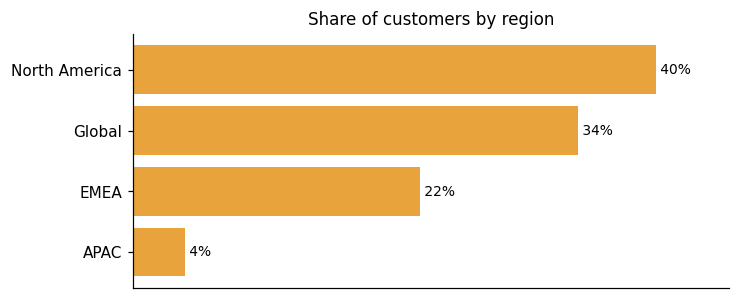
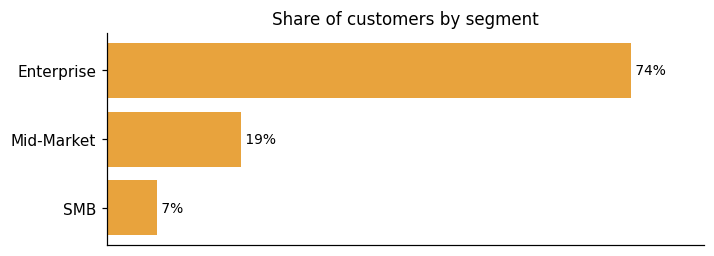
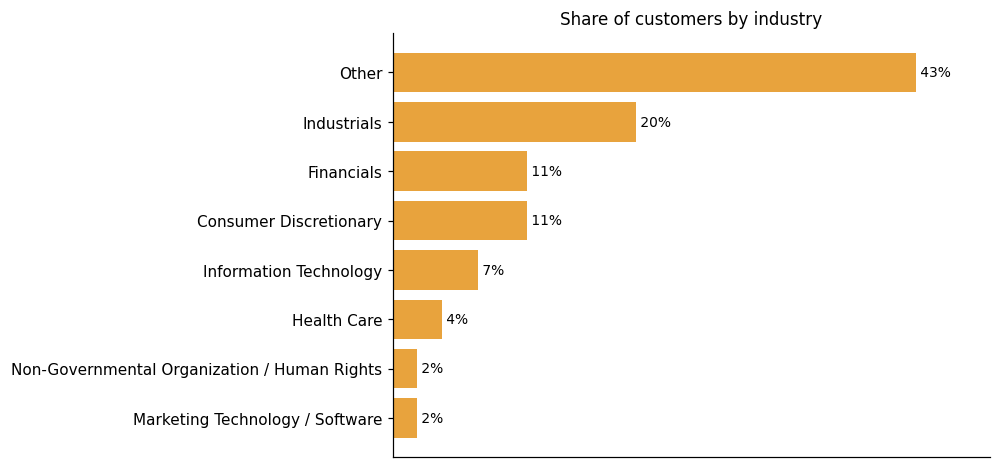
Representative customers: 2020, a Cyncly Company, Acoustic, Amnesty International France, ATR, Bethany Care Society, Bethany Seniors, Booking.com
How Docebo Learning Platform uses AI in practice
Docebo Learning Platform is built so that AI is the mechanism behind its most prominent capabilities, not an optional add-on — remove it and those capabilities stop working. The skills engine is a clear example of this. It infers, normalizes, and validates skills from roles, experience, projects, and learning activity. Rather than relying on static profiles, it keeps a view of capability current as work changes. Search follows the same logic. The vendor describes Harmony Search as a conversational AI tool that lets learners and admins ask questions in plain language and receive accurate, contextual answers. That turns traditional search into something closer to dynamic discovery. Workforce planning goes a step further. The vendor characterizes those capabilities as agentic, meaning AI acts with a degree of autonomy in surfacing and acting on workforce signals.
Agentic AI
Read detailsDocebo Learning Platform deploys multiple AI agents across tasks like building role frameworks, guiding career paths, and triggering workforce planning actions. The vendor describes these agents as executing multi-step tasks autonomously, reducing manual effort while keeping humans in the loop for governance and validation.
Generative AI
Read detailsDocebo Learning Platform uses generative AI for both content creation and platform administration. On the content side, Docebo Learning Platform can generate course content, assessments, custom videos, and AI avatar simulations — all from an uploaded document or a plain-language prompt. On the administrative side, a natural-language interface called Harmony handles conversational search and supports admins with day-to-day tasks.
Recommendation / Matching
Read detailsDocebo Learning Platform handles personalized learning in three connected ways: suggesting and filtering courses, building personalized learning paths, and surfacing relevant content through semantic search. The AI matches learners to materials based on their role, goals, and skill gaps.
Predictive ML
Read detailsDocebo Learning Platform builds a live picture of what your workforce actually knows by pulling signals from roles, experience, projects, and learning activity. It infers and normalizes employee skills from all of those sources continuously. The result is a validated view of workforce capability that updates as work changes.
Docebo Learning Platform pricing and value: quote-based costs, ROI and fit
Docebo Learning Platform does not publish list prices — all pricing is obtained through a "Get Your Pricing" or "Contact sales" flow, with two named tiers (Elevate and Enterprise) and a model built on active user-based pricing with custom pricing tailored to each organization's needs. Customer-reported ROI results show what the platform can deliver in practice. One customer saved their customer success managers over 5,420 hours of one-on-one training time, which translates to nearly $150,000 in cost savings and 119% ROI. That result came from 5,472 course completions for 3,572 customer accounts. Separately, customers have reported over 800 hours of learning operations time saved. Across seven different customers, eight ROI results have been reported. On implementation, Docebo offers a migration service. That service can cover importing courses, quizzes, user data, enrollment records, multimedia content, and more from existing training materials.
ROI evidence from 7 customers
- Over 800 hours of learning operations time saved
- saved their customer success managers over 5420 hours of one on- one training time, which translates to nearly $150,000 cost savings and 119% ROI
- 5,472 course completions for 3,572 customer accounts saved over 5,420 hours of training time
- Nearly $150,000 cost savings and 119% ROI from PowerDMS University powered by Docebo
Time-to-value: what implementations take
- Certified service partners help you launch in 90–120 days. Fully configured and customized, without waiting years.
- Expect roughly 90-120 days, with weekly check-in calls to enable your team. By working with some of our trusted partners, this timeline can potentially be expedited.
- 365Talents delivered remarkable results for our project, launching the solution within 3 months and activating nearly 52% of our 4,300 users across France, Romania, and Austria by June.
- Our new employees have been overwhelmingly positive about the new onboarding process. We've had employees tell us that this is the best training they've received in their 30-year careers
- Our new employees have been overwhelmingly positive about the new onboarding process. This is the best training they've received in their 30-year careers.
- Having our customers onboard in less than 90 days is very important for us...Since we've switched to Docebo, we've been able to hit that goal more consistently. That's a big deal.
Who it fits: value by company size
Docebo Learning Platform is built for organizations training at least 250+ learners — a mix of employees, customers, and partners — and for medium to large enterprises with significant training needs across internal and external use cases. Companies in financial services, healthcare, and government that need tailored software and hardware specs meeting specific security requirements are also a named fit. Memberships and associations with complex training requirements seeking to scale across large numbers of external partners and resellers are explicitly called out as well. Large companies that currently spend resources on duplicative training systems across departments are a core target. The platform is designed to let those organizations unify L&D programs with one centralized learning platform. Multilingual content needs and multi-business-unit L&D programs are also part of the stated fit profile. The affordability signals point in the opposite direction for smaller buyers. Users flag that Docebo Learning Platform is very expensive, and that the price is not affordable for small organizations. If your organization falls below the 250-learner threshold or has a modest training budget, these are plain signals to weigh before engaging.
Docebo presents two named tiers (Elevate and Enterprise) with feature details but publishes no specific prices; all pricing is obtained via "Get Your Pricing" / "Contact sales" flows.
Elevate
Get Your Pricing Personalization and multi-audience support White-labeled, customizable design Certification and compliance tracking AI-powered content creation Multilingual training and instant translations
Enterprise
Get Your Pricing Everything in Elevate, plus: Advanced analytics and insights Integration of up to 6 tools Extended enterprise (up to 10 domains) 2x Sandbox environments Branded mobile app Upgraded API access — 100 calls/min Dedicated database Elite support with priority assistance
Plans as published by the vendor on Explore Docebo LMS Pricing and Plans Guide; Docebo – Software Service Addendums (Packs).
Docebo Learning Platform enterprise readiness: security, compliance, migration, and support
Docebo Learning Platform covers four enterprise-readiness dimensions: security, compliance, migration, and customer support.
Security controls and assurance
Docebo Learning Platform holds a broad stack of certifications that cover the main procurement gates: ISO 27001, 27017, 27018, and 27701 for its information security management system, plus SOC 2 Type II, ISO 9001, and PCI DSS Level 2 Service Provider. For public-sector buyers, the platform carries FedRAMP Moderate Authorization, supporting data classified up to Impact Level 3. Third-party audits and certifications are available to customers upon written request. The security program is built into development, not bolted on afterward. Security by design is embedded in the Software Development Life Cycle and Change Management process, and a dedicated security team manages the full control set. One limitation applies specifically to the federal variant. Some advanced AI features are not yet enabled on Docebo Federal to meet federal security guidelines. Screen recording is also disabled on that variant. The vendor describes these as active work items rather than permanent gaps.
Compliance and data protection
Docebo Learning Platform covers a wide range of compliance ground, from cross-border data transfer frameworks to regulated-industry requirements like FDA 21 CFR Part 11. The platform holds independent verification of security, privacy, and compliance controls against global standards, with a stated commitment to expanding that coverage over time. For cross-border data transfers, Docebo holds three certifications: the EU-U.S. Data Privacy Framework, the Swiss-U.S. Data Privacy Framework, and the UK Extension to the EU-U.S. Data Privacy Framework. Data protection regulations including GDPR, UK data protection rules, PIPEDA, and US State laws are addressed through close collaboration between Docebo's Legal and Security Compliance teams and their customers. For organizations in regulated industries, Docebo supports compliance with FDA 21 CFR Part 11 through Electronic Signatures, comprehensive Audit Trails, and user management and reporting capabilities. Docebo also monitors the data protection and cyber security legal landscape and adjusts its practices as applicable laws evolve.
Migration from competing platforms
Docebo Learning Platform is designed to migrate customers without downtime or data loss. The process follows four stages: scoping and planning, ETL data migration into a sandbox for validation, review and approval, and a final delta load to production on the agreed go-live date. Dedicated experts and support staff are available every step of the way through to launch. On content compatibility, the platform supports SCORM 1.2 and 2004, Tin Can/xAPI, and AICC. Implementation assistance extends to course content, APIs, and plugins. For Headless Learning specifically, the vendor notes that each Headless project is different and, as a result, will require different resources and skill levels, including designers and developers.
Customer support experience
Docebo Learning Platform offers round-the-clock access through two channels: users can reach the helpdesk via the integrated ticket management tool inside the platform or through a web form, and supported users can also reach experts via a dedicated phone line 24 hours a day, 7 days a week. Premium support options include a Named Technical Advisor, who collaborates with account and internal technical teams to drive case resolution and proactively communicates maintenance updates, and Key Event Management, which provides on-call specialized resources during critical events, covering pre-event analysis, real-time monitoring, and issue mitigation. For its Harmony AI capability, an in-platform AI copilot called Harmony for Support is designed to help administrators get things done faster, with fewer mistakes, by offering step-by-step contextual guidance based on what the administrator is doing in the moment. There are documented scope boundaries to be aware of. The helpdesk service level targets expressly exclude three categories: custom CSS, third-party authoring tools, and third-party system integrations not developed or managed by Docebo. Separately, premium support packages are not applicable to the AI Video Presenter service.
Docebo Learning Platform alternatives and competitive landscape


Connect Docebo Learning Platform with your stack: integrations and partner ecosystem
Docebo Learning Platform connects to 130 native integrations across 5 integration partnerships. Those integrations spread across 106 partner categories, ranging from AI Video Generation and AI-Powered Learning Content Creation to Ad Bid Optimization / PPC Automation.
Docebo Learning Platform connects with HRIS, CRM, ERP, collaboration, and BI tools through APIs, webhooks, and pre-built connectors, with SSO and SCIM handling provisioning and access automatically. Altogether, the platform spans 400+ secure integrations covering content authoring tools, HRIS systems, CRM systems, enterprise messaging platforms, and LMS data warehouses. Beyond the pre-built catalog, Docebo can support and build custom integrations for virtually any software tool. Salesforce gets particularly deep treatment. The vendor describes two integration paths: a premium off-the-shelf integration and a Salesforce connector, with the Premium App embedding the full learning experience directly inside Salesforce Lightning and Experience Cloud. For its Headless Learning capability, Docebo provides a complete toolkit that includes APIs and webhooks, a workflow automation platform, and a widget library alongside professional services, so teams can build custom learner experiences into applications they already own. That capability decouples the front-end UI from the back-end LMS, letting organizations integrate learning into existing workflows using APIs, webhooks, workflow automation, and customizable widgets. For its Content Marketplace capability, native integrations with aggregators like OpenSesame and Go1 are available, with additional libraries supported through technical integrations.
| Partner category | Integration partners | Native count | Flow direction |
|---|---|---|---|
| AI Video Generation | Colossyan, Synthesia | 2 | Unknown |
| AI-Powered Learning Content Creation | Skill Studio AI | 1 | Unknown |
| Ad Bid Optimization / PPC Automation | Adspert | 1 | Unknown |
| CRM | Salesforce | 1 | Bidirectional |
| CRM / marketing automation | HubSpot | 1 | Upstream |
| CRM Software | Pipeliner CRM | 1 | Unknown |
| Community & Engagement Platform | Higher Logic | 1 | Unknown |
| Compliance Automation | anecdotes | 1 | Unknown |
| Compliance Training | EasyLLama | 1 | Unknown |
| Content Management System / Website Builder | WordPress | 1 | Unknown |
| Content Marketing / SEO Services | Minuttia | 1 | Unknown |
| Customer Advocacy & Community Platform | Influitive | 1 | Unknown |
| Customer Messaging & Support Platform | Intercom | 1 | Unknown |
| Data Analytics for Associations | Association Analytics | 1 | Unknown |
| Data Integration / ETL Platform | Rivery | 1 | Unknown |
| Developer Community & Tech Events | Codemotion | 1 | Unknown |
| Digital Experience / A/B Testing & Experimentation Platform | Optimizely | 1 | Unknown |
| Document Management | AODocs | 1 | Unknown |
| Embedded Analytics & Business Intelligence | Panintelligence | 1 | Unknown |
| Employee Communication Platform for Frontline Workers | Speakap | 1 | Unknown |
| Enterprise Search & Cognitive Platform | SearchUnify | 1 | Unknown |
| Event Management Software | Ungerboeck | 1 | Unknown |
| Financial Services Technology Platform | FintechOS | 1 | Unknown |
| Frontline Employee Experience & Operations Platform | YOOBIC | 1 | Unknown |
| HR & HCM | ADP, BambooHR, Hibob | 3 | Upstream |
| HR & Learning Consulting | Kolabori | 1 | Unknown |
| HR & Organizational Development Consulting | GROW-ING | 1 | Unknown |
| HR & Payroll Software | MHR International, Proliant | 2 | Unknown |
| HR Management Software | Cezanne, HeavenHR, Namely | 3 | Unknown |
| HR Systems Integration Platform | Joynd | 1 | Unknown |
| HR technology consulting | Educe | 1 | Unknown |
| Higher Education ERP / Student Information Systems | Ellucian | 1 | Unknown |
| Human Capital Management (HCM) / ERP | Workday | 1 | Unknown |
| Human Capital Management (HCM) / HR Software | Ultimate Software | 1 | Unknown |
| Human Capital Management (HCM) / Payroll | Dayforce | 1 | Unknown |
| IT Asset Management & Technology Lifecycle Services | Gilmore Global | 1 | Unknown |
| IT Consulting & SAP Services | SEIDOR | 1 | Unknown |
| IT Services / Directory Services | Ldap Bilgi Teknolojileri | 1 | Unknown |
| IT service management | ServiceNow | 1 | Bidirectional |
| Identity & Access Management / Authentication | Auth0 | 1 | Unknown |
| Identity & Access Management / SSO | miniOrange | 1 | Unknown |
| Identity & Single Sign-On | Facebook, Okta | 2 | Upstream |
| Integration & Workflow Automation Platform | Workato | 1 | Unknown |
| Integration Platform as a Service (iPaaS) | tray.io | 1 | Unknown |
| Interactive Tutorial / Step-by-Step Training Tool | iorad | 1 | Unknown |
| Labeling & Auto-ID Solutions | SATO HOLDINGS CORPORATION | 1 | Unknown |
| Learning & Development / Training Services | Elucidate Technologies, Inc. | 1 | Unknown |
| Learning & Development Consulting | GuyKat | 1 | Unknown |
| Learning & Development Services | Complete Learning Solutions | 1 | Unknown |
| Networking & IT Infrastructure | Cisco Systems | 1 | Unknown |
| On-Demand Pay / Earned Wage Access | Payflow | 1 | Unknown |
| Online Training / Virtual Classroom | GoToTraining | 1 | Unknown |
| Online Travel & Accommodation Booking | Booking.com | 1 | Unknown |
| Open Authentication / Identity Standard | OpenID | 1 | Unknown |
| Partner / Channel Ecosystem Platform | ShuffleExchange | 1 | Unknown |
| Partner Deal Registration & Channel Management | Vartopia | 1 | Unknown |
| Partner Relationship Management | Partner IQ | 1 | Unknown |
| Password Management | LastPass | 1 | Unknown |
| People Intelligence / Employee Directory Platform | Structural | 1 | Unknown |
| Performance Management / OKR Software | Betterworks | 1 | Unknown |
| Professional Community / Revenue Leader Network | Pavilion | 1 | Unknown |
| Professional Services / Consulting | Deloitte US | 1 | Unknown |
| Programmatic Job Advertising / Recruitment Marketing | Joveo | 1 | Unknown |
| Remote Work & IT Management Software | GoTo | 1 | Unknown |
| Retail Operations & Frontline Communication Platform | Zipline | 1 | Unknown |
| Sales Consulting & Training | Growing Up Sales Consulting | 1 | Unknown |
| Sales Enablement | Highspot | 1 | Unknown |
| Sales Training & Performance Improvement | Richardson Sales Performance | 1 | Unknown |
| Simulation-Based Sales Training | Bright Software | 1 | Unknown |
| Subscription Management & Billing | Zuora | 1 | Unknown |
| Talent Experience / Recruitment Platform | Phenom People | 1 | Unknown |
| Technology Services / IT Solutions | Parco | 1 | Unknown |
| Training Evaluation & Learning Analytics | Formetris | 1 | Unknown |
| Video Conferencing | BlueJeans | 1 | Unknown |
| Video Conferencing & Collaboration | WebEx | 1 | Unknown |
| Video Conferencing / Online Meetings | GoToMeeting | 1 | Unknown |
| Web Conferencing / Virtual Classroom | BigBlueButton | 1 | Unknown |
| association management software | Association Anywhere, iMIS | 2 | Bidirectional |
| business intelligence / data visualization | Tableau | 1 | Downstream |
| cloud platform / Identity & Single Sign-On | Microsoft Azure | 1 | Upstream |
| cloud storage | Amazon S3, Dropbox, Google Drive | 3 | Bidirectional, Upstream |
| customer service / help desk | Zendesk | 1 | Bidirectional |
| cybersecurity / phishing simulation | VIPRE | 1 | Bidirectional |
| data warehouse | Google BigQuery, Snowflake | 2 | Downstream |
| digital credentialing | Accredible | 1 | Bidirectional |
| e-commerce platform | Shopify | 1 | Bidirectional |
| e-learning content provider | Coursera, Edflex, Go1, LinkedIn Learning, OpenSesame, Pluralsight, Skilla, Skillsoft | 5 | Upstream |
| eCommerce Platform / WordPress Plugin | WooCommerce | 1 | Unknown |
| eLearning & Digital Learning Solutions | Omniplex, TicTac Interactive, TicTac Learn | 3 | Unknown |
| eLearning & Virtual Training Platform | Teleskill | 1 | Unknown |
| eLearning Authoring Tool | Easygenerator, Elucidat, Trivantis | 3 | Unknown |
| eLearning Content & Training Services | Bluewater, Knowzies, eSkillz | 3 | Unknown |
| eLearning Services | Nettop Learning | 1 | Unknown |
| eLearning Services & Consulting | iLearn Group | 1 | Unknown |
| eLearning Services & Training | Nixfon | 1 | Unknown |
| enterprise software / database | Oracle | 1 | Bidirectional |
| mobile app marketplace | Google Play | 1 | Downstream |
| payment gateway | Adyen, Authorize.Net, CyberSource, PayPal, Stripe, Westpac | 6 | Downstream |
| relational database | MySQL | 1 | Bidirectional |
| skills intelligence / talent management | 365Talents | 0 | Bidirectional |
| team collaboration / video conferencing | Microsoft Teams | 1 | Bidirectional |
| team messaging / collaboration | Slack | 1 | Downstream |
| video conferencing | Zoom | 1 | Bidirectional |
| video conferencing / virtual classroom | Adobe Connect | 1 | Bidirectional |
| virtual classroom | Class | 0 | Unknown |
| web analytics | Google Analytics | 1 | Downstream |


What's new in Docebo Learning Platform
Docebo Learning Platform has earned 5 awards over the last 24 months.
Recent awards for Docebo Learning Platform
Docebo Learning Platform has received 5 awards in the last 24 months. Those awards include Newsweek's 2025 Global Most Loved Workplaces and the 2024 AWS Rising Star Technology Italian Partner of the Year. They also include the Diamond Level Smartchoice Preferred Provider by Brandon Hall Group, Nine Brandon Hall Excellence in Technology Awards, and Gold at the Canadian Marketing Association Awards for Leaders in Learning Series.
- Newsweek's 2025 Global Most Loved Workplaces (2025-05-27) →
- Diamond Level Smartchoice Preferred Provider by Brandon Hall Group (2024-12-31) →
- Nine Brandon Hall Excellence in Technology Awards (2024-12-31) →
- Gold at the Canadian Marketing Association Awards for Leaders in Learning Series (2024-12-31) →
- 2024 AWS Rising Star Technology Italian Partner of the Year (2024-12-05) →
Docebo Inc stock (CA25609L1004): earnings momentum meets share price ...
Docebo Inc reported a revenue increase to approximately US$65.6 million for Q1 2026, surpassing the previous year's US$57.3 million. The company also exceeded earnings expectations with an adjusted EPS of US$0.34, slightly above the consensus of US$0.33. Despite these positive results, Docebo's stock remains volatile, reflecting investor concerns over growth prospects and competitive pressures in the cloud-based learning platform market.
Docebo strengthens global leadership in enterprise learning with dual AWS competency status in Education and Non-Profit
Docebo has achieved dual AWS Competency status in Education and Non-Profit, validating its capability to deliver secure, scalable AI-driven learning experiences on AWS infrastructure. This recognition enhances Docebo's reputation as a trusted provider for enterprise and non-profit organizations seeking robust learning management solutions.
Docebo Inc. (DCBO) Q1 Earnings and Revenues Top Estimates
Docebo Inc. reported Q1 earnings of $0.34 per share, surpassing the Zacks Consensus Estimate of $0.33. Revenues reached $65.62 million, exceeding expectations of $65.5 million. This marks the fourth consecutive quarter of beating earnings and revenue estimates. Despite underperforming the market this year, Docebo's favorable earnings outlook has earned it a Zacks Rank #1 (Strong Buy).
Docebo Inc. Profile
Company Name
Docebo Inc.
Company Website
https://www.docebo.com/HQ Location
Toronto, Ontario
Social


